Official websites use .gov
A .gov website belongs to an official government organization in the United States.

Secure .gov websites use HTTPS
A lock ( ) or https:// means you’ve safely connected to the .gov website. Share sensitive information only on official, secure websites.

Advancing multistressor forecasting for South Florida’s reef and coastal communities

Coral reef located in the Florida Keys.
An underwater view of a coral reef located in the Florida Keys. (Credit: National Marine Sanctuary)

Characterizing and forecasting coastal ecosystem responses to multiple stressors for management applications in South Florida

Why we care
Reefs and seagrass beds are not just beautiful, they support food, income, recreation, and provide coastal protection. Florida’s coral reefs are valued at about $3.4 billion, bring in $1.1 billion in tourism each year, and support over 71,000 jobs.  Recreational fishing in the Everglades coastal region also adds hundreds of millions of dollars to the economy. But ocean acidification, low oxygen, red tides, warmer water, and excess nutrients are placing these valuable ecosystems at risk. These stressors can weaken coral reefs, damage seagrass beds, kill fish and shellfish, reduce water quality, close beaches, and threaten the income and well-being of people who depend on healthy coastal waters.

What we are doing
This project aims to model and forecast harmful ocean conditions for coral reef ecosystems. The team will first combine satellite data with more than 20 years of data from ship surveys, new water sampling, laboratory experiments, and computer models. Then they will map where harmful conditions occur, test how much stress corals, seagrasses, algae, plankton, and other key species. They can then predict how change in ocean conditions, Everglades water management, seagrass restoration, and coral restoration may shape the region in the future. Ocean acidification is a core component of the water quality and experimental data considered with this effort, since it can impact the net growth of a coral reef.

Benefits of our work
The project will provide maps, forecasts, and an online planning tool for managers and restoration teams. These products can help identify which reef sites, coral types, and restoration actions have the best chance of success. They can also support better decisions about Everglades water flow, red tide risks, fisheries, and coastal development. By helping protect reefs, seagrass beds, fish populations, and water quality, this work can support tourism, fishing businesses, recreation, public health, and the long-term economic stability of South Florida’s coastal communities.

This work is jointly funded by the NOAA Ocean Acidification Program (OAP), NOAA National Ocean Service and NOAA National Centers for Coastal Ocean Science

Resources
Florida Keys National Marine Sanctuary (FKNMS)
Marine Biodiversity Observation Network (MBON)
NOAA National Coral Reef Monitoring Program (NCRMP)
The South Florida Ecosystem Restoration
NOAA red tide and harmful algal bloom forecasts
Restoring Coral Reefs
Survey: Trends from socioeconomic surveying in South Florida
Podcast: Restoring Florida’s Iconic Coral Reef

Investigators
Ana Palacio Castro, University Miami Cooperative Institute for Marine and Atmospheric Studies (CIMAS)
Enrique Montes, University Miami Cooperative Institute for Marine and Atmospheric Studies (CIMAS)
Jennifer Dorton, Southeast Coastal Ocean Observing Regional Association – SECOORA
Ian C. Enochs, NOAA Atlantic Oceanographic and Meteorological Laboratory (AOML)
Fabian A. Gomez, Northern Gulf Institute, Mississippi State University
Katherine A. Hubbard, Florida Fish and Wildlife Conservation Commission, Fish and Wildlife Research Institute
Christopher R. Kelble, NOAA Atlantic Oceanographic and Meteorological Laboratory (AOML)
Nicole C. Millette, Virginia Institute of Marine Science, College of William & Mary
Frank E. Muller-Karger, University of South Florida

Advisory Committee
Jennifer Moore, NOAA Fisheries
Andrew Bruckner, NOAA National Marine Sanctuary
Erica Towle, NOAA National Coral Reef Monitoring Program
Shay Viehman, NOAA National Centers for Coastal Ocean Science
John Walter, NOAA Southeast Fisheries Science Center
Nicholas Parr, Florida Department of Environmental Protection
James Erskine, Florida Fish and Wildlife Commission (FWC)

Effects of ocean acidification and temperature on Alaskan crabs

Red King Crab
Image credit: David Csepp, NMFS AKFSC ABL

Long-term declines of red king crab in Bristol Bay, Alaska may be partially attributed to ocean acidification conditions. These impacts may be partially responsible for the fishery closures during the 2021–2022 and 2022–2023 seasons. Researchers found that ocean acidification negatively impacts Alaskan crabs generally by changing physiological processes, decreasing growth, increasing death rates and reducing shell thickness. Funded by the Ocean Acidification Program, scientists at the Alaska Fisheries Science Center continue to investigate the responses of early life history stages and study the potential of various Alaska crabs to acclimate to changing conditions. Results will inform models that will use the parameters studied to predict the effects of future ocean acidification on the populations of red king crab in Bristol Bay as well as on the fisheries that depend on them. Fishery managers will better be able to anticipate and manage stocks if changing ocean chemistry affects stock productivity and thus the maximum sustainable yield.

More about this work

Forecasts for Alaska Fisheries

Crab pots and fishing nets in Alaska's Dutch Harbor
Image credit: Michael Theberge

Understanding seasonal changes in ocean acidification in Alaskan waters and the potential impacts to the multi-billion-dollar fishery sector is a main priority. Through work funded by NOAA’s Ocean Acidification Program, the Pacific Marine Environmental Laboratory developed a model capable of depicting past ocean chemistry conditions for the Bering Sea and is now testing the ability of this model to forecast future conditions. This model is being used to develop an ocean acidification indicator provided to fisheries managers in the annual NOAA Eastern Bering Sea Ecosystem Status Report.

ADAPTING TO OCEAN ACIDIFICATION

The NOAA Ocean Acidification Program (OAP) works to prepare society to adapt to the consequences of ocean acidification and conserve marine ecosystems as acidification occurs. Learn more about the human connections and adaptation strategies from these efforts.

Adaptation approaches fostered by the OAP include:

FORECASTING

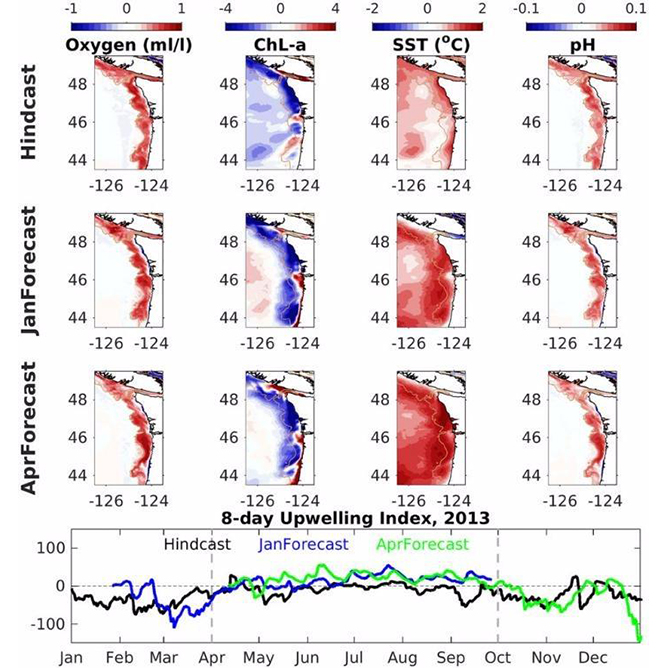
Using models and research to understand the sensitivity of organisms and ecosystems to ocean acidification to make predictions about the future, allowing communities and industries to prepare

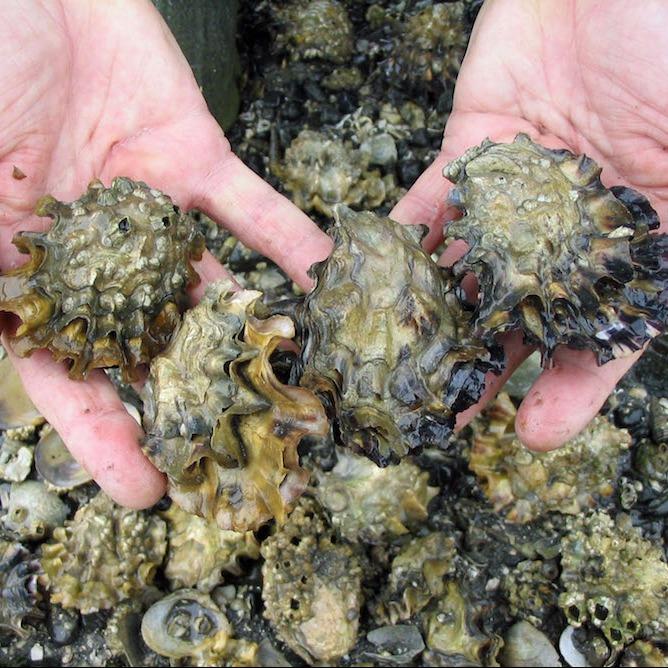
Closeup of oysters cupped in someone's hands

MANAGEMENT

Using these models and predictions as tools to facilitate management strategies that will protect marine resources and communities from future changes

TECHNOLOGY DEVELOPMENT

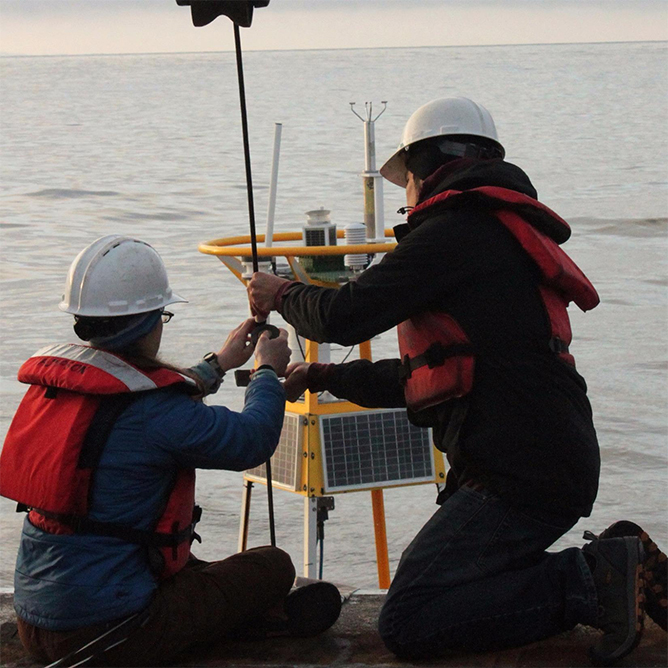
Developing innovative tools to help monitor ocean acidification and mitigate changing ocean chemistry locally

REDUCING OUR CARBON FOOTPRINT

On the Road

Drive fuel-efficient vehicles or choose public transportation. Choose your bike or walk! Don't sit idle for more than 30 seconds. Keep your tires properly inflated.

With your Food Choices

Eat local- this helps cut down on production and transport! Reduce your meat and dairy. Compost to avoid food waste ending up in the landfill

With your Food Choices

Make energy-efficient choices for your appliances and lighting. Heat and cool efficiently! Change your air filters and program your thermostat, seal and insulate your home, and support clean energy sources

By Reducing Coastal Acidification

Reduce your use of fertilizers, Improve sewage treatment and run off, and Protect and restore coastal habitats

TAKE ACTION WITH YOUR COMMUNITY

You've taken the first step to learn more about ocean acidification - why not spread this knowledge to your community?

Every community has their unique culture, economy and ecology and what’s at stake from ocean acidification may be different depending on where you live.  As a community member, you can take a larger role in educating the public about ocean acidification. Creating awareness is the first step to taking action.  As communities gain traction, neighboring regions that share marine resources can build larger coalitions to address ocean acidification.  Here are some ideas to get started:

  1. Work with informal educators, such as aquarium outreach programs and local non-profits, to teach the public about ocean acidification. Visit our Education & Outreach page to find the newest tools!
  2. Participate in habitat restoration efforts to restore habitats that help mitigate the effects of coastal acidification
  3. Facilitate conversations with local businesses that might be affected by ocean acidification, building a plan for the future.
  4. Partner with local community efforts to mitigate the driver behind ocean acidification  – excess CO2 – such as community supported agriculture, bike & car shares and other public transportation options.
  5. Contact your regional Coastal Acidification Network (CAN) to learn how OA is affecting your region and more ideas about how you can get involved in your community
       More for Taking Community Action