Expanding the reach of a civic science project on ocean acidification: Curriculum development and project-based learning illuminate the relationship between ocean acidification and oyster ecology
Why we care
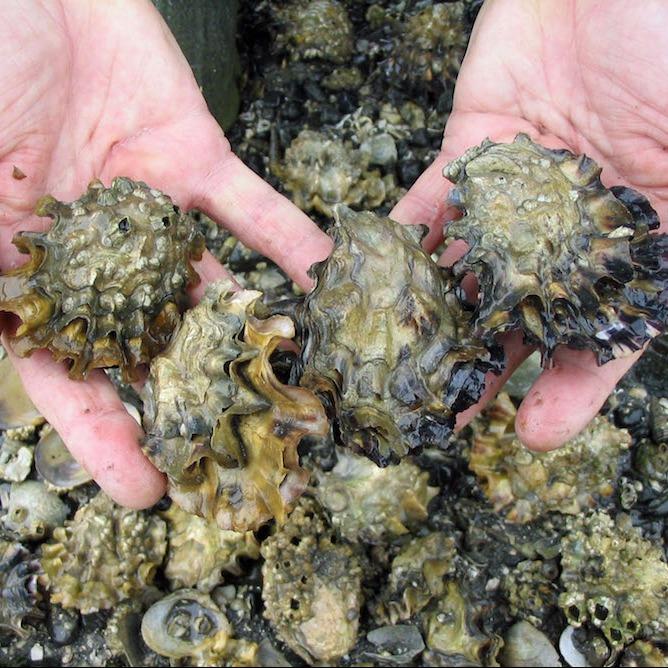
Healthy oysters depend on healthy water, and understanding that relationship can help protect the future of Chesapeake Bay. Ocean acidification does not act alone. Temperature, salinity, dissolved oxygen, water chemistry, and other environmental conditions can all influence oyster survival and growth. Understanding these relationships can support oyster restoration while giving students a meaningful role in real scientific research.
What we will do
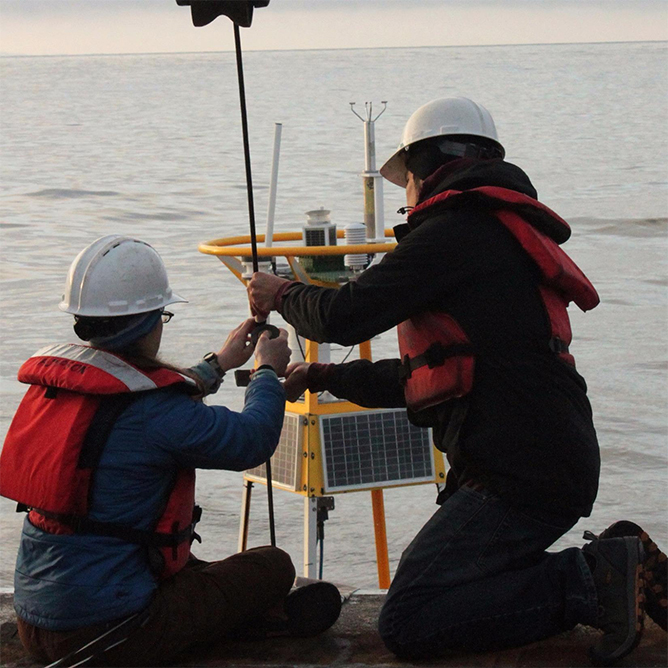
This project partners with high school students and teachers in Virginia and Maryland to monitor Chesapeake Bay water quality and oyster growth. Students regularly measure temperature, salinity, pH, dissolved oxygen, water clarity, and other environmental conditions while tracking oyster survival and growth at local field sites.
Benefits of our work
The project gives students direct experience with how science is used to solve real environmental problems. Students learn to collect and analyze data, interpret patterns, and understand how changing water conditions may affect oysters and restoration efforts.
Results and impact
Two partner teachers helped develop the curriculum, and another seven Maryland and Virginia teachers later piloted the revised lessons. Student surveys included 140 pre-curriculum responses and 67 post-curriculum responses and showed improved understanding of ocean acidification, the relationship between oysters and water quality, and how scientists conduct research. Teacher feedback also showed that the modular format made the lessons easier to adapt across different classes and grade levels.
Co-lead investigator
Jill Bible, Washington College
Sara Clarke-Vivier, Washington College