Official websites use .gov
A .gov website belongs to an official government organization in the United States.

Secure .gov websites use HTTPS
A lock ( ) or https:// means you’ve safely connected to the .gov website. Share sensitive information only on official, secure websites.

Celebrating 15 Years of NOAA's Ocean Acidification Program

Science to service and the power of partnership

Shellfish Aquaculture (Susan McLean)

Ocean acidification is a global challenge, but its effects are felt locally and regionally – in shellfish hatcheries, on coastal waters across the nation, and communities where fishing and tourism fuel economies. Over the past fifteen years, ocean acidification science has advanced into actionable services that are responsive to the challenges people face.

Highlights

  • Targeted risk assessment: OAP supported 17 regional Resilience and Vulnerability Assessments to provide actionable roadmaps to protect coastal communities and economies.
  • Economic protection for key fisheries: Co-developed forecasting tools and adaptive research and strategies directly support vital commercial and subsistence fisheries, including some of the most valuable in the nation.
  • Regional collaboration: Coastal Acidification Networks connect federally funded research with local stakeholders, rights-holders, industry leaders, and state managers to ensure scientific investments directly drive on-the-ground resilience.
  • Informed resource allocation: High-resolution regional modeling and species sensitivity research equip resource managers, industry and decision-makers with the data they need to optimize legislative and community investments.
  • Strategic coordination within NOAA: OAP supports cutting-edge research, monitoring and modeling, and data management with labs, programs, and fishery science centers across NOAA.

Background Image:

Regional Resilience and Vulnerability Assessments (RVAs) provide a roadmap for understanding where communities are most at risk and how we can support their resilience. These efforts bring together ocean biogeochemical data and social science to identify how and where communities and industries may be vulnerable. This empowers decision-makers and business owners alike to allocate resources and adjust practices where they can be most effective.

Stats:

Cool Number
0

Rounds of RVA projects (duration 3-4 years)

Cool Number
0

Regional RVAs

Cool Number
0

Active projects

Background Image: 

Case Studies

With the establishment of the Olympic Coast OA Sentinel Site (OASeS), researchers, local Tribes, and state agencies continue to work together to co-develop practical forecasting tools for key marine species. These resources help tribal managers adapt to changing ocean conditions and safeguard essential food and cultural traditions threatened by ocean acidification.


Two Atlantic sea callop fishing vessels docked in Seaford VA. Credit: NOAA Fisheries/Dvora Hart

The Atlantic sea scallop is one of the nation’s most valuable fisheries and fishermen have seen shifts in this resource. Researchers directly address concerns and observations raised from firsthand industry knowledge. This led to co-develop forecasting tools for the fishery and offering recommendations for fisheries management. These practical resources help fishermen understand how changing ocean conditions impact scallop growth, creating a clear roadmap to secure the future of this vital coastal industry.

“The fishermen want to come up with sustainable solutions so they can keep on fishing. We became a resource to help them understand what was happening to this industry and their livelihood.”
Shannon Meseck
NOAA Northeast Fishery Science Center

Colorful coral

Hawai’i now has the first-ever high resolution ocean modeling to best understand how ocean acidification affects coral reefs. Adding socioeconomic information, we now an better assess risk across the islands. Managers and communities can use risk maps to best decide how to allocate resources effectively to mitigate and adapt to the effects of ocean acidification.

“Until now, we weren’t able to capture the finer scale variability needed to better model what’s happening in a way that communities can plan for risk.”
Chris Sabine
University of Hawai’i, Manoa

Bob Foy, Director of NOAA's Alaska Fisheries Science Center holding up crabs

Co-developed with local fishing and Native Alaskan communities, maps and models help identify stressors on key natural resources. These tools provide harvesters and resource managers with adaptive strategies to build resilience.


sunrise on a coastal town in Maine

Maine’s shellfish industry faces increased ocean warming, ocean acidification, and other stressors that can impact the bottom line. By engaging with local harvesters, scientists, and community leaders, a new assessment framework provides a clear path forward for adaptive planning and protecting these valuable coastal economies.


Satellite view of the Mississippi River plume in the Gulf of America. You can see sediment discharging into the Gulf. Credit: NASA

Scientists are meeting with fishermen, managers and tribes now in foundational workshops to establish awareness and needs around ocean acidification in Louisiana waters. This knowledge exchange will support the development of a future resilience and vulnerability assessment (RVA) for the broader Gulf region. Outcomes from the project will directly inform adaptation planning and decision-making at local, state, and national levels.

Background Image: 

Image: Virginia Sea Grant

Partnerships are central to OAP’s bridge from “science to service.” Coastal Acidification Networks (CANs) serve as a cornerstone of this effort, creating a vital connection among researchers with the industries, educators, decision makers, and stakeholders whose livelihoods depend on the ocean. These on-the-ground networks build scientific capacity and develop regionally relevant responses to ocean acidification. By facilitating these networks, OAP ensures that our research directly informs the adaptation strategies.

Darcy Dugan
Janet Reimer

Click on a logo below to learn more

Key insight: Co-produced research and adaptation strategies between scientists and stakeholders most effectively address the needs by where there is greatest impact.

Over the past 15 years, NOAA has chaired the Interagency Working Group on Ocean Acidification (IWGOA), charged through FOARAM to coordinate federal efforts toward preparing our nation for OA impacts. Through coordinated research, monitoring, and engagement, the IWGOA delivered an Ocean Chemistry Vulnerability Assessment Report (2023) and forward-looking Ocean Acidification Monitoring Plan (2024) built from the Implementation of the IWGOA Strategic Plan (2016).

IWGOA logo
  • Mobilized a highly diverse network of stakeholders across a massive geographic area, bringing together commercial fishermen, shellfish growers, scientists, and Alaska Native tribes.
  • Provides a comprehensive, public-facing information hub that translates complex OA science into adaptation strategies for fishing sectors and coastal communities.
  • Plays a pivotal role in expanding community-based water sampling and autonomous vehicle monitoring across Alaskan waters, bridging critical data gaps in the Arctic and sub-Arctic.
  • Formed as a direct, rapid response to the Pacific Northwest oyster hatchery crashes in the late 2000s, California Current Coastal Acidification Network (C-CAN) was the first economically impactful network from which local and other regional partnerships arose.
  • Developed standardized, core principles for OA measurement and data collection, ensuring that data collected by different scientists and industries along the West Coast is accessible, standardized, and immediately useful to hatchery managers.
  • Successfully expanded from just shellfish hatcheries to include a broader coalition of other ocean-dependent industries, communities, and tribes.
  • Formed in 2025 in response to long-term monitoring and Resilience and Vulnerability Assessment in Puerto Rico and regional concerns about the effects of acidification on coral reef ecosystems that fuel local economies and ways of life.
  • Created the first unified nexus between scientists and the robust Mid-Atlantic aquaculture and shellfish hatchery industries (stretching from south of Long Island down to Virginia).
  • Advanced the region’s ability to model and predict the consequences of changing chemistry on estuarine environments, specifically focusing on economically vital species like surf clams and sea scallops.
  • Focused heavily on the human dimensions of OA, evaluating the costs and benefits of various mitigation strategies to ensure coastal community sustainability.
  • Created the first unified nexus between scientists and the robust Mid-Atlantic aquaculture and shellfish hatchery industries.
  • Advanced the region’s ability to model and predict the consequences of changing chemistry on estuarine environments, specifically focusing on economically vital species like surfclams and sea scallops.
  • Successfully established unified priorities for ocean and coastal acidification monitoring across both the Northeast U.S. and Eastern Canada.
  • Conducted deep-dive syntheses of socio-economic data to identify critical vulnerabilities for some of the nation’s most valuable marine real estate and fisheries like the Maine lobster industry.
  • Is the primary host of state-of-the-science information, translating into formats directly usable by state and federal policymakers and resource managers.
  • Catalyzed a cohesive Southeast regional acidification monitoring network where one previously did not exist.
  • Identified critical gaps in scientific knowledge regarding how Southeast-specific marine resources (like deep-water corals and regional fisheries) will respond to corrosive waters.
  • Facilitated extensive, ongoing dialogues (via robust webinar series and workshops) to connect regional stakeholders and catalyze scientific collaborations in an area where OA impacts are uniquely complex due to diverse coastal hydrology.

Bioeconomic modeling to inform Alaska fisheries management

Fishing Dock in Juneau Alaska
Image credit: Allen Shimada, NOAA NMFS

Bioeconomic models are a multidisciplinary tool that use oceanography, fisheries science and social science to assess socioeconomic impacts. Funded by the Ocean Acidification Program, researchers at the Alaska Fisheries Science Center use a bioeconomic model to study the impacts of ocean acidification on Eastern Bering Sea crab, northern rock sole and Alaska cod. The goal is to predict how ocean acidification will affect abundance yields and income generated by the fisheries. This work informs the potential economic impacts of ocean acidification and future decision making and research planning.

More about this work

Effects of ocean acidification and temperature on Alaskan crabs

Red King Crab
Image credit: David Csepp, NMFS AKFSC ABL

Long-term declines of red king crab in Bristol Bay, Alaska may be partially attributed to ocean acidification conditions. These impacts may be partially responsible for the fishery closures during the 2021–2022 and 2022–2023 seasons. Researchers found that ocean acidification negatively impacts Alaskan crabs generally by changing physiological processes, decreasing growth, increasing death rates and reducing shell thickness. Funded by the Ocean Acidification Program, scientists at the Alaska Fisheries Science Center continue to investigate the responses of early life history stages and study the potential of various Alaska crabs to acclimate to changing conditions. Results will inform models that will use the parameters studied to predict the effects of future ocean acidification on the populations of red king crab in Bristol Bay as well as on the fisheries that depend on them. Fishery managers will better be able to anticipate and manage stocks if changing ocean chemistry affects stock productivity and thus the maximum sustainable yield.

More about this work

Forecasts for Alaska Fisheries

Crab pots and fishing nets in Alaska's Dutch Harbor
Image credit: Michael Theberge

Understanding seasonal changes in ocean acidification in Alaskan waters and the potential impacts to the multi-billion-dollar fishery sector is a main priority. Through work funded by NOAA’s Ocean Acidification Program, the Pacific Marine Environmental Laboratory developed a model capable of depicting past ocean chemistry conditions for the Bering Sea and is now testing the ability of this model to forecast future conditions. This model is being used to develop an ocean acidification indicator provided to fisheries managers in the annual NOAA Eastern Bering Sea Ecosystem Status Report.

ADAPTING TO OCEAN ACIDIFICATION

The NOAA Ocean Acidification Program (OAP) works to prepare society to adapt to the consequences of ocean acidification and conserve marine ecosystems as acidification occurs. Learn more about the human connections and adaptation strategies from these efforts.

Adaptation approaches fostered by the OAP include:

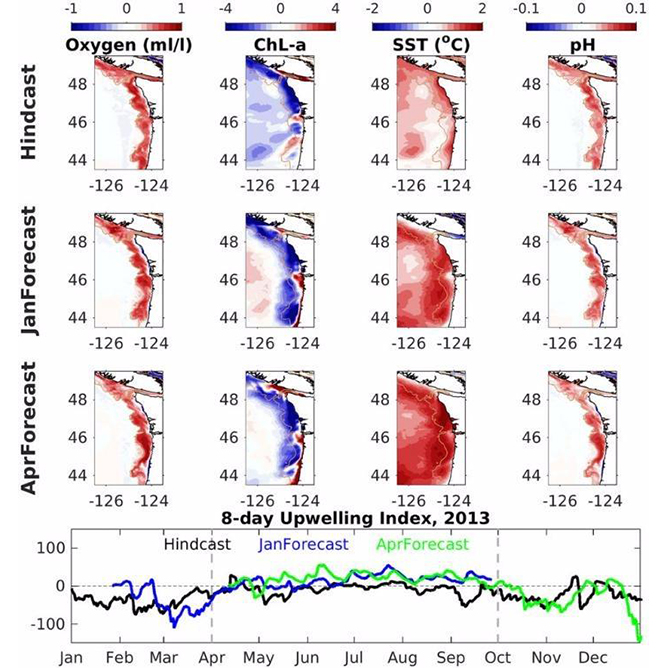
FORECASTING

Using models and research to understand the sensitivity of organisms and ecosystems to ocean acidification to make predictions about the future, allowing communities and industries to prepare
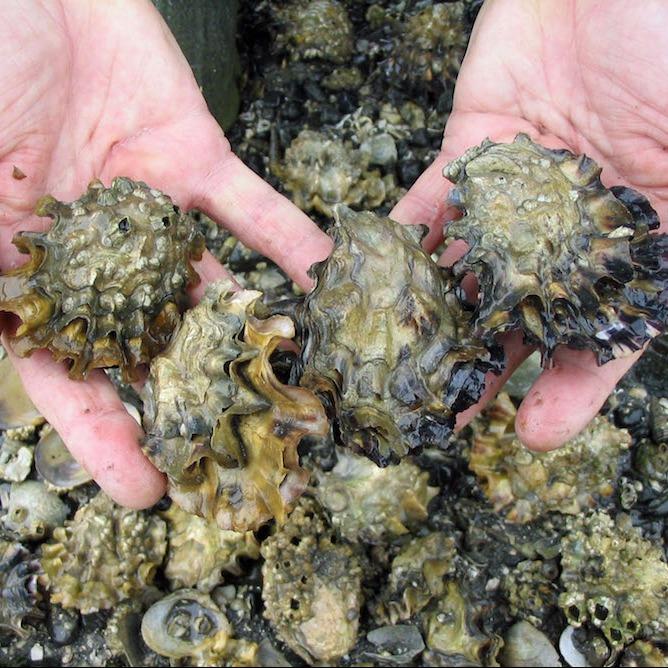
Closeup of oysters cupped in someone's hands

MANAGEMENT

Using these models and predictions as tools to facilitate management strategies that will protect marine resources and communities from future changes
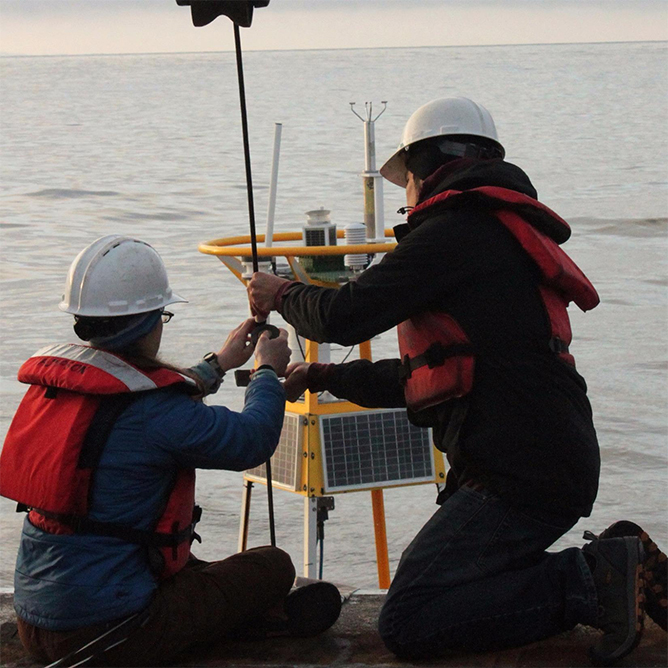
TECHNOLOGY DEVELOPMENT

Developing innovative tools to help monitor ocean acidification and mitigate changing ocean chemistry locally

REDUCING OUR CARBON FOOTPRINT

On the Road

Drive fuel-efficient vehicles or choose public transportation. Choose your bike or walk! Don't sit idle for more than 30 seconds. Keep your tires properly inflated.

With your Food Choices

Eat local- this helps cut down on production and transport! Reduce your meat and dairy. Compost to avoid food waste ending up in the landfill

With your Food Choices

Make energy-efficient choices for your appliances and lighting. Heat and cool efficiently! Change your air filters and program your thermostat, seal and insulate your home, and support clean energy sources

By Reducing Coastal Acidification

Reduce your use of fertilizers, Improve sewage treatment and run off, and Protect and restore coastal habitats

TAKE ACTION WITH YOUR COMMUNITY

You've taken the first step to learn more about ocean acidification - why not spread this knowledge to your community?

Every community has their unique culture, economy and ecology and what’s at stake from ocean acidification may be different depending on where you live.  As a community member, you can take a larger role in educating the public about ocean acidification. Creating awareness is the first step to taking action.  As communities gain traction, neighboring regions that share marine resources can build larger coalitions to address ocean acidification.  Here are some ideas to get started:

  1. Work with informal educators, such as aquarium outreach programs and local non-profits, to teach the public about ocean acidification. Visit our Education & Outreach page to find the newest tools!
  2. Participate in habitat restoration efforts to restore habitats that help mitigate the effects of coastal acidification
  3. Facilitate conversations with local businesses that might be affected by ocean acidification, building a plan for the future.
  4. Partner with local community efforts to mitigate the driver behind ocean acidification  – excess CO2 – such as community supported agriculture, bike & car shares and other public transportation options.
  5. Contact your regional Coastal Acidification Network (CAN) to learn how OA is affecting your region and more ideas about how you can get involved in your community
       More for Taking Community Action