Resources for Students & Educators
Education and Outreach
Education and outreach are vital to improving the public’s awareness and understanding of ocean acidification to prepare and adapt to its impacts.
Resources for Students & Educators
Education and outreach are vital to improving the public’s awareness and understanding of ocean acidification to prepare and adapt to its impacts.
OAP advances ocean acidification literacy for better decision-making
NOAA’s Ocean Acidification Program provides educational and public outreach opportunities to improve understanding of ocean acidification to students, educators and the broader public. With increased awareness of ocean and coastal acidification, communities can prepare and adapt to the consequences of our changing ocean. NOAA is legislated to facilitate national public outreach activities to improve the understanding of current scientific knowledge of ocean acidification and its impacts on marine resources.
The Ocean Acidification Program works to understand and fill the needs of the ocean acidification education and communication community.
The NOAA Ocean Acidification Implementation Plan identifies actions to extend the reach of NOAA research findings to the broader community through education and outreach. The first step was evaluating the needs in education and outreach programming to determine gaps and opportunities to strengthen ocean acidification education and communication.
OAP supported grants and NOAA activities address the goals of the implementation plan. Some efforts include developing multimedia education tools, place-based curricula and supporting community science in various U.S. regions.
Unlock ocean acidification with our curated collection of background, classroom ready, regional and species-specific resources – each vetted for teaching and communication best practices. These resources are for teachers, students and anyone interested in ocean and coastal acidification.
Explore a personalized learning path tailored to your specific interests and goals. This interactive feature helps you quickly navigate our curated library to find the exact resources you need. You can also browse our full resource collection using our searchable Resources portal.
Build your foundational knowledge with expert-curated materials, including in-depth guides, easy to understand graphics, and primers designed to clarify the science and impacts of ocean acidification. Find more at Choose Your Own (O)Adventure.

Ocean acidification (OA) occurs when the ocean absorbs carbon dioxide from the atmosphere like sponge. This causes a fundamental and global change in the chemistry of the ocean. Learn all about ocean acidification, it’s causes, consequences and solutions straight from NOAA’s Ocean Acidification Program.

General information from NOAA Education about ocean acidification (OA) including a brief overview of the past 200 years and the pH scale we use to measure OA.

NOAA Fisheries presents how our oceans are absorbing increasingly more carbon dioxide from the atmosphere, leading to lower pH and increased acidity. Learn about the impacts of ocean acidification (OA) on people and society and what we can do to mitigate and adapt.
Inspire the next generation with NGSS aligned lessons, dynamic tools and multimedia that make complex ocean chemistry accessible and relevant and bring these concepts to life inside and outside the classroom.
Browse all materials in our Resources portal
Access a comprehensive suite of lesson plans, teaching guides, and instructional materials vetted for educational use and ready for immediate implementation.
Search by grade level and more at Choose Your Own (O)Adventure
Deepen student understanding through structured, NGSS aligned mulit-lesson curricula that emphasize active learning, critical thinking, and real-world application.
Choose Your Own (O)Adventure by grade level and discover more curricula.

Dive into ocean and coastal acidification with the newly updated NOAA Data in the Classroom. Designed for grades 9-12, this 5-level module features interactive maps, graphs, videos and incorporates the latest NOAA data to reveal the science behind acidification impacts.

This NGSS aligned curriculum developed by the Mid-Atlantic Coastal Acidification Network (MACAN) brings coastal and ocean acidification into high school classrooms with lessons, hands-on activities and data-driven investigations.
Make learning fun and impactful with engaging simulations, virtual experiences and hands-on experiments and games that demonstrate impacts of ocean acidification and point toward solutions.
Explore more at Choose Your Own (O)Adventure

Understand ocean acidification through game-based learning. Website includes easy to access game, source code, science standards, educator guide, and module integration. Geared toward students middle school to adults. (2023)

Four module online and mobile friendly curriculum for students to experiment and learn about ocean acidification, it’s impacts, and actions students can take. Available in five languages. Based on real sea urchin research.

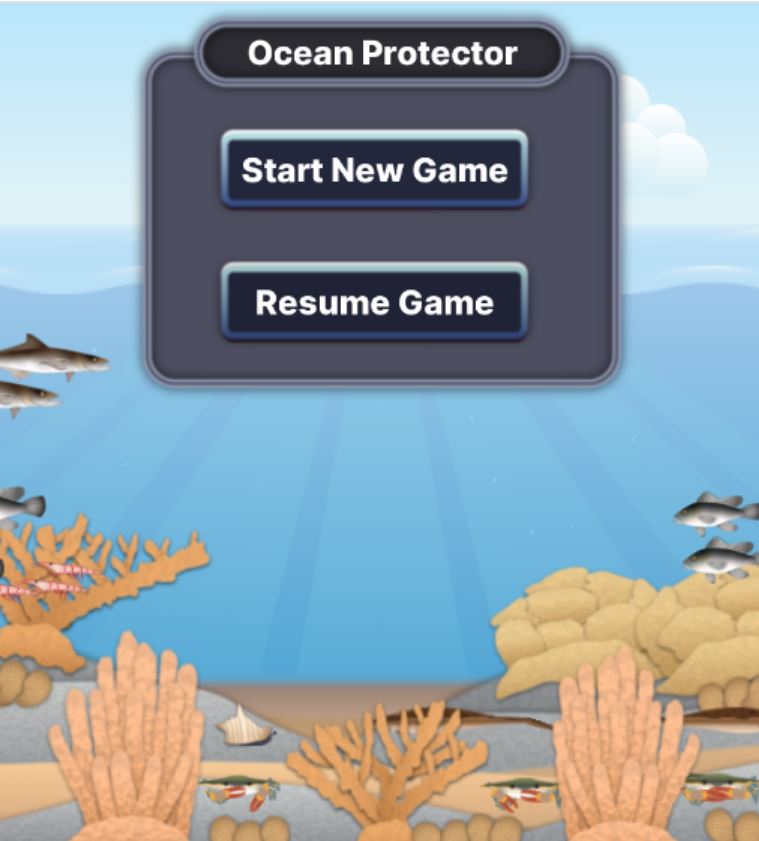
Come along with MACAN and adventure through an education video game that follows acidification through coastal habitats. Meet coastal and ocean friends and help them recover from the effects of acidified waters.
Access a comprehensive suite of lesson plans, teaching guides, and instructional materials vetted for educational use and ready for immediate implementation.
Search by grade level and more at Choose Your Own (O)Adventure
Make learning fun and impactful with engaging simulations, virtual experiences and hands-on experiments and games that demonstrate impacts of ocean acidification and point toward solutions.
Explore more at Choose Your Own (O)Adventure

This toolkit designed for educators and communicators to use to teach others about the impact of ocean acidification on Dungeness crab. Inside the toolkit: fact sheet, infographic, slideshow with script, reference list, resource list, and public domain media.

The Biological Impacts Graphics from MACAN show conditions where negative impacts have been observed and potentially lethal conditions for Mid-Atlantic species. These graphics explore how species are impacted by the natural differences in pH and aragonite saturation values across different coastal and marine habitats.
Keep ocean acidification relevant with location-specific research stories and solutions, including storymaps,regional network resources, education toolkits and more. Choose Your Own (O)Adventure for your own backyard.
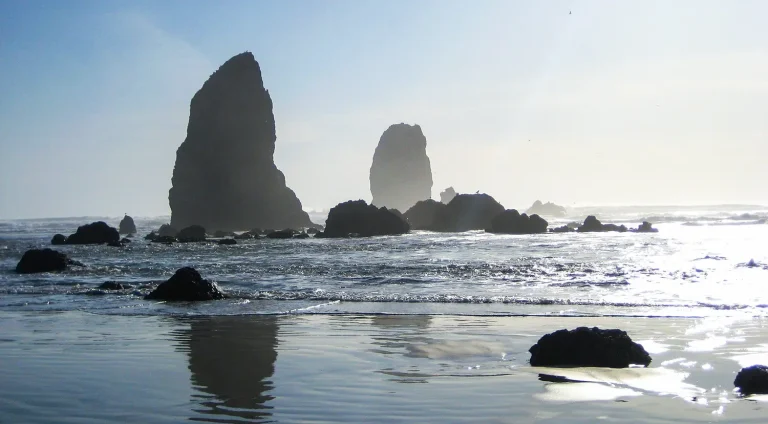
"Hey! What's the commotion in our ocean?" is an NGSS aligned 4 module toolkit that brings the Pacific Northwest into the classroom. Students ages 9 and up will make connections between how changes in the atmosphere affect the ocean and in turn, important marine life. Students can become OA Ambassadors as they explore solutions and take action.

Access six interactive StoryMaps showcasing relevant ocean acidification trends, science activities, stakeholder engagements and policy responses taking place across regions where NOAA supports U.S. Coastal Acidification Networks (“CANs”). The six regional NOAA CANs include activities in Alaska, California Current, North Atlantic, Mid-Atlantic, South Atlantic and the Gulf.
Take your exploration further with advanced resources, webinar series like SOARCE and collaborative opportunities to expand your knowledge toolkit.
Access our entire resource collection using our searchable portal.
This webinar series provides ocean acidification communication tools to formal and informal educators, stakeholders, and rightsholders across the country.
SOARCE promotes a more integrated and effective ocean acidification education community by sharing activities and resources virtually. The ocean acidification education and communication communities can use and create cutting-edge communication tools incorporating current scientific and communication research to reach a variety of audiences.
The OAP works closely with coastal state governments, on-the-ground networks, industry and NGOs to develop their responses to ocean acidification
Bioeconomic models are a multidisciplinary tool that use oceanography, fisheries science and social science to assess socioeconomic impacts. Funded by the Ocean Acidification Program, researchers at the Alaska Fisheries Science Center use a bioeconomic model to study the impacts of ocean acidification on Eastern Bering Sea crab, northern rock sole and Alaska cod. The goal is to predict how ocean acidification will affect abundance yields and income generated by the fisheries. This work informs the potential economic impacts of ocean acidification and future decision making and research planning.
Long-term declines of red king crab in Bristol Bay, Alaska may be partially attributed to ocean acidification conditions. These impacts may be partially responsible for the fishery closures during the 2021–2022 and 2022–2023 seasons. Researchers found that ocean acidification negatively impacts Alaskan crabs generally by changing physiological processes, decreasing growth, increasing death rates and reducing shell thickness. Funded by the Ocean Acidification Program, scientists at the Alaska Fisheries Science Center continue to investigate the responses of early life history stages and study the potential of various Alaska crabs to acclimate to changing conditions. Results will inform models that will use the parameters studied to predict the effects of future ocean acidification on the populations of red king crab in Bristol Bay as well as on the fisheries that depend on them. Fishery managers will better be able to anticipate and manage stocks if changing ocean chemistry affects stock productivity and thus the maximum sustainable yield.
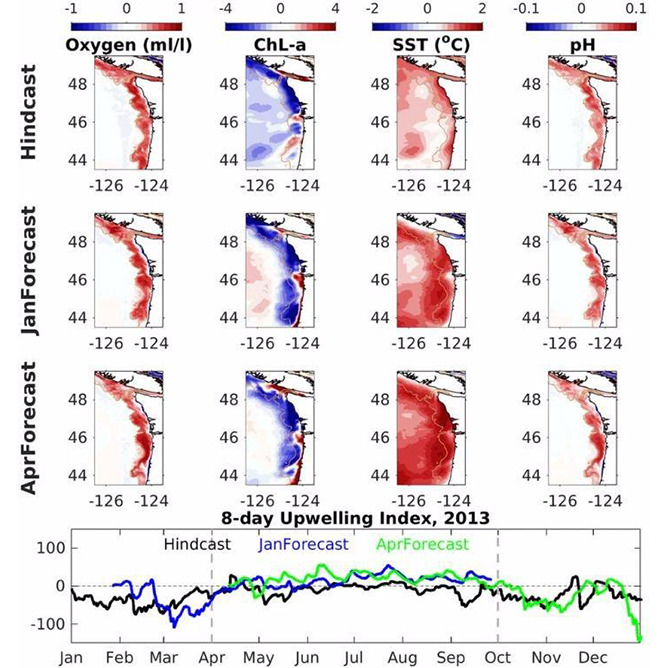
Understanding seasonal changes in ocean acidification in Alaskan waters and the potential impacts to the multi-billion-dollar fishery sector is a main priority. Through work funded by NOAA’s Ocean Acidification Program, the Pacific Marine Environmental Laboratory developed a model capable of depicting past ocean chemistry conditions for the Bering Sea and is now testing the ability of this model to forecast future conditions. This model is being used to develop an ocean acidification indicator provided to fisheries managers in the annual NOAA Eastern Bering Sea Ecosystem Status Report.
The NOAA Ocean Acidification Program (OAP) works to prepare society to adapt to the consequences of ocean acidification and conserve marine ecosystems as acidification occurs. Learn more about the human connections and adaptation strategies from these efforts.
Adaptation approaches fostered by the OAP include:

Using models and research to understand the sensitivity of organisms and ecosystems to ocean acidification to make predictions about the future, allowing communities and industries to prepare
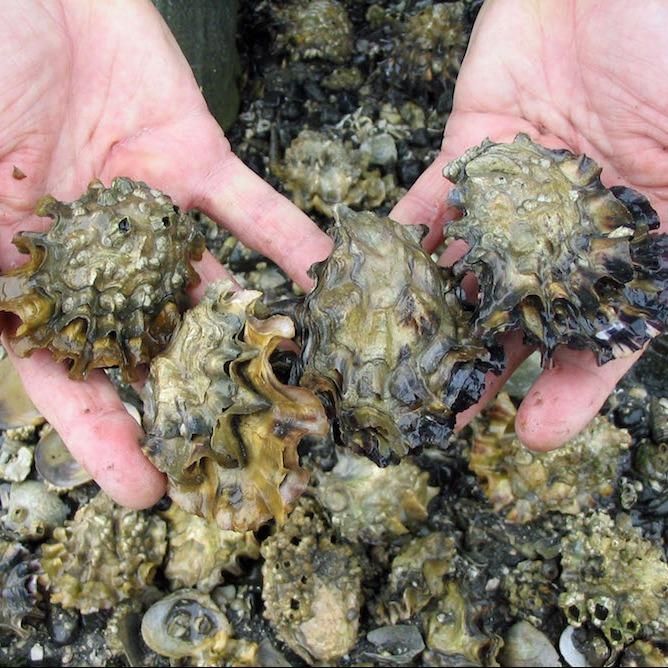
Using these models and predictions as tools to facilitate management strategies that will protect marine resources and communities from future changes
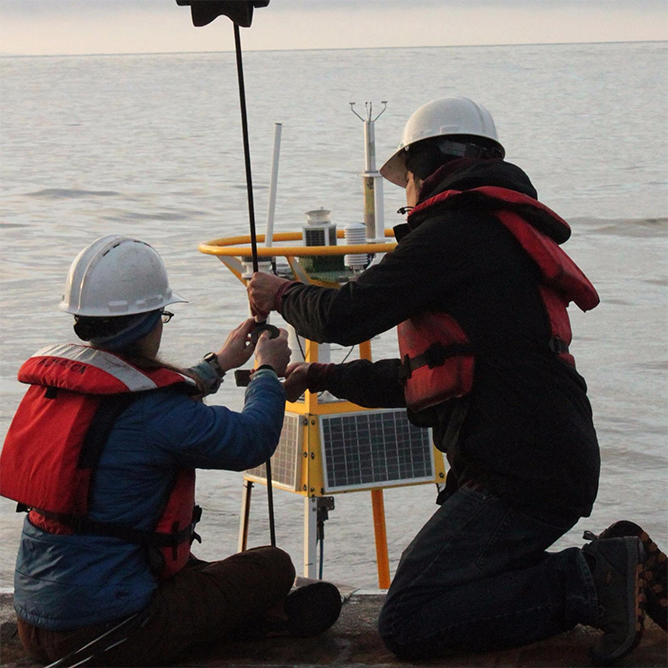
Developing innovative tools to help monitor ocean acidification and mitigate changing ocean chemistry locally
Drive fuel-efficient vehicles or choose public transportation. Choose your bike or walk! Don't sit idle for more than 30 seconds. Keep your tires properly inflated.
Eat local- this helps cut down on production and transport! Reduce your meat and dairy. Compost to avoid food waste ending up in the landfill
Make energy-efficient choices for your appliances and lighting. Heat and cool efficiently! Change your air filters and program your thermostat, seal and insulate your home, and support clean energy sources
Reduce your use of fertilizers, Improve sewage treatment and run off, and Protect and restore coastal habitats
You've taken the first step to learn more about ocean acidification - why not spread this knowledge to your community?
Every community has their unique culture, economy and ecology and what’s at stake from ocean acidification may be different depending on where you live. As a community member, you can take a larger role in educating the public about ocean acidification. Creating awareness is the first step to taking action. As communities gain traction, neighboring regions that share marine resources can build larger coalitions to address ocean acidification. Here are some ideas to get started: