Official websites use .gov
A .gov website belongs to an official government organization in the United States.

Secure .gov websites use HTTPS
A lock ( ) or https:// means you’ve safely connected to the .gov website. Share sensitive information only on official, secure websites.

Publications

Publication Post Type

The Carbonate Chemistry of the “Fattening Line,” Willapa Bay, 2011–2014

Willapa Bay has received a great deal of attention in the context of rising atmospheric CO2 and the concomitant effects of changes in bay carbonate chemistry, referred to as ocean acidification, and the potential effects on the bay’s naturalized Pacific oyster (Crassostrea gigas) population and iconic oyster farming industry. Competing environmental stressors, historical variability in the […]

The Carbonate Chemistry of the “Fattening Line,” Willapa Bay, 2011–2014 Read More »

Assessing the effects of ocean acidification in the Northeast US using an end-to-end marine ecosystem model

The effects of ocean acidification on living marine resources present serious challenges for managers of these resources. An understanding of the ecosystem consequences of ocean acidification is required to assess tradeoffs among ecosystem components (e.g. fishery yield, protected species conservation, sensitive habitat) and adaptations to this perturbation. We used a marine ecosystem model for the Northeast

Assessing the effects of ocean acidification in the Northeast US using an end-to-end marine ecosystem model Read More »

Mixed-layer carbon cycling at the Kuroshio Extension Observatory

Seven years of data from the NOAA Kuroshio Extension Observatory (KEO) surface mooring, located in the North Pacific Ocean carbon sink region, were used to evaluate drivers of mixed-layer carbon cycling. A time-dependent mass balance approach relying on two carbon tracers was used to diagnostically evaluate how surface ocean processes influence mixed-layer carbon concentrations over

Mixed-layer carbon cycling at the Kuroshio Extension Observatory Read More »

Estimating Total Alkalinity in the Washington State Coastal Zone: Complexities and Surprising Utility for Ocean Acidification Research

Evidence of ocean acidification (OA) throughout the global ocean has galvanized some coastal communities to evaluate carbonate chemistry variations closer to home. An impediment to doing this effectively is that, often, only one carbonate system parameter is measured at a time, while two are required to fully constrain the inorganic carbon chemistry of seawater. In

Estimating Total Alkalinity in the Washington State Coastal Zone: Complexities and Surprising Utility for Ocean Acidification Research Read More »

Genotype and local environment dynamically influence growth, disturbance response and survivorship in the threatened coral, <em>Acropora cervicornis</em>

The relationship between the coral genotype and the environment is an important area of research in degraded coral reef ecosystems. We used a reciprocal outplanting experiment with 930 corals representing ten genotypes on each of eight reefs to investigate the influence of genotype and the environment on growth and survivorship in the threatened Caribbean staghorn

Genotype and local environment dynamically influence growth, disturbance response and survivorship in the threatened coral, <em>Acropora cervicornis</em> Read More »

Ocean acidification leads to altered micromechanical properties of the mineralized cuticle in juvenile red and blue king crabs

Ocean acidification (OA) adversely affects a broad range of marine calcifying organisms. Crustaceans, however, exhibit mixed responses to OA, with growth or survival negatively affected in some species, but unaffected or positively affected in others. In crustaceans, the mineralized cuticle resists mechanical loads, provides protection from the environment, and enables mobility, but little is known about

Ocean acidification leads to altered micromechanical properties of the mineralized cuticle in juvenile red and blue king crabs Read More »

Persistent spatial structuring of coastal ocean acidification in the California Current System

The near-term progression of ocean acidification (OA) is projected to bring about sharp changes in the chemistry of coastal upwelling ecosystems. The distribution of OA exposure across these early-impact systems, however, is highly uncertain and limits our understanding of whether and how spatial management actions can be deployed to ameliorate future impacts. Through a novel

Persistent spatial structuring of coastal ocean acidification in the California Current System Read More »

Using mineralogy and higher-level taxonomy as indicators of species sensitivity to pH: A case-study of Puget Sound

Information on ecosystem sensitivity to global change can help guide management decisions. Here, we characterize the sensitivity of the Puget Sound ecosystem to ocean acidification by estimating, at a number of taxonomic levels, the direct sensitivity of its species. We compare sensitivity estimates based on species mineralogy and on published literature from laboratory experiments and

Using mineralogy and higher-level taxonomy as indicators of species sensitivity to pH: A case-study of Puget Sound Read More »

Exposure history determines pteropod vulnerability to ocean acidification along the US West Coast

The pteropod Limacina helicina frequently experiences seasonal exposure to corrosive conditions (Ωar  < 1) along the US West Coast and is recognized as one of the species most susceptible to ocean acidification (OA). Yet, little is known about their capacity to acclimatize to such conditions. We collected pteropods in the California Current Ecosystem (CCE) that differed in the severity

Exposure history determines pteropod vulnerability to ocean acidification along the US West Coast Read More »

Seasonal carbonate chemistry variability in marine surface waters of the US Pacific Northwest

Fingerprinting ocean acidification (OA) in US West Coast waters is extremely challenging due to the large magnitude of natural carbonate chemistry variations common to these regions. Additionally, quantifying a change requires information about the initial conditions, which is not readily available in most coastal systems. In an effort to address this issue, we have collated high-quality publicly

Seasonal carbonate chemistry variability in marine surface waters of the US Pacific Northwest Read More »

Forecasts for Alaska Fisheries

Crab pots and fishing nets in Alaska's Dutch Harbor
Image credit: Michael Theberge

Understanding seasonal changes in ocean acidification in Alaskan waters and the potential impacts to the multi-billion-dollar fishery sector is a main priority. Through work funded by NOAA’s Ocean Acidification Program, the Pacific Marine Environmental Laboratory developed a model capable of depicting past ocean chemistry conditions for the Bering Sea and is now testing the ability of this model to forecast future conditions. This model is being used to develop an ocean acidification indicator provided to fisheries managers in the annual NOAA Eastern Bering Sea Ecosystem Status Report.

ADAPTING TO OCEAN ACIDIFICATION

The NOAA Ocean Acidification Program (OAP) works to prepare society to adapt to the consequences of ocean acidification and conserve marine ecosystems as acidification occurs. Learn more about the human connections and adaptation strategies from these efforts.

Adaptation approaches fostered by the OAP include:

FORECASTING

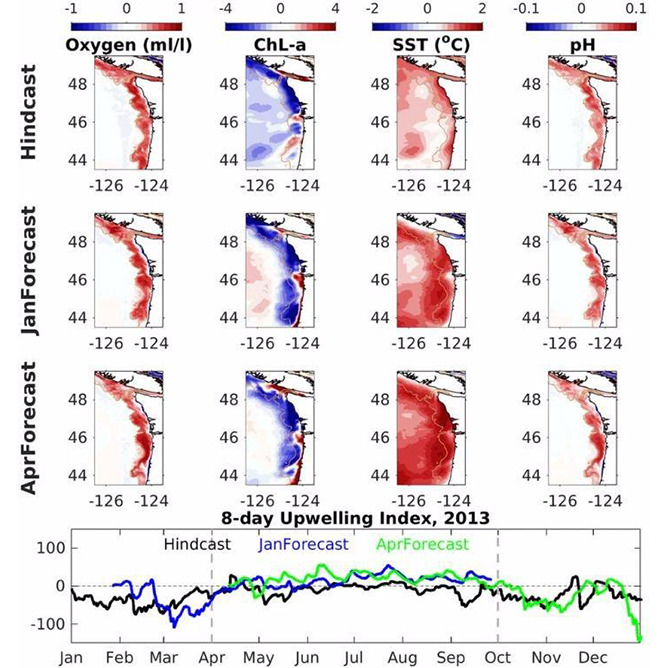
Using models and research to understand the sensitivity of organisms and ecosystems to ocean acidification to make predictions about the future, allowing communities and industries to prepare

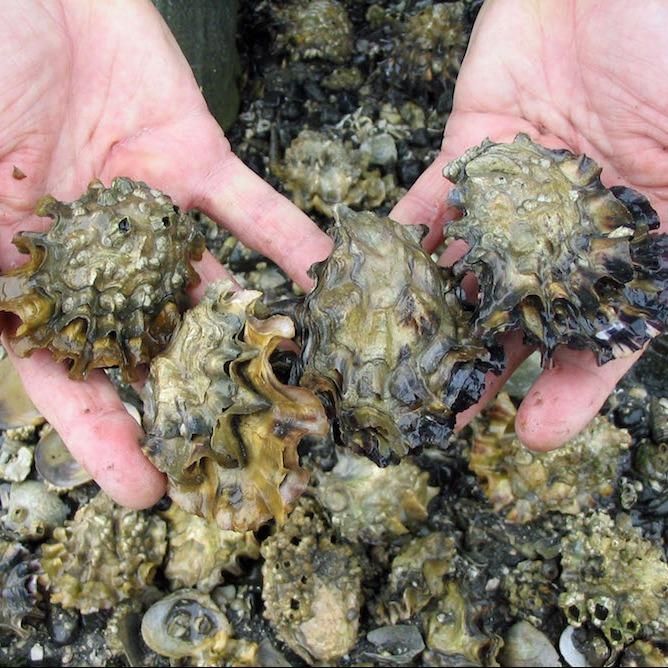
Closeup of oysters cupped in someone's hands

MANAGEMENT

Using these models and predictions as tools to facilitate management strategies that will protect marine resources and communities from future changes

TECHNOLOGY DEVELOPMENT

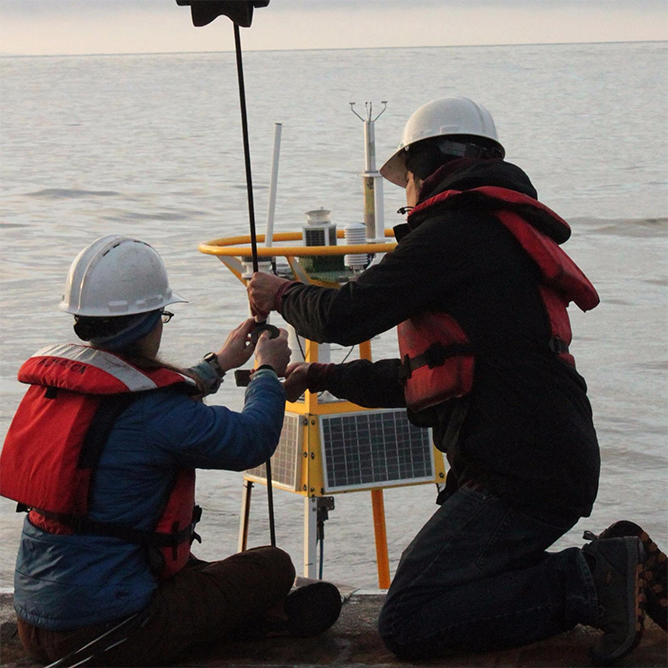
Developing innovative tools to help monitor ocean acidification and mitigate changing ocean chemistry locally

REDUCING OUR CARBON FOOTPRINT

On the Road

Drive fuel-efficient vehicles or choose public transportation. Choose your bike or walk! Don't sit idle for more than 30 seconds. Keep your tires properly inflated.

With your Food Choices

Eat local- this helps cut down on production and transport! Reduce your meat and dairy. Compost to avoid food waste ending up in the landfill

With your Food Choices

Make energy-efficient choices for your appliances and lighting. Heat and cool efficiently! Change your air filters and program your thermostat, seal and insulate your home, and support clean energy sources

By Reducing Coastal Acidification

Reduce your use of fertilizers, Improve sewage treatment and run off, and Protect and restore coastal habitats

TAKE ACTION WITH YOUR COMMUNITY

You've taken the first step to learn more about ocean acidification - why not spread this knowledge to your community?

Every community has their unique culture, economy and ecology and what’s at stake from ocean acidification may be different depending on where you live.  As a community member, you can take a larger role in educating the public about ocean acidification. Creating awareness is the first step to taking action.  As communities gain traction, neighboring regions that share marine resources can build larger coalitions to address ocean acidification.  Here are some ideas to get started:

  1. Work with informal educators, such as aquarium outreach programs and local non-profits, to teach the public about ocean acidification. Visit our Education & Outreach page to find the newest tools!
  2. Participate in habitat restoration efforts to restore habitats that help mitigate the effects of coastal acidification
  3. Facilitate conversations with local businesses that might be affected by ocean acidification, building a plan for the future.
  4. Partner with local community efforts to mitigate the driver behind ocean acidification  – excess CO2 – such as community supported agriculture, bike & car shares and other public transportation options.
  5. Contact your regional Coastal Acidification Network (CAN) to learn how OA is affecting your region and more ideas about how you can get involved in your community
       More for Taking Community Action