Ocean acidification monitoring priorities report released for Northeast
The Northeast Coastal Acidification Network (NECAN) released six priorities for ocean and coastal acidification monitoring in the Northeast U.S. and Eastern Canada.

The Northeast Coastal Acidification Network (NECAN) released six priorities for ocean and coastal acidification monitoring in the Northeast U.S. and Eastern Canada.

Surprising findings from a pair of NOAA buoys show the importance of frequent, long-term observations.

The Mid-Atlantic Coastal Acidification Network announces a 2025 fellowship opportunity open to undergraduate or graduate students.

The 2025 National Coral Reef Monitoring Program (NCRMP)’s Mariana Archipelago mission finished in June.

Study finds that ocean acidification has significantly compromised 40% of the global surface ocean, and 60% of the subsurface ocean.

NOAA’s Ocean Carbon Acidification Data System (OCADS) now includes the 2025 version of the Surface Ocean CO2 Atlas (SOCAT) database.

Join MACAN and NOAA OAP for the biennial state-of-the-science meeting and technical assistance workshop July 15-17 in Edgewater, Maryland.

The University of Delaware’s School of Marine Science seeks two doctoral students to join a research group investigating ocean acidification.

The Interagency Working Group on Ocean Acidification (IWG-OA) seeks nominations for membership on the newly established OA Advisory Board.

NOAA’s Ocean Acidification Program (OAP) announces the FY24 Education Mini-grant Program awards.
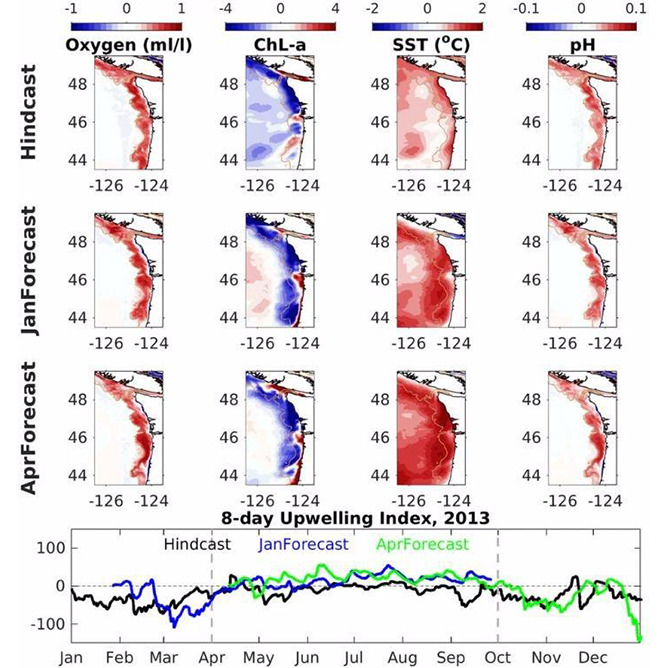
Understanding seasonal changes in ocean acidification in Alaskan waters and the potential impacts to the multi-billion-dollar fishery sector is a main priority. Through work funded by NOAA’s Ocean Acidification Program, the Pacific Marine Environmental Laboratory developed a model capable of depicting past ocean chemistry conditions for the Bering Sea and is now testing the ability of this model to forecast future conditions. This model is being used to develop an ocean acidification indicator provided to fisheries managers in the annual NOAA Eastern Bering Sea Ecosystem Status Report.
The NOAA Ocean Acidification Program (OAP) works to prepare society to adapt to the consequences of ocean acidification and conserve marine ecosystems as acidification occurs. Learn more about the human connections and adaptation strategies from these efforts.
Adaptation approaches fostered by the OAP include:

Using models and research to understand the sensitivity of organisms and ecosystems to ocean acidification to make predictions about the future, allowing communities and industries to prepare

Using these models and predictions as tools to facilitate management strategies that will protect marine resources and communities from future changes

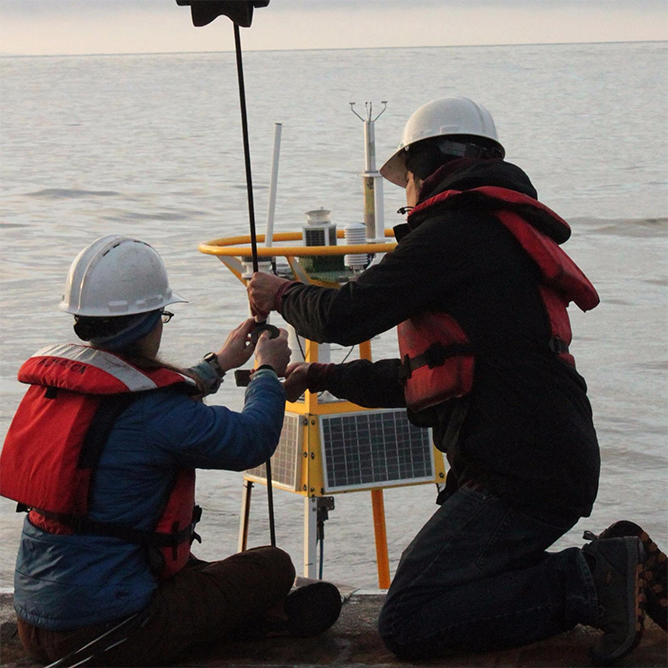
Developing innovative tools to help monitor ocean acidification and mitigate changing ocean chemistry locally
Drive fuel-efficient vehicles or choose public transportation. Choose your bike or walk! Don't sit idle for more than 30 seconds. Keep your tires properly inflated.
Eat local- this helps cut down on production and transport! Reduce your meat and dairy. Compost to avoid food waste ending up in the landfill
Make energy-efficient choices for your appliances and lighting. Heat and cool efficiently! Change your air filters and program your thermostat, seal and insulate your home, and support clean energy sources
Reduce your use of fertilizers, Improve sewage treatment and run off, and Protect and restore coastal habitats
You've taken the first step to learn more about ocean acidification - why not spread this knowledge to your community?
Every community has their unique culture, economy and ecology and what’s at stake from ocean acidification may be different depending on where you live. As a community member, you can take a larger role in educating the public about ocean acidification. Creating awareness is the first step to taking action. As communities gain traction, neighboring regions that share marine resources can build larger coalitions to address ocean acidification. Here are some ideas to get started: