NOAA Ocean Acidification Program
These are exciting times for the NOAA Ocean Acidification Program (OAP) – the Program is growing and maturing! The OAP is the only federal program dedicated to ocean acidification, and was founded just five years ago. It is committed to promoting integration across NOAA to achieve an interdisciplinary approach and fulfill requirements outlined by the FOARAM Act (Federal Ocean Acidification Research and Monitoring Act) and the Interagency Working Group on Ocean Acidification Strategic Plan for Federal Research and Monitoring Requirements of Ocean Acidification. At the start of FY15, the OAP moved into its second, three-year funding cycle. With this transition, it adopted a new way to make decisions about funding allocations, dividing its portfolio into four investment types:
- Sustained Investments – Sustained investments in ocean acidification research serve as the Program’s foundation for a diverse suite of research and development initiatives, and provide continuity and opportunities for growth for those NOAA and academic-partner research programs funded by the OAP previously. These investments focus on the four major areas of OA work for which NOAA is responsible: long-term monitoring, impacts research on or related to managed species, modeling biogeochemical change and associated ecosystem impacts, and data management and archiving. Over one-third of this funding goes to academic partners who collaborate with the OAP to meet its and NOAA’s core missions.
- Competitive Awards – The OAP currently invests in competitive awards, and plans to allocate at least 25% of any funding increase to the Program to multi-year, peer-reviewed, competitively awarded grants. These grants will be awarded to successful proposals responsive to targeted Federal Funding Opportunities developed by the OAP or in partnership with funding partners. Investigators from NOAA laboratories and science centers as well as academic institutions, industry, and NGOs will be eligible to compete for funding, and external participants may be encouraged to partner with NOAA PIs and, as appropriate, make substantial use of OAP sustained investments. Topic areas for the Federal Funding Opportunities will be guided by the NOAA OA Research Plan, the Interagency Working Group on Ocean Acidification Strategic Research Plan, and the National Ocean Policy, as well as input from the OAP’s Executive Oversight Board, NOAA OA Working Group, the Interagency Working Group on OA, and feedback from current NOAA-funded principal investigators. New FY 15 – 17 project awards from the most recent competitive RFP, co-funded by NOAA National Centers for Coastal Ocean Science and the OA Program, will be announced soon.
- Capacity Building – The OAP will foster international, national, regional, state, and local engagement on ocean acidification, with project selection on an annual basis. Recipients are not limited to NOAA entities.
- Venture Funding – A portion of OAP resources will be reserved each year to address urgent, near-term, critical issues; fund pilot studies; invest in short-lived, high-return opportunities; and explore new R&D directions.
For more information about upcoming, open Requests for Proposals or how to apply for capacity building or venture funding, please see our “Opportunities” page.
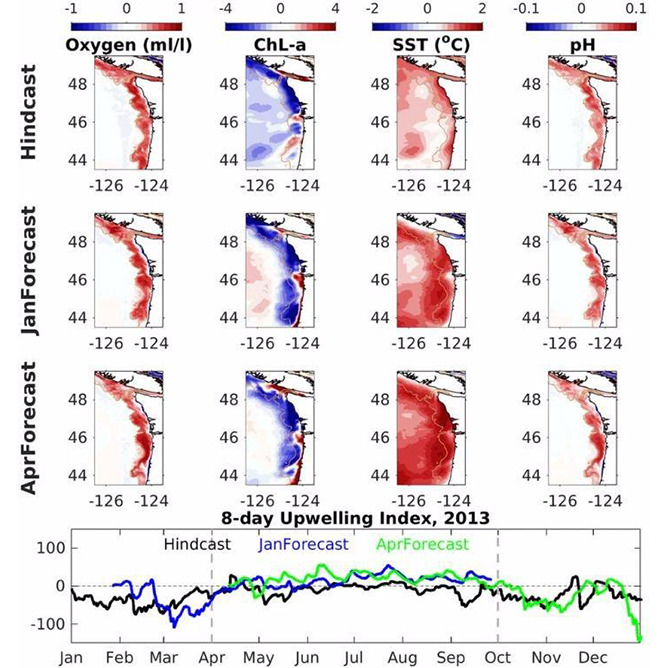
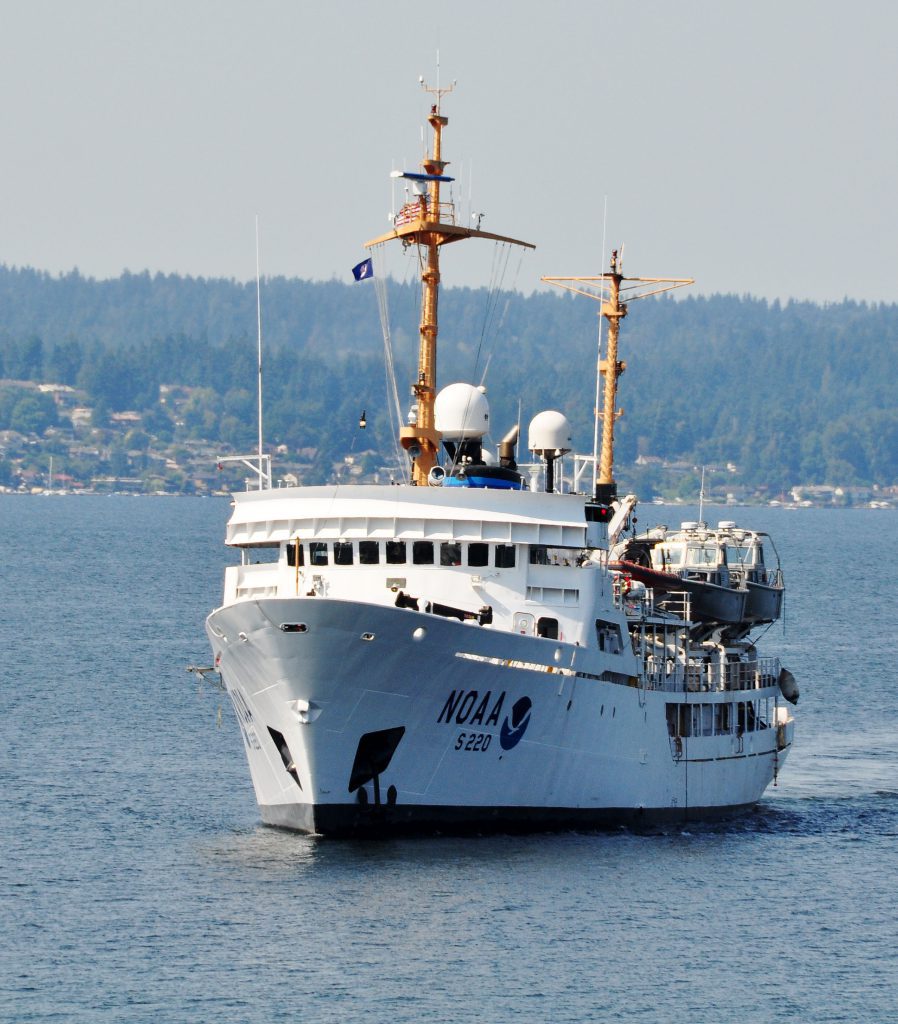
As part of the application process to renew sustained investments, OAP-funded scientists were strongly encouraged to work together across organizational boundaries in NOAA to create vision statements focused on research and monitoring relevant to management at ecosystem and regional levels. For example, the vision statement from Alaska discusses how ocean carbon chemistry data recently collected in Alaska’s marine waters using novel observing technologies will inform the design of new experiments on the sensitivity of Alaska’s commercial crab species to predicted ocean carbon chemistry conditions. The West Coast vision statement outlines an integrated research program with the goal of understanding how physical, chemical, biological, and ecological processes interact in the California Current System and Salish Sea, so that managers can make informed choices of how to account for OA effects in their decision-making. Biological research in this region will focus on early life stages of Dungeness crabs; observations, such as the synoptic west coast cruise, will document the progression of OA and inform how upwelling contributes to it; and modeling exercises will provide forecasts of OA events for the Pacific Northwest. OA research on US coral reefs will continue state-of-the-art monitoring of carbon chemistry in reefs systems and novel measures of ecosystem response to changing chemistry, including measurement of the reef accretion, dissolution, and biodiversity.
In addition, as a result of an enacted funding increase for OAP in FY 15, new investments complimenting the core sustained investments were also vetted and chosen. They include:
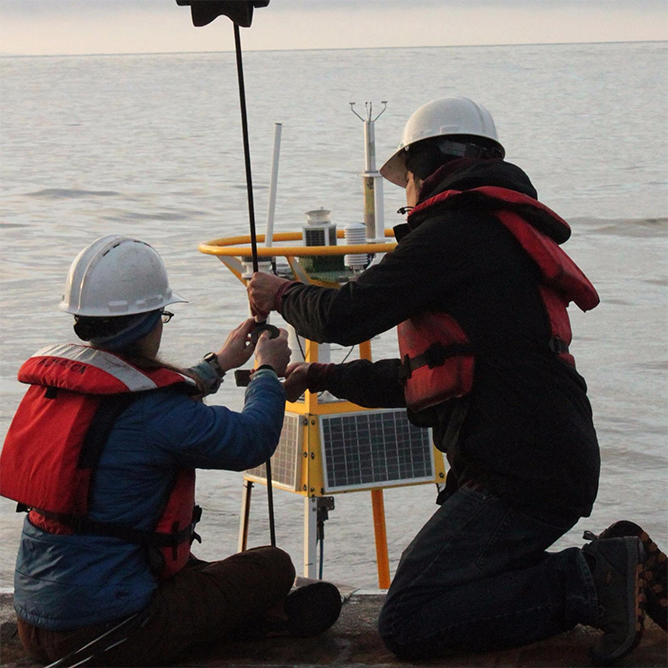
- testing new technologies to monitor carbon chemistry below the ocean surface;
- increasing chemistry monitoring in coral reefs, off the Washington and Alaskan coasts, and in Chesapeake Bay;
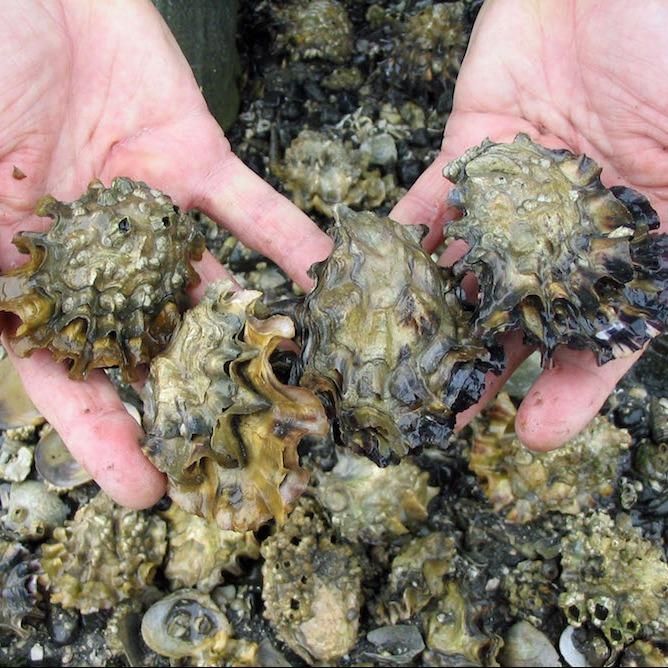
- expanding biological impacts research to new species (sea scallops) and new analytical approaches (molecular techniques like genomics and metabolomics);
- developing synthetic understanding of the biogeochemistry of the east and gulf coasts; and
- forecasting OA events in Pacific Northwest waters.
As part of its review and selection process, OAP solicits input and feedback from external reviewers to ensure alignment with broader community requirements and to maintain the highest quality investments.. “External review of the OAP’s investments on ocean acidification is crucial to making sure that the OAP funds top-notch science at NOAA facilmding needed to respond to ocean acidification at local to global levels,” said Dr. Jewett.
“Such ‘daylighting’ of the OAP’s investments is an important part of building a trusting community that works on ocean acidification together,” she continued.
In early FY17, the OAP will revisit its overall investment portfolio in preparation for its next three-year funding cycle (FY18-20). Because the field of ocean acidification is making discoveries so rapidly, the OAP expects that many exciting new avenues of research will have developed based on advances made over the next few years.