Official websites use .gov
A .gov website belongs to an official government organization in the United States.

Secure .gov websites use HTTPS
A lock ( ) or https:// means you’ve safely connected to the .gov website. Share sensitive information only on official, secure websites.

Projects

Probing molecular determinants of bivalve resilience to ocean acidification

The overall aim of this proposal is to identify molecular mechanisms and markers that segregate “Winners” from “Losers” in three regionally-important bivalve species. The proposed research will identify molecular markers and mechanisms associated with resilience to acidification in some of the most important bivalve species along the east coasts: the eastern oyster (Crassostrea virginica), the hard clam (Mercenaria mercenaria), and the blue mussel Mytilus edulis. Furthermore, identified genetic markers will be validated with the aim of providing the aquaculture industry with tools needed to produce superior crops.
We have three specific objectives:   
(1) To identify molecular processes involved in bivalve resilience to ocean acidification and to characterize genetic markers associated with resilience 
 (2) To  validate  the  ability  of  identified  markers  to  predict resilience towards acidification  
(3)   To determine the physiological cost of resilience   
This research has major implications for basic and applied science. It will determine molecular and physiological mechanisms and pathways involved in bivalve natural resilience to acidification and identify molecular features associated with resilience. This information is greatly needed for the management of wild fisheries and for the development of resilient varieties of aquacultured stocks. Resilient broodstocks will provide the industry with superior germline to face current and projected episodes of acidification in local waters.

Probing molecular determinants of bivalve resilience to ocean acidification Read More »
Genetic and phenotypic response of larval American lobster to ocean warming and acidification across New England’s steep thermal gradient

Co-PI's Wahle (UMaine) and Fields (Bigelow Laboratory) join Co-investigator Greenwood (UPEI) in this US-Canadian collaboration. The proposed study is designed to fill knowledge gaps in our understanding of the response of lobster larvae to ocean warming and acidification across lobster subpopulations occupying New England’s steep north-south thermal gradient. The research involves a comprehensive assessment of the physiological and behavioral response of lobster larvae to climate model-projected end-century ocean temperature and acidification conditions. We will address the following two primary objectives over the 2-year duration of the proposed study:
(1)  To determine whether projected end-century warming and acidification impact lobster larval survival, development, respiration rate, behavior and gene expression; and
(2)  To determine whether larvae from southern subpopulations are more resistant than larvae from northern populations to elevated temperature and pCO2.

Genetic and phenotypic response of larval American lobster to ocean warming and acidification across New England’s steep thermal gradient Read More »

Developing innovative tools to connect stakeholders with NOAA’s Ocean Acidification Observing Network (NOA-ON)

Students from University of Washington's (UW) College of Computer Science & Engineering (CSE), are looking for local opportunities to apply their newly-acquired skills and gain experience in preparation for a competitive job market. We propose to leverage this local (and economical) tech resource by hiring student interns interested in working with the PMEL Carbon Program's large data collections and developing novel interactive tools for data visualization and communication that would serve the broader community of scientists, resource managers, and other stakeholders. We also propose to develop new 2D and/or 3D visualizations of observational data, model results, model-data comparisons, and conceptual diagrams related to OAP-funded work in the California Current Large Marine Ecosystem to improve the coastal OA community's ability to communicate with stakeholders about observed and forecasted conditions and potential impacts. This work will build on an existing partnership with UW's Center for Environmental Visualization (CEV), which built the PMEL Carbon Program website in 2010 and recently updated our antiquated Google Earth data portal (www.pmel.noaa.gov/co2/map/index). The proposed work will contribute to improving the public's access to and ability to interact with data generated by the NOAA Ocean Acidification Observing Network (NOA-ON) with the goal of increasing awareness and understanding of ocean acidification (OA). 

Developing innovative tools to connect stakeholders with NOAA’s Ocean Acidification Observing Network (NOA-ON) Read More »

Time series assessments of OA and Carbon system properties in the western Gulf of Maine

In terms of the commercial value of its shellfish and its importance as a finfish breeding ground, the western Gulf of Maine (GOM) is certainly one of the most valuable ecosystems in the United States. Because over 80% of organisms landed in the GOM must utilize calcium carbonate during certain critical life stages, the effects of ocean acidification (OA) on ecosystems are a topic of increasing regional concern. This notion was accentuated by recent demands from marine industry stakeholders and the State Legislature in Maine who convened an Ocean Acidification Commission to study and mitigate the effects of OA. By nature of its cool temperatures and copious freshwater subsidies from both remote and local origins, the western GOM may be particularly sensitive to future acidification stresses (Salisbury et al, 2008; Wang et al, 2013). With the goals of 1) providing data critical for climate studies and local decision support, and 2) understanding of regional processes affecting acidification, we propose to maintain data collection efforts at and proximal to UNH-PMEL acidification buoy. We will deploy, maintain and recover the buoy and its suite of instruments that provide quality oceanographic and carbonate system data. We will supplement these activities with seasonal cruises that map surface regional pCO2 and several surface variables supplemented with hydrographic and optical profiles at six stations along the UNH Wilkinson Basin Line (aka Portsmouth Line), which runs orthogonal to the coast. This in turn will be supplemented with ancillary bottle sampling and all will be used in research aimed at understanding processes controlling the dynamically evolving carbonate system in the western GOM.

Time series assessments of OA and Carbon system properties in the western Gulf of Maine Read More »

Monitoring of water column DIC, TA and pH on the N.E. U.S. shelf and the development of OA Indicators to inform Marine resource managers

The Ecosystem Monitoring program of the Northeast Fisheries Science Center conducts four dedicated cruises per year covering the entire extent of the Northeast United States (NEUS).  NOAA OAP provides funding for the processing of dissolved inorganic carbon (DIC) and total alkalinity (TAlk ) samples from two Ecosystem Monitoring cruises. As part of these cruises, water samples have been taken at a subset of locations and at a range of depths. The depth-discrete nature of this sampling is very important and provides data to complement the more intensive surface sampling conducted by the pCO2 sensors. These samples are used to measure DIC and TAlk and their analyses are conducted by AOML.  In addition, samples for among lab comparisons have been collected. Nutrient samples are also taken and are analyzed at University of Maine. 
Initially, these samples will be used for an analysis comparing the extent of ocean acidification on the NEUS compared to the late 1970's. Subsequently, these samples will be used to provide continued monitoring of the state of ocean acidification. In addition, these samples will be used to better understand the relationship between carbonate chemistry and nutrient speciation on the NEUS. While interpretation of this data is complex, a consolidated analysis is being undertaken to develop an “Ocean Acidification Indicator” for the Northeast Shelf. This metric will provide resource managers and vested stakeholders a concise interpretation of current and near-term expected conditions of acidification in the region. This project also coordinates and cooperates with a number of other regional partners in an attempt to fulfill the regional monitoring vision of National OA Plan.

Monitoring of water column DIC, TA and pH on the N.E. U.S. shelf and the development of OA Indicators to inform Marine resource managers Read More »

Testing critical population level hypothesis regarding OA effects on early life history stages of marine fish for the N.E. U.S.

The primary goal of our OA projects (NEFSC Howard Laboratory) is to understand the impacts of increased CO2 and acidity of ocean and estuarine waters on important finfish species of our region. Our tactical objectives during FY12-14 were to develop, test, and then implement an experimental system that allows for the estimation of impacts of high CO2 and associated increased acidity of marine waters on the ELS of economically and ecologically important finfish species important to the NE USA. In FY15-17 we are building upon investments in research capacity and knowledge, and our experiments are addressing higher order questions that fold very well into one of the goals of the Interagency Working Group on OA – undertaking research to examine species-specific and multi-species physiological responses including behavioral and evolutionary adaptive capacities. We have four higher level objectives for our FY15-17 studies. 
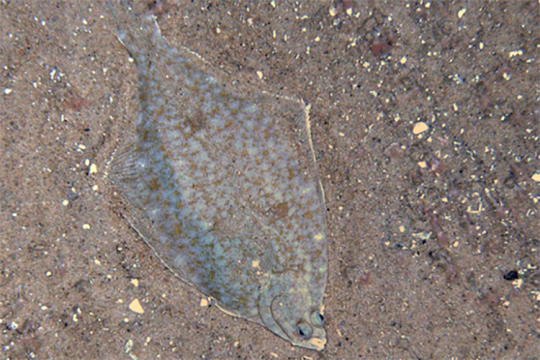
First, we are testing our hypothesis that the resilience of the individuals in a population is inversely related to the variability of the CO2 in the habitat the population occupies (see also, Murray et al. 2014). This evaluation is being done by conducting comparative experiments among winter flounder from separate and distinct source populations whose resident habitats differ in characteristic levels and stability in CO2. Second, we are evaluating the role of parental exposure in the resilience / susceptibility of offspring to elevated CO2 (Sunday et al. 2014, Malvezzi et al. 2015). For these transgenerational studies, we are using three different forage species (original intent was to use Atlantic cod broodstock housed at the University of Maine but logistics and staffing decisions there precluded our use of those fish). Third, we are expanding our synthesis and meta-analysis of biological effects of CO2 on finfish. Lastly, we continue our education and outreach efforts on OA themes by mentoring students, conducting surveys, and providing tours of our OA experimental facilities.

Testing critical population level hypothesis regarding OA effects on early life history stages of marine fish for the N.E. U.S. Read More »

East Coast OA (ECOA) Cruise

NOAA academic partners Salisbury and Cai will organize and lead a 34-days cruise covering 12 transects of the U.S. and Canadian coast oceans from Nova Scotia in the north to the Gulf of Maine, Long Island Sound, Mid-Atlantic and Southern Bight regions, ending with a transect off of mid Florida. This cruise will serve as a synoptic characterization of the marine carbonate parameters of the coastal ocean with increased coverage in nearshore areas that have not surveyed in the previous cruises and subsurface dynamics that are not captured from using buoyed assets or ships of opportunity. The climate quality data from these cruises provide an important link to the Global Ocean Acidification Network (GOAN) effort, and serves as a start of a long-term record of dynamics and processes controlling Ocean Acidification (OA) on the coastal shelves. To this end there is an increasing focus on these cruises to perform rate measurements (e.g. NPP/NEP/NEC) for validation measurements of autonomous assets and buoyed assets, for algorithm development utilizing remotely sensed signals that are used to characterize saturation states, and to project the future state of ocean acidification in the project area. 

East Coast OA (ECOA) Cruise Read More »

Service and Maintenence of the Gray’s Reef OA Mooring

This project will provide service and maintenance of sensors and ground-truthing of the mooring data at the Gray's Reef OA monitoring site, as well as data quality control and synthesis. Specifically, we will accomplish the follow three tasks: 1. Deployment and maintenance of the sensors (pCO2, pH, and dissolved oxygen); 2. Collection of underway pCO2 data and bulk water samples for analyses using ship-of-opportunity and dedicated cruises about four times a year; and 3. Data quality control and data synthesis.

Service and Maintenence of the Gray’s Reef OA Mooring Read More »

Building Robust Reef Carbonate Projections from Synthesized NCRMP Ocean Acidification Datasets

This project will serve to (1) synthesize National Coral Reef Monitoring Program (NCRMP) OA Enterprise observations; (2) compare reef OA observations to oceanic end members to infer reefscale biogeochemical processes, and finally (3) use these synthesis products to better link projection models of oceanic carbonate systems to reef-scale OA impacts. The NCRMP OA enterprise supports: our collection of seawater samples from reef and surface observations; a set of MapCO2 buoys in the Caribbean and Hawaii; diurnal monitoring instruments (e.g. CREP's diurnal suite, AOML's/McGillis' BEAMS); and metrics of ecosystem response to OA (e.g. CAUs, coral coring, etc.). The datasets generated by these activities will be the focus of this wide-ranging synthesis.

Building Robust Reef Carbonate Projections from Synthesized NCRMP Ocean Acidification Datasets Read More »

Forecasts for Alaska Fisheries

Crab pots and fishing nets in Alaska's Dutch Harbor
Image credit: Michael Theberge

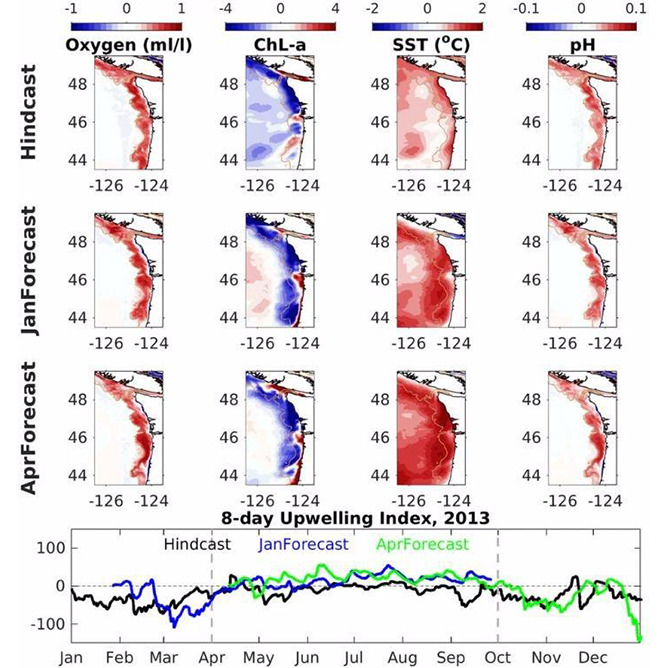
Understanding seasonal changes in ocean acidification in Alaskan waters and the potential impacts to the multi-billion-dollar fishery sector is a main priority. Through work funded by NOAA’s Ocean Acidification Program, the Pacific Marine Environmental Laboratory developed a model capable of depicting past ocean chemistry conditions for the Bering Sea and is now testing the ability of this model to forecast future conditions. This model is being used to develop an ocean acidification indicator provided to fisheries managers in the annual NOAA Eastern Bering Sea Ecosystem Status Report.

ADAPTING TO OCEAN ACIDIFICATION

The NOAA Ocean Acidification Program (OAP) works to prepare society to adapt to the consequences of ocean acidification and conserve marine ecosystems as acidification occurs. Learn more about the human connections and adaptation strategies from these efforts.

Adaptation approaches fostered by the OAP include:

FORECASTING

Using models and research to understand the sensitivity of organisms and ecosystems to ocean acidification to make predictions about the future, allowing communities and industries to prepare

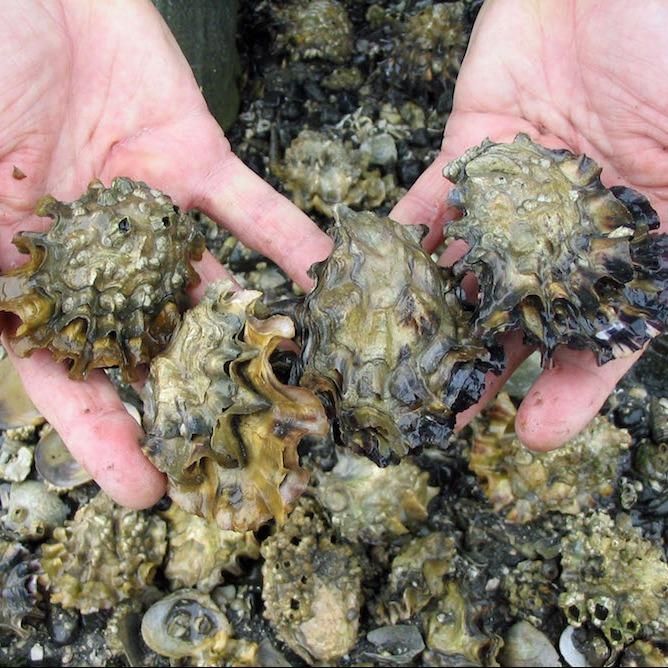
Closeup of oysters cupped in someone's hands

MANAGEMENT

Using these models and predictions as tools to facilitate management strategies that will protect marine resources and communities from future changes

TECHNOLOGY DEVELOPMENT

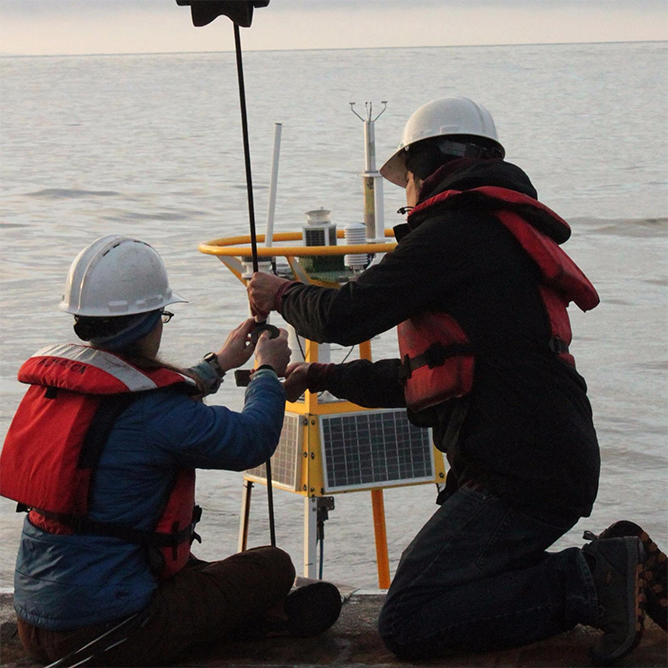
Developing innovative tools to help monitor ocean acidification and mitigate changing ocean chemistry locally

REDUCING OUR CARBON FOOTPRINT

On the Road

Drive fuel-efficient vehicles or choose public transportation. Choose your bike or walk! Don't sit idle for more than 30 seconds. Keep your tires properly inflated.

With your Food Choices

Eat local- this helps cut down on production and transport! Reduce your meat and dairy. Compost to avoid food waste ending up in the landfill

With your Food Choices

Make energy-efficient choices for your appliances and lighting. Heat and cool efficiently! Change your air filters and program your thermostat, seal and insulate your home, and support clean energy sources

By Reducing Coastal Acidification

Reduce your use of fertilizers, Improve sewage treatment and run off, and Protect and restore coastal habitats

TAKE ACTION WITH YOUR COMMUNITY

You've taken the first step to learn more about ocean acidification - why not spread this knowledge to your community?

Every community has their unique culture, economy and ecology and what’s at stake from ocean acidification may be different depending on where you live.  As a community member, you can take a larger role in educating the public about ocean acidification. Creating awareness is the first step to taking action.  As communities gain traction, neighboring regions that share marine resources can build larger coalitions to address ocean acidification.  Here are some ideas to get started:

  1. Work with informal educators, such as aquarium outreach programs and local non-profits, to teach the public about ocean acidification. Visit our Education & Outreach page to find the newest tools!
  2. Participate in habitat restoration efforts to restore habitats that help mitigate the effects of coastal acidification
  3. Facilitate conversations with local businesses that might be affected by ocean acidification, building a plan for the future.
  4. Partner with local community efforts to mitigate the driver behind ocean acidification  – excess CO2 – such as community supported agriculture, bike & car shares and other public transportation options.
  5. Contact your regional Coastal Acidification Network (CAN) to learn how OA is affecting your region and more ideas about how you can get involved in your community
       More for Taking Community Action