Official websites use .gov
A .gov website belongs to an official government organization in the United States.

Secure .gov websites use HTTPS
A lock ( ) or https:// means you’ve safely connected to the .gov website. Share sensitive information only on official, secure websites.

Publications

Publication Post Type

Acidification, warming, and nutrient management are projected to cause reductions in shell and tissue weights of oysters in a coastal plain estuary

Coastal acidification, warming, and nutrient management actions all alter water quality conditions that marine species experience, with potential impacts to their physiological processes. Decreases in calcite saturation state (ΩCa) and food availability, combined with warming water temperatures, pose a threat to calcifying organisms; however, the magnitude of future changes in estuarine systems is challenging to […]

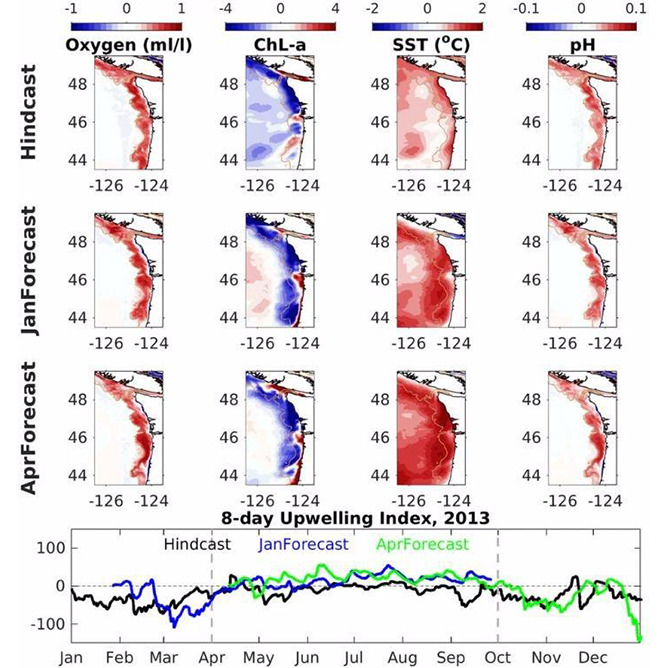
Acidification, warming, and nutrient management are projected to cause reductions in shell and tissue weights of oysters in a coastal plain estuary Read More »

Impacts of ocean acidification and altered prey fatty acids on the early development of northern rock sole (<em>Lepidopsetta polyxystra</em>) larvae

Ocean acidification (OA) is predicted to affect the physiological rates of larval fish and invertebrates and is also expected to significantly impact marine fisheries through alteration of food webs. We examined whether mortality rates, body size, and condition of first-feeding larval northern rock sole, Lepidopsetta polyxystra, were synergistically influenced by prey quality (essential fatty acids,

Impacts of ocean acidification and altered prey fatty acids on the early development of northern rock sole (<em>Lepidopsetta polyxystra</em>) larvae Read More »

Modeling the spatiotemporal effects of ocean acidification and warming on Atlantic sea scallop growth to guide adaptive fisheries management

Climate-ready fisheries management requires reliable predictions of species responses to changing conditions across large-scale environmental gradients. Bioenergetic frameworks, such as Dynamic Energy Budget (DEB) models, relate physiological processes to environmental conditions, enabling predictions of organismal growth under projected climate change conditions. Here, we provide the first large-scale coupling of a DEB model to downscaled regional

Modeling the spatiotemporal effects of ocean acidification and warming on Atlantic sea scallop growth to guide adaptive fisheries management Read More »

Mothers know best: Maternal signaling boosts larval resilience under ocean acidification conditions

Bivalve aquaculture is a growing sector worldwide, producing sustainable animal protein to meet growing demand from consumers. Yet, the industry remains vulnerable to environmental changes that can impact their product across life stages, especially at the larval stage. Parental priming, or the exposure of broodstock to adverse environmental conditions as they undergo gametogenesis, holds promise

Mothers know best: Maternal signaling boosts larval resilience under ocean acidification conditions Read More »

Assessment framework to predict sensitivity of marine calcifiers to ocean alkalinity enhancement – identification of biological thresholds and importance of precautionary principle

Ocean alkalinity enhancement (OAE), one of the marine carbon dioxide removal strategies, is gaining recognition in its ability to mitigate climate change and ocean acidification (OA). OAE is based on adding alkalinity to open-ocean and coastal marine systems through a variety of different approaches, which raises carbonate chemistry parameters (such as pH, total alkalinity, aragonite

Assessment framework to predict sensitivity of marine calcifiers to ocean alkalinity enhancement – identification of biological thresholds and importance of precautionary principle Read More »

Site selection for ocean alkalinity enhancement informed by passive tracer simulations

Ocean alkalinity enhancement is a marine-based carbon dioxide removal strategy that involves adding alkaline material to the surface ocean to boost carbon uptake and storage. The physical circulation of ocean water exerts fundamental control on the dilution, spreading, and retention of alkaline materials, influencing carbon removal effectiveness, environmental impacts, and monitoring feasibility. Here we evaluate

Site selection for ocean alkalinity enhancement informed by passive tracer simulations Read More »

Biological response of eelgrass epifauna, Taylor’s Sea hare (<em>Phyllaplysia taylori</eM>) and eelgrass isopod (<em>Idotea resecata</em>), to elevated ocean alkalinity

Marine carbon dioxide removal (mCDR) approaches are under development to mitigate the effects of climate change by sequestering carbon in stable reservoirs, with the potential co-benefit of local reductions in coastal acidification impacts. One such method is ocean alkalinity enhancement (OAE). A specific OAE method is the generation of aqueous alkalinity via electrochemistry to enhance

Biological response of eelgrass epifauna, Taylor’s Sea hare (<em>Phyllaplysia taylori</eM>) and eelgrass isopod (<em>Idotea resecata</em>), to elevated ocean alkalinity Read More »

Estimating coral reef carbonate budgets using Structure-from-Motion photogrammetry

Carbonate budget assessments quantify rates of calcium carbonate production and erosion from habitat-altering marine taxa and can be used to evaluate the potential for reef growth and the persistence of coral reef frameworks. Tracking the key ecosystem processes that control carbonate budgets is increasingly critical as climate change threatens to shift reefs toward net erosional

Estimating coral reef carbonate budgets using Structure-from-Motion photogrammetry Read More »

Quantifying coral-algal interactions in an acidified ocean: <em>Sargassum</em> spp. exposure mitigates low pH effects on Acropora cervicornis health

Increasingly frequent large-scale pelagic Sargassum algae blooms in the Atlantic have become a problem for coastal ecosystems. The mass decay of these blooms reduces water quality for coastal flora and fauna. However, the effects of living Sargassum blooms on seawater quality and consequently coral reef ecosystems that rely on delicately balanced carbonate chemistry are more ambiguous. Future oceans are

Quantifying coral-algal interactions in an acidified ocean: <em>Sargassum</em> spp. exposure mitigates low pH effects on Acropora cervicornis health Read More »

Forecasts for Alaska Fisheries

Crab pots and fishing nets in Alaska's Dutch Harbor
Image credit: Michael Theberge

Understanding seasonal changes in ocean acidification in Alaskan waters and the potential impacts to the multi-billion-dollar fishery sector is a main priority. Through work funded by NOAA’s Ocean Acidification Program, the Pacific Marine Environmental Laboratory developed a model capable of depicting past ocean chemistry conditions for the Bering Sea and is now testing the ability of this model to forecast future conditions. This model is being used to develop an ocean acidification indicator provided to fisheries managers in the annual NOAA Eastern Bering Sea Ecosystem Status Report.

ADAPTING TO OCEAN ACIDIFICATION

The NOAA Ocean Acidification Program (OAP) works to prepare society to adapt to the consequences of ocean acidification and conserve marine ecosystems as acidification occurs. Learn more about the human connections and adaptation strategies from these efforts.

Adaptation approaches fostered by the OAP include:

FORECASTING

Using models and research to understand the sensitivity of organisms and ecosystems to ocean acidification to make predictions about the future, allowing communities and industries to prepare

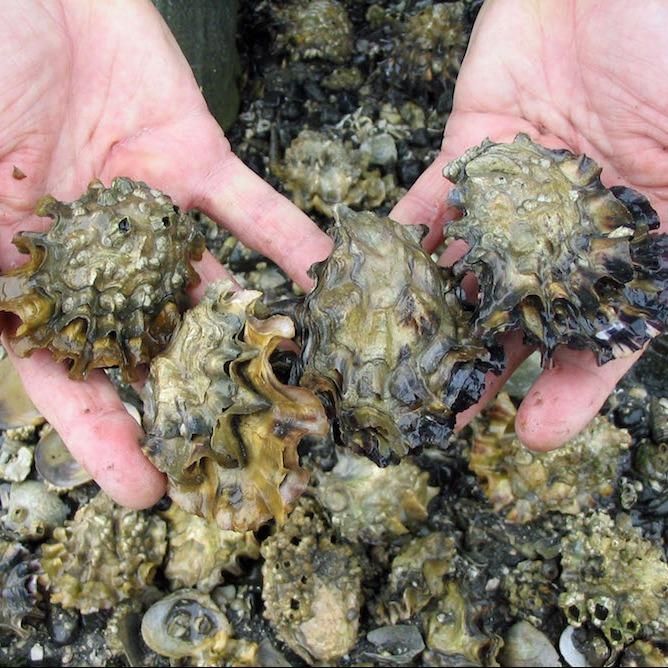
Closeup of oysters cupped in someone's hands

MANAGEMENT

Using these models and predictions as tools to facilitate management strategies that will protect marine resources and communities from future changes

TECHNOLOGY DEVELOPMENT

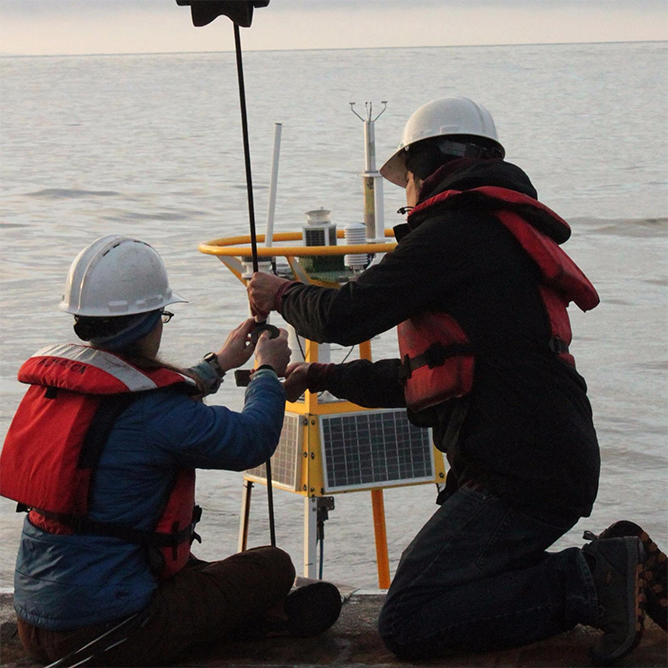
Developing innovative tools to help monitor ocean acidification and mitigate changing ocean chemistry locally

REDUCING OUR CARBON FOOTPRINT

On the Road

Drive fuel-efficient vehicles or choose public transportation. Choose your bike or walk! Don't sit idle for more than 30 seconds. Keep your tires properly inflated.

With your Food Choices

Eat local- this helps cut down on production and transport! Reduce your meat and dairy. Compost to avoid food waste ending up in the landfill

With your Food Choices

Make energy-efficient choices for your appliances and lighting. Heat and cool efficiently! Change your air filters and program your thermostat, seal and insulate your home, and support clean energy sources

By Reducing Coastal Acidification

Reduce your use of fertilizers, Improve sewage treatment and run off, and Protect and restore coastal habitats

TAKE ACTION WITH YOUR COMMUNITY

You've taken the first step to learn more about ocean acidification - why not spread this knowledge to your community?

Every community has their unique culture, economy and ecology and what’s at stake from ocean acidification may be different depending on where you live.  As a community member, you can take a larger role in educating the public about ocean acidification. Creating awareness is the first step to taking action.  As communities gain traction, neighboring regions that share marine resources can build larger coalitions to address ocean acidification.  Here are some ideas to get started:

  1. Work with informal educators, such as aquarium outreach programs and local non-profits, to teach the public about ocean acidification. Visit our Education & Outreach page to find the newest tools!
  2. Participate in habitat restoration efforts to restore habitats that help mitigate the effects of coastal acidification
  3. Facilitate conversations with local businesses that might be affected by ocean acidification, building a plan for the future.
  4. Partner with local community efforts to mitigate the driver behind ocean acidification  – excess CO2 – such as community supported agriculture, bike & car shares and other public transportation options.
  5. Contact your regional Coastal Acidification Network (CAN) to learn how OA is affecting your region and more ideas about how you can get involved in your community
       More for Taking Community Action