Official websites use .gov
A .gov website belongs to an official government organization in the United States.

Secure .gov websites use HTTPS
A lock ( ) or https:// means you’ve safely connected to the .gov website. Share sensitive information only on official, secure websites.

Publications

Publication Post Type

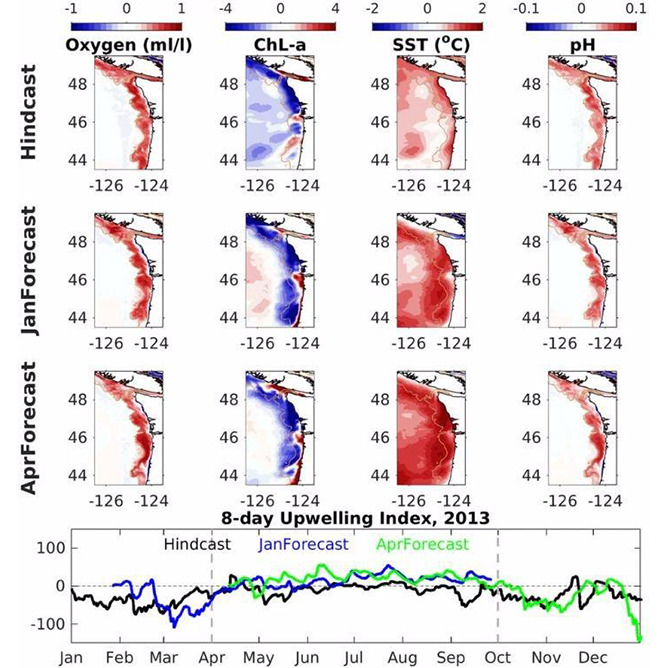
Differential performance of diploid, mated triploid, and induced triploid Pacific oysters under varied environmental conditions: Insights into impacts of temperature, dissolved oxygen, and <em>p</em>CO<sub>2</sub>

Pacific oysters (Crassostrea gigas) are an important aquaculture species due to their fast growth, high market demand, and adaptability. Triploid oysters, have an additional set of chromosomes relative to diploids, grow faster and are functionally sterile. Thus, triploids comprise a large proportion of oysters grown worldwide. Triploid oysters are reported to experience higher mortality than diploids. Growers must make decisions […]

Differential performance of diploid, mated triploid, and induced triploid Pacific oysters under varied environmental conditions: Insights into impacts of temperature, dissolved oxygen, and <em>p</em>CO<sub>2</sub> Read More »

Statistical Prediction of In Situ Coral Reef Carbonate Dynamics Using Endmember Chemistry, Hydrodynamic Models, And Benthic Composition

In the face of rapidly compounding climate change impacts, including ocean acidification (OA), it is critical to understand present-day stress exposure and to anticipate the biogeochemical conditions experienced by vulnerable ecosystems like coral reefs. To meaningfully predict nearshore carbonate chemistry, we must account for the complexity of the local benthic community, as well as connectivity

Statistical Prediction of In Situ Coral Reef Carbonate Dynamics Using Endmember Chemistry, Hydrodynamic Models, And Benthic Composition Read More »

Mechanisms of Ocean Acidification in Massachusetts Bay: Insights from Modeling and Observations

Massachusetts Bay in the northeastern United States is highly vulnerable to ocean acidification (OA) due to reduced buffering capacity from significant freshwater inputs. We hypothesize that acidification varies across temporal and spatial scales, with short-term variability driven by seasonal biological respiration, precipitation–evaporation balance, and river discharge, and long-term changes linked to global warming and river

Mechanisms of Ocean Acidification in Massachusetts Bay: Insights from Modeling and Observations Read More »

Three-dimensional photogrammetry-based monitoring to enhance site-level carbonate budget assessments of coral reefs

Census-based carbonate budget assessments synthesize metrics on biologically derived carbonate production and erosion rates to generate estimates of net carbonate production (NCP). ReefBudget is a widely used in-water carbonate budget approach, but this methodology can be field-intensive and logistically challenging, limiting spatial data coverage. Large-area imagery (LAI) is increasingly used to evaluate benthic communities and

Three-dimensional photogrammetry-based monitoring to enhance site-level carbonate budget assessments of coral reefs Read More »

Perspectives on Marine Carbon Dioxide Removal from the Global Ocean Acidification Observing Network

Along with other carbon monitoring groups, the ocean acidification (OA) community has been observing, modeling, and projecting the impacts of changing carbonate chemistry for over two decades. The Global Ocean Acidification Observing Network (GOA-ON) has three key goals related to these issues: (1) improve understanding of global OA conditions, (2) improve understanding of ecosystem responses

Perspectives on Marine Carbon Dioxide Removal from the Global Ocean Acidification Observing Network Read More »

Regulation of surface carbon dioxide distributions and air–sea fluxes by temperature, biology, and mixing along the North American Atlantic Coastal Ocean Margin

The North American Atlantic Coastal Ocean Margin (NAACOM) was recognized as an atmospheric carbon dioxide (CO2) sink, with large uncertainties in its northern areas due to complex dynamics in controlling the spatiotemporal variability of surface partial pressure of CO2 (pCO2) and limited pCO2 observations. Here, we used a regional reconstructed product to investigate the spatial and seasonal variability

Regulation of surface carbon dioxide distributions and air–sea fluxes by temperature, biology, and mixing along the North American Atlantic Coastal Ocean Margin Read More »

Management considerations for establishing a coastal acidification monitoring system from U.S. Coastal Acidification Networks

Ocean acidification (OA), caused by the uptake of anthropogenic carbon dioxide, is a concern for ocean resource users in coastal regions where the phenomenon is compounded by variable processes. Sustained OA monitoring systems are critical for characterization of baseline ocean conditions and identification of changes and impacts to coastal ecosystems and communities. Establishing an OA

Management considerations for establishing a coastal acidification monitoring system from U.S. Coastal Acidification Networks Read More »

Shellfisheries’ adaptation to ocean acidification in OR and CA: Linking strategies to strategic policy action

As ocean pH levels continue to decline due to increased absorption of atmospheric CO2, a process known as ocean acidification (OA), industries dependent on ocean resources must adapt to mitigate negative impacts of OA. Utilizing adaptive strategies identified by shellfish growers in prior, related research, we seek to explore and identify existing U.S. State and Federal policies

Shellfisheries’ adaptation to ocean acidification in OR and CA: Linking strategies to strategic policy action Read More »

High-Frequency Correlations Between Winds and <em>p</em>CO<sub>2</sub> Change the California Coastal Upwelling System From a CO<sub>2</sub> Sink to a Source

The exchange of carbon dioxide (CO2) between the ocean and atmosphere plays a crucial role in regulating Earth’s climate. In this study, we examined how accurately this exchange is captured along the California coast, where seasonal wind-driven upwelling brings CO2-rich waters to the surface. We compared CO2 flux estimates using data collected every 3 hours for 10 years

High-Frequency Correlations Between Winds and <em>p</em>CO<sub>2</sub> Change the California Coastal Upwelling System From a CO<sub>2</sub> Sink to a Source Read More »

Navigating ocean acidification in shellfish aquaculture: Stakeholder perspectives of developing strategies in the U.S. Pacific Region

The marine shellfish aquaculture industry across the U.S. Pacific region faces escalating ocean acidification and its associated challenges. This study examines industry participant perceptions and experiences regarding ocean acidification, additional threats, and future research needs, finding a notable decrease in perceived concern regarding ocean acidification over the past decade. Through structured interviews, broad industry perspectives

Navigating ocean acidification in shellfish aquaculture: Stakeholder perspectives of developing strategies in the U.S. Pacific Region Read More »

Forecasts for Alaska Fisheries

Crab pots and fishing nets in Alaska's Dutch Harbor
Image credit: Michael Theberge

Understanding seasonal changes in ocean acidification in Alaskan waters and the potential impacts to the multi-billion-dollar fishery sector is a main priority. Through work funded by NOAA’s Ocean Acidification Program, the Pacific Marine Environmental Laboratory developed a model capable of depicting past ocean chemistry conditions for the Bering Sea and is now testing the ability of this model to forecast future conditions. This model is being used to develop an ocean acidification indicator provided to fisheries managers in the annual NOAA Eastern Bering Sea Ecosystem Status Report.

ADAPTING TO OCEAN ACIDIFICATION

The NOAA Ocean Acidification Program (OAP) works to prepare society to adapt to the consequences of ocean acidification and conserve marine ecosystems as acidification occurs. Learn more about the human connections and adaptation strategies from these efforts.

Adaptation approaches fostered by the OAP include:

FORECASTING

Using models and research to understand the sensitivity of organisms and ecosystems to ocean acidification to make predictions about the future, allowing communities and industries to prepare

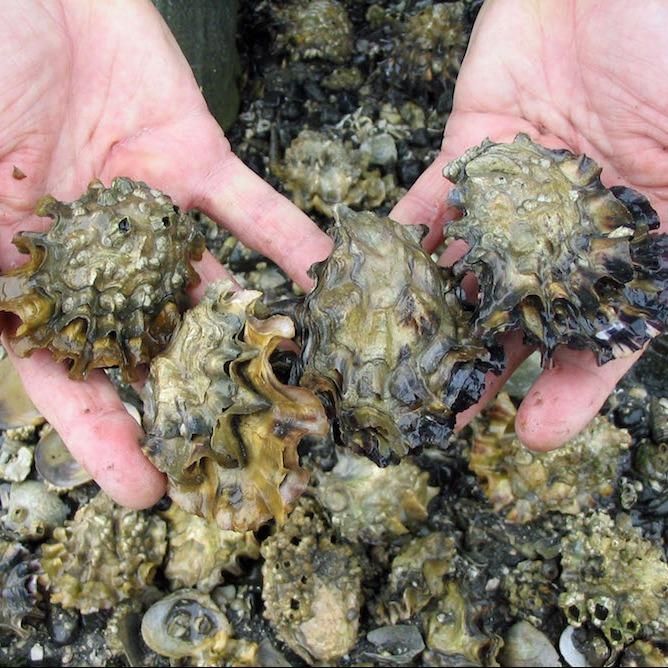
Closeup of oysters cupped in someone's hands

MANAGEMENT

Using these models and predictions as tools to facilitate management strategies that will protect marine resources and communities from future changes

TECHNOLOGY DEVELOPMENT

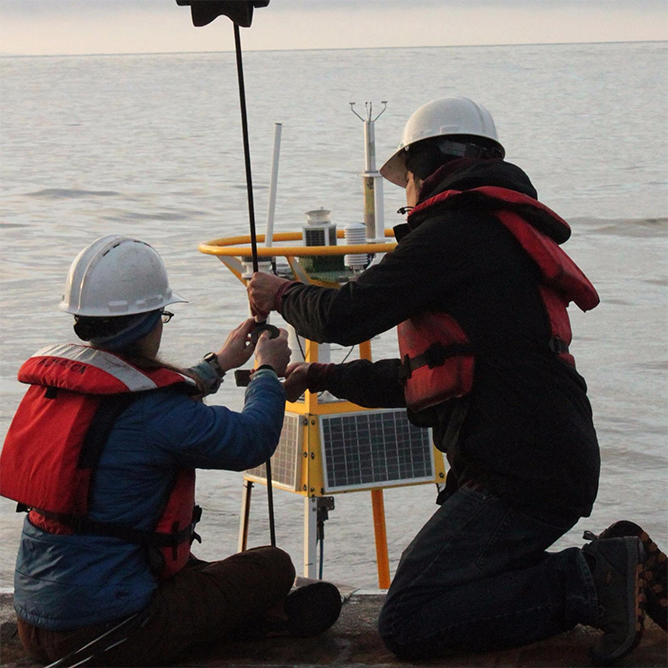
Developing innovative tools to help monitor ocean acidification and mitigate changing ocean chemistry locally

REDUCING OUR CARBON FOOTPRINT

On the Road

Drive fuel-efficient vehicles or choose public transportation. Choose your bike or walk! Don't sit idle for more than 30 seconds. Keep your tires properly inflated.

With your Food Choices

Eat local- this helps cut down on production and transport! Reduce your meat and dairy. Compost to avoid food waste ending up in the landfill

With your Food Choices

Make energy-efficient choices for your appliances and lighting. Heat and cool efficiently! Change your air filters and program your thermostat, seal and insulate your home, and support clean energy sources

By Reducing Coastal Acidification

Reduce your use of fertilizers, Improve sewage treatment and run off, and Protect and restore coastal habitats

TAKE ACTION WITH YOUR COMMUNITY

You've taken the first step to learn more about ocean acidification - why not spread this knowledge to your community?

Every community has their unique culture, economy and ecology and what’s at stake from ocean acidification may be different depending on where you live.  As a community member, you can take a larger role in educating the public about ocean acidification. Creating awareness is the first step to taking action.  As communities gain traction, neighboring regions that share marine resources can build larger coalitions to address ocean acidification.  Here are some ideas to get started:

  1. Work with informal educators, such as aquarium outreach programs and local non-profits, to teach the public about ocean acidification. Visit our Education & Outreach page to find the newest tools!
  2. Participate in habitat restoration efforts to restore habitats that help mitigate the effects of coastal acidification
  3. Facilitate conversations with local businesses that might be affected by ocean acidification, building a plan for the future.
  4. Partner with local community efforts to mitigate the driver behind ocean acidification  – excess CO2 – such as community supported agriculture, bike & car shares and other public transportation options.
  5. Contact your regional Coastal Acidification Network (CAN) to learn how OA is affecting your region and more ideas about how you can get involved in your community
       More for Taking Community Action