Official websites use .gov
A .gov website belongs to an official government organization in the United States.

Secure .gov websites use HTTPS
A lock ( ) or https:// means you’ve safely connected to the .gov website. Share sensitive information only on official, secure websites.

Publications

Publication Post Type

Ocean acidification changes the vertical movement of stone crab larvae

Anthropogenic activities are increasing ocean temperature and decreasing ocean pH. Some coastal habitats are experiencing increases in organic runoff, which when coupled with a loss of vegetated coastline can accelerate reductions in seawater pH. Marine larvae that hatch in coastal habitats may not have the ability to respond to elevated temperature and changes in seawater […]

Ocean acidification changes the vertical movement of stone crab larvae Read More »

Time of Emergence of Surface Ocean Carbon Dioxide Trends in the North American Coastal Margins in Support of Ocean Acidification Observing System Design

Time of Emergence (ToE) is the time when a signal emerges from the noise of natural variability. Commonly used in climate science for the detection of anthropogenic forcing, this concept has recently been applied to geochemical variables, to assess the emerging times of anthropogenic ocean acidification (OA), mostly in the open ocean using global climate

Time of Emergence of Surface Ocean Carbon Dioxide Trends in the North American Coastal Margins in Support of Ocean Acidification Observing System Design Read More »

Large Decadal Changes in Air-Sea CO<sub>2</sub> Fluxes in the Caribbean Sea

Through a unique collaboration with Royal Caribbean Cruise Lines several cruise ships were outfitted with automated surface water carbon dioxide (CO2) measurement systems, providing weekly observations in the Caribbean Sea over the past 16 years. From over a million measurements, the increase in surface water CO2 in response to rising atmospheric levels was accurately monitored. The region is,

Large Decadal Changes in Air-Sea CO<sub>2</sub> Fluxes in the Caribbean Sea Read More »

Elevated CO<sub>2</sub> alters behavior, growth, and lipid composition of Pacific cod larvae

High-latitude seas, which support a number of commercially important fisheries, are predicted to be most immediately impacted by ongoing ocean acidification (OA). Elevated CO2 levels have been shown to induce a range of impacts on the physiology and behavior of marine fish larvae. However, these responses have yet to be characterized for most fishery species, including Pacific cod (Gadus

Elevated CO<sub>2</sub> alters behavior, growth, and lipid composition of Pacific cod larvae Read More »

Global Carbon Budget 2019

Accurate assessment of anthropogenic carbon dioxide (CO2) emissions and their redistribution among the atmosphere, ocean, and terrestrial biosphere – the “global carbon budget” – is important to better understand the global carbon cycle, support the development of climate policies, and project future climate change. Here we describe data sets and methodology to quantify the five

Global Carbon Budget 2019 Read More »

Sponging up diversity: Evaluating metabarcoding performance for a taxonomically challenging phylum within a complex cryptobenthic community

Despite their ecological importance, sponges are often avoided in biodiversity studies and monitoring programs because they are notoriously difficult to identify using morphological or molecular methods. Here, we investigate the metabarcoding performance of universal degenerate cytochrome c oxidase subunit I (COI) primers in detecting species from this challenging phylum in a cryptobenthic community. Twenty-two modified

Sponging up diversity: Evaluating metabarcoding performance for a taxonomically challenging phylum within a complex cryptobenthic community Read More »

Supporting Ecosystem-based Fisheries Management in meeting multiple objectives for sustainable use of coral reef ecosystems

Ecosystem-based Fisheries Management is a holistic management approach that integrates the dynamics of an entire ecosystem, including societal dimensions. However, this approach seldom lives up to its promise because economic and social objectives are rarely specified. To fill this gap, we explored how an ecosystem model could better integrate economic and social objectives, using the

Supporting Ecosystem-based Fisheries Management in meeting multiple objectives for sustainable use of coral reef ecosystems Read More »

A 17-year dataset of surface water fugacity of CO<sub>2</sub> along with calculated pH, aragonite saturation state and air–sea CO2 fluxes in the northern Caribbean Sea

A high-quality dataset of surface water fugacity of CO2 (fCO2w)1, consisting of over a million observations, and derived products are presented for the northern Caribbean Sea, covering the time span from 2002 through 2018. Prior to installation of automated pCO2 systems on cruise ships of Royal Caribbean International and subsidiaries, very limited surface water carbon data were available in

A 17-year dataset of surface water fugacity of CO<sub>2</sub> along with calculated pH, aragonite saturation state and air–sea CO2 fluxes in the northern Caribbean Sea Read More »

Exoskeleton dissolution with mechanoreceptor damage in larval Dungeness crab related to severity of present-day ocean acidification vertical gradients

Ocean acidification (OA) along the US West Coast is intensifying faster than observed in the global ocean. This is particularly true in nearshore regions (<200 m) that experience a lower buffering capacity while at the same time providing important habitats for ecologically and economically significant species. While the literature on the effects of OA from laboratory experiments

Exoskeleton dissolution with mechanoreceptor damage in larval Dungeness crab related to severity of present-day ocean acidification vertical gradients Read More »

Chemical Exposure Due to Anthropogenic Ocean Acidification Increases Risks for Estuarine Calcifiers in the Salish Sea: Biogeochemical Model Scenarios

Ocean acidification (OA) is projected to have profound impacts on marine ecosystems and resources, especially in estuarine habitats. Here, we describe biological risks under current levels of exposure to anthropogenic OA in the Salish Sea, an estuarine system that already experiences inherently low pH and aragonite saturation state (Ωar) conditions. We used the Pacific Northwest

Chemical Exposure Due to Anthropogenic Ocean Acidification Increases Risks for Estuarine Calcifiers in the Salish Sea: Biogeochemical Model Scenarios Read More »

Forecasts for Alaska Fisheries

Crab pots and fishing nets in Alaska's Dutch Harbor
Image credit: Michael Theberge

Understanding seasonal changes in ocean acidification in Alaskan waters and the potential impacts to the multi-billion-dollar fishery sector is a main priority. Through work funded by NOAA’s Ocean Acidification Program, the Pacific Marine Environmental Laboratory developed a model capable of depicting past ocean chemistry conditions for the Bering Sea and is now testing the ability of this model to forecast future conditions. This model is being used to develop an ocean acidification indicator provided to fisheries managers in the annual NOAA Eastern Bering Sea Ecosystem Status Report.

ADAPTING TO OCEAN ACIDIFICATION

The NOAA Ocean Acidification Program (OAP) works to prepare society to adapt to the consequences of ocean acidification and conserve marine ecosystems as acidification occurs. Learn more about the human connections and adaptation strategies from these efforts.

Adaptation approaches fostered by the OAP include:

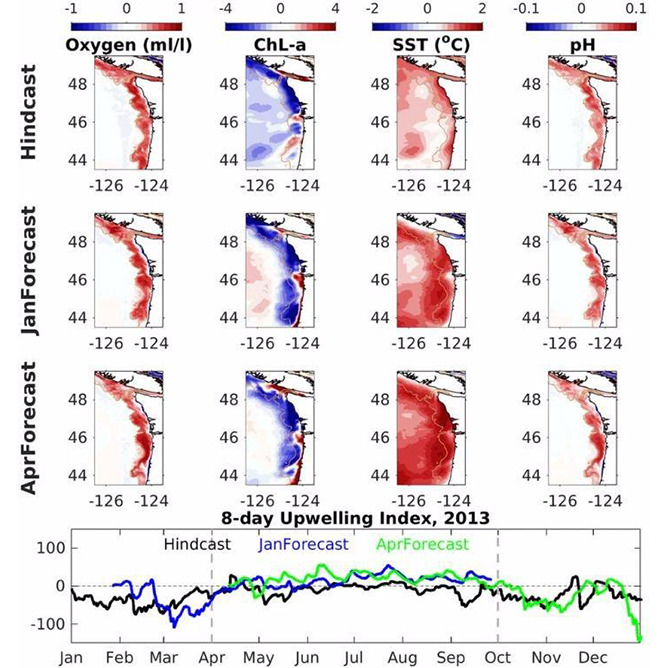
FORECASTING

Using models and research to understand the sensitivity of organisms and ecosystems to ocean acidification to make predictions about the future, allowing communities and industries to prepare

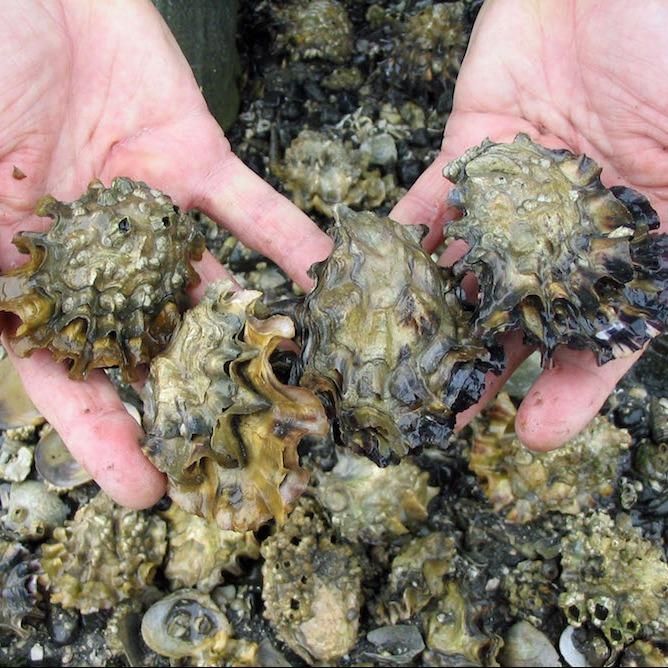
Closeup of oysters cupped in someone's hands

MANAGEMENT

Using these models and predictions as tools to facilitate management strategies that will protect marine resources and communities from future changes

TECHNOLOGY DEVELOPMENT

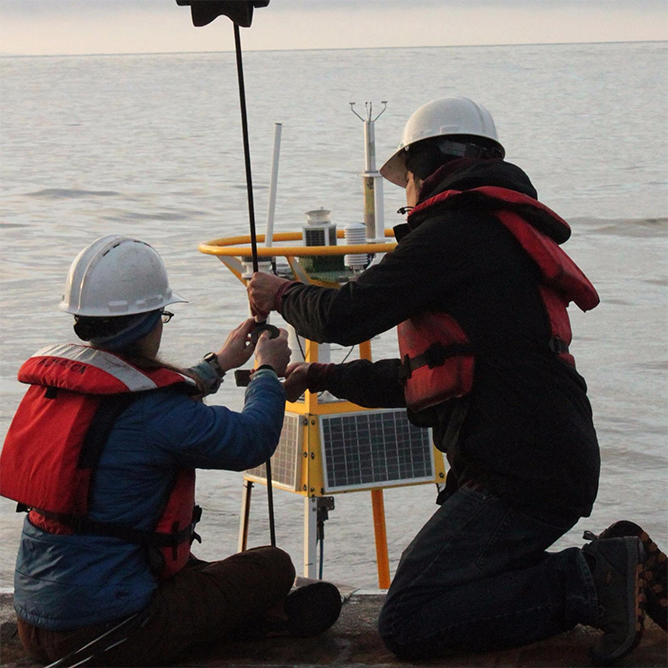
Developing innovative tools to help monitor ocean acidification and mitigate changing ocean chemistry locally

REDUCING OUR CARBON FOOTPRINT

On the Road

Drive fuel-efficient vehicles or choose public transportation. Choose your bike or walk! Don't sit idle for more than 30 seconds. Keep your tires properly inflated.

With your Food Choices

Eat local- this helps cut down on production and transport! Reduce your meat and dairy. Compost to avoid food waste ending up in the landfill

With your Food Choices

Make energy-efficient choices for your appliances and lighting. Heat and cool efficiently! Change your air filters and program your thermostat, seal and insulate your home, and support clean energy sources

By Reducing Coastal Acidification

Reduce your use of fertilizers, Improve sewage treatment and run off, and Protect and restore coastal habitats

TAKE ACTION WITH YOUR COMMUNITY

You've taken the first step to learn more about ocean acidification - why not spread this knowledge to your community?

Every community has their unique culture, economy and ecology and what’s at stake from ocean acidification may be different depending on where you live.  As a community member, you can take a larger role in educating the public about ocean acidification. Creating awareness is the first step to taking action.  As communities gain traction, neighboring regions that share marine resources can build larger coalitions to address ocean acidification.  Here are some ideas to get started:

  1. Work with informal educators, such as aquarium outreach programs and local non-profits, to teach the public about ocean acidification. Visit our Education & Outreach page to find the newest tools!
  2. Participate in habitat restoration efforts to restore habitats that help mitigate the effects of coastal acidification
  3. Facilitate conversations with local businesses that might be affected by ocean acidification, building a plan for the future.
  4. Partner with local community efforts to mitigate the driver behind ocean acidification  – excess CO2 – such as community supported agriculture, bike & car shares and other public transportation options.
  5. Contact your regional Coastal Acidification Network (CAN) to learn how OA is affecting your region and more ideas about how you can get involved in your community
       More for Taking Community Action