Official websites use .gov
A .gov website belongs to an official government organization in the United States.

Secure .gov websites use HTTPS
A lock ( ) or https:// means you’ve safely connected to the .gov website. Share sensitive information only on official, secure websites.

Publications

Publication Post Type

Using Global-Scale Earth System Models for Regional Fisheries Applications

Climate change may impact ocean ecosystems through a number of mechanisms, including shifts in primary productivity or plankton community structure, ocean acidification, and deoxygenation. These processes can be simulated with global Earth system models (ESMs), which are increasingly being used in the context of fisheries management and other living marine resource (LMR) applications. However, projections […]

Using Global-Scale Earth System Models for Regional Fisheries Applications Read More »

Novel and disappearing climates in the global surface ocean from 1800 to 2100

Marine ecosystems are experiencing unprecedented warming and acidification caused by anthropogenic carbon dioxide. For the global sea surface, we quantified the degree that present climates are disappearing and novel climates (without recent analogs) are emerging, spanning from 1800 through different emission scenarios to 2100. We quantified the sea surface environment based on model estimates of

Novel and disappearing climates in the global surface ocean from 1800 to 2100 Read More »

Why are Surface Ocean pH and CaCO<sub>3</sub> Saturation State Often out of Phase in Spatial Patterns and Seasonal Cycles?

Although both pH and calcium carbonate mineral saturation states (Ω) are good metrics for ocean acidification, in the global surface ocean their spatial patterns and seasonal cycles are often out of phase, which appears counter intuitive. To explain this, we separate pH and Ω changes into thermal and nonthermal components. Thermal components are mainly related

Why are Surface Ocean pH and CaCO<sub>3</sub> Saturation State Often out of Phase in Spatial Patterns and Seasonal Cycles? Read More »

Expanding evaluation of ocean acidification responses in a marine gadid: elevated CO<sub>2</sub> impacts development, but not size of larval walleye pollock

Responses of marine populations to climate conditions reflect the integration of a suite of complex and interrelated physiological and behavioral responses at the individual level. Many of these responses are not immediately reflected in changes to survival, but may impact growth or survival at later life stages. Understanding the broad range of impacts of rising

Expanding evaluation of ocean acidification responses in a marine gadid: elevated CO<sub>2</sub> impacts development, but not size of larval walleye pollock Read More »

A monthly surface <em>p</em>CO<sub>2</sub> product for the California Current Large Marine Ecosystem

A common strategy for calculating the direction and rate of carbon dioxide gas (CO2) exchange between the ocean and atmosphere relies on knowledge of the partial pressure of CO2 in surface seawater (pCO2(sw)), a quantity that is frequently observed by autonomous sensors on ships and moored buoys, albeit with significant spatial and temporal gaps. Here we

A monthly surface <em>p</em>CO<sub>2</sub> product for the California Current Large Marine Ecosystem Read More »

OOI Biogeochemical Sensor Data Best Practices and User Guide. Version 1.1.1. [GOOS ENDORSED PRACTICE]

The GOOS best practice endorsement process has been developed by the GOOS and the Observation Coordination Group (OCG) in conjunction with the Ocean Best Practices System (OBPS). The aim is for global networks (eg the International Argo programme through GOOS OCG) or groups of experts (eg. the GOOS Biogeochemical Panel) to endorse and share methods

OOI Biogeochemical Sensor Data Best Practices and User Guide. Version 1.1.1. [GOOS ENDORSED PRACTICE] Read More »

The Combined Effects of Ocean Acidification and Respiration on Habitat Suitability for Marine Calcifiers Along the West Coast of North America

The combined effect of ocean acidification and respiration in the California Current Ecosystem is to reduce water column pH and aragonite saturation state, resulting in a compression of the overall size of suitable habitat for marine calcifiers. The addition of excess anthropogenic CO2 also makes it more likely that critical biological thresholds are crossed and shell

The Combined Effects of Ocean Acidification and Respiration on Habitat Suitability for Marine Calcifiers Along the West Coast of North America Read More »

Coral Reef Carbonate Chemistry Reveals Interannual, Seasonal, and Spatial Impacts on Ocean Acidification Off Florida

Ocean acidification (OA) threatens coral reef persistence by decreasing calcification and accelerating the dissolution of reef frameworks. The carbonate chemistry of coastal areas where many reefs exist is strongly influenced by the metabolic activity of the underlying benthic community, contributing to high spatiotemporal variability. While characterizing this variability is difficult, it has important implications for

Coral Reef Carbonate Chemistry Reveals Interannual, Seasonal, and Spatial Impacts on Ocean Acidification Off Florida Read More »

Restoration and coral adaptation delay, but do not prevent, climate-driven reef framework erosion of an inshore site in the Florida Keys

For reef framework to persist, calcium carbonate production by corals and other calcifiers needs to outpace loss due to physical, chemical, and biological erosion. This balance is both delicate and dynamic and is currently threatened by the effects of ocean warming and acidification. Although the protection and recovery of ecosystem functions are at the center

Restoration and coral adaptation delay, but do not prevent, climate-driven reef framework erosion of an inshore site in the Florida Keys Read More »

Direct, carryover, and maternal effects of ocean acidification on snow crab embryos and larvae

Ocean acidification, a decrease in ocean pH with increasing anthropogenic CO2 concentrations, is expected to affect many marine animals. To examine the effects of decreased pH on snow crab (Chionoecetes opilio), a commercial species in Alaska, we reared ovigerous females in one of three treatments: Ambient pH (~8.1), pH 7.8, and pH 7.5, through two annual

Direct, carryover, and maternal effects of ocean acidification on snow crab embryos and larvae Read More »

Forecasts for Alaska Fisheries

Crab pots and fishing nets in Alaska's Dutch Harbor
Image credit: Michael Theberge

Understanding seasonal changes in ocean acidification in Alaskan waters and the potential impacts to the multi-billion-dollar fishery sector is a main priority. Through work funded by NOAA’s Ocean Acidification Program, the Pacific Marine Environmental Laboratory developed a model capable of depicting past ocean chemistry conditions for the Bering Sea and is now testing the ability of this model to forecast future conditions. This model is being used to develop an ocean acidification indicator provided to fisheries managers in the annual NOAA Eastern Bering Sea Ecosystem Status Report.

ADAPTING TO OCEAN ACIDIFICATION

The NOAA Ocean Acidification Program (OAP) works to prepare society to adapt to the consequences of ocean acidification and conserve marine ecosystems as acidification occurs. Learn more about the human connections and adaptation strategies from these efforts.

Adaptation approaches fostered by the OAP include:

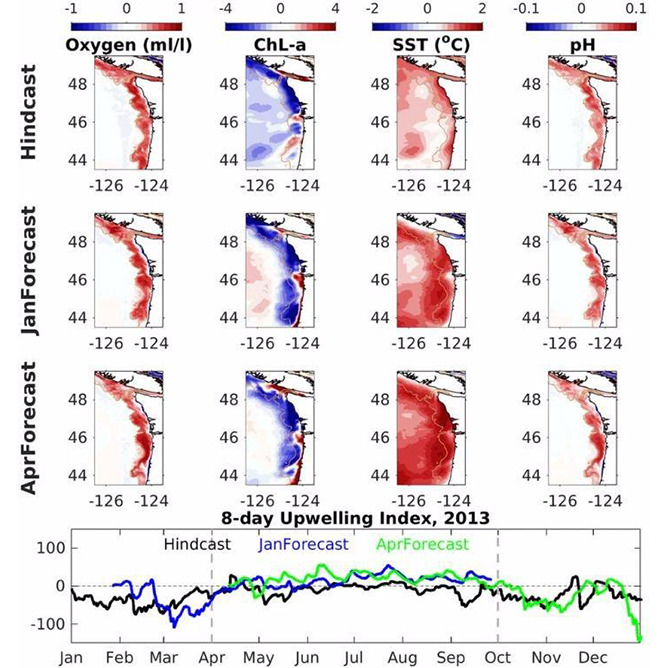
FORECASTING

Using models and research to understand the sensitivity of organisms and ecosystems to ocean acidification to make predictions about the future, allowing communities and industries to prepare

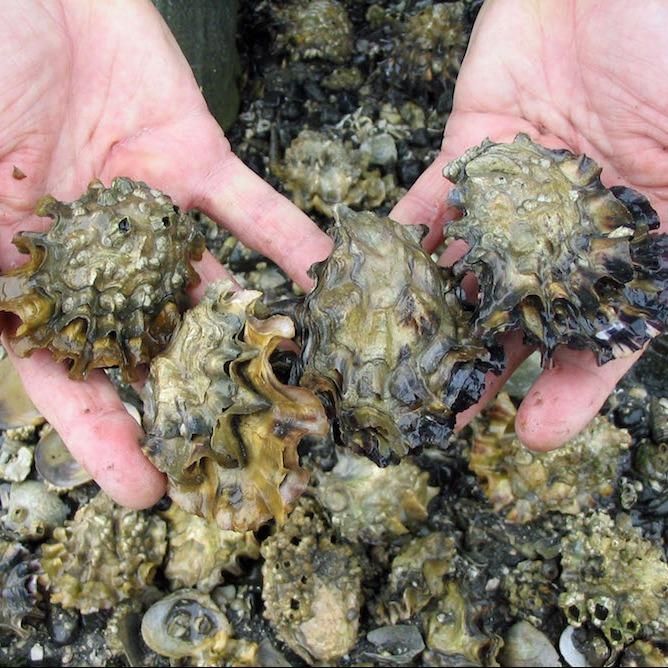
Closeup of oysters cupped in someone's hands

MANAGEMENT

Using these models and predictions as tools to facilitate management strategies that will protect marine resources and communities from future changes

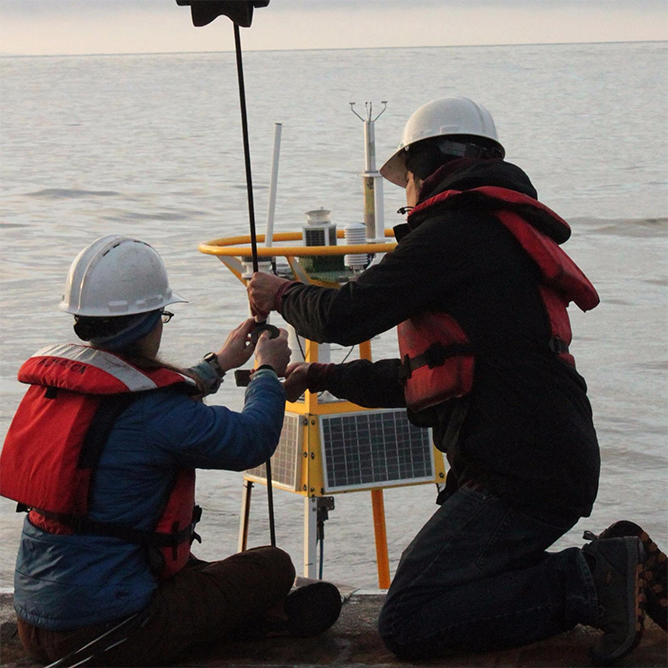
TECHNOLOGY DEVELOPMENT

Developing innovative tools to help monitor ocean acidification and mitigate changing ocean chemistry locally

REDUCING OUR CARBON FOOTPRINT

On the Road

Drive fuel-efficient vehicles or choose public transportation. Choose your bike or walk! Don't sit idle for more than 30 seconds. Keep your tires properly inflated.

With your Food Choices

Eat local- this helps cut down on production and transport! Reduce your meat and dairy. Compost to avoid food waste ending up in the landfill

With your Food Choices

Make energy-efficient choices for your appliances and lighting. Heat and cool efficiently! Change your air filters and program your thermostat, seal and insulate your home, and support clean energy sources

By Reducing Coastal Acidification

Reduce your use of fertilizers, Improve sewage treatment and run off, and Protect and restore coastal habitats

TAKE ACTION WITH YOUR COMMUNITY

You've taken the first step to learn more about ocean acidification - why not spread this knowledge to your community?

Every community has their unique culture, economy and ecology and what’s at stake from ocean acidification may be different depending on where you live.  As a community member, you can take a larger role in educating the public about ocean acidification. Creating awareness is the first step to taking action.  As communities gain traction, neighboring regions that share marine resources can build larger coalitions to address ocean acidification.  Here are some ideas to get started:

  1. Work with informal educators, such as aquarium outreach programs and local non-profits, to teach the public about ocean acidification. Visit our Education & Outreach page to find the newest tools!
  2. Participate in habitat restoration efforts to restore habitats that help mitigate the effects of coastal acidification
  3. Facilitate conversations with local businesses that might be affected by ocean acidification, building a plan for the future.
  4. Partner with local community efforts to mitigate the driver behind ocean acidification  – excess CO2 – such as community supported agriculture, bike & car shares and other public transportation options.
  5. Contact your regional Coastal Acidification Network (CAN) to learn how OA is affecting your region and more ideas about how you can get involved in your community
       More for Taking Community Action