Official websites use .gov
A .gov website belongs to an official government organization in the United States.

Secure .gov websites use HTTPS
A lock ( ) or https:// means you’ve safely connected to the .gov website. Share sensitive information only on official, secure websites.

Changing Waters with Jan Newton

Background image: Jan Newton looking out on the coastline of Washington State

Dr. Jan Newton is a biological oceanographer whose lifelong love of the Washington coast propelled her to an internationally recognized career. She shares her story, the importance of working together to address big challenges, and her vision for the future.

Serendipity launches a career

Jan Newton is a world expert in ocean change and human impacts to marine systems. It started in her hometown of Seattle, where she spent her childhood on her parents’ 17-ft boat and exploring the beaches near the San Juan Islands and Puget Sound, Washington. Newton remembers this time fondly, saying “the love for nature, the beach and sea was always part of me.” Years later, unsure what to do with her undergraduate science degree, she made the trip to the University of Washington to apply for graduate school in zoology. Having missed the program’s deadline, they pointed her to the oceanography department. There she found her scientific home, with her work focused on climate and human influences on ocean processes.

Jan now wears many hats – scientist, leader, and mentor. She is a senior principal Oceanographer at the Applied Physics Lab at the University of Washington and an affiliate professor in the UW School of Oceanography and School of Marine and Environmental Affairs. She serves as Co-director for Washington Ocean Acidification Center and is the Executive Director of the Northwest Association of Networked Ocean Observing Systems (NANOOS), one of the nation’s regional ocean observing networks, and a Co-chair of the Global Ocean Acidification Observing Network (GOA-ON).

Background Image: San Juan Islands in Washington State


Tackling global problems at home, together

Jan’s work continues in Puget Sound and off the Washington coast, which experience changing ocean conditions that impact both natural ecosystems and the people who depend on them. Ocean acidification, which is the change in ocean chemistry caused by the ocean’s absorption of carbon from the atmosphere, is one impactful change happening in this system. “When you study ocean acidification, you’re really studying just about everything: physics, chemistry, biology.” Early on, she recognized that building relationships and collaborating with others is essential for tackling these challenges. “Because ocean acidification was relatively new and increasingly developing as a scientific area of inquiry, it caught my interest as an early career scientist – thinking about implications and opportunities to combine forces to study it more fully.” Partnering and making connections to diverse perspectives is one of Jan’s great talents.

A hard shell to crack. Along the U.S. west coast, shellfish growers encountered devastating impacts to the industry with ocean acidification impacting young oyster survival. Newton recognized this hardship, but also the learning opportunity it presented, saying, “we knew we could aid shellfish growers with observations and forecasts, but also that their experience with the shellfish under different conditions had much to teach us.” As a result, Jan and other scientists partner with industry members to better understand ocean acidification impacts to shellfish and to help find ways for the industry to adapt.

Taking a holistic, integrative approach. Jan identifies her partnerships with Indigenous peoples, who have been ocean observers since time immemorial, as some of her most rewarding work. She has learned from the full-system knowledge held by native tribes, saying “Indigenous communities are explicitly place-based and culturally take a holistic, integrative view. That’s exactly the kind of mindset that is helpful for understanding and addressing ocean acidification.” Through these partnerships, solutions are being co-developed for adapting to ocean change.

Background Image:  Cha’ba buoy

Fostering hope for the future

Jan speaks of her advisor and mentor, Carl Lorenzen, with fond appreciation. Her career was greatly influenced by his big picture perspective and the connections he made between multiple disciplines, while also integrating the many details that matter. Now, as a mentor herself, Jan hopes to encourage young scientists, saying “trust in yourself, study hard, and recognize that you’ll get this.”

Stepping onto that first ship and advice for budding oceanographers

Jan learned how to trust herself and abilities after stepping onto her first ship. She recollects her first experience thinking, “wow, okay, it’s me, my wherewithal, and the resources that are in front of me. There’s nothing like being out in nature and having to make it work.”

Now, Jan is “inspired by the energy and insights that students bring.” She has “confidence that the next generations will increase knowledge in ways that we can only dare to imagine. The ship is in good hands.”

Background Image: Jan Newton on the R/V Rachel Carson

Image Credits

Banner: Dan Hannafious; Beach: Jan Newton; Cha’ba Buoy: Jan Newton; Shipside R/V Carson: Dan Hannafious
Effects of ocean acidification and temperature on Alaskan crabs

Red King Crab
Image credit: David Csepp, NMFS AKFSC ABL

Long-term declines of red king crab in Bristol Bay, Alaska may be partially attributed to ocean acidification conditions. These impacts may be partially responsible for the fishery closures during the 2021–2022 and 2022–2023 seasons. Researchers found that ocean acidification negatively impacts Alaskan crabs generally by changing physiological processes, decreasing growth, increasing death rates and reducing shell thickness. Funded by the Ocean Acidification Program, scientists at the Alaska Fisheries Science Center continue to investigate the responses of early life history stages and study the potential of various Alaska crabs to acclimate to changing conditions. Results will inform models that will use the parameters studied to predict the effects of future ocean acidification on the populations of red king crab in Bristol Bay as well as on the fisheries that depend on them. Fishery managers will better be able to anticipate and manage stocks if changing ocean chemistry affects stock productivity and thus the maximum sustainable yield.

More about this work

Forecasts for Alaska Fisheries

Crab pots and fishing nets in Alaska's Dutch Harbor
Image credit: Michael Theberge

Understanding seasonal changes in ocean acidification in Alaskan waters and the potential impacts to the multi-billion-dollar fishery sector is a main priority. Through work funded by NOAA’s Ocean Acidification Program, the Pacific Marine Environmental Laboratory developed a model capable of depicting past ocean chemistry conditions for the Bering Sea and is now testing the ability of this model to forecast future conditions. This model is being used to develop an ocean acidification indicator provided to fisheries managers in the annual NOAA Eastern Bering Sea Ecosystem Status Report.

ADAPTING TO OCEAN ACIDIFICATION

The NOAA Ocean Acidification Program (OAP) works to prepare society to adapt to the consequences of ocean acidification and conserve marine ecosystems as acidification occurs. Learn more about the human connections and adaptation strategies from these efforts.

Adaptation approaches fostered by the OAP include:

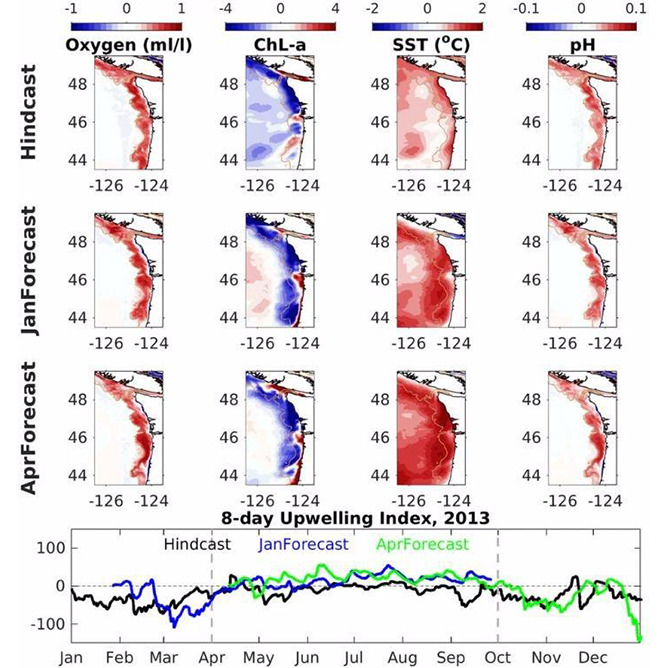
FORECASTING

Using models and research to understand the sensitivity of organisms and ecosystems to ocean acidification to make predictions about the future, allowing communities and industries to prepare

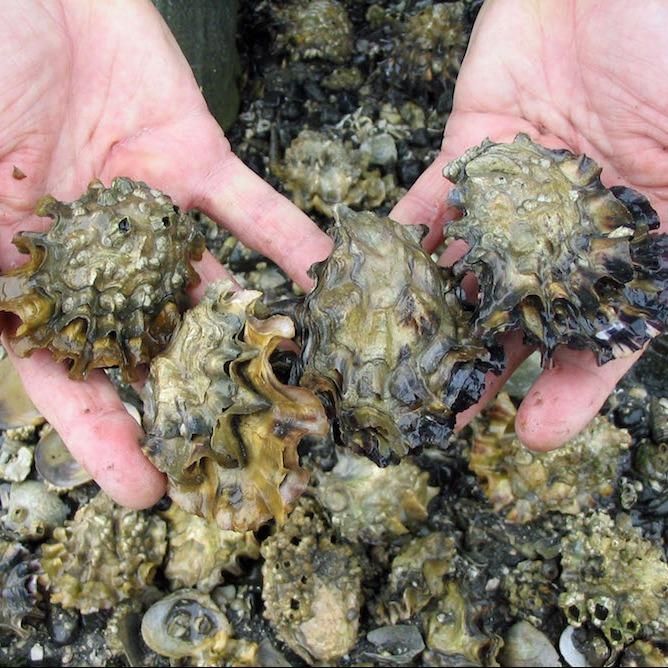
Closeup of oysters cupped in someone's hands

MANAGEMENT

Using these models and predictions as tools to facilitate management strategies that will protect marine resources and communities from future changes

TECHNOLOGY DEVELOPMENT

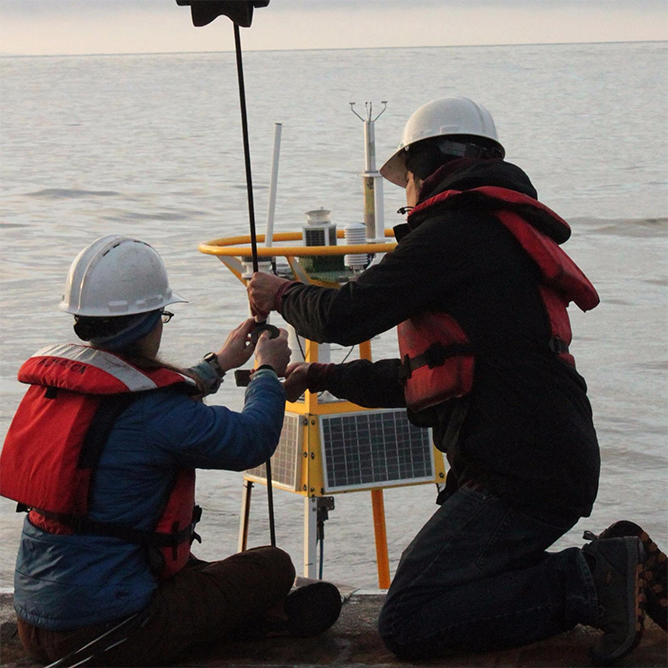
Developing innovative tools to help monitor ocean acidification and mitigate changing ocean chemistry locally

REDUCING OUR CARBON FOOTPRINT

On the Road

Drive fuel-efficient vehicles or choose public transportation. Choose your bike or walk! Don't sit idle for more than 30 seconds. Keep your tires properly inflated.

With your Food Choices

Eat local- this helps cut down on production and transport! Reduce your meat and dairy. Compost to avoid food waste ending up in the landfill

With your Food Choices

Make energy-efficient choices for your appliances and lighting. Heat and cool efficiently! Change your air filters and program your thermostat, seal and insulate your home, and support clean energy sources

By Reducing Coastal Acidification

Reduce your use of fertilizers, Improve sewage treatment and run off, and Protect and restore coastal habitats

TAKE ACTION WITH YOUR COMMUNITY

You've taken the first step to learn more about ocean acidification - why not spread this knowledge to your community?

Every community has their unique culture, economy and ecology and what’s at stake from ocean acidification may be different depending on where you live.  As a community member, you can take a larger role in educating the public about ocean acidification. Creating awareness is the first step to taking action.  As communities gain traction, neighboring regions that share marine resources can build larger coalitions to address ocean acidification.  Here are some ideas to get started:

  1. Work with informal educators, such as aquarium outreach programs and local non-profits, to teach the public about ocean acidification. Visit our Education & Outreach page to find the newest tools!
  2. Participate in habitat restoration efforts to restore habitats that help mitigate the effects of coastal acidification
  3. Facilitate conversations with local businesses that might be affected by ocean acidification, building a plan for the future.
  4. Partner with local community efforts to mitigate the driver behind ocean acidification  – excess CO2 – such as community supported agriculture, bike & car shares and other public transportation options.
  5. Contact your regional Coastal Acidification Network (CAN) to learn how OA is affecting your region and more ideas about how you can get involved in your community
       More for Taking Community Action