Official websites use .gov
A .gov website belongs to an official government organization in the United States.

Secure .gov websites use HTTPS
A lock ( ) or https:// means you’ve safely connected to the .gov website. Share sensitive information only on official, secure websites.

Understanding vulnerability to coastal acidification: scientists, oyster growers and restoration specialists working together in the Chesapeake Bay

Background image: Oysters in the Damariscotta River

The excess carbon dioxide responsible for global warming also increases the acidity of seawater, challenging the growth and survival of oysters and other shellfish. A team led by researchers at the Virginia Institute of Marine Science (VIMS) is helping oyster growers and restoration specialists better manage their future responses to acidification in the Chesapeake Bay.

The study will develop tools for forecasting acidification thresholds to help commercial shellfish growers make more informed decisions, thus helping to protect an industry that in recent years has generated around $15 million in farm-gate value in Virginia, and $9 million in Maryland.

Background Image: Growers check oyster pot in Chester River, Maryland

Increased seawater acidity hampers the growth and survival of oysters and other shellfish by eating away at their calcium carbonate shells, the same process that causes carbonated sodas to corrode the enamel of human teeth. It also reduces the number of carbonate ions dissolved in seawater, making it more difficult for oysters to build their shells in the first place. Acidification is particularly challenging to oyster larvae and juveniles.

The goal of the 3-year project is to understand the vulnerability of shellfish aquaculture and restoration efforts to ocean acidification. To accomplish this, the team is integrating results from a high-resolution, 3-D model of the Chesapeake Bay, water-quality data from ongoing monitoring programs, recent studies of ocean acidification and its effects on shellfish, and information from aquaculture stakeholders.

“Recent research has given us a clearer understanding of the physiological vulnerability of oysters to ocean acidification,” says Emily Rivest, co-lead on the project at VIMS, “but we still lack a basic understanding of how vulnerability might differ among oyster hatcheries, farms, public-harvest reefs, or coastal restoration projects. This knowledge gap is what motivated us to submit our proposal.”

Background Image: Exploring US oyster aquaculture

The study represents a state-of-the-art integration of physical, ecological, biological, and social dimensions of oyster aquaculture. “The impacts of ocean acidification aren’t just a problem for the physical sciences,” says David Wrathall, an associate professor at Oregon State University and social science lead on the project. “Addressing them also requires a profound understanding of the economic, political, and regulatory pressures that oyster growers face.” The study will include social science field research focusing on key stakeholders in Virginia and Maryland.

This is one of many vulnerability assessment efforts around the U.S.; one element of the nationwide strategy NOAA is using to guide acidification science for the coming decade. Developed by nearly 70 federal researchers and academic partners, the strategy calls for a Regional Vulnerability Assessment (RVA) in each of six U.S. regions with differing ocean conditions, marine species, and industry concerns.

“Years of physical, biological, ecological research has paved the way to understand the vulnerability of human communities and industries, says Erica Ombres, NOAA Ocean Acidification Program Manager. “This important work shows us how we can adapt and be resilient as we face a changing ocean.”

Background Image: Egrets roost in a small hummock in Assateague Bay — the small islands within Chesapeake Bay Maryland National Estuarine Research Reserve

Credits:

More credits/content in this areaTitle image: Oysters in the Damariscotta River. Credit: NOAA Sea Grant Image 1: Growers check oyster pot in Chester River Maryland Credit: NOAA Sea Grant Image 2: Exploring US oyster aquaculture Credit: NOAA Sea Grant Image 3: Egrets roost in a small hummock in Assateague Bay — the small islands within Chesapeake Bay Maryland National Estuarine Research Reserve Credit: National Ocean Service
Effects of ocean acidification and temperature on Alaskan crabs

Red King Crab
Image credit: David Csepp, NMFS AKFSC ABL

Long-term declines of red king crab in Bristol Bay, Alaska may be partially attributed to ocean acidification conditions. These impacts may be partially responsible for the fishery closures during the 2021–2022 and 2022–2023 seasons. Researchers found that ocean acidification negatively impacts Alaskan crabs generally by changing physiological processes, decreasing growth, increasing death rates and reducing shell thickness. Funded by the Ocean Acidification Program, scientists at the Alaska Fisheries Science Center continue to investigate the responses of early life history stages and study the potential of various Alaska crabs to acclimate to changing conditions. Results will inform models that will use the parameters studied to predict the effects of future ocean acidification on the populations of red king crab in Bristol Bay as well as on the fisheries that depend on them. Fishery managers will better be able to anticipate and manage stocks if changing ocean chemistry affects stock productivity and thus the maximum sustainable yield.

More about this work

Forecasts for Alaska Fisheries

Crab pots and fishing nets in Alaska's Dutch Harbor
Image credit: Michael Theberge

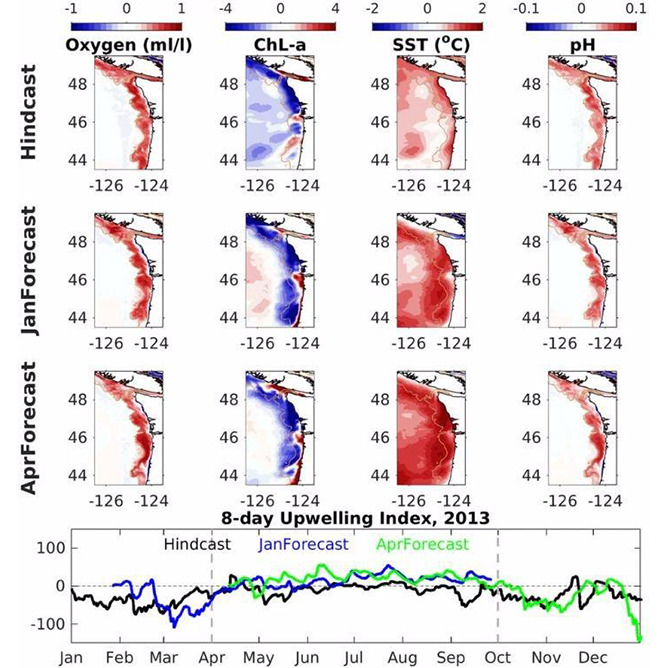
Understanding seasonal changes in ocean acidification in Alaskan waters and the potential impacts to the multi-billion-dollar fishery sector is a main priority. Through work funded by NOAA’s Ocean Acidification Program, the Pacific Marine Environmental Laboratory developed a model capable of depicting past ocean chemistry conditions for the Bering Sea and is now testing the ability of this model to forecast future conditions. This model is being used to develop an ocean acidification indicator provided to fisheries managers in the annual NOAA Eastern Bering Sea Ecosystem Status Report.

ADAPTING TO OCEAN ACIDIFICATION

The NOAA Ocean Acidification Program (OAP) works to prepare society to adapt to the consequences of ocean acidification and conserve marine ecosystems as acidification occurs. Learn more about the human connections and adaptation strategies from these efforts.

Adaptation approaches fostered by the OAP include:

FORECASTING

Using models and research to understand the sensitivity of organisms and ecosystems to ocean acidification to make predictions about the future, allowing communities and industries to prepare

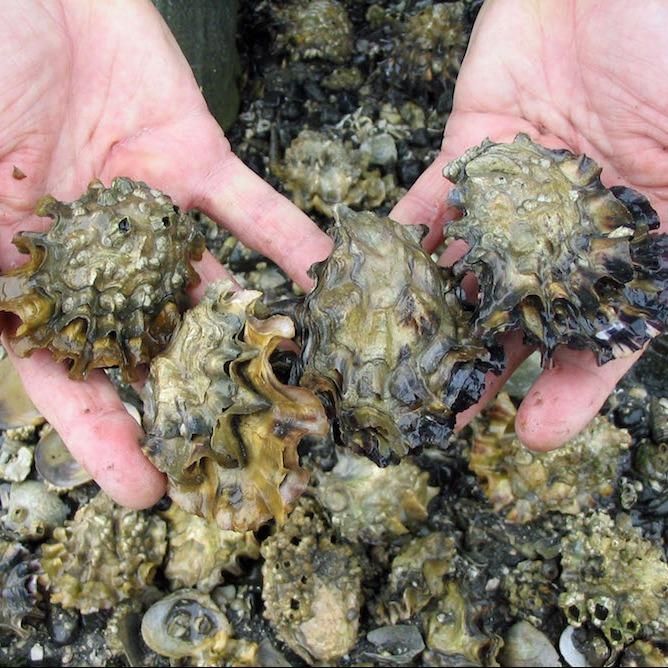
Closeup of oysters cupped in someone's hands

MANAGEMENT

Using these models and predictions as tools to facilitate management strategies that will protect marine resources and communities from future changes

TECHNOLOGY DEVELOPMENT

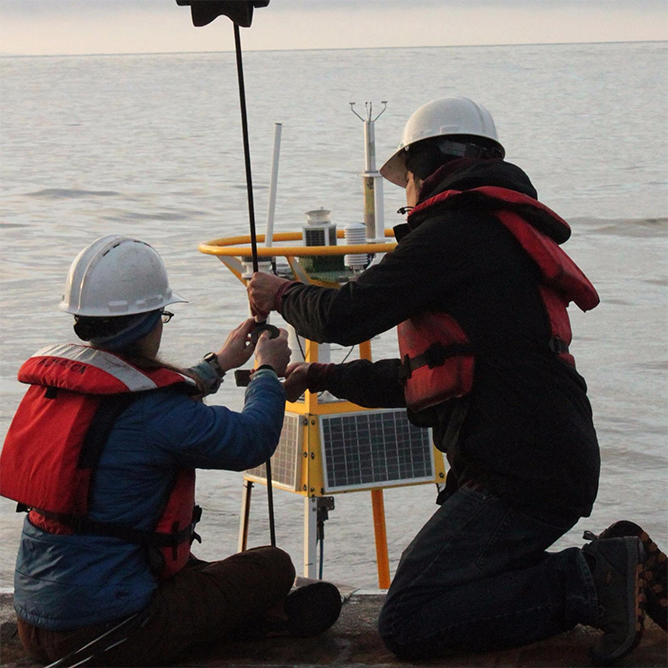
Developing innovative tools to help monitor ocean acidification and mitigate changing ocean chemistry locally

REDUCING OUR CARBON FOOTPRINT

On the Road

Drive fuel-efficient vehicles or choose public transportation. Choose your bike or walk! Don't sit idle for more than 30 seconds. Keep your tires properly inflated.

With your Food Choices

Eat local- this helps cut down on production and transport! Reduce your meat and dairy. Compost to avoid food waste ending up in the landfill

With your Food Choices

Make energy-efficient choices for your appliances and lighting. Heat and cool efficiently! Change your air filters and program your thermostat, seal and insulate your home, and support clean energy sources

By Reducing Coastal Acidification

Reduce your use of fertilizers, Improve sewage treatment and run off, and Protect and restore coastal habitats

TAKE ACTION WITH YOUR COMMUNITY

You've taken the first step to learn more about ocean acidification - why not spread this knowledge to your community?

Every community has their unique culture, economy and ecology and what’s at stake from ocean acidification may be different depending on where you live.  As a community member, you can take a larger role in educating the public about ocean acidification. Creating awareness is the first step to taking action.  As communities gain traction, neighboring regions that share marine resources can build larger coalitions to address ocean acidification.  Here are some ideas to get started:

  1. Work with informal educators, such as aquarium outreach programs and local non-profits, to teach the public about ocean acidification. Visit our Education & Outreach page to find the newest tools!
  2. Participate in habitat restoration efforts to restore habitats that help mitigate the effects of coastal acidification
  3. Facilitate conversations with local businesses that might be affected by ocean acidification, building a plan for the future.
  4. Partner with local community efforts to mitigate the driver behind ocean acidification  – excess CO2 – such as community supported agriculture, bike & car shares and other public transportation options.
  5. Contact your regional Coastal Acidification Network (CAN) to learn how OA is affecting your region and more ideas about how you can get involved in your community
       More for Taking Community Action