Official websites use .gov
A .gov website belongs to an official government organization in the United States.

Secure .gov websites use HTTPS
A lock ( ) or https:// means you’ve safely connected to the .gov website. Share sensitive information only on official, secure websites.

Category: OAP Happenings

2020 Ocean Acidification Education Minigrant Program Funding Opportunity Now Open

The Ocean Acidification Program announces is now accepting applications for its 2020 education mini-grant initiative.Topics suitable under this Notice of Funding Opportunity (NOFO) should fill needs identified in the NOAA Ocean Acidification Needs Assessment including: 
(1) Education and outreach products that incorporate data interpretation and/or visualization;
(2) Multimedia

Read More »

February 6th, 2020, 12pmET

This virtual seminar will explore how calcium carbonate shells and shelly habitats are increasingly recognized as potential mitigation approaches for localized acidification effects, yet very little is known about the alkalinity and geochemical properties of intact oyster reefs. This research team collected cores of restored oyster reefs in Harris Creek,

Read More »
Coastal Acidification

Thursday, January 30, 12-1pm EST

This virtual seminar will focus coupled a comprehensive measurement program to retrospective and future model simulations to quantify controls on estuarine acidification in Chesapeake Bay,a large estuarine complex with strong gradients of salinity, oxygen, metabolicrates, and bathymetry. Researched found that estuarine acidification may be even more complex (and interesting!) than originally

Read More »

November 4-8th, 2019, Portland, Maine

The Gulf of Maine 2050 international symposium will integrate environmental, economic, social, and institutional perspectives on emerging climate challenges and opportunities. It will bring together multiple science disciplines, natural resource managers, municipal planners, representatives from key industries, a diverse mix of community leaders, non-governmental organizations, and the donor community. Leaders from

Read More »

To be held in Lima, Peru September 7-10, 2020

Announcing 5th International Symposium on the Ocean in a High-CO2 World The SOLAS-IMBER Working Group on Ocean Acidification (SIOA) is pleased to announce that the 5th International Symposium on the Ocean in a High-CO2 World will be held in Lima, Peru on 7-10 September 2020. The lead organizers are Drs. Wilmer Carbajal

Read More »

Federal Funding Opportunity: Regional Ocean Acidification Observing Optimization Study

The NOAA/OAR/Ocean Acidification Program (OAP) is soliciting proposals for studies investigating ocean acidification monitoring strategies that would offer an observing system design that best characterizes and tracks ocean acidification within U.S. Large Marine Ecosystems (LMEs) optimized towards characterizing the conditions most relevant to ecologically and economically important marine species.

Read More »

OAP Deputy Director contributes to effort to identify research need to understand impacts and explore adaptation in Arctic

OAR OAP Deputy Director participated in the AMAP/EU-PolarNet Stakeholder Workshop on Research Needs on Climate-Related Effects on the Arctic Cryosphere and Adaptation Options. Participants discussed research issues in relation to both the need for further scientific understanding of the impacts of the rapidly changing climate on the Arctic cryosphere and the

Read More »

Forecasts for Alaska Fisheries

Crab pots and fishing nets in Alaska's Dutch Harbor
Image credit: Michael Theberge

Understanding seasonal changes in ocean acidification in Alaskan waters and the potential impacts to the multi-billion-dollar fishery sector is a main priority. Through work funded by NOAA’s Ocean Acidification Program, the Pacific Marine Environmental Laboratory developed a model capable of depicting past ocean chemistry conditions for the Bering Sea and is now testing the ability of this model to forecast future conditions. This model is being used to develop an ocean acidification indicator provided to fisheries managers in the annual NOAA Eastern Bering Sea Ecosystem Status Report.

ADAPTING TO OCEAN ACIDIFICATION

The NOAA Ocean Acidification Program (OAP) works to prepare society to adapt to the consequences of ocean acidification and conserve marine ecosystems as acidification occurs. Learn more about the human connections and adaptation strategies from these efforts.

Adaptation approaches fostered by the OAP include:

FORECASTING

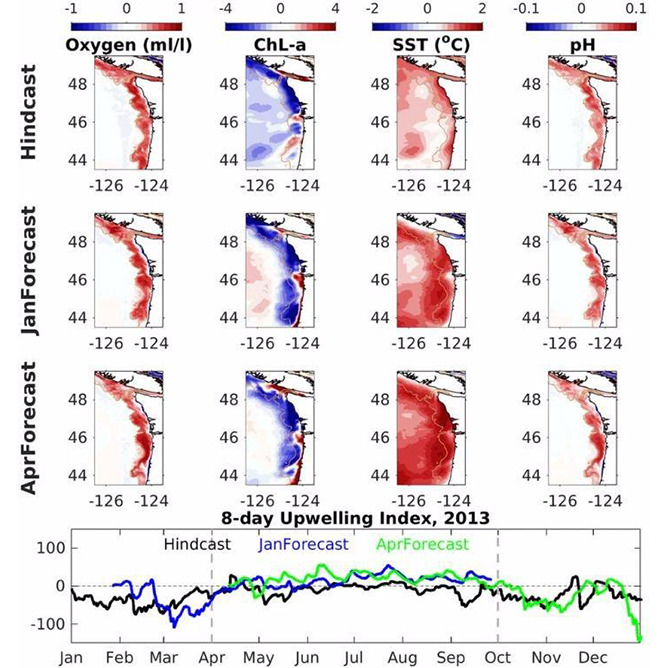
Using models and research to understand the sensitivity of organisms and ecosystems to ocean acidification to make predictions about the future, allowing communities and industries to prepare

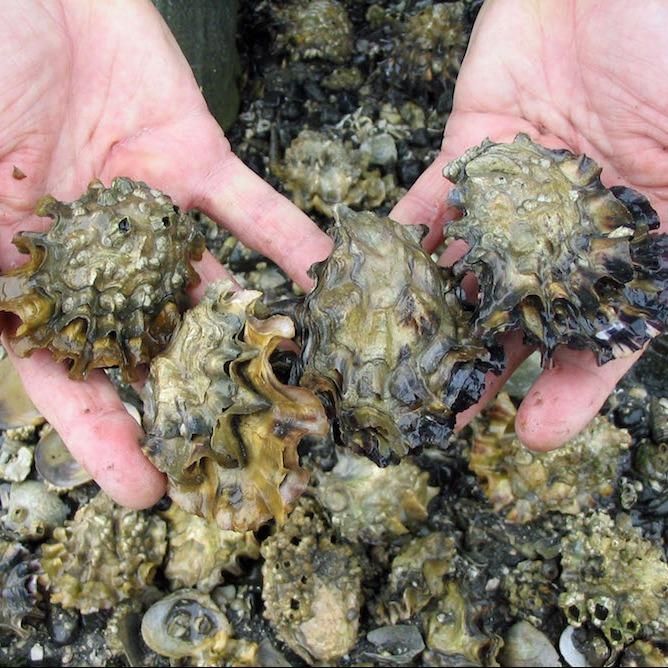
Closeup of oysters cupped in someone's hands

MANAGEMENT

Using these models and predictions as tools to facilitate management strategies that will protect marine resources and communities from future changes

TECHNOLOGY DEVELOPMENT

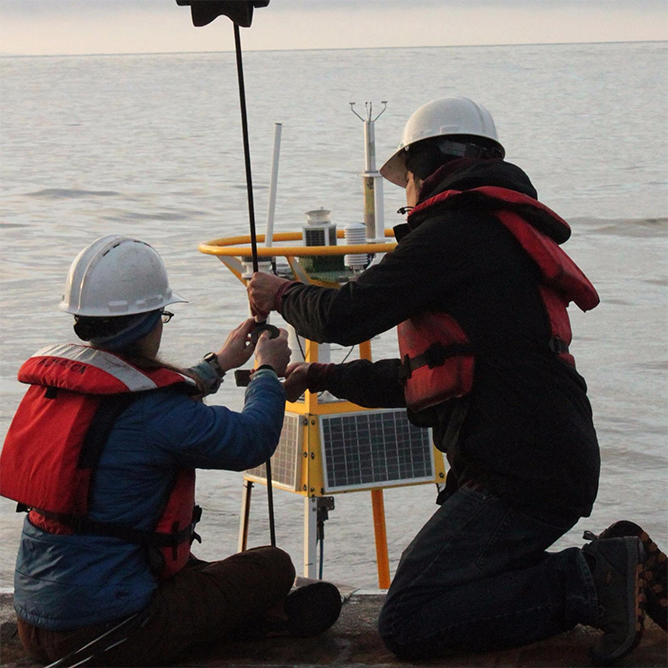
Developing innovative tools to help monitor ocean acidification and mitigate changing ocean chemistry locally

REDUCING OUR CARBON FOOTPRINT

On the Road

Drive fuel-efficient vehicles or choose public transportation. Choose your bike or walk! Don't sit idle for more than 30 seconds. Keep your tires properly inflated.

With your Food Choices

Eat local- this helps cut down on production and transport! Reduce your meat and dairy. Compost to avoid food waste ending up in the landfill

With your Food Choices

Make energy-efficient choices for your appliances and lighting. Heat and cool efficiently! Change your air filters and program your thermostat, seal and insulate your home, and support clean energy sources

By Reducing Coastal Acidification

Reduce your use of fertilizers, Improve sewage treatment and run off, and Protect and restore coastal habitats

TAKE ACTION WITH YOUR COMMUNITY

You've taken the first step to learn more about ocean acidification - why not spread this knowledge to your community?

Every community has their unique culture, economy and ecology and what’s at stake from ocean acidification may be different depending on where you live.  As a community member, you can take a larger role in educating the public about ocean acidification. Creating awareness is the first step to taking action.  As communities gain traction, neighboring regions that share marine resources can build larger coalitions to address ocean acidification.  Here are some ideas to get started:

  1. Work with informal educators, such as aquarium outreach programs and local non-profits, to teach the public about ocean acidification. Visit our Education & Outreach page to find the newest tools!
  2. Participate in habitat restoration efforts to restore habitats that help mitigate the effects of coastal acidification
  3. Facilitate conversations with local businesses that might be affected by ocean acidification, building a plan for the future.
  4. Partner with local community efforts to mitigate the driver behind ocean acidification  – excess CO2 – such as community supported agriculture, bike & car shares and other public transportation options.
  5. Contact your regional Coastal Acidification Network (CAN) to learn how OA is affecting your region and more ideas about how you can get involved in your community
       More for Taking Community Action