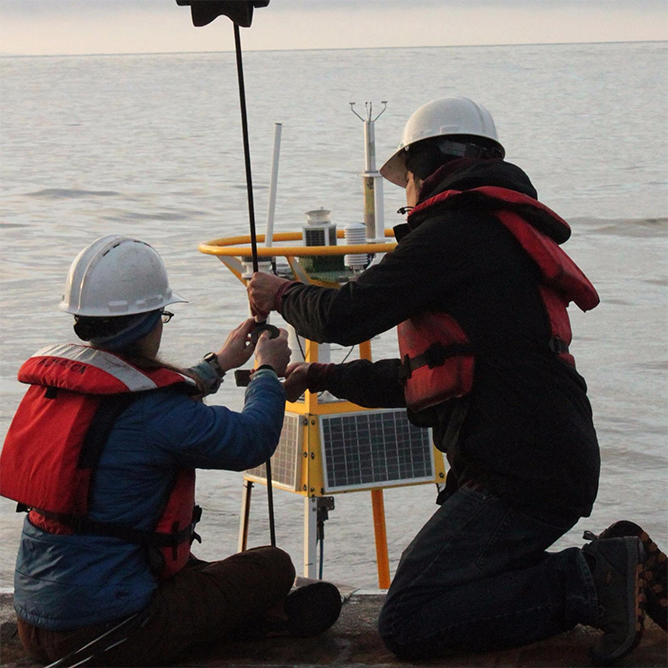
These 13 intrepid scientists are covering the WCOA noon-to-midnight shift for the first leg of the journey. It’s a little tricky to start their day with a sandwich or burger, but upon settling in everyone has found something to be excited about. Read on to find out more about the cruise participants.
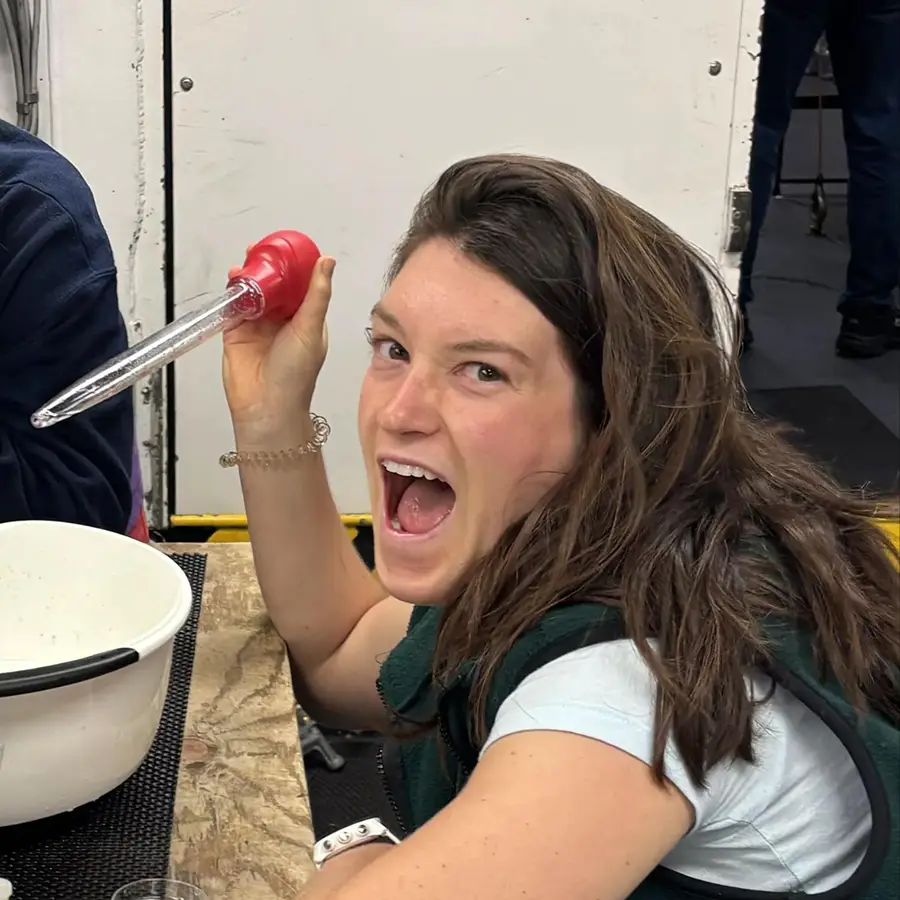
Avery Mathias
Avery is a graduate student with the Chan Lab at the University of Washington (UW). During the cruise, Avery is on the hunt for copepods to explore the interaction of latitude on metabolic rate and thermal tolerance. “I was excited to see baby fish turn up in some net tows along with a rare peanut worm larva. Tonight’s dinner was also such a delicious curry!”

Brendan Carter
Brendan is the chief scientist for the first leg of WCOA. A scientist with CICOES, Brendan is involved in global and regional efforts to measure seawater and its changes over time, and in international efforts to make the measurements made by the many laboratories and nations working together to track ocean change more comparable. One of his scientific pursuits is figuring out how much of the carbon in seawater is there because of human activities, and then using that information to quantify the impacts ocean acidification has had on ocean chemistry and biology. This is his third West Coast OA cruise, and each time he’s found more carbon from humans than the time before. He’s thrilled to be out here again with this great team of scientists. “I had a chance to watch a bird on the bow for around 20 minutes – he was in his moment and I was in mine watching him.”
Caroline Fradette
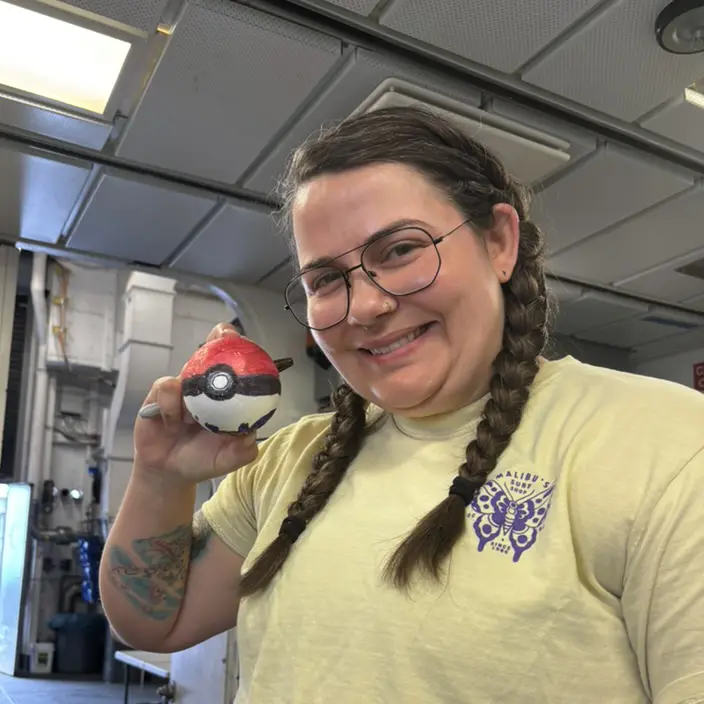
Caroline is a research scientist with the NOAA PMEL carbon group, interested in carbon system metrology (translation: finding the best way to measure the carbon dioxide system in seawater). “I’ve mostly done shallow station sampling, so this is the first time I’ve shrunk styrofoam in deep water. I made a pokeball!”
Christopher Ikeda
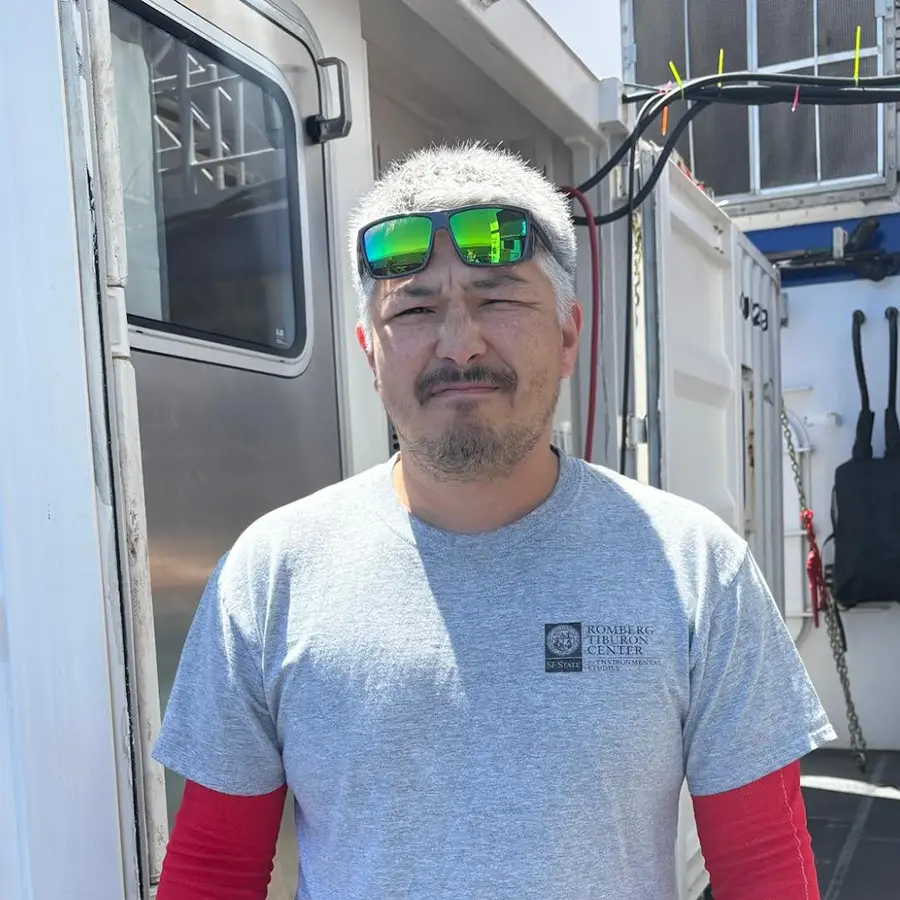
Christopher is a research scientist with the carbon group at NOAA PMEL. “I’ve enjoyed the moments of stepping away from the lab setup to look around and day dreaming of ways to get back to shore.”

Emily Lemagie
Emily is a physical oceanographer with EcoFOCI at NOAA PMEL, specifically looking at how ocean currents and temperature change and impact organisms. “I’ve loved when folks are crammed around the CTD rosette all taking samples. It’s teamwork to the utmost!”

Gerardo Toro-Farmer
Gerardo is a bio-optical oceanographer using in-situ and remote sensing tools to better understand biochemical processes at NASA. “I’ve had the most fun climbing to the top of a tall tower on the bow of the ship in order to take radiometric measurements that will help validate the PACE satellite. It’s a little scary but fun!”

Karen Chan
Karen is faculty at UW School of Oceanography, and her group investigates how the environment and zooplankton interact and the implications for ecosystem functions. “I found a horseshoe worm larva – only two species have ever been described, and the one we’ve seen is new to me!”

KyungJae Lee
KyungJae is a research scientist with UW Tacoma, identifying the occurrences and impacts of anthropogenic contaminants in the Puget Sound. Areas of research interest include the global carbon cycle, the impacts of ocean acidification and other anthropogenic stressors on the coastal ecosystem, and the trends of pCO2. On WCOA, KyungJae is focused on oxygen sampling and titrations. “I’ve enjoyed learning both scientific and life lessons from the diverse perspectives of scientists on board!”

Lucy Greeley
Embarking on her first research cruise, Lucy is helping with net tow operations on WCOA. “I’m quite thankful to have kept all my innards on the inside, thank you scopolamine! I’ve been most excited to see a seabird 250 nautical miles from shore, and hope to see some more wildlife while relaxing in the ship’s hot tub.”

Macarena (Maki) Martin Mayor
Maki is a PhD Candidate in the Byrne lab at the University of South Florida and the lead pH tech on WCOA. “The Naan at tonight’s dinner has changed my life and digestive system – the best solution to seasickness I’ve found. The current naan tally is five. The cheese danish is a close second!”

Matthew Kehrli
Matthew is a lead research scientist with NASA Goddard, specifically as an optical oceanographer measuring optical biogeochemical parameters in the ocean. “It’s been great to see clear skies from the boat, it does mean more work for me, but it’s definitely nice to see sunshine.”

Nina Buzby
Nina is a PhD candidate at UW splitting time between the Argo float labs at both UW and NOAA PMEL. “I was meant to deploy my first biogeochemical Argo float during this cruise, but I’m equally excited to be an extra hand when needed. This means I can be found in just about any lab/van/room while on shift!”

Sean McAllister
Sean is a researcher with CICOES studying environmental DNA and reference barcoding. “For a >4000m deep cast, I made a styrofoam cup for my 10-month old. I’ve never made a cup for anyone but myself before!”