Official websites use .gov
A .gov website belongs to an official government organization in the United States.

Secure .gov websites use HTTPS
A lock ( ) or https:// means you’ve safely connected to the .gov website. Share sensitive information only on official, secure websites.

Day 3: Meet the “Night Shift”

WCOA Night Shift Crew

Here is a brief introduction to the 11 scientists working the midnight to noon shift of leg 1 of WCOA 2026. Starting your day at midnight is definitely a difficult adjustment and if you didn’t save any leftovers from the day before you have seven hours until breakfast so best to plan ahead. Work stations and workflows have been ironed out by this point and everyone’s data is rolling in!

Julian Herndon

Julian Herndon

Julian is a University of Washington/CICOES scientist and part of the PMEL Marine Carbon Chemistry Group. His role on the WCOA26 cruise is the Co-Chief Scientist and Technical Lead. His primary role is to coordinate between the scientists and the ship to ensure that the researchers working on this cruise have everything they need to conduct their investigations in an effective, efficient, and safe manner and to try to keep the project on schedule as we move from station to station on the “night shift.”

Garret Feroy at the bow of a ship

Garrett Feroy

Garrett is a contributing member of the NOAA PMEL Underway Carbon group helping with sampling, analysis, and storage of: total alkalinity (TA), chlorophyll, salts, and nutrients. As a recently added member, he is excited to be at sea doing field research and alongside scientists in other oceanographic disciplines. With his background in hydraulic manufacturing, he has been able to help with building, fixing, and securing equipment with both his and a few other groups.

Juan Millan-Otoya at a lab work station

Juan Millan-Otoya

Juan is a PhD student from the Byrne Lab in the College of Marine Science at University of South Florida. During WCOA 2026 he will contribute to pH measurements and he will be implementing a newly developed  semi-automated spectrophotometric method to measure calcium in sea water. It is his first time in over 15 years in the Pacific Ocean and is very excited for the opportunity of doing science with such an amazing group of researchers.

Susan Curless

Susan Curless

Susan is a University of Washington CICOES scientist, and a member of the PMEL Marine Carbon group. Her primary role on this cruise is to lead the dissolved inorganic carbon (DIC) measurements. She spends most of her time analyzing the water samples collected from the rosette on technical equipment in one of the two laboratory containers the science team brought on board the ship. She is used to spending a lot of time at sea, but mostly in the open ocean, so being able to see land throughout a lot of this cruise is new and different to experience. She also believes it was a good omen for the trip to have seen a sea turtle (her spirit animal) at the surface on the first day of the cruise.

Julia-Lara Navarette taking a selfie on the deck of a ship

Julia Lara Navarrete

Julia is a PhD student from the Coastal Biogeochemical Dynamics Lab at the University of Connecticut Avery Point. WCOA26 is her first research cruise and so far, so good (*knocks on wood). For her research she’s working on a forecasting model for Dungeness crab fisheries, but on the R/V Sikuliaq you can find her in the computer lab talking to the winch and staring at the screens as the CTD watch for the night shift.

Zach Gold examining a CTD rosette

Zachary Gold

Zack is a research scientist at NOAA PMEL, leading biological sampling efforts on WCOA26. Zack has been impressed by the creativity and perseverance of the R/V Sikuliaq team in overcoming the winch struggles and generosity of colleagues Greg Rouse and Charlotte Seid at UCSD SIO to provide last minute liquid nitrogen refills before the cruise. Surprisingly, we’ve been seeing a suite of pteropod species (Limacina, Clio, and Cresseis sp.) in our bongo and neuston tows, despite the overall low biomass in the anomalously warm Southern California waters.

Naja Murphy

Naja Murphy

Naja Murphy is a graduate student with the Byrne Lab in the College of Marine Science at University of South Florida. Aboard WCOA, she is implementing a totally new method of measuring organic alkalinity. Although the instrument set up has been a little challenging at the beginning of the cruise, Naja brought enough backups of everything to handle whatever breaks or needs replacing! Her packing was so stellar, she even brought along a nice camera ready to take pictures of any spotted wildlife. 

Alitzah Saenz

Alitzah Saenz

Alitzah Saenz is helping out the net team on WCOA. Alitzah previously worked for CalCOFI so she probably knows the most about these waters of everyone on the ship! “I’m excited to sail beyond California, I haven’t done much outside of the Southern California Current.” We hope she’s ready for all the clouds and vampires of the PNW.

Karina Lai

Karina Lai

Karina is a research assistant with the NOAA PMEL Ocean Molecular Ecology group. On WCOA, she is in charge of collecting and processing environmental DNA samples, methane, and domoic acid samples. She has been enjoying the creative (and goofy) solutions the lab comes up with, from filtering seawater with kitten feeding bags to the DIY home depot light trap. Recently graduating from undergraduate at UW, this is her first long offshore cruise, and she is very excited that she hasn’t gotten seasick so far.

Anna Boyar wearing hard hat

Anna Boyar

Anna is a research technician at the Washington Ocean Acidification Center (WOAC), and on WCOA is part of the dissolved oxygen team. Anna was quite excited to see extremely low oxygen in the Santa Barbara basin, and is known for adding fun drawings to her labeled leftovers!

Kazumi Schubert

Kazumi Schubert

Kazumi is a research Scientist with CICOES and NOAA PMEL Carbon group. On WCOA26, Kazumi is working hard in the TA van during the night shift. “I’ve been away from the oceanography field for a while, so this is a long-awaited opportunity to set sail. As always, the sea is a wonderful place to be, and it’s an honor to meet everyone aboard.”

Share this post:

Related Posts

Effects of ocean acidification and temperature on Alaskan crabs

Red King Crab
Image credit: David Csepp, NMFS AKFSC ABL

Long-term declines of red king crab in Bristol Bay, Alaska may be partially attributed to ocean acidification conditions. These impacts may be partially responsible for the fishery closures during the 2021–2022 and 2022–2023 seasons. Researchers found that ocean acidification negatively impacts Alaskan crabs generally by changing physiological processes, decreasing growth, increasing death rates and reducing shell thickness. Funded by the Ocean Acidification Program, scientists at the Alaska Fisheries Science Center continue to investigate the responses of early life history stages and study the potential of various Alaska crabs to acclimate to changing conditions. Results will inform models that will use the parameters studied to predict the effects of future ocean acidification on the populations of red king crab in Bristol Bay as well as on the fisheries that depend on them. Fishery managers will better be able to anticipate and manage stocks if changing ocean chemistry affects stock productivity and thus the maximum sustainable yield.

More about this work

Forecasts for Alaska Fisheries

Crab pots and fishing nets in Alaska's Dutch Harbor
Image credit: Michael Theberge

Understanding seasonal changes in ocean acidification in Alaskan waters and the potential impacts to the multi-billion-dollar fishery sector is a main priority. Through work funded by NOAA’s Ocean Acidification Program, the Pacific Marine Environmental Laboratory developed a model capable of depicting past ocean chemistry conditions for the Bering Sea and is now testing the ability of this model to forecast future conditions. This model is being used to develop an ocean acidification indicator provided to fisheries managers in the annual NOAA Eastern Bering Sea Ecosystem Status Report.

ADAPTING TO OCEAN ACIDIFICATION

The NOAA Ocean Acidification Program (OAP) works to prepare society to adapt to the consequences of ocean acidification and conserve marine ecosystems as acidification occurs. Learn more about the human connections and adaptation strategies from these efforts.

Adaptation approaches fostered by the OAP include:

FORECASTING

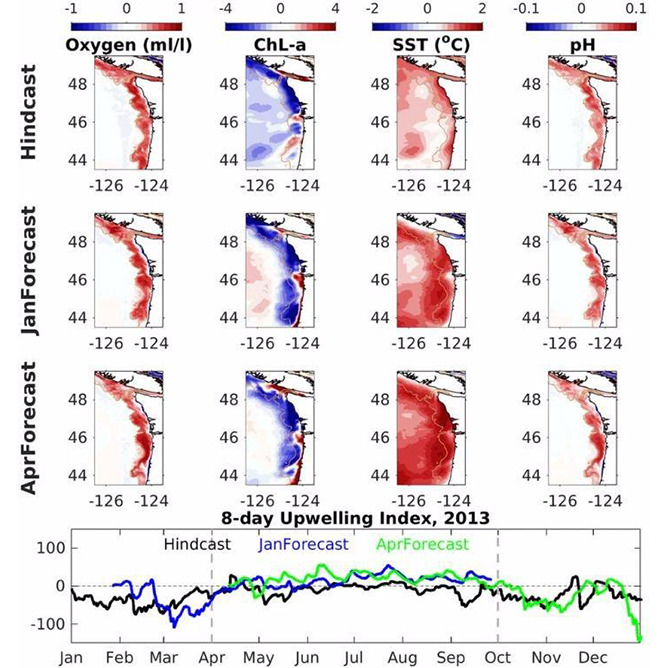
Using models and research to understand the sensitivity of organisms and ecosystems to ocean acidification to make predictions about the future, allowing communities and industries to prepare

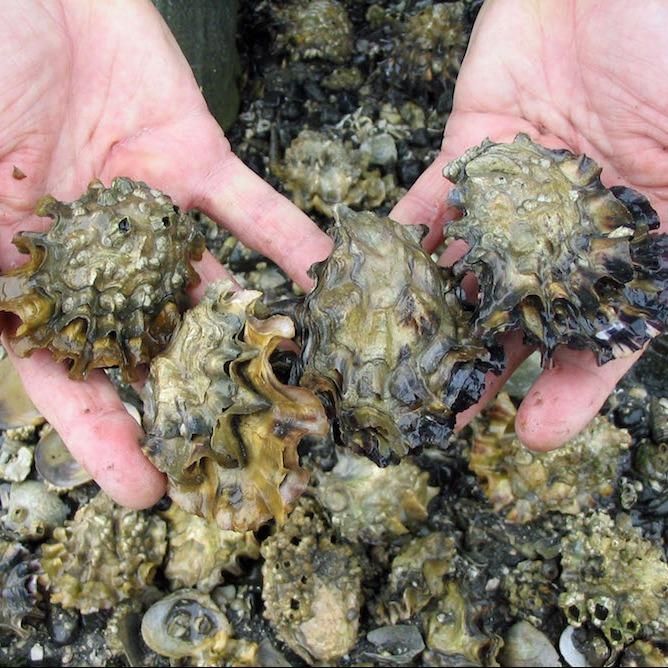
Closeup of oysters cupped in someone's hands

MANAGEMENT

Using these models and predictions as tools to facilitate management strategies that will protect marine resources and communities from future changes

TECHNOLOGY DEVELOPMENT

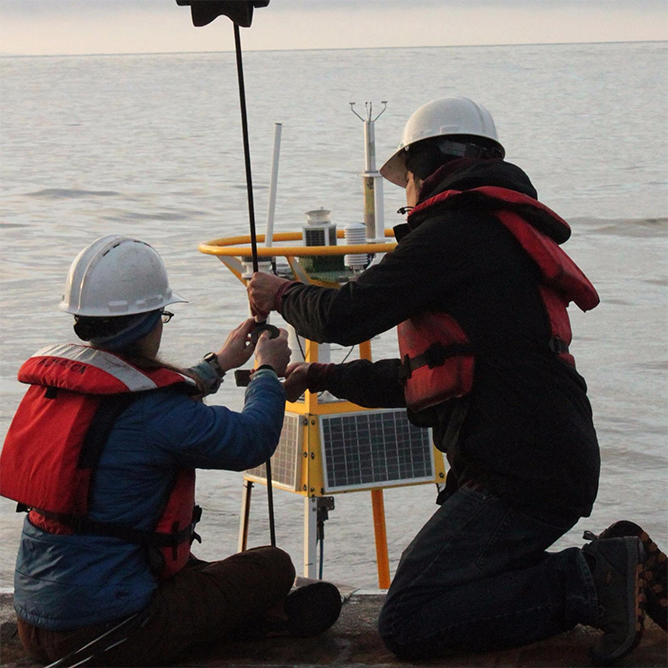
Developing innovative tools to help monitor ocean acidification and mitigate changing ocean chemistry locally

REDUCING OUR CARBON FOOTPRINT

On the Road

Drive fuel-efficient vehicles or choose public transportation. Choose your bike or walk! Don't sit idle for more than 30 seconds. Keep your tires properly inflated.

With your Food Choices

Eat local- this helps cut down on production and transport! Reduce your meat and dairy. Compost to avoid food waste ending up in the landfill

With your Food Choices

Make energy-efficient choices for your appliances and lighting. Heat and cool efficiently! Change your air filters and program your thermostat, seal and insulate your home, and support clean energy sources

By Reducing Coastal Acidification

Reduce your use of fertilizers, Improve sewage treatment and run off, and Protect and restore coastal habitats

TAKE ACTION WITH YOUR COMMUNITY

You've taken the first step to learn more about ocean acidification - why not spread this knowledge to your community?

Every community has their unique culture, economy and ecology and what’s at stake from ocean acidification may be different depending on where you live.  As a community member, you can take a larger role in educating the public about ocean acidification. Creating awareness is the first step to taking action.  As communities gain traction, neighboring regions that share marine resources can build larger coalitions to address ocean acidification.  Here are some ideas to get started:

  1. Work with informal educators, such as aquarium outreach programs and local non-profits, to teach the public about ocean acidification. Visit our Education & Outreach page to find the newest tools!
  2. Participate in habitat restoration efforts to restore habitats that help mitigate the effects of coastal acidification
  3. Facilitate conversations with local businesses that might be affected by ocean acidification, building a plan for the future.
  4. Partner with local community efforts to mitigate the driver behind ocean acidification  – excess CO2 – such as community supported agriculture, bike & car shares and other public transportation options.
  5. Contact your regional Coastal Acidification Network (CAN) to learn how OA is affecting your region and more ideas about how you can get involved in your community
       More for Taking Community Action