Conductivity, Temperature, Depth (CTD)
A Conductivity (salinity), Temperature, Depth (CTD) sensor is a key instrument on ocean acidification research cruises. CTD measurements paint a picture of salinity and temperature from surface to seafloor. Temperature and salinity influence water movement, activity by marine life, and water chemistry throughout the ocean. The CTD is linked with a Niskin bottle rosette (pictured). This collector takes water samples at many depths, providing a snapshot of the whole water column. This expands our sampling below surface waters that are continuously monitored by buoys and moorings in our network. Scientists deploy the CTD rosette at every monitoring station during the cruise.
Water Quality

Dissolved Inorganic Carbon (DIC)
The partial pressure of CO2 (pCO2) tells us how much carbon dioxide is in seawater. Sampling on ocean acidification research cruises expands an important time-series of marine carbon dioxide levels. This information helps us understand ocean carbonate chemistry and biological productivity in the region. On ECOA-3, NOAA’s Atlantic Oceanographic and Meteorological Laboratory (AOML) measured pCO2 using an underway system that continuously takes high-quality measurements during the cruise.
Water Chemistry

Partial Pressure of CO2 (pCO2)
Water Chemistry

Total Alkalinity & pH (TA, pH)
Water Chemistry

Oxygen (O2)
Oxygen is a core measurement taken on coastal and ocean acidification research cruises. Like animals on land, marine life requires sufficient oxygen to live. Ocean oxygen is considered a co-stressor to ocean acidification. Both low oxygen and acidification increase stress on marine life, and they often occur at the same times and places, creating a greater burden for socio-economically important species. On ECOA-3, researchers from the University of Miami researched more about how ocean biogeochemistry controls oxygen saturation. Oxygen is measured onboard using the Winkler titration method.
Water Chemistry
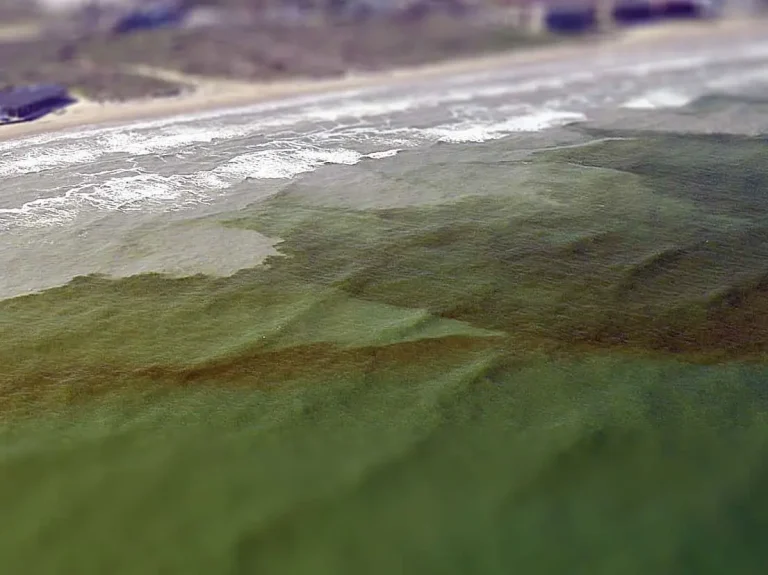
Harmful Algal Blooms & Other Protists
Oxygen is a core measurement taken on coastal and ocean acidification research cruises. Like animals on land, marine life requires sufficient oxygen to live. Ocean oxygen is considered a co-stressor to ocean acidification. Both low oxygen and acidification increase stress on marine life, and they often occur at the same times and places, creating a greater burden for socio-economically important species. On ECOA-3, researchers from the University of Miami researched more about how ocean biogeochemistry controls oxygen saturation. Oxygen is measured onboard using the Winkler titration method.
Ecosystem Health
Sediment
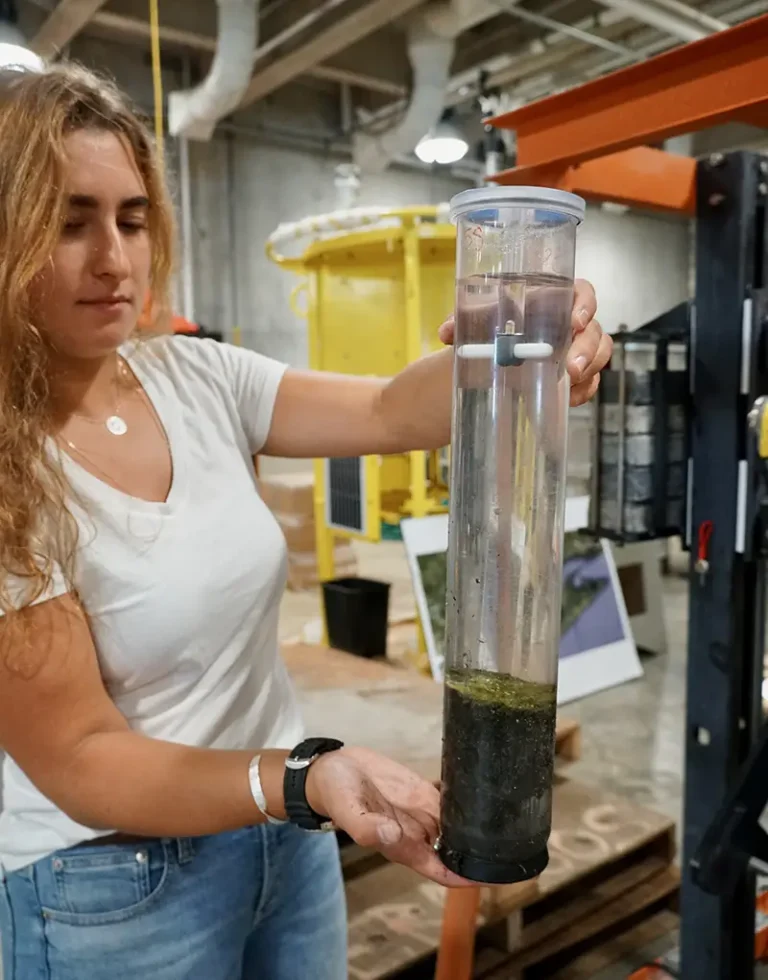
Sediments contribute importantly to biogeochemical cycles and remain understudied. On ECOA-3, scientists from the University of Connecticut, Avery Point collected sediments from the seafloor to better understand carbon exchange between seawater and seafloor with the help of bacteria, plankton and other marine life. This was the first time for these in depth sediment analyses on an ECOA cruise.
Take a deep dive with the sediment corer from ECOA-3 >
Ecosystem Health
Nutrients
Ecosystem Health
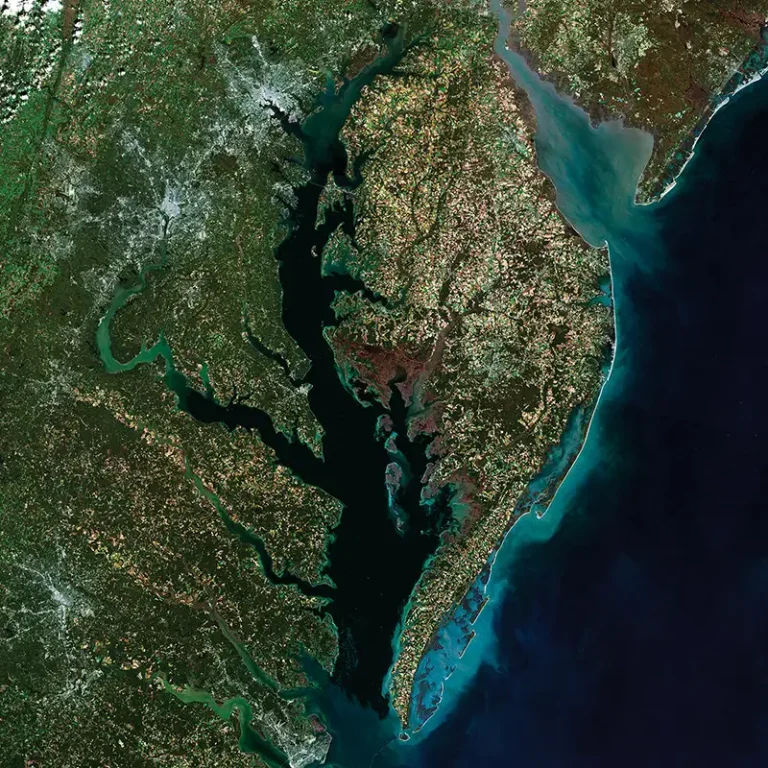
Nitrate, nitrite, ammonium, phosphate and silicate are major inorganic nutrients that control primary production and carbon movement in the ocean. Together with the measurements of inorganic carbon, researchers will estimate the effect of riverine input, air-sea CO2 exchange, biological productivity, and carbon exchange on the coastal carbon dynamics.

Ocean Optics
Satellites complement monitoring in the water. Measurements of light in the ocean collected during daylight hours while sampling water directly enable comparisons between the different types of data. This work supports the calibration and validation of sensors on join NOAA and NASA supported satellites. Furthermore, this information helps validate satellite-based sensors for ocean carbon and better quantify the relationships between salinity and organic (life-based) and inorganic carbon. Some of the parameters collected are colored dissolved organic matter (CDOM), chlorophyll (green pigments from plankton), and salinity.
Verification of Observations
Dissolved Inorganic Carbon (DIC)
Water Chemistry
The partial pressure of CO2 (pCO2) tells us how much carbon dioxide is in seawater. Sampling on ocean acidification research cruises expands an important time-series of marine carbon dioxide levels. This information helps us understand ocean carbonate chemistry and biological productivity in the region. On ECOA-3, NOAA’s Atlantic Oceanographic and Meteorological Laboratory (AOML) measured pCO2 using an underway system that continuously takes high-quality measurements during the cruise.
Partial Pressure of Co2 (PCO2)
Water Chemistry
The partial pressure of CO2 (pCO2) tells us how much carbon dioxide is in seawater. Sampling on ocean acidification research cruises expands an important time-series of marine carbon dioxide levels. This information helps us understand ocean carbonate chemistry and biological productivity in the region. On ECOA-3, NOAA’s Atlantic Oceanographic and Meteorological Laboratory (AOML) measured pCO2 using an underway system that continuously takes high-quality measurements during the cruise.Increases in carbon dioxide (known as CO2) in the atmosphere drive corresponding increases in dissolved CO2 within the surface waters of our ocean. This dissolved CO2 reacts with seawater to form carbonic acid (H2CO3). Carbonic acid breaks apart to form bicarbonate ions (HCO3-) and hydrogen ions (H+). Hydrogen ions (H+) act like free agents. And while the ocean is not acidic, these free agent hydrogen ions cause the seawater to become more acidic. We measure this using pH (H represents hydrogen ions). The free agent hydrogen ions also react with carbonate ions (CO32-) to form bicarbonate (HCO3-), making carbonate ions relatively less abundant.
Oxygen (O2)
Water Chemistry
Oxygen is a core measurement taken on coastal and ocean acidification research cruises. Like animals on land, marine life requires sufficient oxygen to live. Ocean oxygen is considered a co-stressor to ocean acidification. Both low oxygen and acidification increase stress on marine life, and they often occur at the same times and places, creating a greater burden for socio-economically important species. On ECOA-3, researchers from the University of Miami researched more about how ocean biogeochemistry controls oxygen saturation. Oxygen is measured onboard using the Winkler titration method.
Harmful Algal Blooms & Other Protists
Ecosystem Health
Oxygen is a core measurement taken on coastal and ocean acidification research cruises. Like animals on land, marine life requires sufficient oxygen to live. Ocean oxygen is considered a co-stressor to ocean acidification. Both low oxygen and acidification increase stress on marine life, and they often occur at the same times and places, creating a greater burden for socio-economically important species. On ECOA-3, researchers from the University of Miami researched more about how ocean biogeochemistry controls oxygen saturation. Oxygen is measured onboard using the Winkler titration method.
Sediment
Ecosystem Health
Sediments contribute importantly to biogeochemical cycles and remain understudied. On ECOA-3, scientists from the University of Connecticut, Avery Point collected sediments from the seafloor to better understand carbon exchange between seawater and seafloor with the help of bacteria, plankton and other marine life. This was the first time for these in depth sediment analyses on an ECOA cruise.
Take a deep dive with the sediment corer from ECOA-3 >
Nutrients
Ecosystem Health
Nitrate, nitrite, ammonium, phosphate and silicate are major inorganic nutrients that control primary production and carbon movement in the ocean. Together with the measurements of inorganic carbon, researchers will estimate the effect of riverine input, air-sea CO2 exchange, biological productivity, and carbon exchange on the coastal carbon dynamics.
Ocean Optics
VErification of Observations
Satellites complement monitoring in the water. Measurements of light in the ocean collected during daylight hours while sampling water directly enable comparisons between the different types of data. This work supports the calibration and validation of sensors on join NOAA and NASA supported satellites. Furthermore, this information helps validate satellite-based sensors for ocean carbon and better quantify the relationships between salinity and organic (life-based) and inorganic carbon. Some of the parameters collected are colored dissolved organic matter (CDOM), chlorophyll (green pigments from plankton), and salinity.