Official websites use .gov
A .gov website belongs to an official government organization in the United States.

Secure .gov websites use HTTPS
A lock ( ) or https:// means you’ve safely connected to the .gov website. Share sensitive information only on official, secure websites.

Biological Response

Effects of light and elevated <em>p</em>CO<sub>2</sub> on the growth and photochemical efficiency of <em>Acropora cervicornis</eM>

The effects of light and elevated pCO2 on the growth and photochemical efficiency of the critically endangered staghorn coral, Acropora cervicornis, were examined experimentally. Corals were subjected to high and low treatments of CO2 and light in a fully crossed design and monitored using 3D scanning and buoyant weight methodologies. Calcification rates, linear extension, as well as colony surface […]

Effects of light and elevated <em>p</em>CO<sub>2</sub> on the growth and photochemical efficiency of <em>Acropora cervicornis</eM> Read More »

Dissolution Dominating Calcification Process in Polar Pteropods Close to the Point of Aragonite Undersaturation

Thecosome pteropods are abundant upper-ocean zooplankton that build aragonite shells. Ocean acidification results in the lowering of aragonite saturation levels in the surface layers, and several incubation studies have shown that rates of calcification in these organisms decrease as a result. This study provides a weight-specific net calcification rate function for thecosome pteropods that includes

Dissolution Dominating Calcification Process in Polar Pteropods Close to the Point of Aragonite Undersaturation Read More »

Galápagos coral reef persistence after ENSO warming across an acidification gradient

Anthropogenic CO2 is causing warming and ocean acidification. Coral reefs are being severely impacted, yet confusion lingers regarding how reefs will respond to these stressors over this century. Since the 1982–1983 El Niño–Southern Oscillation warming event, the persistence of reefs around the Galápagos Islands has differed across an acidification gradient. Reefs disappeared where pH < 8.0 and aragonite

Galápagos coral reef persistence after ENSO warming across an acidification gradient Read More »

Ocean acidification along the Gulf Coast and East Coast of the USA

As part of an effort to monitor changes in inorganic carbon chemistry of the coastal ocean, near-synoptic cruises are being conducted in the Northern Gulf of Mexico and along the East Coast of the United States. Here we describe observations obtained on a cruise in the summer of 2012 and compare them with results from a cruise following a

Ocean acidification along the Gulf Coast and East Coast of the USA Read More »

Effect of ocean acidification on growth and otolith condition of juvenile scup, <em>Stenotomus chrysops</em>

Increasing amounts of atmospheric carbon dioxide (CO2) from human industrial activities are causing changes in global ocean carbonate chemistry, resulting in a reduction in pH, a process termed “ocean acidification.” It is important to determine which species are sensitive to elevated levels of CO2 because of potential impacts to ecosystems, marine resources, biodiversity, food webs, populations,

Effect of ocean acidification on growth and otolith condition of juvenile scup, <em>Stenotomus chrysops</em> Read More »

Ocean Acidification in the Surface Waters of the Pacific-Arctic Boundary Regions

The continental shelves of the Pacific-Arctic Region (PAR) are especially vulnerable to the effects of ocean acidification (OA) because the intrusion of anthropogenic CO2 is not the only process that can reduce pH and carbonate mineral saturation states for aragonite (Ωarag). Enhanced sea ice melt, respiration of organic matter, upwelling, and riverine inputs have been

Ocean Acidification in the Surface Waters of the Pacific-Arctic Boundary Regions Read More »

Recent decade of growth and calcification of <em>Orbicella faveolata</em> in the Florida Keys: an inshore-offshore comparison

Coral reefs along the Florida Keys portion of the Florida Reef Tract (FRT) have undergone a dramatic decline since the 1980s. Since the 1997-1998 El Niño event, coral cover on offshore reefs of the FRT has been ≤5% and continues to decline. Mortality of the framework-constructing coral in the Orbicella (formerly Montastraea) annularis species complex has driven this recent loss

Recent decade of growth and calcification of <em>Orbicella faveolata</em> in the Florida Keys: an inshore-offshore comparison Read More »

Transcriptome-wide analysis of the response of the thecosome pteropod <em>Clio pyramidata</em> to short-term CO<sub>2</sub> exposure

Thecosome pteropods, a group of calcifying holoplanktonic mollusks, have recently become a research focus due to their potential sensitivity to increased levels of anthropogenic dissolved CO2 in seawater and the accompanying ocean acidification. Some populations, however, already experience high CO2 in their natural distribution during diel vertical migrations. To achieve a better understanding of the mechanisms of pteropod calcification and physiological response to

Transcriptome-wide analysis of the response of the thecosome pteropod <em>Clio pyramidata</em> to short-term CO<sub>2</sub> exposure Read More »

Effects of CO2 on growth rate, C:N:P, and fatty acid composition of seven marine phytoplankton species

Carbon dioxide (CO2) is the primary substrate for photosynthesis by the phytoplankton that form the base of the marine food web and mediate biogeochemical cycling of C and nutrient elements. Specific growth rate and elemental composition (C:N:P) were characterized for 7 cosmopolitan coastal and oceanic phytoplankton species (5 diatoms and 2 chlorophytes) using low density,

Effects of CO2 on growth rate, C:N:P, and fatty acid composition of seven marine phytoplankton species Read More »

An updated synthesis of the observed and projected impacts of climate change on the chemical, physical and biological processes in the oceans

The 5th Assessment Report (AR5) of the Intergovernmental Panel on Climate Change (IPCC) states with very high certainty that anthropogenic emissions have caused measurable changes in the physical ocean environment. These changes are summarized with special focus on those that are predicted to have the strongest, most direct effects on ocean biological processes; namely, ocean

An updated synthesis of the observed and projected impacts of climate change on the chemical, physical and biological processes in the oceans Read More »

Forecasts for Alaska Fisheries

Crab pots and fishing nets in Alaska's Dutch Harbor
Image credit: Michael Theberge

Understanding seasonal changes in ocean acidification in Alaskan waters and the potential impacts to the multi-billion-dollar fishery sector is a main priority. Through work funded by NOAA’s Ocean Acidification Program, the Pacific Marine Environmental Laboratory developed a model capable of depicting past ocean chemistry conditions for the Bering Sea and is now testing the ability of this model to forecast future conditions. This model is being used to develop an ocean acidification indicator provided to fisheries managers in the annual NOAA Eastern Bering Sea Ecosystem Status Report.

ADAPTING TO OCEAN ACIDIFICATION

The NOAA Ocean Acidification Program (OAP) works to prepare society to adapt to the consequences of ocean acidification and conserve marine ecosystems as acidification occurs. Learn more about the human connections and adaptation strategies from these efforts.

Adaptation approaches fostered by the OAP include:

FORECASTING

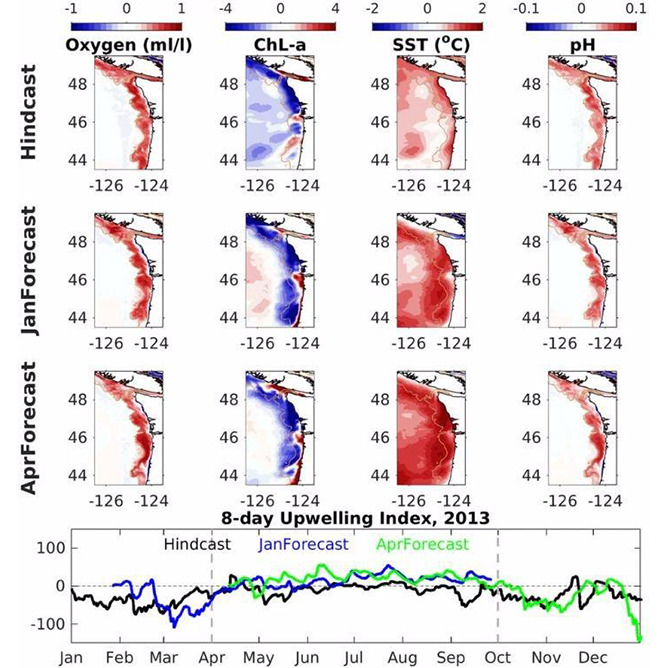
Using models and research to understand the sensitivity of organisms and ecosystems to ocean acidification to make predictions about the future, allowing communities and industries to prepare

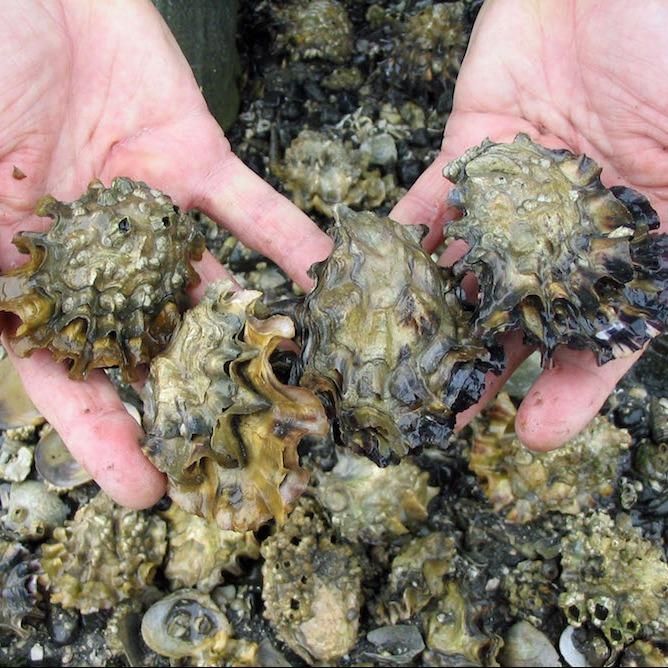
Closeup of oysters cupped in someone's hands

MANAGEMENT

Using these models and predictions as tools to facilitate management strategies that will protect marine resources and communities from future changes

TECHNOLOGY DEVELOPMENT

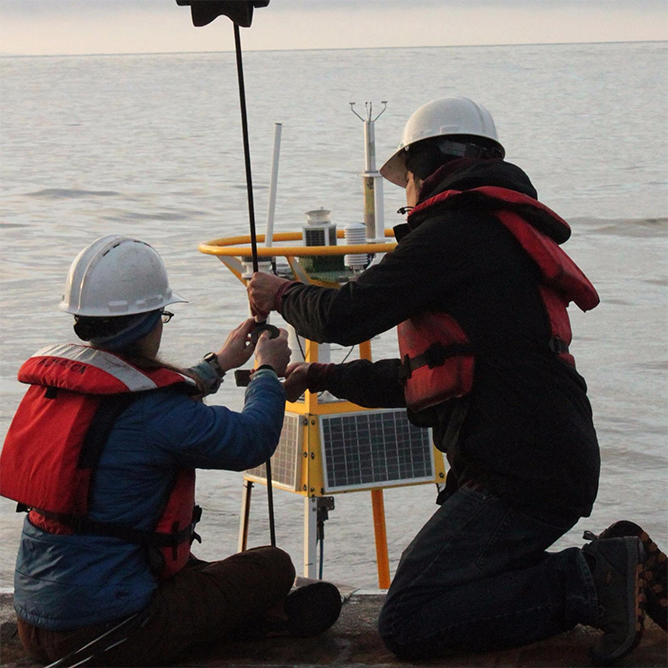
Developing innovative tools to help monitor ocean acidification and mitigate changing ocean chemistry locally

REDUCING OUR CARBON FOOTPRINT

On the Road

Drive fuel-efficient vehicles or choose public transportation. Choose your bike or walk! Don't sit idle for more than 30 seconds. Keep your tires properly inflated.

With your Food Choices

Eat local- this helps cut down on production and transport! Reduce your meat and dairy. Compost to avoid food waste ending up in the landfill

With your Food Choices

Make energy-efficient choices for your appliances and lighting. Heat and cool efficiently! Change your air filters and program your thermostat, seal and insulate your home, and support clean energy sources

By Reducing Coastal Acidification

Reduce your use of fertilizers, Improve sewage treatment and run off, and Protect and restore coastal habitats

TAKE ACTION WITH YOUR COMMUNITY

You've taken the first step to learn more about ocean acidification - why not spread this knowledge to your community?

Every community has their unique culture, economy and ecology and what’s at stake from ocean acidification may be different depending on where you live.  As a community member, you can take a larger role in educating the public about ocean acidification. Creating awareness is the first step to taking action.  As communities gain traction, neighboring regions that share marine resources can build larger coalitions to address ocean acidification.  Here are some ideas to get started:

  1. Work with informal educators, such as aquarium outreach programs and local non-profits, to teach the public about ocean acidification. Visit our Education & Outreach page to find the newest tools!
  2. Participate in habitat restoration efforts to restore habitats that help mitigate the effects of coastal acidification
  3. Facilitate conversations with local businesses that might be affected by ocean acidification, building a plan for the future.
  4. Partner with local community efforts to mitigate the driver behind ocean acidification  – excess CO2 – such as community supported agriculture, bike & car shares and other public transportation options.
  5. Contact your regional Coastal Acidification Network (CAN) to learn how OA is affecting your region and more ideas about how you can get involved in your community
       More for Taking Community Action