Official websites use .gov
A .gov website belongs to an official government organization in the United States.

Secure .gov websites use HTTPS
A lock ( ) or https:// means you’ve safely connected to the .gov website. Share sensitive information only on official, secure websites.

Monitoring & Modeling

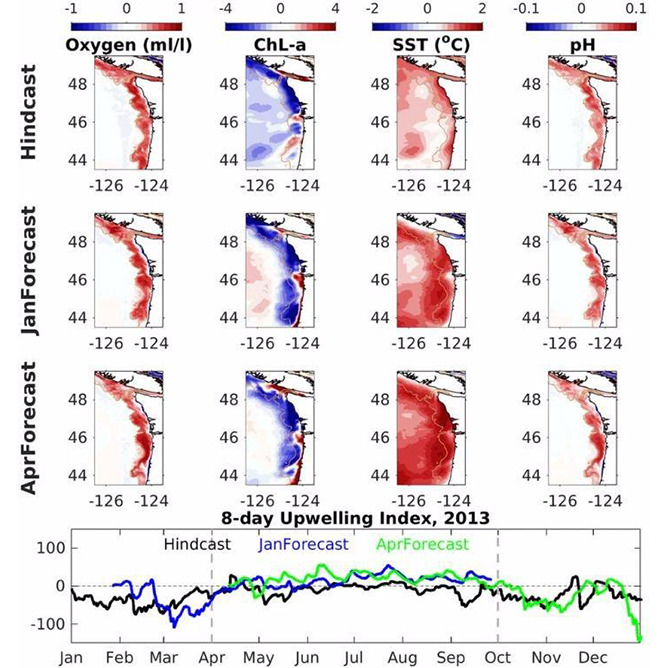
Integrated Modeling of Ocean Acidification and Hypoxia to Support Ecosystem Prediction and Environmental Management in the California Current System

The California Current System (CCS) is one of the most biologically productive regions of the world ocean, but seasonal upwelling of low oxygen and low-pH waters makes it particularly vulnerable to even small additional reductions in O2 and/or pH, which have both been observed in recent decades. Three prominent coastal phenomena have been implicated in precisely these changes: 1) large scale acidification and deoxygenation of the ocean associated with climate warming, 2) natural climate variability, and 3) anthropogenic pollution of coastal waters, especially from nutrient discharge and deposition.  The relative importance of these drivers has not been systematically evaluated, and yet is critical information in any cost-effective strategy to manage coastal resources at local scales.  Disentangling the magnitude and interaction of these different ecosystem stresses requites an integrated systems modeling approach that is carefully validated against available datasets.
The goals of this project are three-fold: 1) develop an ocean hypoxia and acidifcation (OHA) model of the CCS (Baja California to British Columbia), comprising the circulation, biogeochemical cycles, and lower-trophic ecosystem of the CCS, with regional downscaling in the Southern California Bight, Central Coast, and the Oregon Coast; 2) use the model to understand the relative contributions of natural climate variability, anthropogenically induced climate change, and anthropogenic inputs on the status and trends of OHA in the CCS; and 3) transmit these findings to coastal zone mangers and help them explore the implications for marine resource management and pollution control.

Integrated Modeling of Ocean Acidification and Hypoxia to Support Ecosystem Prediction and Environmental Management in the California Current System Read More »

Carbon Dioxide Information Analysis Center (CDIAC-Oceans) ceases operation, all activities to transition to NOAA

Data management activities for the ocean component of the Carbon Dioxide Information Analysis Center (CDIAC-Oceans) at Oak Ridge National Laboratory (ORNL) have recently stopped and this letter provides information on steps being taken to minimize the impact of this stoppage on the oceanographic community. Data, numerical data packages (NDPs), data synthesis product pages, and utilities

Carbon Dioxide Information Analysis Center (CDIAC-Oceans) ceases operation, all activities to transition to NOAA Read More »

Time series assessments of OA and Carbon system properties in the western Gulf of Maine

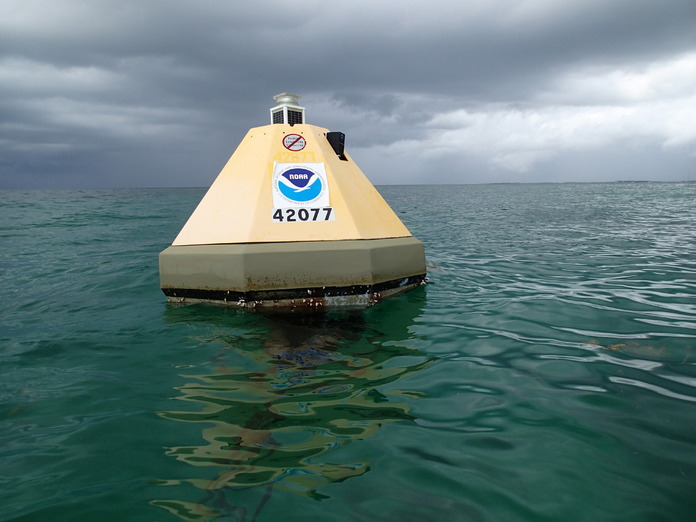
In terms of the commercial value of its shellfish and its importance as a finfish breeding ground, the western Gulf of Maine (GOM) is certainly one of the most valuable ecosystems in the United States. Because over 80% of organisms landed in the GOM must utilize calcium carbonate during certain critical life stages, the effects of ocean acidification (OA) on ecosystems are a topic of increasing regional concern. This notion was accentuated by recent demands from marine industry stakeholders and the State Legislature in Maine who convened an Ocean Acidification Commission to study and mitigate the effects of OA. By nature of its cool temperatures and copious freshwater subsidies from both remote and local origins, the western GOM may be particularly sensitive to future acidification stresses (Salisbury et al, 2008; Wang et al, 2013). With the goals of 1) providing data critical for climate studies and local decision support, and 2) understanding of regional processes affecting acidification, we propose to maintain data collection efforts at and proximal to UNH-PMEL acidification buoy. We will deploy, maintain and recover the buoy and its suite of instruments that provide quality oceanographic and carbonate system data. We will supplement these activities with seasonal cruises that map surface regional pCO2 and several surface variables supplemented with hydrographic and optical profiles at six stations along the UNH Wilkinson Basin Line (aka Portsmouth Line), which runs orthogonal to the coast. This in turn will be supplemented with ancillary bottle sampling and all will be used in research aimed at understanding processes controlling the dynamically evolving carbonate system in the western GOM.

Time series assessments of OA and Carbon system properties in the western Gulf of Maine Read More »

Monitoring of water column DIC, TA and pH on the N.E. U.S. shelf and the development of OA Indicators to inform Marine resource managers

The Ecosystem Monitoring program of the Northeast Fisheries Science Center conducts four dedicated cruises per year covering the entire extent of the Northeast United States (NEUS).  NOAA OAP provides funding for the processing of dissolved inorganic carbon (DIC) and total alkalinity (TAlk ) samples from two Ecosystem Monitoring cruises. As part of these cruises, water samples have been taken at a subset of locations and at a range of depths. The depth-discrete nature of this sampling is very important and provides data to complement the more intensive surface sampling conducted by the pCO2 sensors. These samples are used to measure DIC and TAlk and their analyses are conducted by AOML.  In addition, samples for among lab comparisons have been collected. Nutrient samples are also taken and are analyzed at University of Maine. 
Initially, these samples will be used for an analysis comparing the extent of ocean acidification on the NEUS compared to the late 1970's. Subsequently, these samples will be used to provide continued monitoring of the state of ocean acidification. In addition, these samples will be used to better understand the relationship between carbonate chemistry and nutrient speciation on the NEUS. While interpretation of this data is complex, a consolidated analysis is being undertaken to develop an “Ocean Acidification Indicator” for the Northeast Shelf. This metric will provide resource managers and vested stakeholders a concise interpretation of current and near-term expected conditions of acidification in the region. This project also coordinates and cooperates with a number of other regional partners in an attempt to fulfill the regional monitoring vision of National OA Plan.

Monitoring of water column DIC, TA and pH on the N.E. U.S. shelf and the development of OA Indicators to inform Marine resource managers Read More »

East Coast OA (ECOA) Cruise

NOAA academic partners Salisbury and Cai will organize and lead a 34-days cruise covering 12 transects of the U.S. and Canadian coast oceans from Nova Scotia in the north to the Gulf of Maine, Long Island Sound, Mid-Atlantic and Southern Bight regions, ending with a transect off of mid Florida. This cruise will serve as a synoptic characterization of the marine carbonate parameters of the coastal ocean with increased coverage in nearshore areas that have not surveyed in the previous cruises and subsurface dynamics that are not captured from using buoyed assets or ships of opportunity. The climate quality data from these cruises provide an important link to the Global Ocean Acidification Network (GOAN) effort, and serves as a start of a long-term record of dynamics and processes controlling Ocean Acidification (OA) on the coastal shelves. To this end there is an increasing focus on these cruises to perform rate measurements (e.g. NPP/NEP/NEC) for validation measurements of autonomous assets and buoyed assets, for algorithm development utilizing remotely sensed signals that are used to characterize saturation states, and to project the future state of ocean acidification in the project area. 

East Coast OA (ECOA) Cruise Read More »

Service and Maintenence of the Gray’s Reef OA Mooring

This project will provide service and maintenance of sensors and ground-truthing of the mooring data at the Gray's Reef OA monitoring site, as well as data quality control and synthesis. Specifically, we will accomplish the follow three tasks: 1. Deployment and maintenance of the sensors (pCO2, pH, and dissolved oxygen); 2. Collection of underway pCO2 data and bulk water samples for analyses using ship-of-opportunity and dedicated cruises about four times a year; and 3. Data quality control and data synthesis.

Service and Maintenence of the Gray’s Reef OA Mooring Read More »

Effects of elevated pCO2 and temperature on reef biodiversity and ecosystem functioning using Autonomous Reef Monitoring Structures and hyperspectral technology

The goal of this project is to improve our understanding of the effects of ocean acidification and warming on coral reef communities by examining responses of entire suites of reef organisms recruiting to Autonomous Reef Monitoring Structures (ARMS) in benthic mesocosms. We will perform a fully factorial experiment that consists of four treatments of low and high temperature and pCO₂ levels. ARMS are the leading long-term monitoring tool to measure biodiversity on reef systems and are integrated into the National Coral Reef Monitoring Program (NCRMP) Class II and Class III climate stations dedicated to monitor and access the physical, chemical and biological impacts associated with climate change over time. We propose to examine the effects of elevated temperature and pCO₂ on recruitment, biomass, biodiversity, and community structure over a multiannual time frame to increase our understanding of how biodiversity, ecosystem function, and their relationship will be impacted under future climate scenarios. 

Effects of elevated pCO2 and temperature on reef biodiversity and ecosystem functioning using Autonomous Reef Monitoring Structures and hyperspectral technology Read More »

NCRMP – OA Enterprise

NCRMP‐OA is a Joint Enterprise designed to address the Tier 1 Ocean Acidification (OA) components of the larger NCRMP strategic framework at Class 0, II, and III stations. Field work and laboratory analyses for the Atlantic/Caribbean region (Florida, Puerto Rico, U.S. Virgin Islands [USVI], and Flower Garden Banks [FGB]) are executed by the OAR Atlantic Oceanographic and Meteorological Laboratory (AOML) and by the University of Puerto Rico (UPR) Caribbean Coastal Ocean Observing System (CariCOOS). Field work in the Pacific region (Main Hawaiian Islands [MHI], Northwestern Hawaiian Islands [NWHI], Guam, Commonwealth of the Northern Mariana Islands [CNMI], American Sāmoa, and the Pacific Remote Island Areas [PRIA]) is executed by the NMFS Pacific Islands Fisheries Science Center [PIFSC] Coral Reef Ecosystem Division (CRED); laboratory analyses for the Pacific region are executed by the OAR Pacific Marine Environmental Laboratory (PMEL). NCRMP‐OA Teams closely coordinate with other NCRMP elements (benthic, fish, water temperature, satellite, and socioeconomic teams), including PMEL’s NOAA Ocean Acidification Observing Network (NOA‐ON), other NOAA offices, Federal, State, and Territory agencies, and academic partners, in both the Atlantic and Pacific regions.
 
This project monitors changes to coral reef carbonate chemistry over time, at US affiliated coral reef sites, through quantifying key chemical parameters that are expected to be impacted by ocean acidification. This effort addresses OAP programmatic themes 1 and 5 by maintaining the coral reef portion of the OA monitoring network and developing a procedure for data synthesis, assimilation, and distribution. Incorporating an interdisciplinary approach, this project will collect, process, analyze, and steward dissolved inorganic carbon (DIC) and total alkalinity (TA) water sample data to document seawater carbonate chemistry at Class 0, II, III climate monitoring sites in coral reef areas of the US Atlantic and Pacific regions.

NCRMP – OA Enterprise Read More »

Alaska Ocean Acidification Research: Autonomous Observations of Ocean Acidification in Alaska Coastal Seas

This OAP project represents the first contribution of OAP to sustained coastal Alaska OA monitoring through three years (2015-2017) of maintenance of two previously established OA mooring sites located in critical fishing areas. In FY2015, It also supported a 19 day OA survey cruise along the continental shelf of the Gulf of Alaska in summer of 2015, designed to fill observing gaps that have made it difficult to quantify the extent of OA events. This support has been critical for continuing OA research in Alaska, as the initial infrastructure funding was not sufficient or intended for long-term operation. 
These OAP-sponsored monitoring and observing activities support a number of cross-cutting research efforts. Firstly, the data itself will provide new insights into the seasonal progression of OA events caused by the progressive accumulation of anthropogenic CO2 into the region's coastal seas. The mooring and cruise data can also be used as an early warning system for stakeholders around the state, as well as to provide information for other types of OA research. Other projects within the OAP Alaska Enterprise focus on laboratory based evaluation of the impact of OA on commercially and ecologically important Alaskan species, especially during the vulnerable larval and juvenile life stages. This environmental monitoring informs those studies by describing the intensity, duration, and extent of OA events and providing a baseline for projecting future conditions. Finally, this observational data is used to validate new OA models that are currently being developed for the Gulf of Alaska and Bering Sea, and are applied in bio-economic models of crab and pollock abundance forecasts (e.g., Punt et al., 2014; Mathis et al., 2014).

Alaska Ocean Acidification Research: Autonomous Observations of Ocean Acidification in Alaska Coastal Seas Read More »

Multi-Scale Prediction of California Current Carbonate System Dynamics

The California Current is a dynamic eastern boundary system that spans the Northeast Pacific from Canada to Baja California, Mexico. Upwelling of cold, nutrient rich water drives multi trophic level productivity throughout much of the domain, but also results in naturally acidic on-shelf waters on regional scales. In addition, anthropogenic CO2 on basin to global scales, and local inputs by eutrophication, fresh water inputs, and local respiration or carbon assimilation result in multiscale and context-specific perturbations to the carbonate system. Thus, to understand, manage, or mitigate the effect of ocean acidification on ocean ecosystems, we need to quantify a suite of carbonate system parameters along the Pacific Coast in a mechanistic, spatially explicit, and temporally dynamic fashion.
We propose to embed an improved semi-analytical carbonate-chemistry prediction model within a dynamic classification of pelagic seascapes derived from satellite remotely sensed variables, including, but not limited to, phytoplankton standing stock (chl-a), SST, and wind stress. We will produce synoptic time series and nowcasts of surface TCO2, TALK, pH and Ω that will facilitate regional comparisons of interannual trends in OA parameters. We will include metrics of model and spatiotemporal uncertainty to better inform management decisions. These maps will be validated with the wealth of multi-parameter OA data generated from recent NOAA-supported field-observational efforts, from coastal moorings, West-coast OA cruises, and shore-based Burke-o-Lators. Statistical analyses will quantify spatially explicit trends across OA parameters, and local deviations from seascape-based predictions will disentangle basin-scale oceanic vs. local drivers of the carbonate system. Maps will be served in near real time on IOOS data portals. Time series and maps will inform marine ecosystem management and provide metrics of ocean health for National Marine Sanctuary condition reports.

Multi-Scale Prediction of California Current Carbonate System Dynamics Read More »

Forecasts for Alaska Fisheries

Crab pots and fishing nets in Alaska's Dutch Harbor
Image credit: Michael Theberge

Understanding seasonal changes in ocean acidification in Alaskan waters and the potential impacts to the multi-billion-dollar fishery sector is a main priority. Through work funded by NOAA’s Ocean Acidification Program, the Pacific Marine Environmental Laboratory developed a model capable of depicting past ocean chemistry conditions for the Bering Sea and is now testing the ability of this model to forecast future conditions. This model is being used to develop an ocean acidification indicator provided to fisheries managers in the annual NOAA Eastern Bering Sea Ecosystem Status Report.

ADAPTING TO OCEAN ACIDIFICATION

The NOAA Ocean Acidification Program (OAP) works to prepare society to adapt to the consequences of ocean acidification and conserve marine ecosystems as acidification occurs. Learn more about the human connections and adaptation strategies from these efforts.

Adaptation approaches fostered by the OAP include:

FORECASTING

Using models and research to understand the sensitivity of organisms and ecosystems to ocean acidification to make predictions about the future, allowing communities and industries to prepare

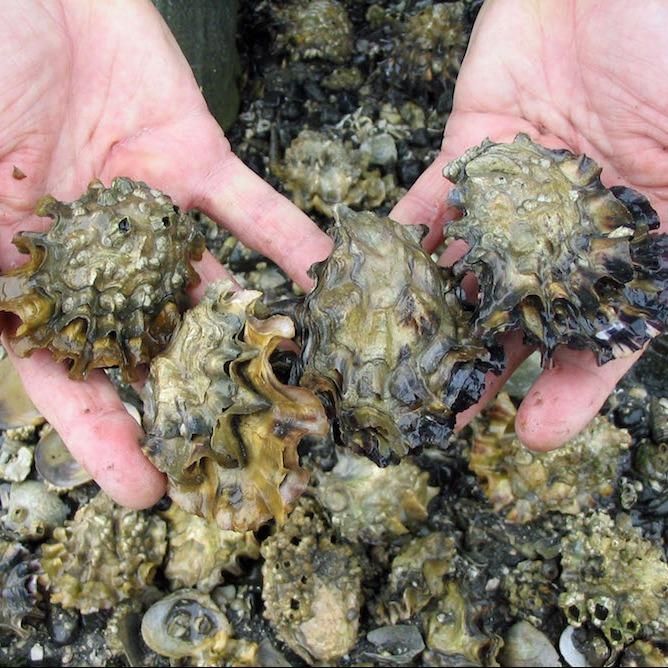
Closeup of oysters cupped in someone's hands

MANAGEMENT

Using these models and predictions as tools to facilitate management strategies that will protect marine resources and communities from future changes

TECHNOLOGY DEVELOPMENT

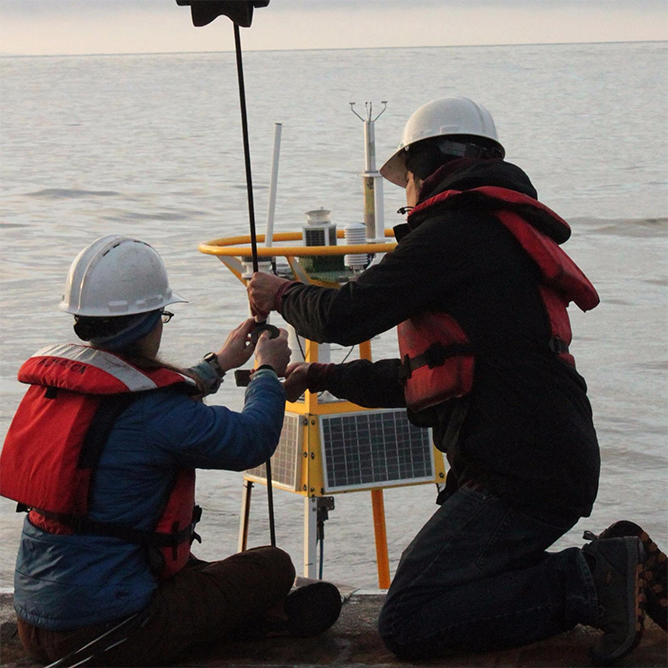
Developing innovative tools to help monitor ocean acidification and mitigate changing ocean chemistry locally

REDUCING OUR CARBON FOOTPRINT

On the Road

Drive fuel-efficient vehicles or choose public transportation. Choose your bike or walk! Don't sit idle for more than 30 seconds. Keep your tires properly inflated.

With your Food Choices

Eat local- this helps cut down on production and transport! Reduce your meat and dairy. Compost to avoid food waste ending up in the landfill

With your Food Choices

Make energy-efficient choices for your appliances and lighting. Heat and cool efficiently! Change your air filters and program your thermostat, seal and insulate your home, and support clean energy sources

By Reducing Coastal Acidification

Reduce your use of fertilizers, Improve sewage treatment and run off, and Protect and restore coastal habitats

TAKE ACTION WITH YOUR COMMUNITY

You've taken the first step to learn more about ocean acidification - why not spread this knowledge to your community?

Every community has their unique culture, economy and ecology and what’s at stake from ocean acidification may be different depending on where you live.  As a community member, you can take a larger role in educating the public about ocean acidification. Creating awareness is the first step to taking action.  As communities gain traction, neighboring regions that share marine resources can build larger coalitions to address ocean acidification.  Here are some ideas to get started:

  1. Work with informal educators, such as aquarium outreach programs and local non-profits, to teach the public about ocean acidification. Visit our Education & Outreach page to find the newest tools!
  2. Participate in habitat restoration efforts to restore habitats that help mitigate the effects of coastal acidification
  3. Facilitate conversations with local businesses that might be affected by ocean acidification, building a plan for the future.
  4. Partner with local community efforts to mitigate the driver behind ocean acidification  – excess CO2 – such as community supported agriculture, bike & car shares and other public transportation options.
  5. Contact your regional Coastal Acidification Network (CAN) to learn how OA is affecting your region and more ideas about how you can get involved in your community
       More for Taking Community Action