Official websites use .gov
A .gov website belongs to an official government organization in the United States.

Secure .gov websites use HTTPS
A lock ( ) or https:// means you’ve safely connected to the .gov website. Share sensitive information only on official, secure websites.

Publications

Publication Post Type

Ocean Acidification Science Needs for Natural Resource Managers of the North American West Coast

Natural circulation patterns along the west coast of North America periodically draw subthermocline, low pH waters into shallow coastal areas. The presence of corrosive, low pH waters, caused by ocean acidification (OA), is frequently observed along the North American west coast. Reduction of global atmospheric CO2 inputs is the appropriate management focus for decreasing OA, […]

Ocean Acidification Science Needs for Natural Resource Managers of the North American West Coast Read More »

An inter-laboratory comparison assessing the quality of seawater carbon dioxide measurements

Seawater CO2 measurements are being made with increasing frequency as interest grows in the ocean’s response to changing atmospheric CO2 levels and to climate change. The ultimate usefulness of these measurements depends on the data quality and consistency. An inter-laboratory comparison was undertaken to help evaluate and understand the current reliability of seawater CO2 measurements. Two seawater test samples

An inter-laboratory comparison assessing the quality of seawater carbon dioxide measurements Read More »

Large Natural pH, CO<sub>2</sub> and O<sub>2</sub> Fluctuations in a Temperate Tidal Salt Marsh on Diel, Seasonal, and Interannual Time Scales

Coastal marine organisms experience dynamic pH and dissolved oxygen (DO) conditions in their natural habitats, which may impact their susceptibility to long-term anthropogenic changes. Robust characterizations of all temporal scales of natural pH and DO fluctuations in different marine habitats are needed; however, appropriate time series of pH and DO are still scarce. We used

Large Natural pH, CO<sub>2</sub> and O<sub>2</sub> Fluctuations in a Temperate Tidal Salt Marsh on Diel, Seasonal, and Interannual Time Scales Read More »

Characterizing the Natural System: Toward Sustained, Integrated Coastal Ocean Acidification Observing Networks to Facilitate Resource Management and Decision Support

Coastal ocean ecosystems have always served human populations—they provide food security, livelihoods, coastal protection, and defense. Ocean acidification is a global threat to these ecosystem services, particularly when other local and regional stressors combine with it to jeopardize coastal health. Monitoring efforts call for a coordinated global approach toward sustained, integrated coastal ocean health observing

Characterizing the Natural System: Toward Sustained, Integrated Coastal Ocean Acidification Observing Networks to Facilitate Resource Management and Decision Support Read More »

Impacts of Coastal Acidification on the Pacific Northwest Shellfish Industry and Adaptation Strategies Implemented in Response

In 2007, the US west coast shellfish industry began to feel the effects of unprecedented levels of larval mortality in commercial hatcheries producing the Pacific oyster Crassostrea gigas. Subsequently, researchers at Whiskey Creek Shellfish Hatchery, working with academic and government scientists, showed a high correlation between aragonite saturation state (Ωarag) of inflowing seawater and survival of

Impacts of Coastal Acidification on the Pacific Northwest Shellfish Industry and Adaptation Strategies Implemented in Response Read More »

Procedures for direct spectrophotometric determination of carbonate ion concentrations: Measurements in US Gulf of Mexico and East Coast waters

Refined procedures were developed for directly determining carbonate ion concentrations in seawater through measurement of the ultraviolet absorbances of lead carbonate and chloride complexes after addition of divalent lead (Pb(II)) to a seawater sample. Our model algorithm is based on carbonate ion concentrations calculated from measurements of pH and dissolved inorganic carbon (DIC) obtained on a NOAA ocean acidification cruise (GOMECC-2, the second Gulf of Mexico and East Coast

Procedures for direct spectrophotometric determination of carbonate ion concentrations: Measurements in US Gulf of Mexico and East Coast waters Read More »

A quantitative genetic approach to assess the evolutionary potential of a coastal marine fish to ocean acidification

Assessing the potential of marine organisms to adapt genetically to increasing oceanic CO2 levels requires proxies such as heritability of fitness-related traits under ocean acidification (OA). We applied a quantitative genetic method to derive the first heritability estimate of survival under elevated CO2 conditions in a metazoan. Specifically, we reared offspring, selected from a wild coastal fish

A quantitative genetic approach to assess the evolutionary potential of a coastal marine fish to ocean acidification Read More »

Robust Sensor for Extended Autonomous Measurements of Surface Ocean Dissolved Inorganic Carbon

Ocean carbon monitoring efforts have increased dramatically in the past few decades in response to the need for better marine carbon cycle characterization. Autonomous pH and carbon dioxide (CO2) sensors capable of yearlong deployments are now commercially available; however, due to their strong covariance, this is the least desirable pair of carbonate system parameters to

Robust Sensor for Extended Autonomous Measurements of Surface Ocean Dissolved Inorganic Carbon Read More »

Gauging perceptions of ocean acidification in Alaska

While ocean acidification (OA) poses a significant threat to ocean-related ecosystems and communities reliant on marine fisheries, aquaculture, and coral reef systems, limited public understanding and awareness can prevent coastal regions from being able to adequately assess the need for OA adaptation or mitigation. This study assessed public understanding of OA and how social and

Gauging perceptions of ocean acidification in Alaska Read More »

Subannual variability of total alkalinity distributions in the northeastern Gulf of Mexico

The subannual variability of total alkalinity (TA) distributions in the northeastern Gulf of Mexico was examined through the use of TA data from ship-based water sampling, historical records of riverine TA, and contemporaneous model output of surface currents and salinity. TA variability was restricted to the upper 150 m of the water column, where relationships

Subannual variability of total alkalinity distributions in the northeastern Gulf of Mexico Read More »

Forecasts for Alaska Fisheries

Crab pots and fishing nets in Alaska's Dutch Harbor
Image credit: Michael Theberge

Understanding seasonal changes in ocean acidification in Alaskan waters and the potential impacts to the multi-billion-dollar fishery sector is a main priority. Through work funded by NOAA’s Ocean Acidification Program, the Pacific Marine Environmental Laboratory developed a model capable of depicting past ocean chemistry conditions for the Bering Sea and is now testing the ability of this model to forecast future conditions. This model is being used to develop an ocean acidification indicator provided to fisheries managers in the annual NOAA Eastern Bering Sea Ecosystem Status Report.

ADAPTING TO OCEAN ACIDIFICATION

The NOAA Ocean Acidification Program (OAP) works to prepare society to adapt to the consequences of ocean acidification and conserve marine ecosystems as acidification occurs. Learn more about the human connections and adaptation strategies from these efforts.

Adaptation approaches fostered by the OAP include:

FORECASTING

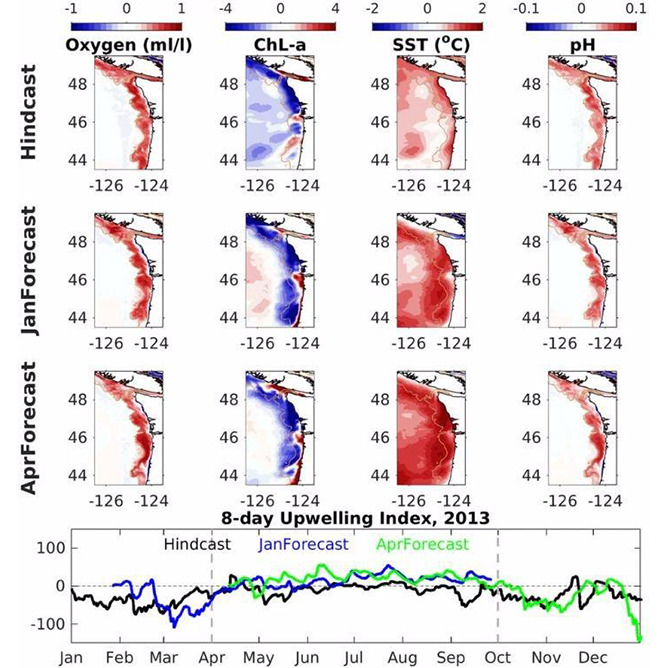
Using models and research to understand the sensitivity of organisms and ecosystems to ocean acidification to make predictions about the future, allowing communities and industries to prepare

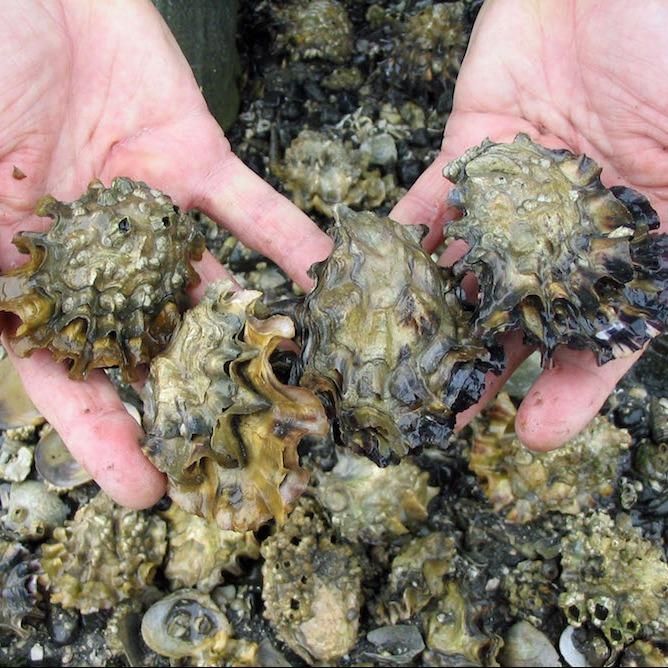
Closeup of oysters cupped in someone's hands

MANAGEMENT

Using these models and predictions as tools to facilitate management strategies that will protect marine resources and communities from future changes

TECHNOLOGY DEVELOPMENT

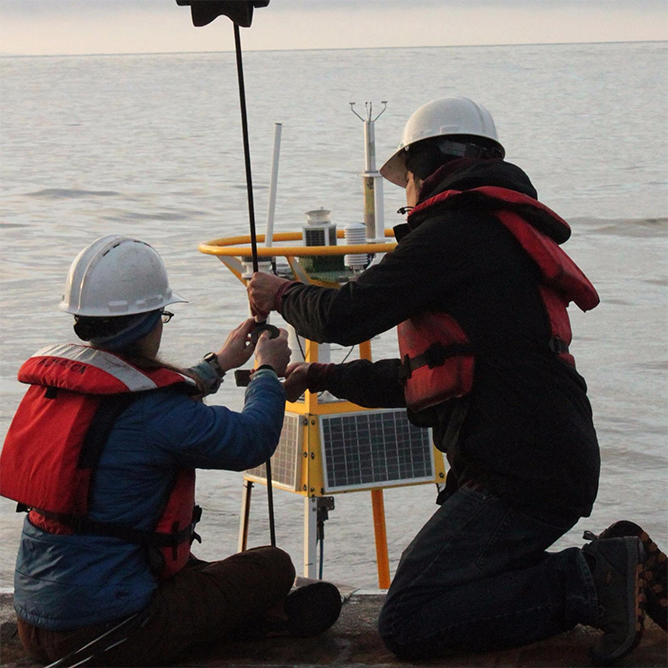
Developing innovative tools to help monitor ocean acidification and mitigate changing ocean chemistry locally

REDUCING OUR CARBON FOOTPRINT

On the Road

Drive fuel-efficient vehicles or choose public transportation. Choose your bike or walk! Don't sit idle for more than 30 seconds. Keep your tires properly inflated.

With your Food Choices

Eat local- this helps cut down on production and transport! Reduce your meat and dairy. Compost to avoid food waste ending up in the landfill

With your Food Choices

Make energy-efficient choices for your appliances and lighting. Heat and cool efficiently! Change your air filters and program your thermostat, seal and insulate your home, and support clean energy sources

By Reducing Coastal Acidification

Reduce your use of fertilizers, Improve sewage treatment and run off, and Protect and restore coastal habitats

TAKE ACTION WITH YOUR COMMUNITY

You've taken the first step to learn more about ocean acidification - why not spread this knowledge to your community?

Every community has their unique culture, economy and ecology and what’s at stake from ocean acidification may be different depending on where you live.  As a community member, you can take a larger role in educating the public about ocean acidification. Creating awareness is the first step to taking action.  As communities gain traction, neighboring regions that share marine resources can build larger coalitions to address ocean acidification.  Here are some ideas to get started:

  1. Work with informal educators, such as aquarium outreach programs and local non-profits, to teach the public about ocean acidification. Visit our Education & Outreach page to find the newest tools!
  2. Participate in habitat restoration efforts to restore habitats that help mitigate the effects of coastal acidification
  3. Facilitate conversations with local businesses that might be affected by ocean acidification, building a plan for the future.
  4. Partner with local community efforts to mitigate the driver behind ocean acidification  – excess CO2 – such as community supported agriculture, bike & car shares and other public transportation options.
  5. Contact your regional Coastal Acidification Network (CAN) to learn how OA is affecting your region and more ideas about how you can get involved in your community
       More for Taking Community Action