Official websites use .gov
A .gov website belongs to an official government organization in the United States.

Secure .gov websites use HTTPS
A lock ( ) or https:// means you’ve safely connected to the .gov website. Share sensitive information only on official, secure websites.

Publications

Publication Post Type

Ecological and socioeconomic strategies to sustain Caribbean coral reefs in a high-CO<sub>2</sub> world

The Caribbean and Western Atlantic region hosts one of the world’s most diverse geopolitical regions and a unique marine biota distinct from tropical seas in the Pacific and Indian Oceans. While this region varies in human population density, GDP and wealth, coral reefs, and their associated ecosystem services, are central to people’s livelihoods. Unfortunately, the region’s reefs […]

Ecological and socioeconomic strategies to sustain Caribbean coral reefs in a high-CO<sub>2</sub> world Read More »

Global Observational Needs and Resources for Marine Biodiversity

The diversity of life in the sea is critical to the health of ocean ecosystems that support living resources and therefore essential to the economic, nutritional, recreational, and health needs of billions of people. Yet there is evidence that the biodiversity of many marine habitats is being altered in response to a changing climate and

Global Observational Needs and Resources for Marine Biodiversity Read More »

Marine CO<sub>2</sub> Patterns in the Northern Salish Sea

Marine carbon dioxide (CO2) system data has been collected from December 2014 to June 2018 in the Northern Salish Sea (NSS; British Columbia, Canada) and consisted of continuous measurements at two sites as well as spatially- and seasonally distributed discrete seawater samples. The array of CO2 observing activities included high-resolution CO2 partial pressure (pCO2) and pHT (total scale)

Marine CO<sub>2</sub> Patterns in the Northern Salish Sea Read More »

Seasonal Variability of the CO<sub>2</sub> System in a Large Coastal Plain Estuary

The Chesapeake Bay, a large coastal plain estuary, has been studied extensively in terms of its water quality, and yet, comparatively less is known about its carbonate system. Here we present discrete observations of dissolved inorganic carbon (DIC) and total alkalinity from four seasonal cruises in 2016–2017. These new observations are used to characterize the

Seasonal Variability of the CO<sub>2</sub> System in a Large Coastal Plain Estuary Read More »

Scientific considerations for acidification monitoring in the U.S. Mid-Atlantic Region

Coastal and ocean acidification has the potential to cause significant environmental and societal impacts. Monitoring carbonate chemistry parameters over spatial and temporal scales is challenging, especially with limited resources. A lack of monitoring data can lead to a limited understanding of real-world conditions. Without such data, robust experimental and model design is challenging, and the identification and

Scientific considerations for acidification monitoring in the U.S. Mid-Atlantic Region Read More »

Ocean sound levels in the northeast Pacific recorded from an autonomous underwater glider

Ocean gliders are a quiet and efficient mobile autonomous platform for passive acoustic monitoring and oceanographic measurements in remote marine environments. During July 20—August 6 2012, we used a Teledyne Webb Research Slocum G2 glider equipped with a hydrophone logging system to record ocean sound along a 458 km north to south traverse of the

Ocean sound levels in the northeast Pacific recorded from an autonomous underwater glider Read More »

High-frequency variability of CO<sub>2</sub> in Grand Passage, Bay of Fundy, Nova Scotia

Assessing changes in the marine carbon cycle arising from anthropogenic CO2 emissions requires a detailed understanding of the carbonate system’s natural variability. Coastal ecosystems vary over short spatial and temporal scales, so their dynamics are not well described by long-term and broad regional averages. A year-long time series of pCO2, temperature, salinity, and currents is used to quantify

High-frequency variability of CO<sub>2</sub> in Grand Passage, Bay of Fundy, Nova Scotia Read More »

Elevated CO<sub>2</sub> impairs olfactory-mediated neural and behavioral responses and gene expression in ocean-phase coho salmon (<em>Oncorhynchus kisutch</em>)

Elevated concentrations of CO2 in seawater can disrupt numerous sensory systems in marine fish. This is of particular concern for Pacific salmon because they rely on olfaction during all aspects of their life including during their homing migrations from the ocean back to their natal streams. We investigated the effects of elevated seawater CO2 on coho salmon

Elevated CO<sub>2</sub> impairs olfactory-mediated neural and behavioral responses and gene expression in ocean-phase coho salmon (<em>Oncorhynchus kisutch</em>) Read More »

Rapid warming and salinity changes in the Gulf of Maine alter surface ocean carbonate parameters and hide ocean acidification

A profound warming event in the Gulf of Maine during the last decade has caused sea surface temperatures to rise to levels exceeding any earlier observations recorded in the region over the last 150 years. This event dramatically affected CO2 solubility and, in turn, the status of the sea surface carbonate system. When combined with the concomitant

Rapid warming and salinity changes in the Gulf of Maine alter surface ocean carbonate parameters and hide ocean acidification Read More »

Spatial and Temporal Variability of pCO2, Carbon Fluxes, and Saturation State on the West Florida Shelf

The West Florida Shelf (WFS) is a source of uncertainty for the Gulf of Mexico carbon budget. Data from the synthesis of approximately 135,000 pCO2 values from 97 cruises from the WFS show that the shelf waters fluctuate between being a weak source to a weak sink of carbon. Overall, the shelf acts as a weak source

Spatial and Temporal Variability of pCO2, Carbon Fluxes, and Saturation State on the West Florida Shelf Read More »

Forecasts for Alaska Fisheries

Crab pots and fishing nets in Alaska's Dutch Harbor
Image credit: Michael Theberge

Understanding seasonal changes in ocean acidification in Alaskan waters and the potential impacts to the multi-billion-dollar fishery sector is a main priority. Through work funded by NOAA’s Ocean Acidification Program, the Pacific Marine Environmental Laboratory developed a model capable of depicting past ocean chemistry conditions for the Bering Sea and is now testing the ability of this model to forecast future conditions. This model is being used to develop an ocean acidification indicator provided to fisheries managers in the annual NOAA Eastern Bering Sea Ecosystem Status Report.

ADAPTING TO OCEAN ACIDIFICATION

The NOAA Ocean Acidification Program (OAP) works to prepare society to adapt to the consequences of ocean acidification and conserve marine ecosystems as acidification occurs. Learn more about the human connections and adaptation strategies from these efforts.

Adaptation approaches fostered by the OAP include:

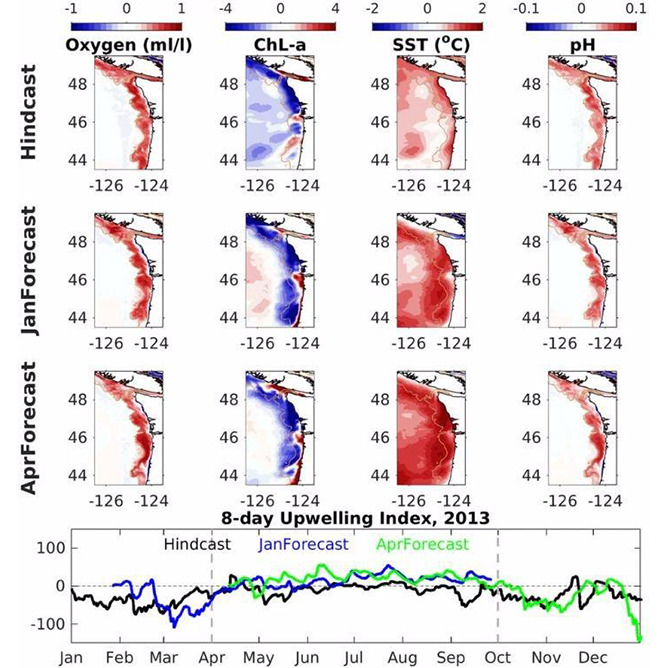
FORECASTING

Using models and research to understand the sensitivity of organisms and ecosystems to ocean acidification to make predictions about the future, allowing communities and industries to prepare

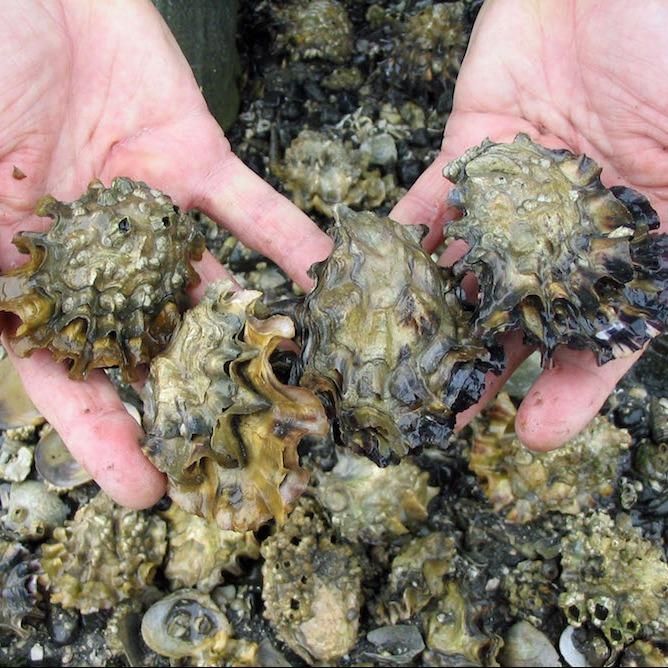
Closeup of oysters cupped in someone's hands

MANAGEMENT

Using these models and predictions as tools to facilitate management strategies that will protect marine resources and communities from future changes

TECHNOLOGY DEVELOPMENT

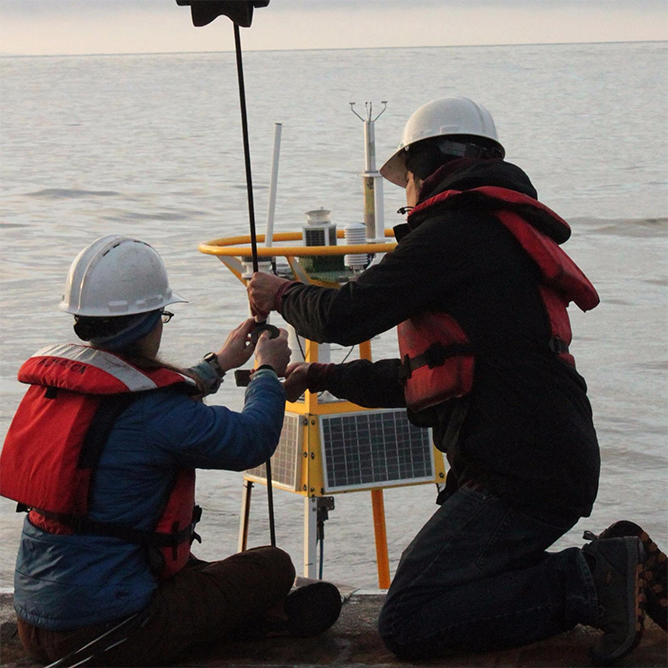
Developing innovative tools to help monitor ocean acidification and mitigate changing ocean chemistry locally

REDUCING OUR CARBON FOOTPRINT

On the Road

Drive fuel-efficient vehicles or choose public transportation. Choose your bike or walk! Don't sit idle for more than 30 seconds. Keep your tires properly inflated.

With your Food Choices

Eat local- this helps cut down on production and transport! Reduce your meat and dairy. Compost to avoid food waste ending up in the landfill

With your Food Choices

Make energy-efficient choices for your appliances and lighting. Heat and cool efficiently! Change your air filters and program your thermostat, seal and insulate your home, and support clean energy sources

By Reducing Coastal Acidification

Reduce your use of fertilizers, Improve sewage treatment and run off, and Protect and restore coastal habitats

TAKE ACTION WITH YOUR COMMUNITY

You've taken the first step to learn more about ocean acidification - why not spread this knowledge to your community?

Every community has their unique culture, economy and ecology and what’s at stake from ocean acidification may be different depending on where you live.  As a community member, you can take a larger role in educating the public about ocean acidification. Creating awareness is the first step to taking action.  As communities gain traction, neighboring regions that share marine resources can build larger coalitions to address ocean acidification.  Here are some ideas to get started:

  1. Work with informal educators, such as aquarium outreach programs and local non-profits, to teach the public about ocean acidification. Visit our Education & Outreach page to find the newest tools!
  2. Participate in habitat restoration efforts to restore habitats that help mitigate the effects of coastal acidification
  3. Facilitate conversations with local businesses that might be affected by ocean acidification, building a plan for the future.
  4. Partner with local community efforts to mitigate the driver behind ocean acidification  – excess CO2 – such as community supported agriculture, bike & car shares and other public transportation options.
  5. Contact your regional Coastal Acidification Network (CAN) to learn how OA is affecting your region and more ideas about how you can get involved in your community
       More for Taking Community Action