Official websites use .gov
A .gov website belongs to an official government organization in the United States.

Secure .gov websites use HTTPS
A lock ( ) or https:// means you’ve safely connected to the .gov website. Share sensitive information only on official, secure websites.

Publications

Publication Post Type

Ocean Acidification and Direct Interactions Affect Coral, Macroalga, and Sponge Growth in the Florida Keys

Coral reef community composition, function, and resilience have been altered by natural and anthropogenic stressors. Future anthropogenic ocean and coastal acidification (together termed “acidification”) may exacerbate this reef degradation. Accurately predicting reef resilience requires an understanding of not only direct impacts of acidification on marine organisms but also indirect effects on species interactions that influence […]

Ocean Acidification and Direct Interactions Affect Coral, Macroalga, and Sponge Growth in the Florida Keys Read More »

Synoptic assessment of coastal total alkalinity through community science

Comprehensive sampling of the carbonate system in estuaries and coastal waters can be difficult and expensive because of the complex and heterogeneous nature of near-shore environments. We show that sample collection by community science programs is a viable strategy for expanding estuarine carbonate system monitoring and prioritizing regions for more targeted assessment. ‘Shell Day’ was

Synoptic assessment of coastal total alkalinity through community science Read More »

Biodiversity of coral reef cryptobiota shuffles but does not decline under the combined stressors of ocean warming and acidification

Ocean-warming and acidification are predicted to reduce coral reef biodiversity, but the combined effects of these stressors on overall biodiversity are largely unmeasured. Here, we examined the individual and combined effects of elevated temperature (+2 °C) and reduced pH (−0.2 units) on the biodiversity of coral reef communities that developed on standardized sampling units over

Biodiversity of coral reef cryptobiota shuffles but does not decline under the combined stressors of ocean warming and acidification Read More »

Effects of ocean acidification on the growth, photosynthetic performance, and domoic acid production of the diatom <em>Pseudo-nitzschia australis</em> from the California Current System

Pseudo-nitzschia australis (Frenguelli), a toxigenic pennate diatom capable of producing the neurotoxin domoic acid (DA), was examined in unialgal laboratory cultures to quantify its physiological response to ocean acidification (OA) – the decline in pH resulting from increasing partial pressure of CO2 (pCO2) in the oceans. Toxic blooms of P. australis are common in the

Effects of ocean acidification on the growth, photosynthetic performance, and domoic acid production of the diatom <em>Pseudo-nitzschia australis</em> from the California Current System Read More »

Evaluating the Evolving Ocean Acidification Risk to Dungeness Crab: Time-Series Observations and Modeling on the Olympic Coast, Washington, USA

The Olympic Coast of Washington is home to four Coastal Treaty Tribes who have relied on the region’s rich marine resources since time immemorial. The region is characterized by large dynamic ranges of physical and biogeochemical oceanographic parameters, particularly during the upwelling season (April–September). Here, we present novel estimates of ocean acidification metrics—pH and calcium

Evaluating the Evolving Ocean Acidification Risk to Dungeness Crab: Time-Series Observations and Modeling on the Olympic Coast, Washington, USA Read More »

Changes in the macrobenthic infaunal community of the Southern California continental margin over five decades in relation to oceanographic factors

Climate change has altered the physiochemical conditions of the coastal ocean but effects on infaunal communities have not been well assessed. Here, we used multivariate ordination to examine temporal patterns in benthic community composition from 4 southern California continental shelf monitoring programs that range in duration from 30 to 50 yr. Temporal changes were compared

Changes in the macrobenthic infaunal community of the Southern California continental margin over five decades in relation to oceanographic factors Read More »

Mississippi river chemistry impacts on the interannual variability of aragonite saturation state in the Northern Gulf of Mexico

In the northern Gulf of Mexico shelf, the Mississippi-Atchafalaya River System (MARS) impacts the carbonate system by delivering freshwater with a distinct seasonal pattern in both total alkalinity (Alk) and dissolved inorganic carbon (DIC), and promoting biologically-driven changes in DIC through nutrient inputs. However, how and to what degree these processes modulate the interannual variability

Mississippi river chemistry impacts on the interannual variability of aragonite saturation state in the Northern Gulf of Mexico Read More »

Variable exposure to multiple climate stressors across the California marine protected area network and policy implications

The efficacy of marine protected areas (MPAs) may be reduced when climate change disrupts the ecosystems and human communities around which they are designed. The effects of ocean warming on MPA functioning have received attention but less is known about how multiple climatic stressors may influence MPAs efficacy. Using a novel dataset incorporating 8.8 million

Variable exposure to multiple climate stressors across the California marine protected area network and policy implications Read More »

Data reporting and sharing for ocean alkalinity enhancement research

Effective management of data is essential for successful ocean alkalinity enhancement (OAE) research, as it guarantees the long-term preservation, interoperability, discoverability, and accessibility of data. OAE research generates various types of data, such as discrete bottle measurements, autonomous measurements from surface underway and uncrewed platforms (e.g., moorings, Saildrones, gliders, Argo floats), physiological response studies (e.g.,

Data reporting and sharing for ocean alkalinity enhancement research Read More »

Coral disease outbreak at the remote Flower Garden Banks, Gulf of Mexico

East and West Flower Garden Bank (FGB) are part of Flower Garden Banks National Marine Sanctuary (FGBNMS) in the northwest Gulf of Mexico. This geographically-isolated reef system contains extensive coral communities with the highest coral cover (>50%) in the continental United States due, in part, to their remoteness and depth, and have historically exhibited low

Coral disease outbreak at the remote Flower Garden Banks, Gulf of Mexico Read More »

Forecasts for Alaska Fisheries

Crab pots and fishing nets in Alaska's Dutch Harbor
Image credit: Michael Theberge

Understanding seasonal changes in ocean acidification in Alaskan waters and the potential impacts to the multi-billion-dollar fishery sector is a main priority. Through work funded by NOAA’s Ocean Acidification Program, the Pacific Marine Environmental Laboratory developed a model capable of depicting past ocean chemistry conditions for the Bering Sea and is now testing the ability of this model to forecast future conditions. This model is being used to develop an ocean acidification indicator provided to fisheries managers in the annual NOAA Eastern Bering Sea Ecosystem Status Report.

ADAPTING TO OCEAN ACIDIFICATION

The NOAA Ocean Acidification Program (OAP) works to prepare society to adapt to the consequences of ocean acidification and conserve marine ecosystems as acidification occurs. Learn more about the human connections and adaptation strategies from these efforts.

Adaptation approaches fostered by the OAP include:

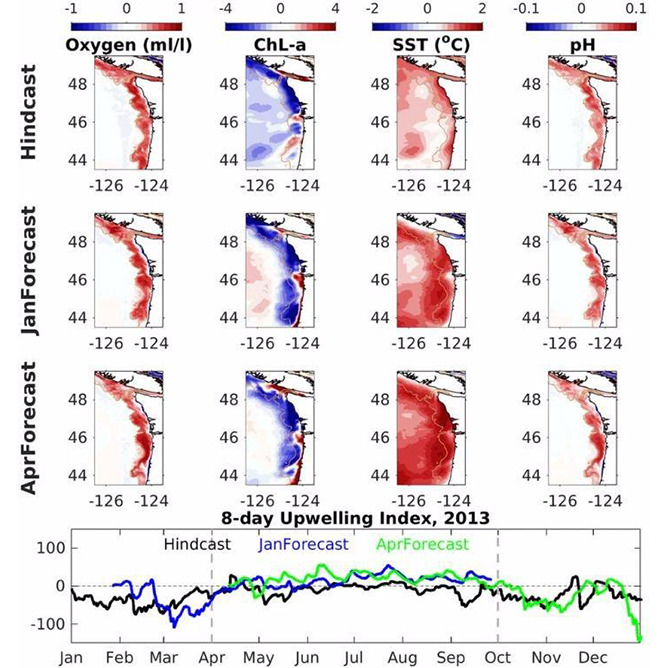
FORECASTING

Using models and research to understand the sensitivity of organisms and ecosystems to ocean acidification to make predictions about the future, allowing communities and industries to prepare

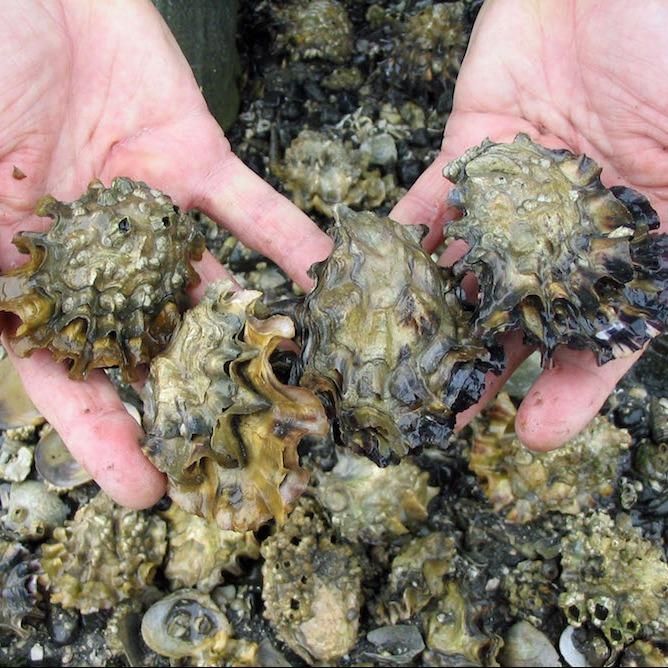
Closeup of oysters cupped in someone's hands

MANAGEMENT

Using these models and predictions as tools to facilitate management strategies that will protect marine resources and communities from future changes

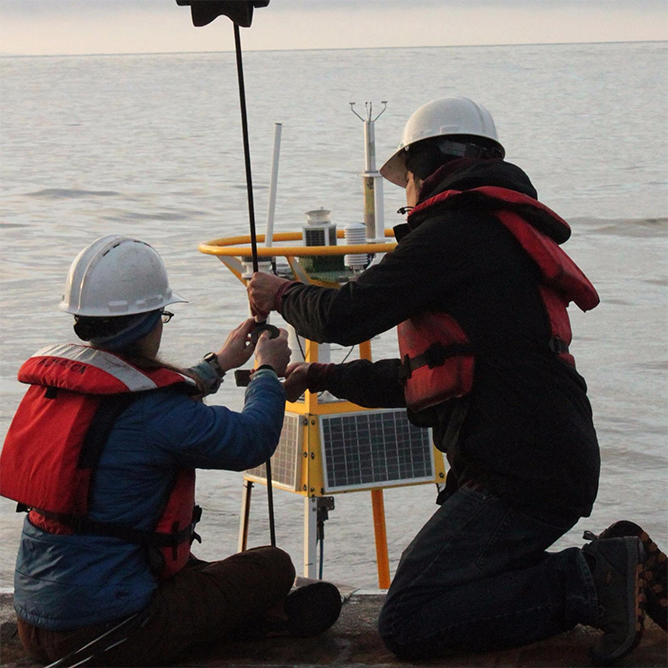
TECHNOLOGY DEVELOPMENT

Developing innovative tools to help monitor ocean acidification and mitigate changing ocean chemistry locally

REDUCING OUR CARBON FOOTPRINT

On the Road

Drive fuel-efficient vehicles or choose public transportation. Choose your bike or walk! Don't sit idle for more than 30 seconds. Keep your tires properly inflated.

With your Food Choices

Eat local- this helps cut down on production and transport! Reduce your meat and dairy. Compost to avoid food waste ending up in the landfill

With your Food Choices

Make energy-efficient choices for your appliances and lighting. Heat and cool efficiently! Change your air filters and program your thermostat, seal and insulate your home, and support clean energy sources

By Reducing Coastal Acidification

Reduce your use of fertilizers, Improve sewage treatment and run off, and Protect and restore coastal habitats

TAKE ACTION WITH YOUR COMMUNITY

You've taken the first step to learn more about ocean acidification - why not spread this knowledge to your community?

Every community has their unique culture, economy and ecology and what’s at stake from ocean acidification may be different depending on where you live.  As a community member, you can take a larger role in educating the public about ocean acidification. Creating awareness is the first step to taking action.  As communities gain traction, neighboring regions that share marine resources can build larger coalitions to address ocean acidification.  Here are some ideas to get started:

  1. Work with informal educators, such as aquarium outreach programs and local non-profits, to teach the public about ocean acidification. Visit our Education & Outreach page to find the newest tools!
  2. Participate in habitat restoration efforts to restore habitats that help mitigate the effects of coastal acidification
  3. Facilitate conversations with local businesses that might be affected by ocean acidification, building a plan for the future.
  4. Partner with local community efforts to mitigate the driver behind ocean acidification  – excess CO2 – such as community supported agriculture, bike & car shares and other public transportation options.
  5. Contact your regional Coastal Acidification Network (CAN) to learn how OA is affecting your region and more ideas about how you can get involved in your community
       More for Taking Community Action