Official websites use .gov
A .gov website belongs to an official government organization in the United States.

Secure .gov websites use HTTPS
A lock ( ) or https:// means you’ve safely connected to the .gov website. Share sensitive information only on official, secure websites.

Publications

Publication Post Type

Environmentally-determined production frontiers and lease utilization in Virginia’s eastern oyster aquaculture industry

During the last decade, oyster aquaculture has rebounded in Virginia and has been associated with an increase in subaqueous leased area. Production levels remain historically low, however, and many leases are thought to be underutilized. This study uses a novel approach leveraging high-resolution environmental data to evaluate lease utilization and identify constraints on aquaculture development. […]

Environmentally-determined production frontiers and lease utilization in Virginia’s eastern oyster aquaculture industry Read More »

Synthesis of Thresholds of Ocean Acidification Impacts on Decapods

Assessing decapod sensitivity to regional-scale ocean acidification (OA) conditions is limited because of a fragmented understanding of the thresholds at which they exhibit biological response. To address this need, we undertook a three-step data synthesis: first, we compiled a dataset composed of 27,000 datapoints from 55 studies of decapod responses to OA. Second, we used

Synthesis of Thresholds of Ocean Acidification Impacts on Decapods Read More »

An Overview of Ocean Climate Change Indicators: Sea Surface Temperature, Ocean Heat Content, Ocean pH, Dissolved Oxygen Concentration, Arctic Sea Ice Extent, Thickness and Volume, Sea Level and Strength of the AMOC (Atlantic Meridional Overturning Circulation)

Global ocean physical and chemical trends are reviewed and updated using seven key ocean climate change indicators: (i) Sea Surface Temperature, (ii) Ocean Heat Content, (iii) Ocean pH, (iv) Dissolved Oxygen concentration (v) Arctic Sea Ice extent, thickness, and volume (vi) Sea Level and (vii) the strength of the Atlantic Meridional Overturning Circulation (AMOC). The

An Overview of Ocean Climate Change Indicators: Sea Surface Temperature, Ocean Heat Content, Ocean pH, Dissolved Oxygen Concentration, Arctic Sea Ice Extent, Thickness and Volume, Sea Level and Strength of the AMOC (Atlantic Meridional Overturning Circulation) Read More »

Carbonate chemistry seasonality in a tropical mangrove lagoon in La Parguera, Puerto Rico

We investigated the seasonal carbonate chemistry variability within a semi-enclosed tropical mangrove lagoon in southwestern Puerto Rico. Biweekly measurements of seawater temperature, salinity, total alkalinity (TA), and dissolved inorganic carbon (DIC) were conducted from 2014 to 2018. We describe the possible mechanisms driving the observed variability by correlating the DIC/TA ratio with pH and Ωarg,

Carbonate chemistry seasonality in a tropical mangrove lagoon in La Parguera, Puerto Rico Read More »

Effects of ocean acidification on young-of-the-year golden king crab (<em>Lithodes aequispinus</eM>) survival and growth

Ocean acidification, a reduction in the pH of the oceans caused by increasing CO2, can have negative physiological effects on marine species. In this study, we examined how CO2-driven acidification affected the growth and survival of juvenile golden king crab (Lithodes aequispinus), an important fishery species in Alaska. Juveniles were reared from larvae in surface

Effects of ocean acidification on young-of-the-year golden king crab (<em>Lithodes aequispinus</eM>) survival and growth Read More »

Pacific-wide pH snapshots reveal that high coral cover correlates with low, but variable pH

Ocean acidification (OA) is impairing the construction of coral reefs while simultaneously accelerating their breakdown. The metabolism of different reef organism assemblages alters seawater pH in different ways, possibly buffering or exacerbating OA impacts. In spite of this, field data relating benthic community structure and seawater pH are sparse. We collected pH time-series data snapshots

Pacific-wide pH snapshots reveal that high coral cover correlates with low, but variable pH Read More »

Multiple Linear Regression Models for Reconstructing and Exploring Processes Controlling the Carbonate System of the Northeast US From Basic Hydrographic Data

In the coastal ocean, local carbonate system variability is determined by the interaction between ocean acidification and local processes. Sporadic observations indicate that biological metabolism, river input, and water mass mixing are dominant local processes driving carbonate system variability in northeast US shelf waters. These processes are also reflected in the variability of observed temperature

Multiple Linear Regression Models for Reconstructing and Exploring Processes Controlling the Carbonate System of the Northeast US From Basic Hydrographic Data Read More »

Irradiance, photosynthesis and elevated pCO<sub>2</sub> effects on net calcification in tropical reef macroalgae

Calcifying tropical macroalgae produce sediment, build three-dimensional habitats, and provide substrate for invertebrate larvae on reefs. Thus, lower calcification rates under declining pH and increasing ocean pCO2, or ocean acidification, is a concern. In the present study, calcification rates were examined experimentally under predicted end-of-the-century seawater pCO2 (1116 μatm) and pH (7.67) compared to ambient controls (pCO2 409 μatm; pH 8.04).

Irradiance, photosynthesis and elevated pCO<sub>2</sub> effects on net calcification in tropical reef macroalgae Read More »

Multi-Stressor Observations and Modeling to Build Understanding of and Resilience to the Coastal Impacts of Climate Change

Multiple stressors are affecting the Pacific Northwest (PNW) coastal ocean, including harmful algal blooms (HABs), ocean acidification, marine heatwaves, and hypoxia (low oxygen). While these conditions or events are tied to seasonal cycles such as upwelling periods and multiyear cycles such as El Niño/La Niña, they are becoming increasingly frequent and intense. Additionally, they can

Multi-Stressor Observations and Modeling to Build Understanding of and Resilience to the Coastal Impacts of Climate Change Read More »

Biological Impact of Ocean Acidification in the Canadian Arctic: Widespread Severe Pteropod Shell Dissolution in Amundsen Gulf

Increasing atmospheric CO2, cold water temperatures, respiration, and freshwater inputs all contribute to enhanced acidification in Arctic waters. However, ecosystem effects of ocean acidification (derived from anthropogenic and/or natural sources) in the Arctic Ocean are highly uncertain. Zooplankton samples and oceanographic data were collected in August 2012–2014 and again in August 2017 to investigate the

Biological Impact of Ocean Acidification in the Canadian Arctic: Widespread Severe Pteropod Shell Dissolution in Amundsen Gulf Read More »

Forecasts for Alaska Fisheries

Crab pots and fishing nets in Alaska's Dutch Harbor
Image credit: Michael Theberge

Understanding seasonal changes in ocean acidification in Alaskan waters and the potential impacts to the multi-billion-dollar fishery sector is a main priority. Through work funded by NOAA’s Ocean Acidification Program, the Pacific Marine Environmental Laboratory developed a model capable of depicting past ocean chemistry conditions for the Bering Sea and is now testing the ability of this model to forecast future conditions. This model is being used to develop an ocean acidification indicator provided to fisheries managers in the annual NOAA Eastern Bering Sea Ecosystem Status Report.

ADAPTING TO OCEAN ACIDIFICATION

The NOAA Ocean Acidification Program (OAP) works to prepare society to adapt to the consequences of ocean acidification and conserve marine ecosystems as acidification occurs. Learn more about the human connections and adaptation strategies from these efforts.

Adaptation approaches fostered by the OAP include:

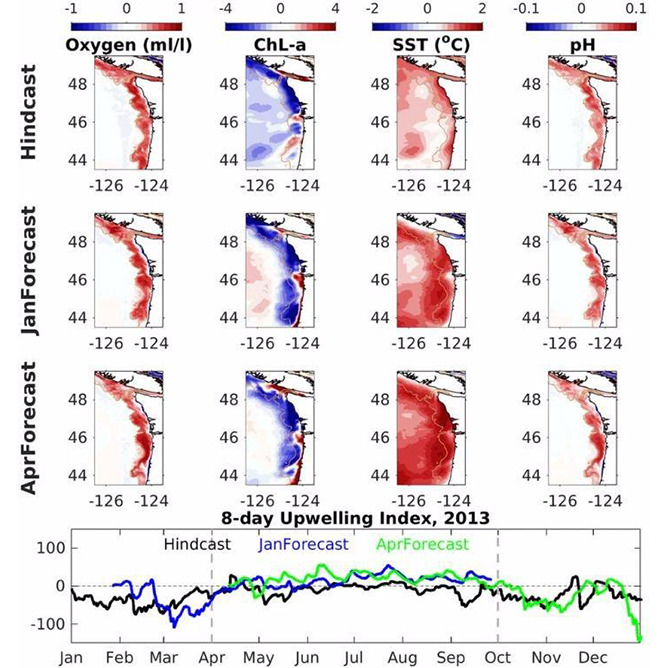
FORECASTING

Using models and research to understand the sensitivity of organisms and ecosystems to ocean acidification to make predictions about the future, allowing communities and industries to prepare

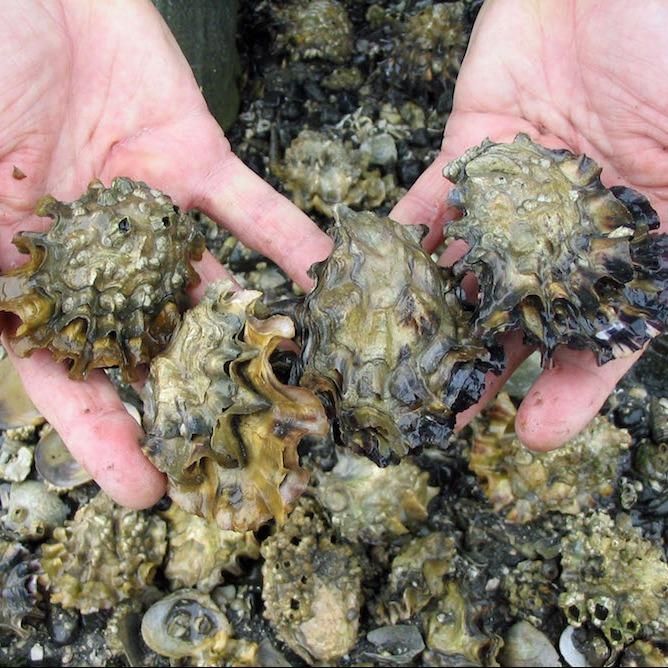
Closeup of oysters cupped in someone's hands

MANAGEMENT

Using these models and predictions as tools to facilitate management strategies that will protect marine resources and communities from future changes

TECHNOLOGY DEVELOPMENT

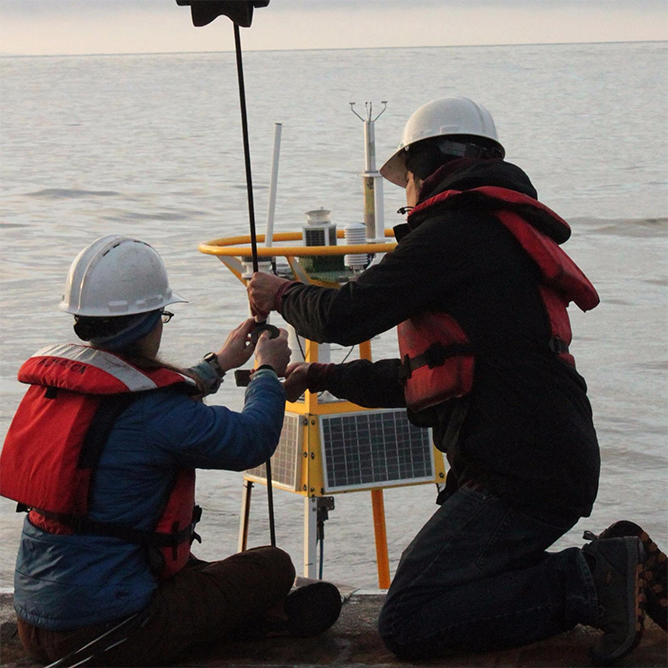
Developing innovative tools to help monitor ocean acidification and mitigate changing ocean chemistry locally

REDUCING OUR CARBON FOOTPRINT

On the Road

Drive fuel-efficient vehicles or choose public transportation. Choose your bike or walk! Don't sit idle for more than 30 seconds. Keep your tires properly inflated.

With your Food Choices

Eat local- this helps cut down on production and transport! Reduce your meat and dairy. Compost to avoid food waste ending up in the landfill

With your Food Choices

Make energy-efficient choices for your appliances and lighting. Heat and cool efficiently! Change your air filters and program your thermostat, seal and insulate your home, and support clean energy sources

By Reducing Coastal Acidification

Reduce your use of fertilizers, Improve sewage treatment and run off, and Protect and restore coastal habitats

TAKE ACTION WITH YOUR COMMUNITY

You've taken the first step to learn more about ocean acidification - why not spread this knowledge to your community?

Every community has their unique culture, economy and ecology and what’s at stake from ocean acidification may be different depending on where you live.  As a community member, you can take a larger role in educating the public about ocean acidification. Creating awareness is the first step to taking action.  As communities gain traction, neighboring regions that share marine resources can build larger coalitions to address ocean acidification.  Here are some ideas to get started:

  1. Work with informal educators, such as aquarium outreach programs and local non-profits, to teach the public about ocean acidification. Visit our Education & Outreach page to find the newest tools!
  2. Participate in habitat restoration efforts to restore habitats that help mitigate the effects of coastal acidification
  3. Facilitate conversations with local businesses that might be affected by ocean acidification, building a plan for the future.
  4. Partner with local community efforts to mitigate the driver behind ocean acidification  – excess CO2 – such as community supported agriculture, bike & car shares and other public transportation options.
  5. Contact your regional Coastal Acidification Network (CAN) to learn how OA is affecting your region and more ideas about how you can get involved in your community
       More for Taking Community Action