Editorial: Acidification and Hypoxia in Marginal Seas
Editorial: Acidification and Hypoxia in Marginal Seas Read More »

Publication Post Type
Dungeness crab (Metacarcinus magister) are the most valuable fishery on the U.S. West Coast and both larval and adult Dungeness crabs are important components of regional food webs. Previous experiments have shown decreased survival and a slower development rate for Dungeness crab zoea reared in water with high CO2, indicating a susceptibility to ocean acidification.
Ocean acidification is changing surface water chemistry, but natural variability due to nearshore processes can mask its effects on ecosystem responses. We present an approach of quantitatively resolving net ecosystem metabolism from an array of long-term time series stations, offering perhaps the longest record of such processes over a reef to date. We used 8
The global ocean is experiencing major changes due to human-made carbon emissions and climate change, leading to a warming ocean with increasing acidity and declining oxygen. On top of these long-term changes in the ocean are short-term extreme events, such as marine heatwaves. These extreme events quickly change the ocean state and can stress marine
Ocean Biogeochemical Signatures of the North Pacific Blob Read More »
Ecosystem Based Fisheries Management aims to broaden the set of factors included in assessments and management decision making but progress with implementation remains limited. We developed a framework that examines the consequences of temporal changes in temperature and ocean pH on yield and profit of multiple interacting stocks including eastern Bering Sea (EBS) snow, southern Tanner, and
Temperature variations in the North and tropical Pacific contribute to the predictability of temperatures along the 26.4σ isopycnal layer off the Northern California Current System (N-CCS). Monthly temperature variations at this depth in the N-CCS are related to a linear combination of factors, including North Pacific spice anomalies, and the PDO and ENSO climate indices. However,
Global ocean/atmosphere circulation models (GCMs) allow us to better understand and predict the behavior of the ocean and atmosphere at large spatial and temporal scales; however, they may be unsuited for regional studies due to their low spatial resolution. We have developed a method for downscaling GCMs data using an artificial neural network to reconstruct
Climate downscaling for regional models with a neural network: A Hawaiian example Read More »
Diurnal variability of ocean CO2 system variables is poorly constrained. Here, this variability and its drivers are assessed using 3-h observations collected over 8–140 months at 37 stations located in diverse marine environments. Extreme diurnal variability, that is, when the daily amplitude exceeds the 99th percentile of diurnal variability, is comparable in magnitude to the seasonal amplitude and
Scientists are working to establish a common methodology for evaluating rates of change in—and the various mechanisms that affect—acidification across ocean environments. This workshop was funded by NOAA’s Ocean Acidification Program
Reaching Consensus on Assessments of Ocean Acidification Trends Read More »
The decline in global emissions of carbon dioxide due to the COVID-19 pandemic provides a unique opportunity to investigate the sensitivity of the global carbon cycle and climate system to emissions reductions. Recent efforts to study the response to these emissions declines has not addressed their impact on the ocean, yet ocean carbon absorption is
The Ocean Carbon Response to COVID-Related Emissions Reductions Read More »

Understanding seasonal changes in ocean acidification in Alaskan waters and the potential impacts to the multi-billion-dollar fishery sector is a main priority. Through work funded by NOAA’s Ocean Acidification Program, the Pacific Marine Environmental Laboratory developed a model capable of depicting past ocean chemistry conditions for the Bering Sea and is now testing the ability of this model to forecast future conditions. This model is being used to develop an ocean acidification indicator provided to fisheries managers in the annual NOAA Eastern Bering Sea Ecosystem Status Report.
The NOAA Ocean Acidification Program (OAP) works to prepare society to adapt to the consequences of ocean acidification and conserve marine ecosystems as acidification occurs. Learn more about the human connections and adaptation strategies from these efforts.
Adaptation approaches fostered by the OAP include:
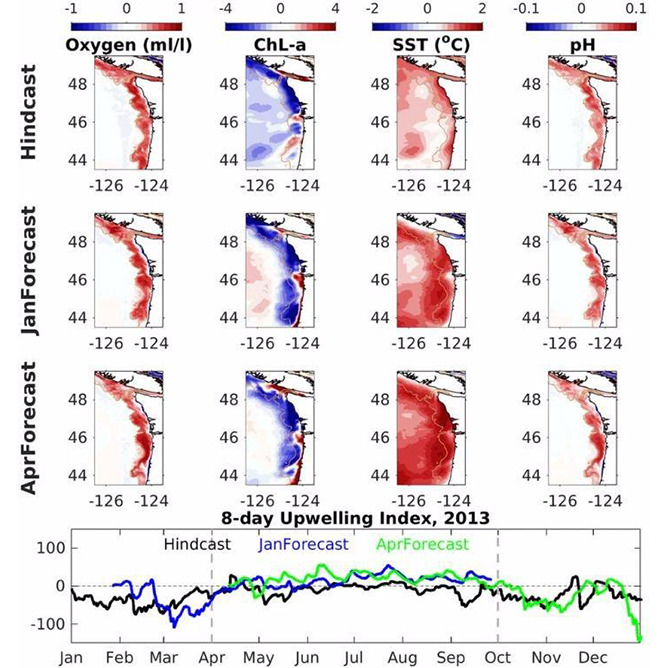
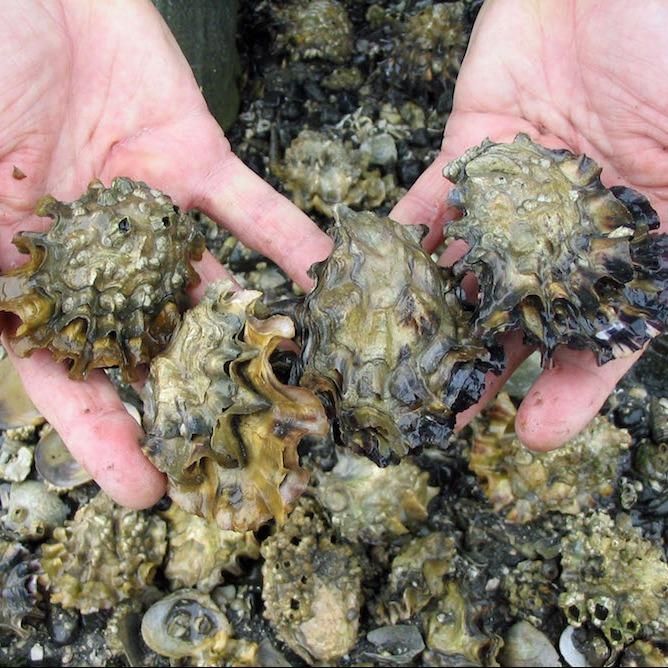
Using models and research to understand the sensitivity of organisms and ecosystems to ocean acidification to make predictions about the future, allowing communities and industries to prepare
Using these models and predictions as tools to facilitate management strategies that will protect marine resources and communities from future changes
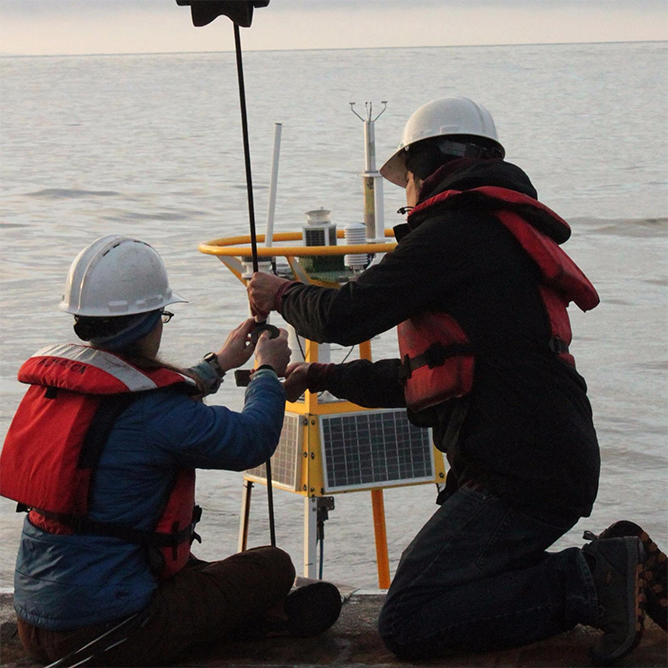
Developing innovative tools to help monitor ocean acidification and mitigate changing ocean chemistry locally
Drive fuel-efficient vehicles or choose public transportation. Choose your bike or walk! Don't sit idle for more than 30 seconds. Keep your tires properly inflated.
Eat local- this helps cut down on production and transport! Reduce your meat and dairy. Compost to avoid food waste ending up in the landfill
Make energy-efficient choices for your appliances and lighting. Heat and cool efficiently! Change your air filters and program your thermostat, seal and insulate your home, and support clean energy sources
Reduce your use of fertilizers, Improve sewage treatment and run off, and Protect and restore coastal habitats
You've taken the first step to learn more about ocean acidification - why not spread this knowledge to your community?
Every community has their unique culture, economy and ecology and what’s at stake from ocean acidification may be different depending on where you live. As a community member, you can take a larger role in educating the public about ocean acidification. Creating awareness is the first step to taking action. As communities gain traction, neighboring regions that share marine resources can build larger coalitions to address ocean acidification. Here are some ideas to get started: