Official websites use .gov
A .gov website belongs to an official government organization in the United States.

Secure .gov websites use HTTPS
A lock ( ) or https:// means you’ve safely connected to the .gov website. Share sensitive information only on official, secure websites.

Publications

Publication Post Type

Evaluating environmental controls on the exoskeleton density of larval Dungeness crab <em>via</em> micro computed tomography

Dungeness crab (Metacarcinus magister) have significant socioeconomic value, but are threatened by ocean acidification (OA) and other environmental stressors that are driven by climate change. Despite evidence that adult harvests are sensitive to the abundance of larval populations, relatively little is known about how Dungeness megalopae will respond to these stressors. Here we evaluate the […]

Evaluating environmental controls on the exoskeleton density of larval Dungeness crab <em>via</em> micro computed tomography Read More »

GLODAPv2.2022: the latest version of the global interior ocean biogeochemical data product

The Global Ocean Data Analysis Project (GLODAP) is a synthesis effort providing regular compilations of surface-to-bottom ocean biogeochemical bottle data, with an emphasis on seawater inorganic carbon chemistry and related variables determined through chemical analysis of seawater samples. GLODAPv2.2022 is an update of the previous version, GLODAPv2.2021 (Lauvset et al., 2021). The major changes are

GLODAPv2.2022: the latest version of the global interior ocean biogeochemical data product Read More »

Pelagic calcifiers face increased mortality and habitat loss with warming and ocean acidification

Global change is impacting the oceans in an unprecedented way, and multiple lines of evidence suggest that species distributions are changing in space and time. There is increasing evidence that multiple environmental stressors act together to constrain species habitat more than expected from warming alone. Here, we conducted a comprehensive study of how temperature and

Pelagic calcifiers face increased mortality and habitat loss with warming and ocean acidification Read More »

Global Synthesis of the Status and Trends of Ocean Acidification Impacts on Shelled Pteropods

The accumulation of anthropogenic CO2 in the ocean has major ecological, socioeconomic, and biogeochemical impacts, with repercussions for the ocean as a critical carbon sink. Ocean acidification (OA) disproportionately affects marine calcifiers, among which pelagic zooplanktonic pteropods play a significant role in carbonate export. The pteropod, due to the susceptibility of its aragonite shell to rapid

Global Synthesis of the Status and Trends of Ocean Acidification Impacts on Shelled Pteropods Read More »

Dysregulation of microRNAs may contribute to neurosensory impairment in Arctic cod (Boreogadus saida) following CO2 exposure

MicroRNAs (miRNAs) are epigenetic markers with a key role in post-transcriptional gene regulation. Several studies have described the dysregulation of miRNAs in temperature and hypoxic stress responses of marine organisms, but their role in the response to acidification conditions has remained relatively underexplored. We investigated the differential expression of miRNAs in whole brain tissue of

Dysregulation of microRNAs may contribute to neurosensory impairment in Arctic cod (Boreogadus saida) following CO2 exposure Read More »

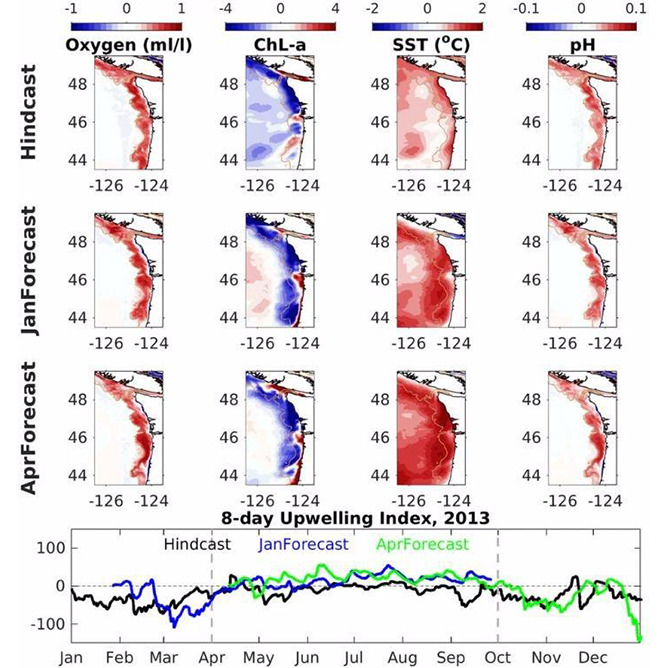
Can Seasonal Forecasts of Ocean Conditions Aid Fishery Managers? Experiences from 10 Years of J-SCOPE

Multiple stressors co-occurring in coastal waters are of increasing concern to local fisheries. Many economically, culturally, or ecologically important species (e.g., oysters, crabs, pteropods) in the Pacific Northwest are already directly affected by ocean acidification (OA), warming, and hypoxia. Additional indirect economic impacts on the finfish industry are possible due to losses of prey species. Because

Can Seasonal Forecasts of Ocean Conditions Aid Fishery Managers? Experiences from 10 Years of J-SCOPE Read More »

A 37-year record of ocean acidification in the Southern California current

Long-term ocean time series have proven to be the most robust approach for direct observation of climate change processes such as Ocean Acidification. The California Cooperative Oceanic Fisheries Investigations (CalCOFI) program has collected quarterly samples for seawater inorganic carbon since 1983. The longest time series is at CalCOFI line 90 station 90 from 1984–present, with

A 37-year record of ocean acidification in the Southern California current Read More »

A decade-long cruise time series (2008–2018) of physical and biogeochemical conditions in the southern Salish Sea, North America

Coastal and estuarine waters of the northern California Current system and southern Salish Sea host an observational network capable of characterizing biogeochemical dynamics related to ocean acidification, hypoxia, and marine heatwaves. Here, we compiled data sets from a set of cruises conducted in estuarine waters of Puget Sound (southern Salish Sea) and its boundary waters

A decade-long cruise time series (2008–2018) of physical and biogeochemical conditions in the southern Salish Sea, North America Read More »

Widespread and increasing near-bottom hypoxia in the coastal ocean off the United States Pacific Northwest

The 2021 summer upwelling season off the United States Pacific Northwest coast was unusually strong leading to widespread near-bottom, low-oxygen waters. During summer 2021, an unprecedented number of ship- and underwater glider-based measurements of dissolved oxygen were made in this region. Near-bottom hypoxia, that is dissolved oxygen less than 61 µmol kg−1 and harmful to marine animals, was

Widespread and increasing near-bottom hypoxia in the coastal ocean off the United States Pacific Northwest Read More »

Emerging Applications of Longstanding Autonomous Ocean Carbon Observations

For over two decades, NOAA’s Pacific Marine Environmental Laboratory (PMEL) has been developing and deploying autonomous ocean carbon measurement technologies. PMEL currently maintains a network of air-sea CO2 and ocean acidification time-series measurements on 33 surface buoys, including the world’s longest record of air-sea CO2 measured from a buoy. These sites are located in every

Emerging Applications of Longstanding Autonomous Ocean Carbon Observations Read More »

Forecasts for Alaska Fisheries

Crab pots and fishing nets in Alaska's Dutch Harbor
Image credit: Michael Theberge

Understanding seasonal changes in ocean acidification in Alaskan waters and the potential impacts to the multi-billion-dollar fishery sector is a main priority. Through work funded by NOAA’s Ocean Acidification Program, the Pacific Marine Environmental Laboratory developed a model capable of depicting past ocean chemistry conditions for the Bering Sea and is now testing the ability of this model to forecast future conditions. This model is being used to develop an ocean acidification indicator provided to fisheries managers in the annual NOAA Eastern Bering Sea Ecosystem Status Report.

ADAPTING TO OCEAN ACIDIFICATION

The NOAA Ocean Acidification Program (OAP) works to prepare society to adapt to the consequences of ocean acidification and conserve marine ecosystems as acidification occurs. Learn more about the human connections and adaptation strategies from these efforts.

Adaptation approaches fostered by the OAP include:

FORECASTING

Using models and research to understand the sensitivity of organisms and ecosystems to ocean acidification to make predictions about the future, allowing communities and industries to prepare

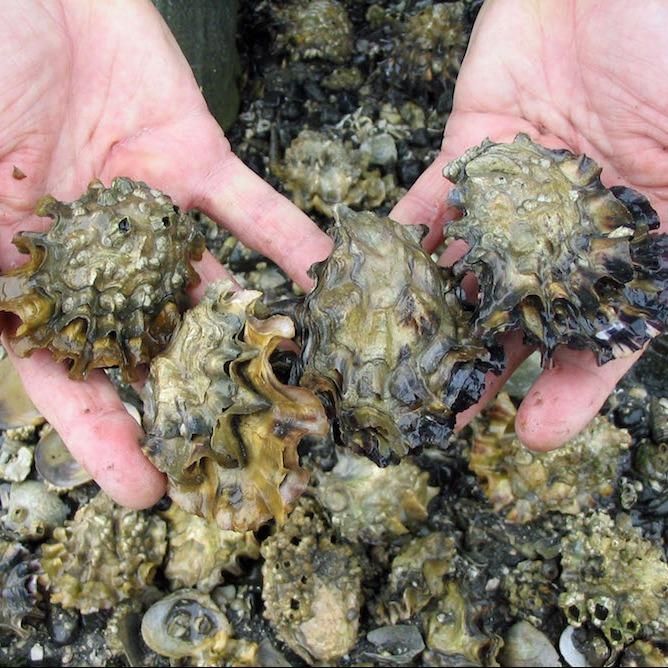
Closeup of oysters cupped in someone's hands

MANAGEMENT

Using these models and predictions as tools to facilitate management strategies that will protect marine resources and communities from future changes

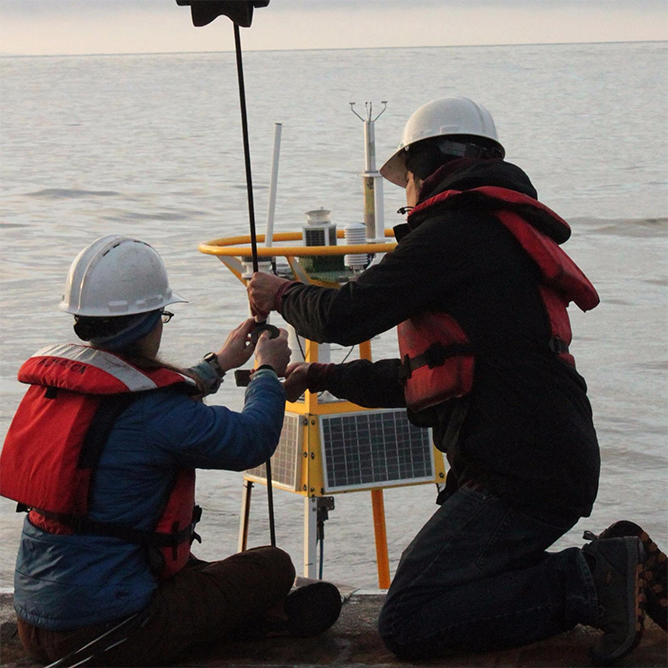
TECHNOLOGY DEVELOPMENT

Developing innovative tools to help monitor ocean acidification and mitigate changing ocean chemistry locally

REDUCING OUR CARBON FOOTPRINT

On the Road

Drive fuel-efficient vehicles or choose public transportation. Choose your bike or walk! Don't sit idle for more than 30 seconds. Keep your tires properly inflated.

With your Food Choices

Eat local- this helps cut down on production and transport! Reduce your meat and dairy. Compost to avoid food waste ending up in the landfill

With your Food Choices

Make energy-efficient choices for your appliances and lighting. Heat and cool efficiently! Change your air filters and program your thermostat, seal and insulate your home, and support clean energy sources

By Reducing Coastal Acidification

Reduce your use of fertilizers, Improve sewage treatment and run off, and Protect and restore coastal habitats

TAKE ACTION WITH YOUR COMMUNITY

You've taken the first step to learn more about ocean acidification - why not spread this knowledge to your community?

Every community has their unique culture, economy and ecology and what’s at stake from ocean acidification may be different depending on where you live.  As a community member, you can take a larger role in educating the public about ocean acidification. Creating awareness is the first step to taking action.  As communities gain traction, neighboring regions that share marine resources can build larger coalitions to address ocean acidification.  Here are some ideas to get started:

  1. Work with informal educators, such as aquarium outreach programs and local non-profits, to teach the public about ocean acidification. Visit our Education & Outreach page to find the newest tools!
  2. Participate in habitat restoration efforts to restore habitats that help mitigate the effects of coastal acidification
  3. Facilitate conversations with local businesses that might be affected by ocean acidification, building a plan for the future.
  4. Partner with local community efforts to mitigate the driver behind ocean acidification  – excess CO2 – such as community supported agriculture, bike & car shares and other public transportation options.
  5. Contact your regional Coastal Acidification Network (CAN) to learn how OA is affecting your region and more ideas about how you can get involved in your community
       More for Taking Community Action