Official websites use .gov
A .gov website belongs to an official government organization in the United States.

Secure .gov websites use HTTPS
A lock ( ) or https:// means you’ve safely connected to the .gov website. Share sensitive information only on official, secure websites.

Publications

Publication Post Type

Transdisciplinary Science: A Path to Understanding the Interactions Among Ocean Acidification, Ecosystems, and Society

The global nature of ocean acidification (OA) transcends habitats, ecosystems, regions, and science disciplines. The scientific community recognizes that the biggest challenge in improving understanding of how changing OA conditions affect ecosystems, and associated consequences for human society, requires integration of experimental, observational, and modeling approaches from many disciplines over a wide range of temporal and […]

Transdisciplinary Science: A Path to Understanding the Interactions Among Ocean Acidification, Ecosystems, and Society Read More »

Ocean acidification along the Gulf Coast and East Coast of the USA

As part of an effort to monitor changes in inorganic carbon chemistry of the coastal ocean, near-synoptic cruises are being conducted in the Northern Gulf of Mexico and along the East Coast of the United States. Here we describe observations obtained on a cruise in the summer of 2012 and compare them with results from a cruise following a

Ocean acidification along the Gulf Coast and East Coast of the USA Read More »

Including high-frequency variability in coastal ocean acidification projections

Assessing the impacts of anthropogenic ocean acidification requires knowledge of present-day and future environmental conditions. Here, we present a simple model for upwelling margins that projects anthropogenic acidification trajectories by combining high-temporal-resolution sensor data, hydrographic surveys for source water characterization, empirical relationships of the CO2 system, and the atmospheric CO2 record. This model characterizes CO2 variability on timescales

Including high-frequency variability in coastal ocean acidification projections Read More »

How Can Present and Future Satellite Missions Support Scientific Studies that Address Ocean Acidification?

Space-based observations offer unique capabilities for studying spatial and temporal dynamics of the upper ocean inorganic carbon cycle and, in turn, supporting research tied to ocean acidification (OA). Satellite sensors measuring sea surface temperature, color, salinity, wind, waves, currents, and sea level enable a fuller understanding of a range of physical, chemical, and biological phenomena

How Can Present and Future Satellite Missions Support Scientific Studies that Address Ocean Acidification? Read More »

Effect of ocean acidification on growth and otolith condition of juvenile scup, <em>Stenotomus chrysops</em>

Increasing amounts of atmospheric carbon dioxide (CO2) from human industrial activities are causing changes in global ocean carbonate chemistry, resulting in a reduction in pH, a process termed “ocean acidification.” It is important to determine which species are sensitive to elevated levels of CO2 because of potential impacts to ecosystems, marine resources, biodiversity, food webs, populations,

Effect of ocean acidification on growth and otolith condition of juvenile scup, <em>Stenotomus chrysops</em> Read More »

Internal consistency of marine carbonate system measurements and assessments of aragonite saturation state: Insights from two U.S. coastal cruises

This research assesses the thermodynamic consistency of recent marine CO2 system measurements in United States coastal waters. As one means of assessment, we compared aragonite saturation states calculated using various combinations of measured parameters. We also compared directly measured and calculated values of total alkalinity and CO2 fugacity. The primary data set consists of state-of-the-art measurements of the keystone

Internal consistency of marine carbonate system measurements and assessments of aragonite saturation state: Insights from two U.S. coastal cruises Read More »

Core Principles of the California Current Acidification Network: Linking Chemistry, Physics, and Ecological Effects

Numerous monitoring efforts are underway to improve understanding of ocean acidification and its impacts on coastal environments, but there is a need to develop a coordinated approach that facilitates spatial and temporal comparisons of drivers and responses on a regional scale. Toward that goal, the California Current Acidification Network (C-CAN) held a series of workshops

Core Principles of the California Current Acidification Network: Linking Chemistry, Physics, and Ecological Effects Read More »

Ocean Acidification in the Surface Waters of the Pacific-Arctic Boundary Regions

The continental shelves of the Pacific-Arctic Region (PAR) are especially vulnerable to the effects of ocean acidification (OA) because the intrusion of anthropogenic CO2 is not the only process that can reduce pH and carbonate mineral saturation states for aragonite (Ωarag). Enhanced sea ice melt, respiration of organic matter, upwelling, and riverine inputs have been

Ocean Acidification in the Surface Waters of the Pacific-Arctic Boundary Regions Read More »

Ocean acidification risk assessment for Alaska’s fishery sector

The highly productive fisheries of Alaska are located in seas projected to experience strong global change, including rapid transitions in temperature and ocean acidification-driven changes in pH and other chemical parameters. Many of the marine organisms that are most intensely affected by ocean acidification (OA) contribute substantially to the state’s commercial fisheries and traditional subsistence

Ocean acidification risk assessment for Alaska’s fishery sector Read More »

Recent decade of growth and calcification of <em>Orbicella faveolata</em> in the Florida Keys: an inshore-offshore comparison

Coral reefs along the Florida Keys portion of the Florida Reef Tract (FRT) have undergone a dramatic decline since the 1980s. Since the 1997-1998 El Niño event, coral cover on offshore reefs of the FRT has been ≤5% and continues to decline. Mortality of the framework-constructing coral in the Orbicella (formerly Montastraea) annularis species complex has driven this recent loss

Recent decade of growth and calcification of <em>Orbicella faveolata</em> in the Florida Keys: an inshore-offshore comparison Read More »

Forecasts for Alaska Fisheries

Crab pots and fishing nets in Alaska's Dutch Harbor
Image credit: Michael Theberge

Understanding seasonal changes in ocean acidification in Alaskan waters and the potential impacts to the multi-billion-dollar fishery sector is a main priority. Through work funded by NOAA’s Ocean Acidification Program, the Pacific Marine Environmental Laboratory developed a model capable of depicting past ocean chemistry conditions for the Bering Sea and is now testing the ability of this model to forecast future conditions. This model is being used to develop an ocean acidification indicator provided to fisheries managers in the annual NOAA Eastern Bering Sea Ecosystem Status Report.

ADAPTING TO OCEAN ACIDIFICATION

The NOAA Ocean Acidification Program (OAP) works to prepare society to adapt to the consequences of ocean acidification and conserve marine ecosystems as acidification occurs. Learn more about the human connections and adaptation strategies from these efforts.

Adaptation approaches fostered by the OAP include:

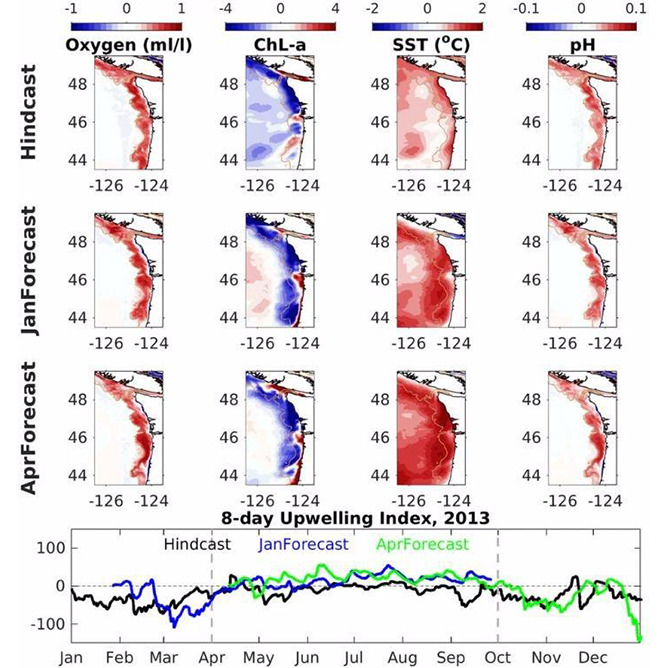
FORECASTING

Using models and research to understand the sensitivity of organisms and ecosystems to ocean acidification to make predictions about the future, allowing communities and industries to prepare

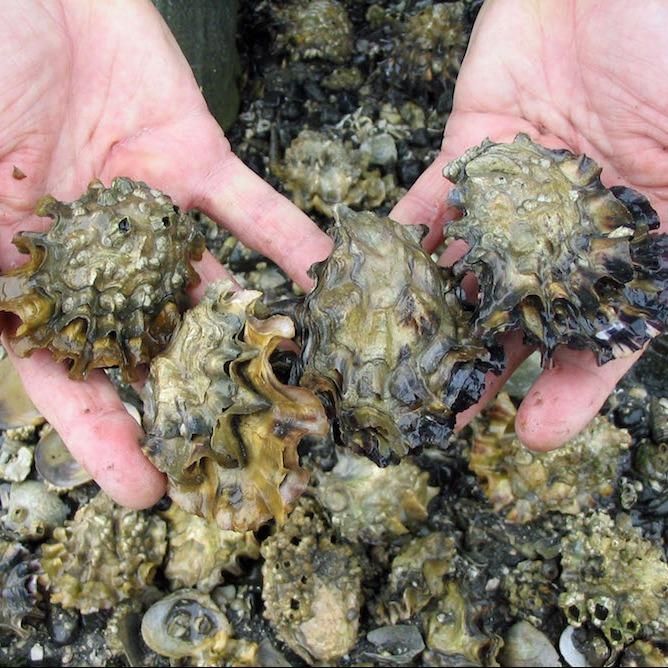
Closeup of oysters cupped in someone's hands

MANAGEMENT

Using these models and predictions as tools to facilitate management strategies that will protect marine resources and communities from future changes

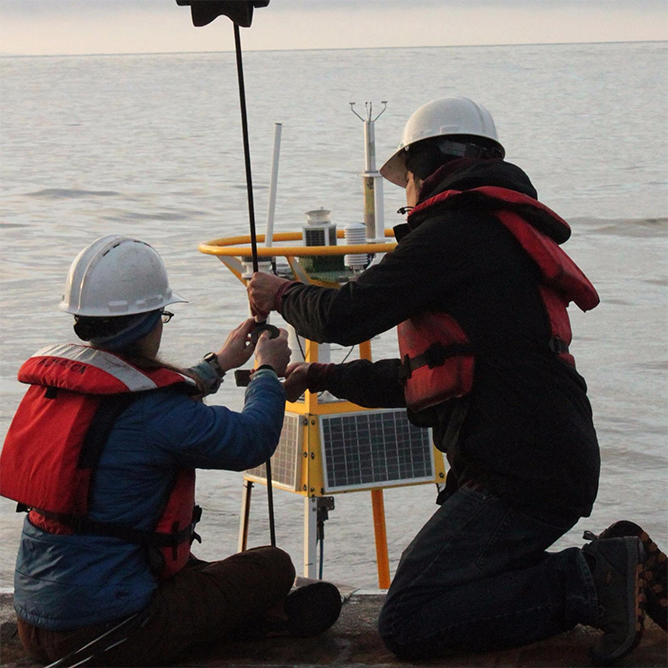
TECHNOLOGY DEVELOPMENT

Developing innovative tools to help monitor ocean acidification and mitigate changing ocean chemistry locally

REDUCING OUR CARBON FOOTPRINT

On the Road

Drive fuel-efficient vehicles or choose public transportation. Choose your bike or walk! Don't sit idle for more than 30 seconds. Keep your tires properly inflated.

With your Food Choices

Eat local- this helps cut down on production and transport! Reduce your meat and dairy. Compost to avoid food waste ending up in the landfill

With your Food Choices

Make energy-efficient choices for your appliances and lighting. Heat and cool efficiently! Change your air filters and program your thermostat, seal and insulate your home, and support clean energy sources

By Reducing Coastal Acidification

Reduce your use of fertilizers, Improve sewage treatment and run off, and Protect and restore coastal habitats

TAKE ACTION WITH YOUR COMMUNITY

You've taken the first step to learn more about ocean acidification - why not spread this knowledge to your community?

Every community has their unique culture, economy and ecology and what’s at stake from ocean acidification may be different depending on where you live.  As a community member, you can take a larger role in educating the public about ocean acidification. Creating awareness is the first step to taking action.  As communities gain traction, neighboring regions that share marine resources can build larger coalitions to address ocean acidification.  Here are some ideas to get started:

  1. Work with informal educators, such as aquarium outreach programs and local non-profits, to teach the public about ocean acidification. Visit our Education & Outreach page to find the newest tools!
  2. Participate in habitat restoration efforts to restore habitats that help mitigate the effects of coastal acidification
  3. Facilitate conversations with local businesses that might be affected by ocean acidification, building a plan for the future.
  4. Partner with local community efforts to mitigate the driver behind ocean acidification  – excess CO2 – such as community supported agriculture, bike & car shares and other public transportation options.
  5. Contact your regional Coastal Acidification Network (CAN) to learn how OA is affecting your region and more ideas about how you can get involved in your community
       More for Taking Community Action