

Bering Sea Red King Crab and Ocean Acidification
This brochure features what we know about ocean acidification effects on Bering Sea red king crab based on the latest science.
Bering Sea Red King Crab and Ocean Acidification Read More »
This brochure features what we know about ocean acidification effects on Bering Sea red king crab based on the latest science.
Bering Sea Red King Crab and Ocean Acidification Read More »

This flier helps start the conversation between shellfish growers and researchers to prepare and adapt to ocean acidification in Alaska together.
Ocean Acidification and Pacific oysters in southeast Alaska Read More »

The Alaska Ocean Acidification Network was developed to expand the understanding of OA processes and consequences in Alaska, as well as potential adaptation and mitigation actions. The network helps connect scientists and coastal communities to identify knowledge gaps, recommend regional priorities, share data, and disseminate information throughout Alaska. Learn more about the network and how
Alaska Ocean Acidification Network Overview Read More »

Hosted by the Interagency Working Group on Ocean Acidification, this series is starting a conversation about the most important research gaps in acidification and estuaries for the federal government to address. The third webinar will discuss examples of where acidification science can inform coastal management decisions to serve community and industry needs.
Acidification & Estuaries: Connecting Science to Management Read More »
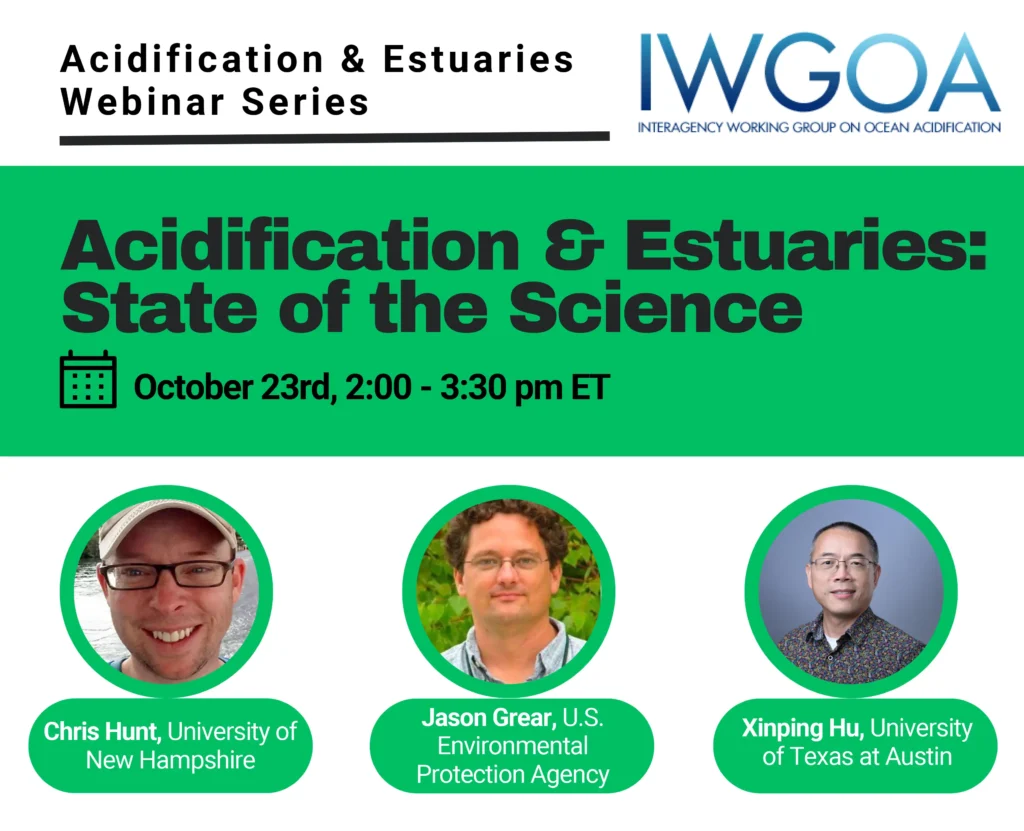
This is the second webinar in the Acidification & Estuaries Webinar Series hosted by the Interagency Working Group on Ocean Acidification. This webinar gives an overview of the state of the science related to acidification in estuaries and discuss remaining research gaps. Speakers discuss the causes of acidification, biological impacts, and how we can assess
Acidification & Estuaries: State of the Science Read More »

Hosted by the Interagency Working Group on Ocean Acidification, this webinar gives an overview of coastal acidification, the importance of studying acidification in estuaries, and the role that federal agencies currently play in monitoring and researching acidification in estuaries.
Acidification & Estuaries as a Federal Priority Read More »

This report describes federally funded ocean acidification activities during fiscal years 2022 and 2023. The report describes projects that were funded across the federal government, organized by region and then by thematic area. Budget tables are included that detail the amount spent by each agency on each thematic area. From these investments, advancements were made
Eighth Report on Federally Funded Ocean Acidification Research and Monitoring Activities Read More »
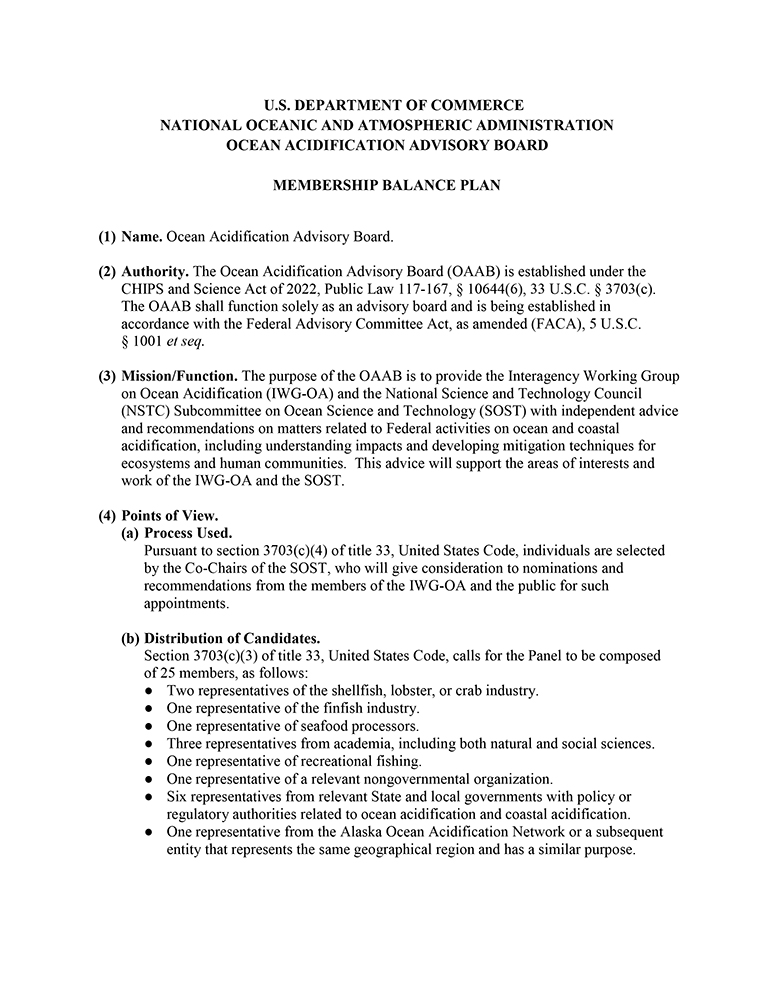
This document outlines the membership balance of the Ocean Acidification Advisory Board
Ocean Acidification Board Membership Balance Plan Read More »

This document is the formation document for the Ocean Acidification Advisory Board and outlines their specific rights and responsibilities.
Ocean Acidification Advisory Board Charter Read More »

The Interagency Working Group for Farming Seaweeds and Seagrasses produced this report that explores opportunities for farming seaweeds and seagrasses to deacidify ocean environments and provide agricultural products, such as livestock feeds.
Farming of Seagrasses and Seaweeds: Responsible Restoration & Revenue Generation Read More »

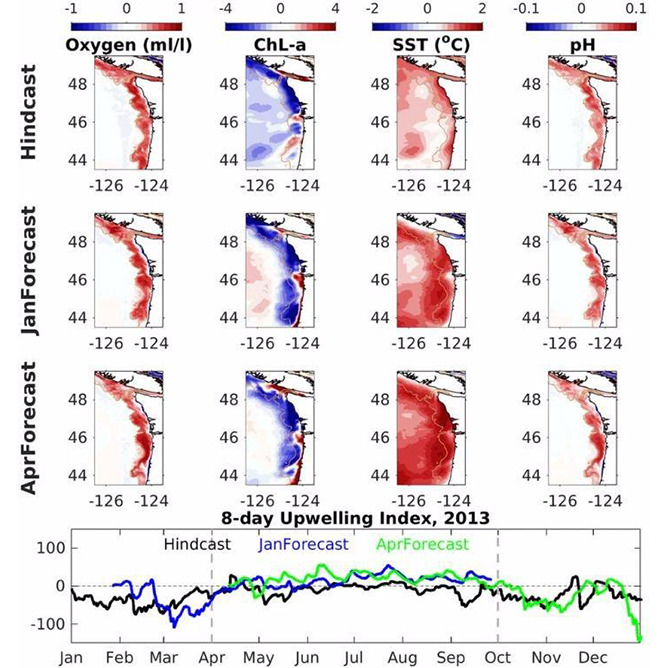
Using models and research to understand the sensitivity of organisms and ecosystems to ocean acidification to make predictions about the future, allowing communities and industries to prepare
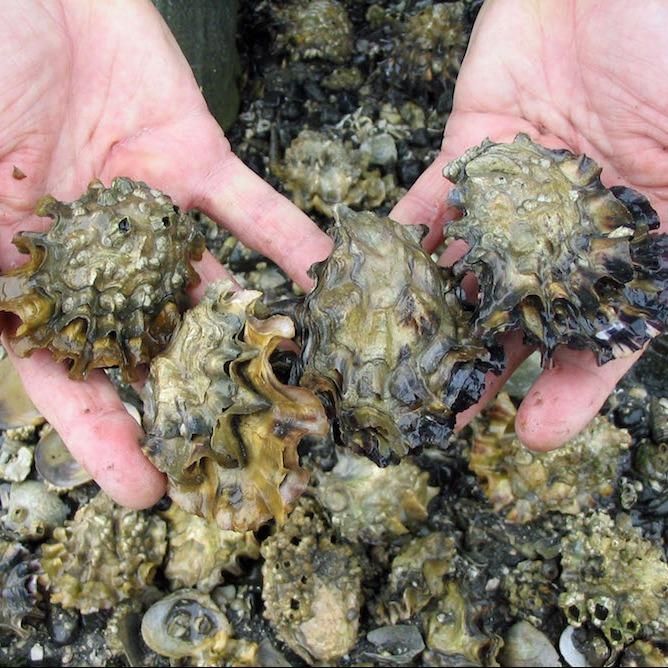
Using these models and predictions as tools to facilitate management strategies that will protect marine resources and communities from future changes
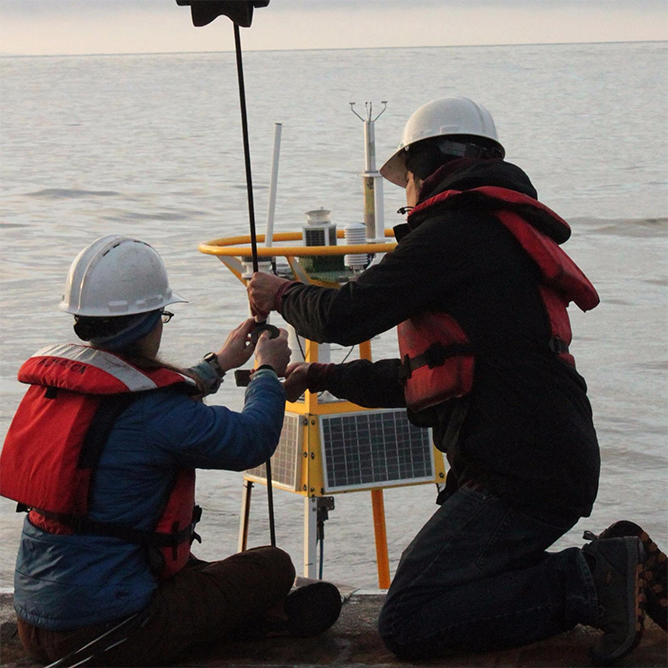
Developing innovative tools to help monitor ocean acidification and mitigate changing ocean chemistry locally