

Ocean Acidification Member Action Plan Examples
Ocean Acidification Member Action Plan Examples Read More »

A unified interface to access all ocean carbon dioxide data products. For more information, check out: Jiang et al. (2026)
Ocean Carbon Dioxide Products hub Read More »
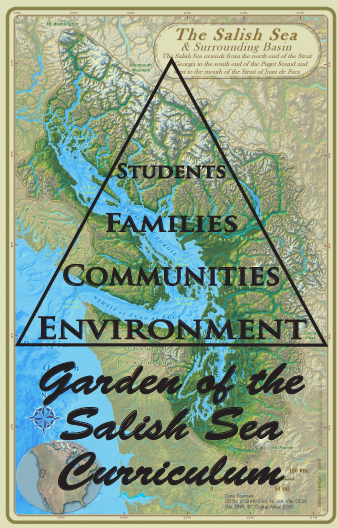
*6th Grade Curriculum includes Ocean Acidification GSSC is a K-12 environmental science program that uses shellfish as a model to teach marine science and stewardship with hands-on learning through field experience.
Garden of the Salish Sea Curriculum Read More »

An inquiry-based lesson where students investigate if ocean acidification and ocean warming affect the behavior and survival of stone crab larvae published in 2024. A full toolkit to be released in fall 2026.
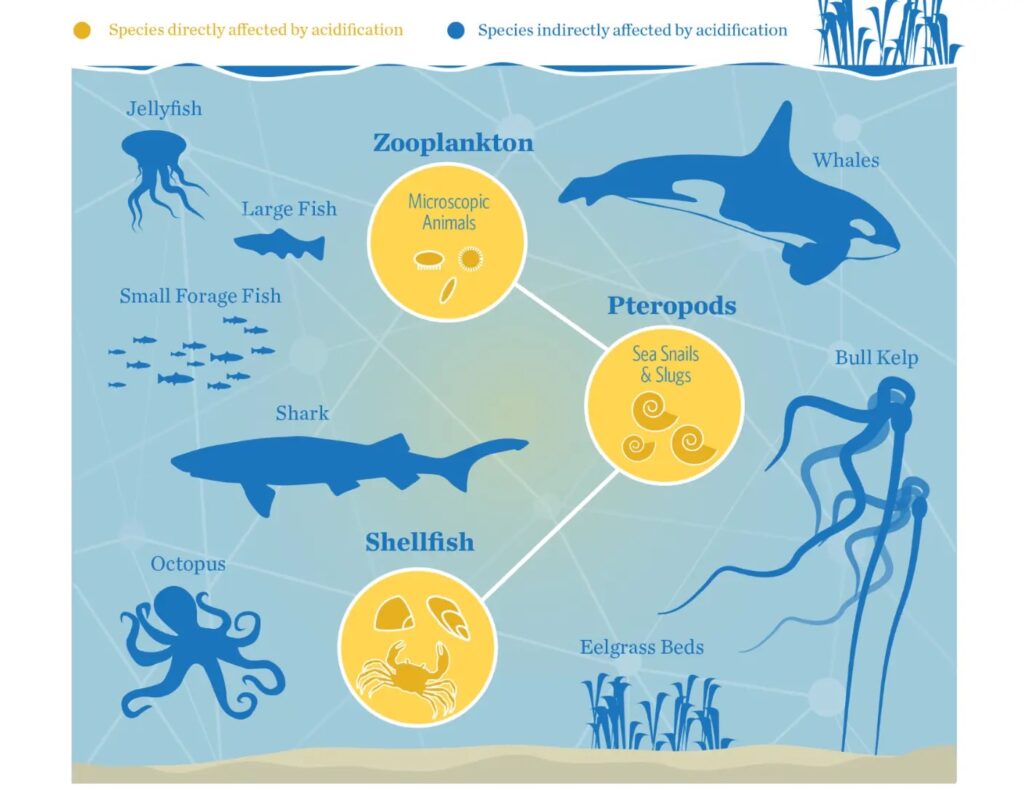
Students examine data on Mid-Atlantic species to understand how decreasing pH affects growth, reproduction, and survival. They connect changes in chemistry to impacts on living organisms.
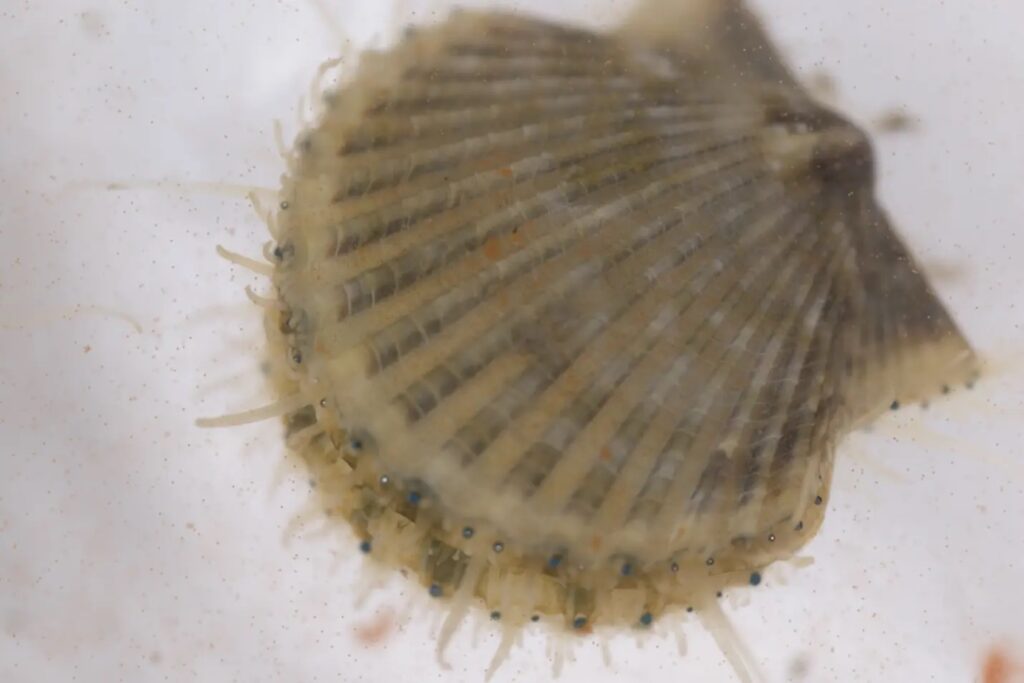
This lesson engages students in investigating declining bay scallop populations while exploring the scientific method and experimental design. Students analyze data, build critical thinking skills, and examine coastal acidification’s impacts on biological species. In Part 2, students apply the scientific method to investigate the bay scallop mystery by reviewing key steps, conducting research, developing hypotheses,
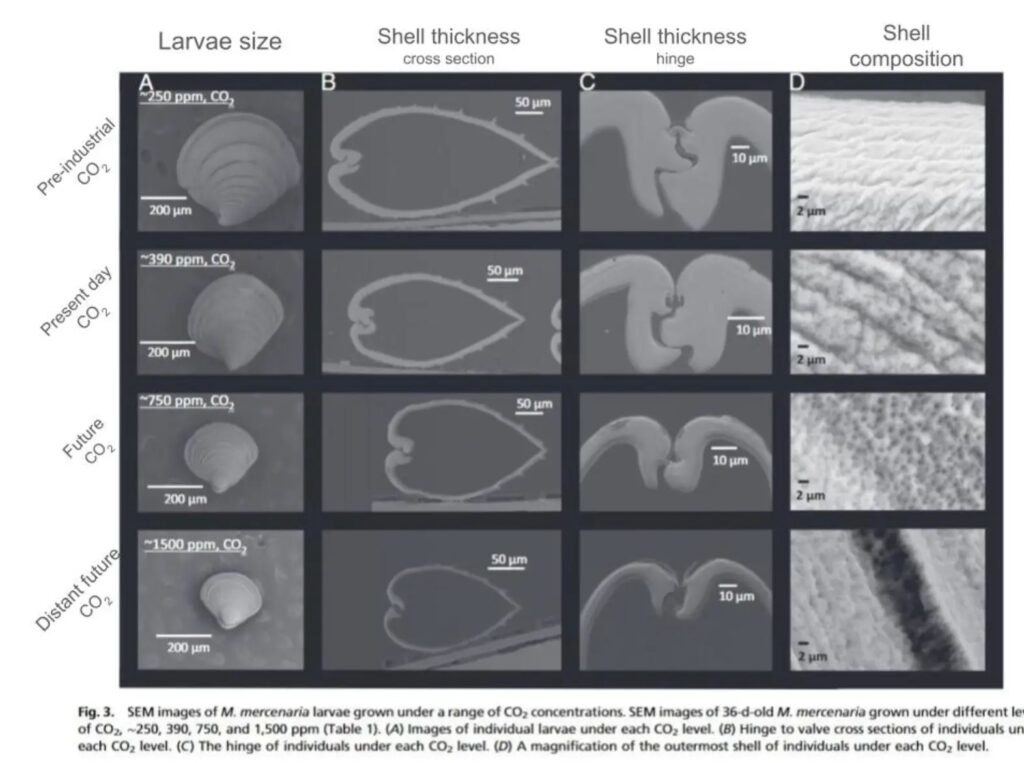
Students work individually and in groups to analyze data related to bivalve health. The lesson focuses on interpreting evidence and drawing conclusions about the effects of dissolved CO₂.
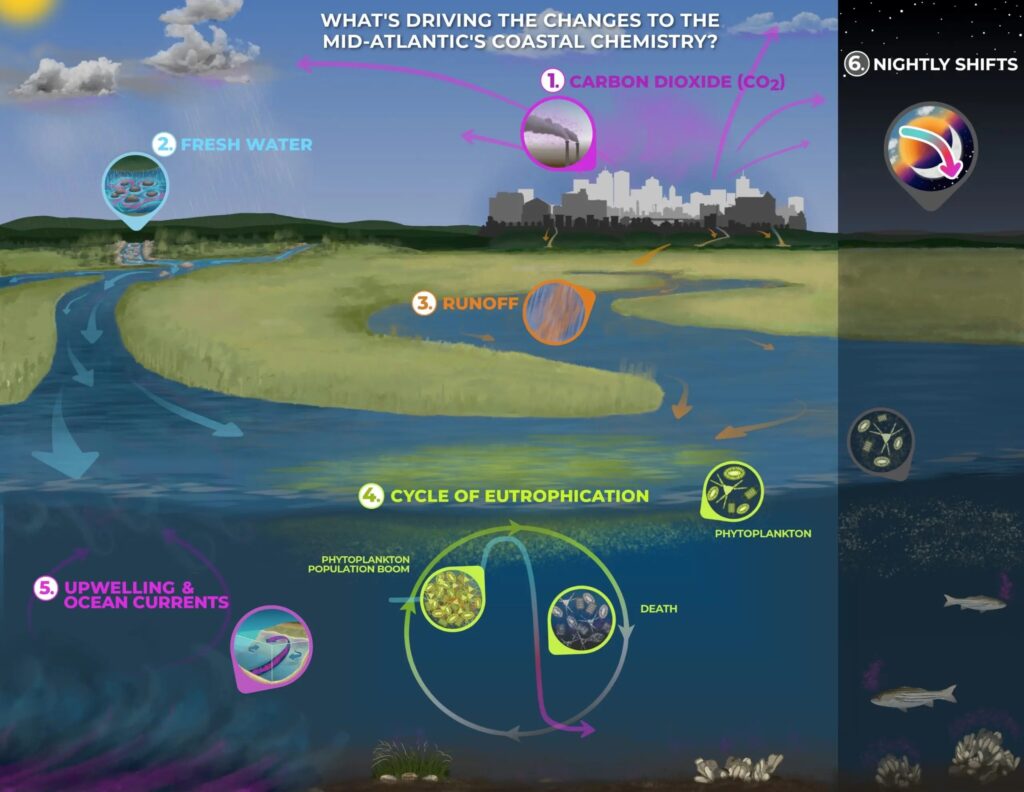
Students compare ocean and coastal acidification using data and infographics. The lesson emphasizes how estuaries and coastal waters experience different conditions than the open ocean.
MACAN: Coastal Acidification in the Classroom Toolkit Section 5 – Coastal Acidification Read More »
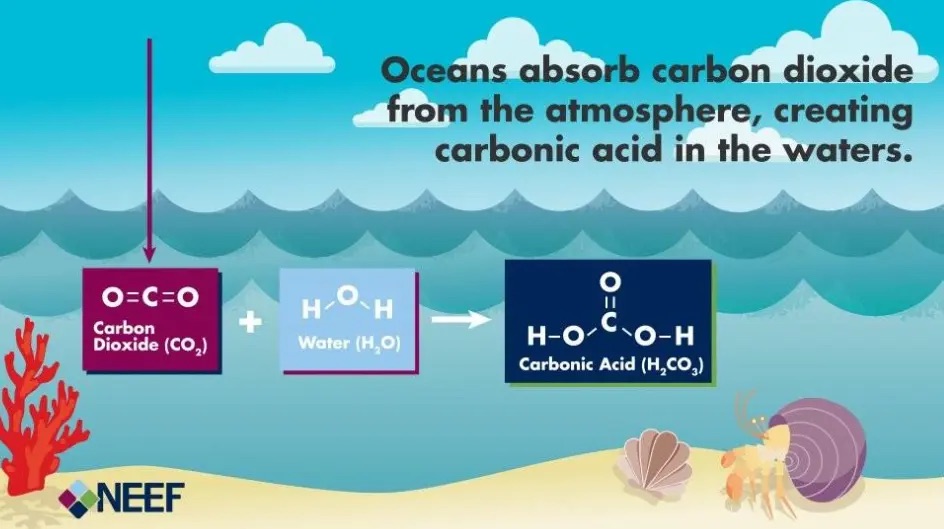
Through hands-on lab activities, students investigate the chemical reactions that drive ocean acidification. These labs also introduce how changes in chemistry affect shell formation in marine organisms.

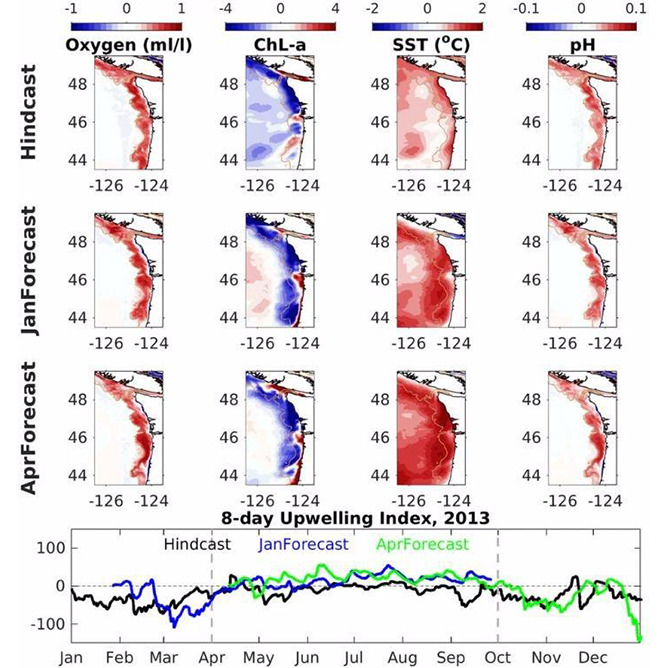
Using models and research to understand the sensitivity of organisms and ecosystems to ocean acidification to make predictions about the future, allowing communities and industries to prepare
Using these models and predictions as tools to facilitate management strategies that will protect marine resources and communities from future changes
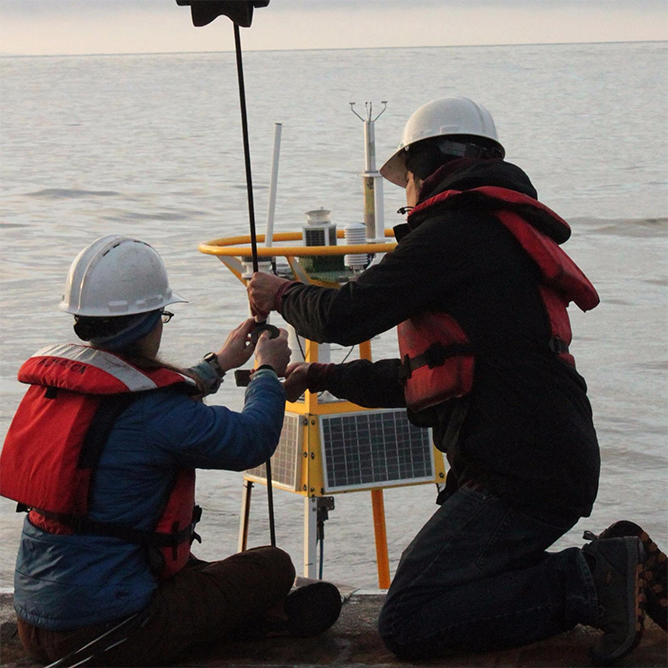
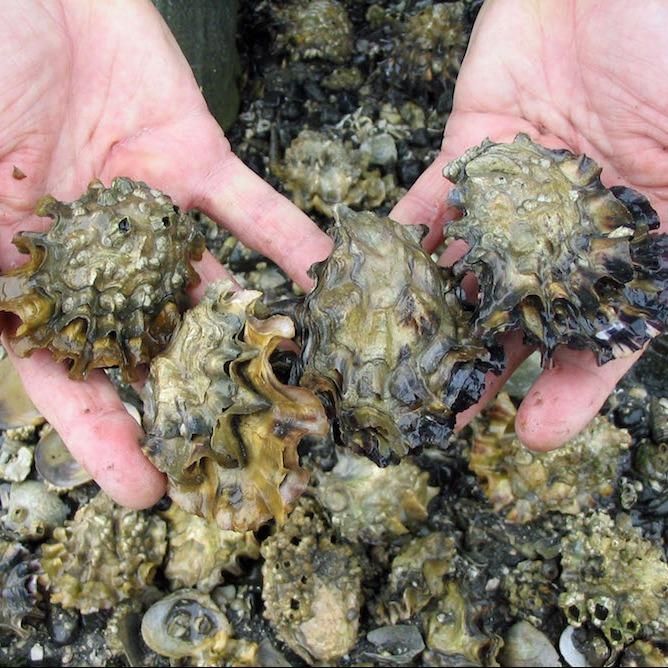
Developing innovative tools to help monitor ocean acidification and mitigate changing ocean chemistry locally
