Official websites use .gov
A .gov website belongs to an official government organization in the United States.

Secure .gov websites use HTTPS
A lock ( ) or https:// means you’ve safely connected to the .gov website. Share sensitive information only on official, secure websites.

From reefs to resilience: researchers in Hawaiʻi combine science and society to tackle ocean acidification

Background image: Researcher diving in coral reef.

Hawaiʻi is changing. Ocean conditions such as ocean warming and ocean acidification threaten Hawaiʻi’s coral reef ecosystems now. As our ocean’s chemistry changes, it becomes harder for coral reefs to build their skeletons, putting these important ecosystems at risk. Coral reefs are an essential part of Hawaiʻi and Hawaiian culture and economy. They form critical habitats for marine life, sustain fisheries, provide coastal protection, and support local economies and communities. Valued at $863 million per year, Hawaiʻi’s coral reefs are an economic lifeline and intricately connected to people’s wellbeing.

Background Image: A monk seal swims over coral

To better understand how ocean acidification is threatening coral reefs across the Hawaiian Islands, a team of researchers at the University of Hawaiʻi integrated oceanographic modeling with socioeconomics. By combining advanced oceanographic and ecosystem modeling that link fisheries and recreational reef use, the project produced ocean acidification projections over the 21st century. They discovered that ocean acidification will increase significantly, but the extent and timing of these changes vary. Capturing the variability over time within and across islands is key in order to help prepare for the economic impacts of increased ocean acidification.

Background Image: 

From global waters to local shores

Hawaiʻi critically needs to understand how ocean conditions are changing and vary by island and location. Global models don’t have the resolution we need.

Hawaiʻi is only one or two dots in the entire ocean with commonly used global models. 

Until now, we weren’t able to capture the finer scale variability needed to better model what’s happening in a way that communities can plan for risk.

Comparison of sea surface temperature simulations for the Main Hawaiian Islands. The coarse-resolution Community Earth System Model (CESM) model (left) misses finer coastal detail, while the downscaled Regional Ocean Modeling System (ROMS) simulation (right) captures island landmasses and surrounding ocean features more accurately (Friedrich et al., 2024; Liu et al., 2023).

The team linked projections of what conditions will look like for Hawaiʻi with an economic valuation of changes in recreational reef use across the Hawaiian Islands. Results show that estimated reef loss is projected to cause substantial reductions in recreational value, up to $2.1-3.3 billion through 2100 across the Hawaiian Islands with some communities more at risk. 

Legend
Projected welfare change
These maps display various scenarios of Shared Socioeconomic Pathways (SSP) and the impact of coral reef loss on communities.

The fine-scale resolution revealed that even on the same island, projections from ocean acidification vary. For example, differences in coral reef resilience will impact the Kona and Hilo coasts of the Big Island differently. Kona’s reefs are more susceptible to ocean acidification and projected to degrade faster, potentially leading to longer-term economic challenges. In contrast, Hilo’s reefs are projected to fare better, which could boost tourism there. This information is valuable for local tourism, marine resource managers, and decision-makers in specific adaptation planning efforts like the Holomua Marine 30×30 Initiative and the Hawaiʻi OA Action Plan.

Background Image:  Coral Reef in Kona and the Four Mile Beach in Hilo.

Credit: NOAA Fisheries/A. Nālani Olguin

Bringing the modeling and economics together, the research team assessed vulnerability to identify which communities are most at risk. They calculated a vulnerability index using a suite of indicators representing dependence on marine resources. Socioeconomic information such as income, occupational diversity, and percent under the poverty line was also incorporated into the vulnerability index using data from the American Community Survey led by the US Census Bureau. This work integrated community exposure, their sensitivity and ability to adapt.

This map displays Vulnerability Index values, which combine exposure, sensitivity, and adaptive capacity to allow for comparison across different Shared Socioeconomic Pathways (SSP). The labeled communities are projected to have the highest vulnerability by the end of the century.

Enhancing local resilience to acidification

Some urban communities such as Honolulu and ‘Ewa – despite greater resources – had high sensitivity attributed to reliance on marine resources, commercial fishery engagement and ocean recreation. Strategies that reduce exposure can benefit these communities. While adaptive capacity was high throughout the Hawaiian Islands, rural communities—particularly on Hawaiʻi Island—generally demonstrated lower capacity. This finding underscores the necessity for targeted capacity-building support in these areas. The creation of this integrated assessment of vulnerability, which combines exposure, sensitivity, and adaptive capacity, reveals nuances not captured by any single measure.

These analyses can provide the foundation for more targeted and informed adaptation strategies that direct resources to areas where they can have the greatest impact.

Background Image: View of Honolulu, Hawai’i from Diamondhead

Building resilience requires an integrated approach that takes into consideration both the ecological and societal outcomes. For Hawaiʻi, coral reefs also face multiple stressors and ocean acidification is just one challenge they face. Next steps for the research team include identifying the potential for coral reefs to adapt to heat stress, identifying potential refugia from ocean conditions, and refining social vulnerability maps to fine-tune actions to enhance community resilience.

Background Image: Diamondhead at sunrise

Background Image: A school of Hawaiian Dascyllus hover above a coral head off of Maui.

Funding Acknowledgement:

This work was supported by the US National Oceanic and Atmospheric Administration (NOAA) Grant NA21OAR0170191.
Effects of ocean acidification and temperature on Alaskan crabs

Red King Crab
Image credit: David Csepp, NMFS AKFSC ABL

Long-term declines of red king crab in Bristol Bay, Alaska may be partially attributed to ocean acidification conditions. These impacts may be partially responsible for the fishery closures during the 2021–2022 and 2022–2023 seasons. Researchers found that ocean acidification negatively impacts Alaskan crabs generally by changing physiological processes, decreasing growth, increasing death rates and reducing shell thickness. Funded by the Ocean Acidification Program, scientists at the Alaska Fisheries Science Center continue to investigate the responses of early life history stages and study the potential of various Alaska crabs to acclimate to changing conditions. Results will inform models that will use the parameters studied to predict the effects of future ocean acidification on the populations of red king crab in Bristol Bay as well as on the fisheries that depend on them. Fishery managers will better be able to anticipate and manage stocks if changing ocean chemistry affects stock productivity and thus the maximum sustainable yield.

More about this work

Forecasts for Alaska Fisheries

Crab pots and fishing nets in Alaska's Dutch Harbor
Image credit: Michael Theberge

Understanding seasonal changes in ocean acidification in Alaskan waters and the potential impacts to the multi-billion-dollar fishery sector is a main priority. Through work funded by NOAA’s Ocean Acidification Program, the Pacific Marine Environmental Laboratory developed a model capable of depicting past ocean chemistry conditions for the Bering Sea and is now testing the ability of this model to forecast future conditions. This model is being used to develop an ocean acidification indicator provided to fisheries managers in the annual NOAA Eastern Bering Sea Ecosystem Status Report.

ADAPTING TO OCEAN ACIDIFICATION

The NOAA Ocean Acidification Program (OAP) works to prepare society to adapt to the consequences of ocean acidification and conserve marine ecosystems as acidification occurs. Learn more about the human connections and adaptation strategies from these efforts.

Adaptation approaches fostered by the OAP include:

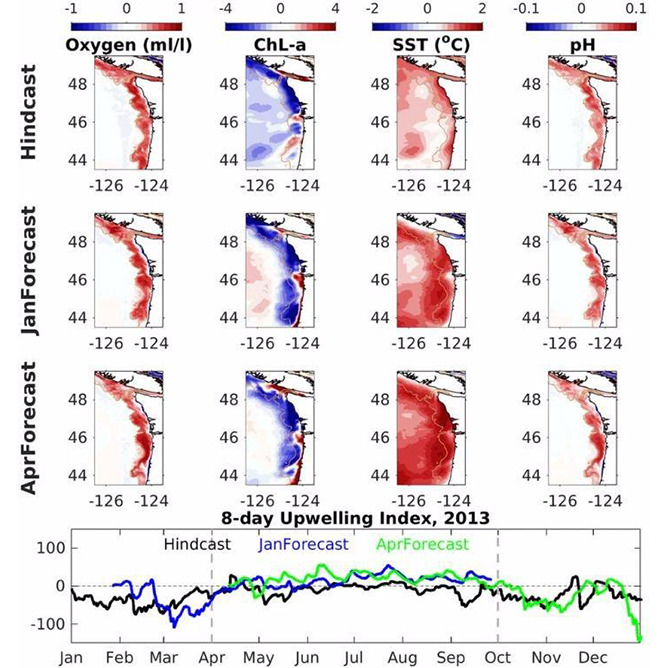
FORECASTING

Using models and research to understand the sensitivity of organisms and ecosystems to ocean acidification to make predictions about the future, allowing communities and industries to prepare

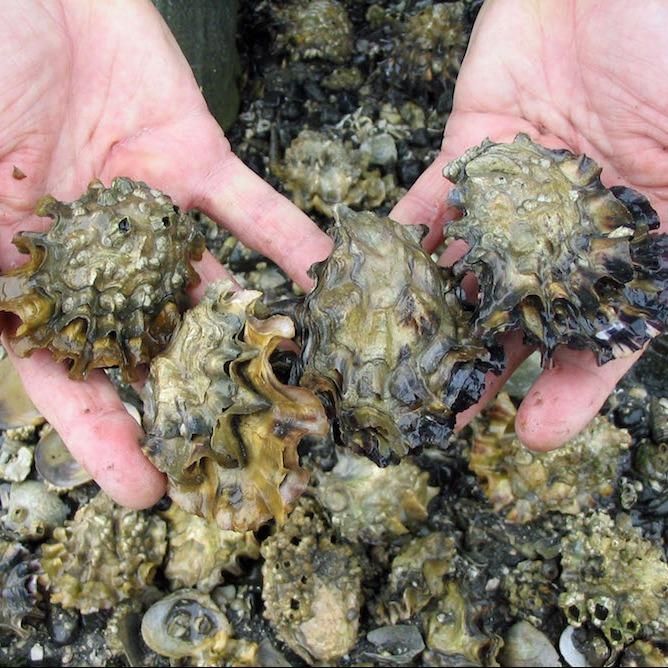
Closeup of oysters cupped in someone's hands

MANAGEMENT

Using these models and predictions as tools to facilitate management strategies that will protect marine resources and communities from future changes

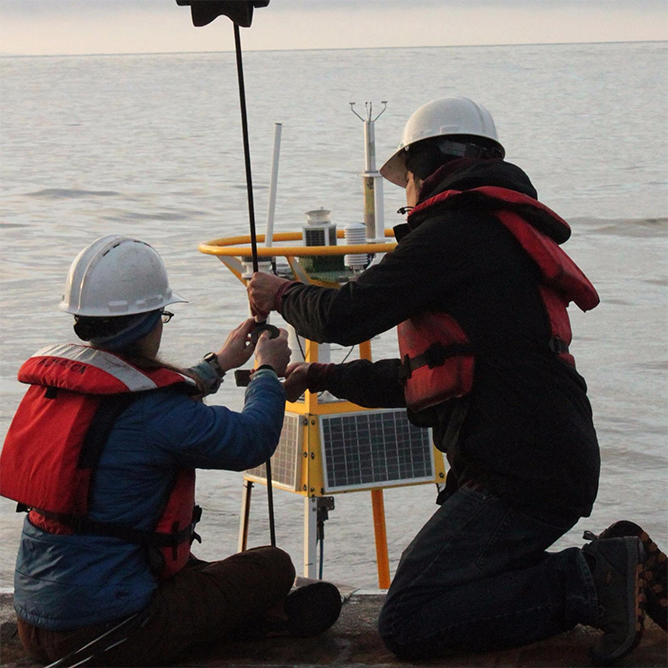
TECHNOLOGY DEVELOPMENT

Developing innovative tools to help monitor ocean acidification and mitigate changing ocean chemistry locally

REDUCING OUR CARBON FOOTPRINT

On the Road

Drive fuel-efficient vehicles or choose public transportation. Choose your bike or walk! Don't sit idle for more than 30 seconds. Keep your tires properly inflated.

With your Food Choices

Eat local- this helps cut down on production and transport! Reduce your meat and dairy. Compost to avoid food waste ending up in the landfill

With your Food Choices

Make energy-efficient choices for your appliances and lighting. Heat and cool efficiently! Change your air filters and program your thermostat, seal and insulate your home, and support clean energy sources

By Reducing Coastal Acidification

Reduce your use of fertilizers, Improve sewage treatment and run off, and Protect and restore coastal habitats

TAKE ACTION WITH YOUR COMMUNITY

You've taken the first step to learn more about ocean acidification - why not spread this knowledge to your community?

Every community has their unique culture, economy and ecology and what’s at stake from ocean acidification may be different depending on where you live.  As a community member, you can take a larger role in educating the public about ocean acidification. Creating awareness is the first step to taking action.  As communities gain traction, neighboring regions that share marine resources can build larger coalitions to address ocean acidification.  Here are some ideas to get started:

  1. Work with informal educators, such as aquarium outreach programs and local non-profits, to teach the public about ocean acidification. Visit our Education & Outreach page to find the newest tools!
  2. Participate in habitat restoration efforts to restore habitats that help mitigate the effects of coastal acidification
  3. Facilitate conversations with local businesses that might be affected by ocean acidification, building a plan for the future.
  4. Partner with local community efforts to mitigate the driver behind ocean acidification  – excess CO2 – such as community supported agriculture, bike & car shares and other public transportation options.
  5. Contact your regional Coastal Acidification Network (CAN) to learn how OA is affecting your region and more ideas about how you can get involved in your community
       More for Taking Community Action