Official websites use .gov
A .gov website belongs to an official government organization in the United States.

Secure .gov websites use HTTPS
A lock ( ) or https:// means you’ve safely connected to the .gov website. Share sensitive information only on official, secure websites.

Biological Response

Building Robust Reef Carbonate Projections from Synthesized NCRMP Ocean Acidification Datasets

This project will serve to (1) synthesize National Coral Reef Monitoring Program (NCRMP) OA Enterprise observations; (2) compare reef OA observations to oceanic end members to infer reefscale biogeochemical processes, and finally (3) use these synthesis products to better link projection models of oceanic carbonate systems to reef-scale OA impacts. The NCRMP OA enterprise supports: our collection of seawater samples from reef and surface observations; a set of MapCO2 buoys in the Caribbean and Hawaii; diurnal monitoring instruments (e.g. CREP's diurnal suite, AOML's/McGillis' BEAMS); and metrics of ecosystem response to OA (e.g. CAUs, coral coring, etc.). The datasets generated by these activities will be the focus of this wide-ranging synthesis.
Building Robust Reef Carbonate Projections from Synthesized NCRMP Ocean Acidification Datasets Read More »

Physiological response of the red tree coral (Primnoa pacifica) to low pH scenarios in the laboratory

Deep-sea corals are widespread throughout Alaska, including the continental shelf and upper slope of the Gulf of Alaska, the Aleutian Islands, the eastern Bering Sea, and extending as far north as the Beaufort Sea. Decreases in oceanic pH and resulting decreases in calcium carbonate saturation state could have profound effects on corals dependent on the extraction of calcium carbonate from seawater for skeletal building. Corals will be affected differently depending on their skeletal composition (aragonite vs. calcite), geographical location, and depth. The aragonite and calcite saturation horizons are already quite shallow in areas of the North Pacific Ocean and are predicted to become shallower in the near future. The skeletal composition is known for only a few Alaskan coral species and may be composed of aragonite, calcite, high-magnesium calcite, or amorphous carbonate hydroxylapatite. Skeletons composed of high magnesium-calcite are the most soluble and consequently corals with high-magnesium calcite skeletons, particularly those residing at depths deeper than the saturation horizon, are most at risk to decreases in oceanic pH. At the completion of this project we will be able to provide a comprehensive risk assessment for all corals in Alaskan waters.

Physiological response of the red tree coral (Primnoa pacifica) to low pH scenarios in the laboratory Read More »

Effects of OA on Alaskan gadids: sensitivity to variation in prey quality and behavioural response

To date many studies of the effects of ocean acidification on fishes have suggested that fish are somewhat resilient to effects on factors such as growth and survival. However, these experiments have generally not included potential interactive stressors which may increase the sensitivity to acidification stress. Further, experiments on some species have demonstrated the OA stress has significant potential to disrupt sensory and behavioral systems in fishes which could compromise survival in natural settings. In this project we will focus on examining the potential for behavioral disruptions due to OA and the interactive stresses of OA and nutritional state on critical Alaskan groundfishes.

Effects of OA on Alaskan gadids: sensitivity to variation in prey quality and behavioural response Read More »

Forecasting the effects of OA on Alaska crabs and pollock abundance

The aim of this project was to forecast effects of ocean acidification on the commercially important Alaska crab stocks including the Bristol Bay red king crab (BBRKC) fishery, which is part of a modern fisheries management program, the Bering Sea and Aleutian Islands (BSAI) crab rationalization program. To investigate the biological and economic impacts of OA, a linked bioeconomic model was developed that a) integrates predictions regarding trends over time in ocean pH, b) separates life-history stages for growth and mortality of juveniles and adults, and c) includes fishery impacts by analyzing catch and effort in both biological and economic terms. By coupling a pre-recruitment component with post-recruitment dynamics, the BBRKC bioeconomic model incorporates effects of OA on vulnerable juvenile crabs in combination with effects of fishing on the BBRKC population as a whole. Many types of projections under management strategies can be made using linked bioeconomic models.

Forecasting the effects of OA on Alaska crabs and pollock abundance Read More »

Physiological response of commercially important crab species to predicted increases in carbon dioxide

In 2010 and 2011, Alaska Fisheries Science Center (AFSC) scientists at the Kodiak Laboratory in Alaska tested the effects of lower pH due to increased carbon dioxide (CO2) on the survival, condition, and growth of red king crab (Paralithodes camtschaticus). Commercially important shellfish are a priority for AFSC research related to ocean acidification because of their economic value and because calcifying species are likely to suffer direct effects due to increased acidity (and a decrease in calcium carbonate saturation state) of our oceans.
The multi-year project objectives are to test the effects of CO2 enrichment (which leads to decreasing pH and lower saturation state) across a range of commercially important crab species and life stages (embryo, larvae, juveniles, and adults). The response variables currently measured include mortality, condition, growth, and calcification of the shell.

Physiological response of commercially important crab species to predicted increases in carbon dioxide Read More »

Assessing the capacity for evolutionary adaptation to ocean acidification in geoduck

We will examine the effects of OA conditions (elevated pCO2) on the adaptive response of a potentially vulnerable native marine mollusc species with ecological, economic and social importance in the Pacific Northwest: geoduck clams (Panopea generosa).  Geoduck clam larvae will be exposed to normal and elevated pCO2 and surviving larvae will be assessed using genomic sequencing to determine changes in allele frequencies at single nucleotide polymorphisms throughout the genome, and changes in the frequency of methylation states (epialleles) throughout the epigenome.  Existing ecosystem models of OA consider a species' response to increased pCO2 as a fixed attribute; however, interpretations of the effects of OA at the population level may shift substantially if species adapt to the new environment. Furthermore, we will gain a better understanding of how specific genetic and epigenetic variations influence phenotype and the ability of an organism to respond, giving us new insights into fundamental aspects of species adaptation to environmental change.

Assessing the capacity for evolutionary adaptation to ocean acidification in geoduck Read More »

Zooplankton OA Exposure Modeling

Assessing a species’ risk to ocean acidification (OA) will depend on their duration of exposure to low pH/low saturation state conditions and their sensitivity to low pH conditions. Lab species exposure experiments attempt to measure species sensitivity to low pH. This modeling project estimates species exposure. In FY13, we started using an existing circulation/water quality of model of the Salish Sea and Washington/B.C. Coasts developed by the Pacific Northwest National Laboratory to understand carbonate chemistry exposure of zooplankton species. We are using empirical relationships between carbonate chemistry, oxygen, temperature and salinity to add carbonate chemistry to the circulation model. We then use an individually-based model to simulate the movement of various zooplankton species in this environment. In FY15-FY17, we will continue development and publication of results from this model, including exploration of current and future CO2 scenarios. Results from the model will inform the Dungeness crab exposure experiments planned for FY16, as well as general zooplankton vulnerability to OA.

Zooplankton OA Exposure Modeling Read More »

OA Ecosystem Modeling

Ecosystem models are used to estimate the potential direct and indirect effects of ocean acidification (OA) on marine resources.  The population abundance and distribution of species that are sensitive to seawater carbonate chemistry can experience the direct effects of OA. Even species not sensitive to carbonate chemistry can have indirectly changes in abundance and distribution as a result of changes in their prey, predators, competitors or critical habitat forming organisms that are sensitive. Ecosystem models use information on food webs and other relationships to estimate these ripple effects of OA on important ecosystem services like fisheries.

OA Ecosystem Modeling Read More »

NORTHWEST FISHERIES SCIENCE CENTER: Ocean Acidification Facility

Species exposure experiments that measure the response of organisms reared in seawater with manipulated carbonate chemistry are an important way to learn about the potential effects of ocean acidification (OA). Experimental systems that closely mimic the natural environment (e.g. with multiple stressors) can lead to studies with greater ecological relevance. Using a combination of NWFSC and OAP funds, the NWFSC built a facility for conducting species exposure experiments at the Montlake Lab, and has started a new facility at the Mukilteo Field station. The facilities include both rearing aquaria and a lab for carbon chemistry analysis (DIC, alkalinity, spectrophotometric pH). The NWFSC experimental systems are considered “shared-use” facilities, in that the systems are available for NWFSC research teams and outside collaborators as capacity allows. In the past, we have worked on collaborative projects with PMEL, University of Washington, Oregon State University, Suquamish Tribe, Evergreen State University, Cal Poly and Western Washington University. These collaborators often provide external funding for experiments, greatly increasing the research that can be conducted.

NORTHWEST FISHERIES SCIENCE CENTER: Ocean Acidification Facility Read More »

NOAA and Sea Grant fund $800,000 in research to understand effects of ocean changes on iconic Northeast marine life

NOAA’s Ocean Acidification Program (OAP) and the Northeast Sea Grant Programs joined together to prioritize and fund new research on how ocean acidification is affecting marine life including lobsters, clams, oysters, mussels and sand lance that are so important to the Northeast region. Funding includes $800,000 in federal funds from the two programs with an additional $400,000 non-federal match.

NOAA and Sea Grant fund $800,000 in research to understand effects of ocean changes on iconic Northeast marine life Read More »

Forecasts for Alaska Fisheries

Crab pots and fishing nets in Alaska's Dutch Harbor
Image credit: Michael Theberge

Understanding seasonal changes in ocean acidification in Alaskan waters and the potential impacts to the multi-billion-dollar fishery sector is a main priority. Through work funded by NOAA’s Ocean Acidification Program, the Pacific Marine Environmental Laboratory developed a model capable of depicting past ocean chemistry conditions for the Bering Sea and is now testing the ability of this model to forecast future conditions. This model is being used to develop an ocean acidification indicator provided to fisheries managers in the annual NOAA Eastern Bering Sea Ecosystem Status Report.

ADAPTING TO OCEAN ACIDIFICATION

The NOAA Ocean Acidification Program (OAP) works to prepare society to adapt to the consequences of ocean acidification and conserve marine ecosystems as acidification occurs. Learn more about the human connections and adaptation strategies from these efforts.

Adaptation approaches fostered by the OAP include:

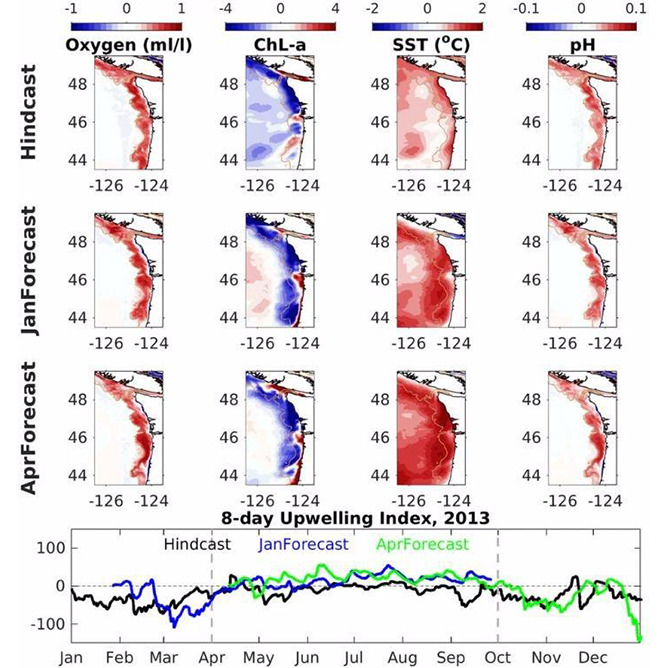
FORECASTING

Using models and research to understand the sensitivity of organisms and ecosystems to ocean acidification to make predictions about the future, allowing communities and industries to prepare

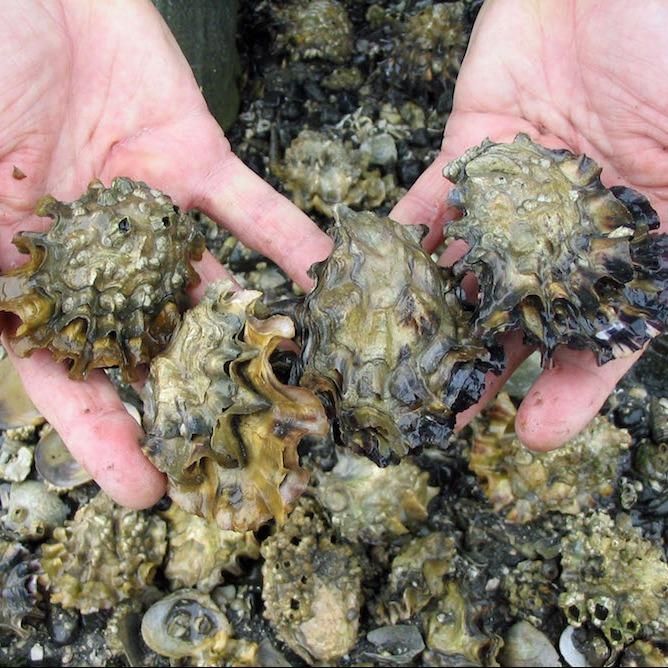
Closeup of oysters cupped in someone's hands

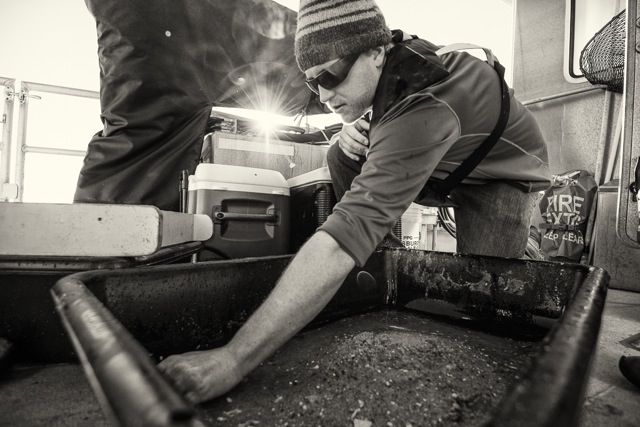
MANAGEMENT

Using these models and predictions as tools to facilitate management strategies that will protect marine resources and communities from future changes

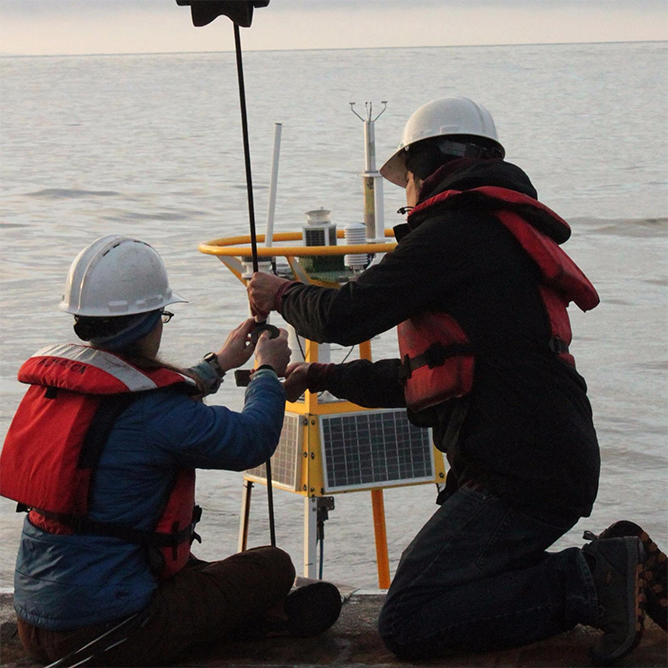
TECHNOLOGY DEVELOPMENT

Developing innovative tools to help monitor ocean acidification and mitigate changing ocean chemistry locally

REDUCING OUR CARBON FOOTPRINT

On the Road

Drive fuel-efficient vehicles or choose public transportation. Choose your bike or walk! Don't sit idle for more than 30 seconds. Keep your tires properly inflated.

With your Food Choices

Eat local- this helps cut down on production and transport! Reduce your meat and dairy. Compost to avoid food waste ending up in the landfill

With your Food Choices

Make energy-efficient choices for your appliances and lighting. Heat and cool efficiently! Change your air filters and program your thermostat, seal and insulate your home, and support clean energy sources

By Reducing Coastal Acidification

Reduce your use of fertilizers, Improve sewage treatment and run off, and Protect and restore coastal habitats

TAKE ACTION WITH YOUR COMMUNITY

You've taken the first step to learn more about ocean acidification - why not spread this knowledge to your community?

Every community has their unique culture, economy and ecology and what’s at stake from ocean acidification may be different depending on where you live.  As a community member, you can take a larger role in educating the public about ocean acidification. Creating awareness is the first step to taking action.  As communities gain traction, neighboring regions that share marine resources can build larger coalitions to address ocean acidification.  Here are some ideas to get started:

  1. Work with informal educators, such as aquarium outreach programs and local non-profits, to teach the public about ocean acidification. Visit our Education & Outreach page to find the newest tools!
  2. Participate in habitat restoration efforts to restore habitats that help mitigate the effects of coastal acidification
  3. Facilitate conversations with local businesses that might be affected by ocean acidification, building a plan for the future.
  4. Partner with local community efforts to mitigate the driver behind ocean acidification  – excess CO2 – such as community supported agriculture, bike & car shares and other public transportation options.
  5. Contact your regional Coastal Acidification Network (CAN) to learn how OA is affecting your region and more ideas about how you can get involved in your community
       More for Taking Community Action