Official websites use .gov
A .gov website belongs to an official government organization in the United States.

Secure .gov websites use HTTPS
A lock ( ) or https:// means you’ve safely connected to the .gov website. Share sensitive information only on official, secure websites.

Biological Response

Elevated Colonization of Microborers at a Volcanically Acidified Coral Reef

Experiments have demonstrated that ocean acidification (OA) conditions projected to occur by the end of the century will slow the calcification of numerous coral species and accelerate the biological erosion of reef habitats (bioerosion). Microborers, which bore holes less than 100 μm diameter, are one of the most pervasive agents of bioerosion and are present […]

Elevated Colonization of Microborers at a Volcanically Acidified Coral Reef Read More »

Enhanced macroboring and depressed calcification drive net dissolution at high-CO<sub>2</sub> coral reefs

Ocean acidification (OA) impacts the physiology of diverse marine taxa; among them corals that create complex reef framework structures. Biological processes operating on coral reef frameworks remain largely unknown from naturally high-carbon-dioxide (CO2) ecosystems. For the first time, we independently quantified the response of multiple functional groups instrumental in the construction and erosion of these

Enhanced macroboring and depressed calcification drive net dissolution at high-CO<sub>2</sub> coral reefs Read More »

Estimates of the Direct Effect of Seawater pH on the Survival Rate of Species Groups in the California Current Ecosystem

Ocean acidification (OA) has the potential to restructure ecosystems due to variation in species sensitivity to the projected changes in ocean carbon chemistry. Ecological models can be forced with scenarios of OA to help scientists, managers, and other stakeholders understand how ecosystems might change. We present a novel methodology for developing estimates of species sensitivity

Estimates of the Direct Effect of Seawater pH on the Survival Rate of Species Groups in the California Current Ecosystem Read More »

Short-term variability of aragonite saturation state in the central Mid-Atlantic Bight

The uptake of anthropogenic carbon dioxide (CO2) from the atmosphere has resulted in a decrease in seawater aragonite saturation state (Ωarag), which affects the health of carbonate-bearing organisms and the marine ecosystem. A substantial short-term variability of surface water Ωarag, with an increase of up to 0.32, was observed in the central Mid-Atlantic Bight off

Short-term variability of aragonite saturation state in the central Mid-Atlantic Bight Read More »

Decreased pH and increased temperatures affect young-of-the-year red king crab (<em>Paralithodes camtschaticus</em>)

The red king crab (Paralithodes camtschaticus) is a high-latitude commercially important species with a complex life-history cycle which encompasses a wide variety of conditions and habitats. High-latitude waters, including those around Alaska where red king crab live, are predicted to have increased ocean acidification and temperatures in comparison to other areas. The interaction of ocean

Decreased pH and increased temperatures affect young-of-the-year red king crab (<em>Paralithodes camtschaticus</em>) Read More »

Multidecadal <em>f</em>CO<sub>2</sub> Increase Along the United States Southeast Coastal Margin

Coastal margins could be hotspots for acidification due to terrestrial-influenced CO2 sources. Currently there are no long-term (>20 years) records from biologically important coastal environments that could demonstrate sea surface CO2 fugacity (fCO2) and pH trends. Here, multidecadal fCO2 trends are calculated from underway and moored time series observations along the United States southeast coastal margin, also referred to

Multidecadal <em>f</em>CO<sub>2</sub> Increase Along the United States Southeast Coastal Margin Read More »

Evaluation of marine pH sensors under controlled and natural conditions for the Wendy Schmidt Ocean Health XPRIZE

The annual anthropogenic ocean carbon uptake of 2.6 ± 0.5 Gt C is changing ocean composition (e.g., pH) at unprecedented rates, but our ability to track this trend effectively across various ocean ecosystems is limited by the availability of low-cost, high-quality autonomous pH sensors. The Wendy Schmidt Ocean Health XPRIZE was a year-long competition to address this

Evaluation of marine pH sensors under controlled and natural conditions for the Wendy Schmidt Ocean Health XPRIZE Read More »

Survival, growth, and morphology of blue king crabs: effect of ocean acidification decreases with exposure time 

Ocean acidification is an altering marine carbonate chemistry resulting in potential effects to marine life. In this study, we determine the effects of decreased pH on the morphology, growth, and survival of juvenile blue king crab, Paralithodes platypus. Crabs were reared at three pH levels: ambient (control, pH ∼8.1), pH 7.8, and pH 7.5, for 1

Survival, growth, and morphology of blue king crabs: effect of ocean acidification decreases with exposure time  Read More »

Plasticity in skeletal characteristics of nursery-raised staghorn coral, <em>Acropora cervicornis</em>

Staghorn coral, Acropora cervicornis, is a threatened species and the primary focus of western Atlantic reef restoration efforts to date. We compared linear extension, calcification rate, and skeletal density of nursery-raised A. cervicornis branches reared for 6 months either on blocks attached to substratum or hanging from PVC trees in the water column. We demonstrate that branches grown on

Plasticity in skeletal characteristics of nursery-raised staghorn coral, <em>Acropora cervicornis</em> Read More »

A year in the life of a central California kelp forest: physical and biological insights into biogeochemical variability

Kelp forests are among the world’s most productive marine ecosystems, yet little is known about their biogeochemistry. This study presents a 14-month time series (July 2013–August 2014) of surface and benthic dissolved inorganic carbon and total alkalinity measurements, along with accompanying hydrographic measurements, from six locations within a central California kelp forest. We present ranges and patterns

A year in the life of a central California kelp forest: physical and biological insights into biogeochemical variability Read More »

Forecasts for Alaska Fisheries

Crab pots and fishing nets in Alaska's Dutch Harbor
Image credit: Michael Theberge

Understanding seasonal changes in ocean acidification in Alaskan waters and the potential impacts to the multi-billion-dollar fishery sector is a main priority. Through work funded by NOAA’s Ocean Acidification Program, the Pacific Marine Environmental Laboratory developed a model capable of depicting past ocean chemistry conditions for the Bering Sea and is now testing the ability of this model to forecast future conditions. This model is being used to develop an ocean acidification indicator provided to fisheries managers in the annual NOAA Eastern Bering Sea Ecosystem Status Report.

ADAPTING TO OCEAN ACIDIFICATION

The NOAA Ocean Acidification Program (OAP) works to prepare society to adapt to the consequences of ocean acidification and conserve marine ecosystems as acidification occurs. Learn more about the human connections and adaptation strategies from these efforts.

Adaptation approaches fostered by the OAP include:

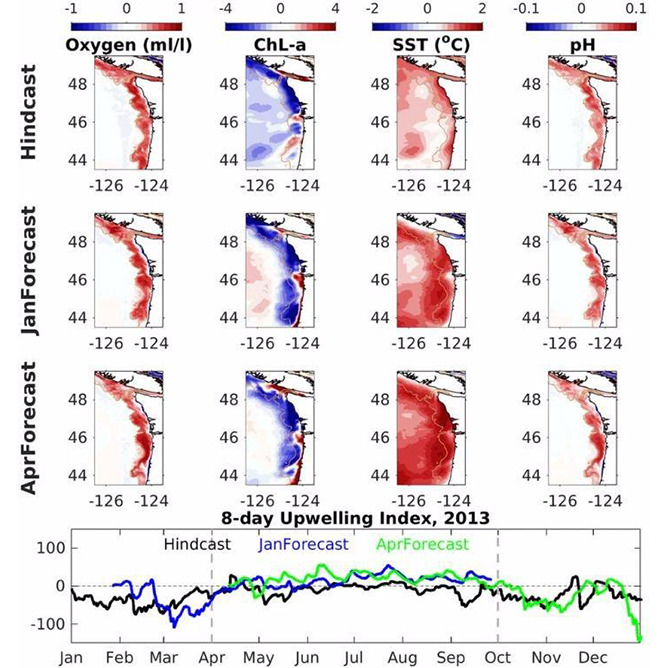
FORECASTING

Using models and research to understand the sensitivity of organisms and ecosystems to ocean acidification to make predictions about the future, allowing communities and industries to prepare

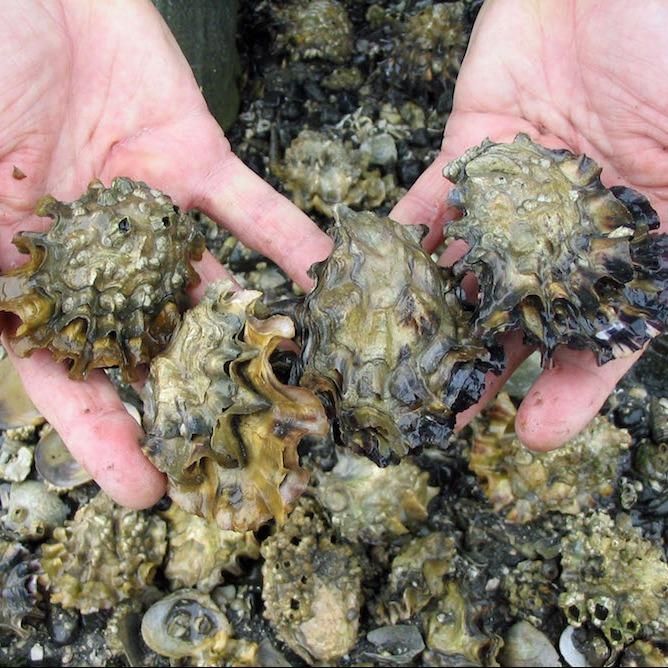
Closeup of oysters cupped in someone's hands

MANAGEMENT

Using these models and predictions as tools to facilitate management strategies that will protect marine resources and communities from future changes

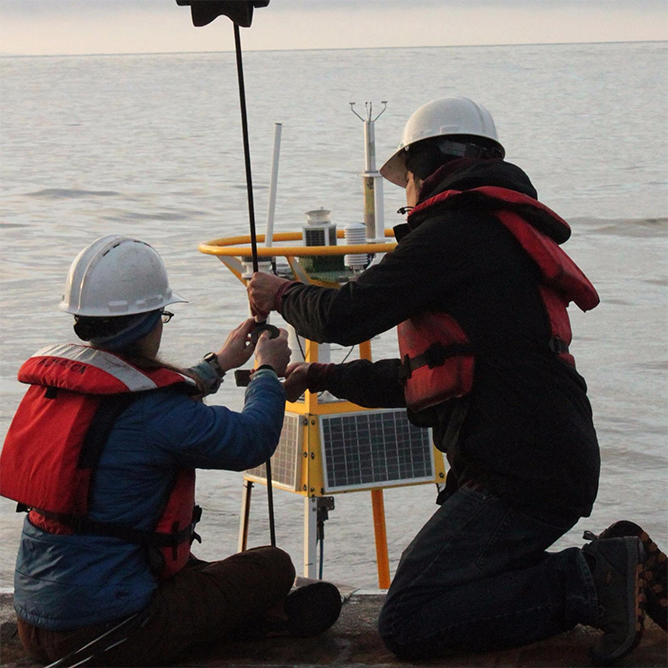
TECHNOLOGY DEVELOPMENT

Developing innovative tools to help monitor ocean acidification and mitigate changing ocean chemistry locally

REDUCING OUR CARBON FOOTPRINT

On the Road

Drive fuel-efficient vehicles or choose public transportation. Choose your bike or walk! Don't sit idle for more than 30 seconds. Keep your tires properly inflated.

With your Food Choices

Eat local- this helps cut down on production and transport! Reduce your meat and dairy. Compost to avoid food waste ending up in the landfill

With your Food Choices

Make energy-efficient choices for your appliances and lighting. Heat and cool efficiently! Change your air filters and program your thermostat, seal and insulate your home, and support clean energy sources

By Reducing Coastal Acidification

Reduce your use of fertilizers, Improve sewage treatment and run off, and Protect and restore coastal habitats

TAKE ACTION WITH YOUR COMMUNITY

You've taken the first step to learn more about ocean acidification - why not spread this knowledge to your community?

Every community has their unique culture, economy and ecology and what’s at stake from ocean acidification may be different depending on where you live.  As a community member, you can take a larger role in educating the public about ocean acidification. Creating awareness is the first step to taking action.  As communities gain traction, neighboring regions that share marine resources can build larger coalitions to address ocean acidification.  Here are some ideas to get started:

  1. Work with informal educators, such as aquarium outreach programs and local non-profits, to teach the public about ocean acidification. Visit our Education & Outreach page to find the newest tools!
  2. Participate in habitat restoration efforts to restore habitats that help mitigate the effects of coastal acidification
  3. Facilitate conversations with local businesses that might be affected by ocean acidification, building a plan for the future.
  4. Partner with local community efforts to mitigate the driver behind ocean acidification  – excess CO2 – such as community supported agriculture, bike & car shares and other public transportation options.
  5. Contact your regional Coastal Acidification Network (CAN) to learn how OA is affecting your region and more ideas about how you can get involved in your community
       More for Taking Community Action