Official websites use .gov
A .gov website belongs to an official government organization in the United States.

Secure .gov websites use HTTPS
A lock ( ) or https:// means you’ve safely connected to the .gov website. Share sensitive information only on official, secure websites.

Human Connections

And on Top of All That… Coping with Ocean Acidification in the Midst of Many Stressors

Oceanic and coastal waters are acidifying due to processes dominated in the open ocean by increasing atmospheric CO2 and dominated in estuaries and some coastal waters by nutrient-fueled respiration. The patterns and severity of acidification, as well as its effects, are modified by the host of stressors related to human activities that also influence these […]

And on Top of All That… Coping with Ocean Acidification in the Midst of Many Stressors Read More »

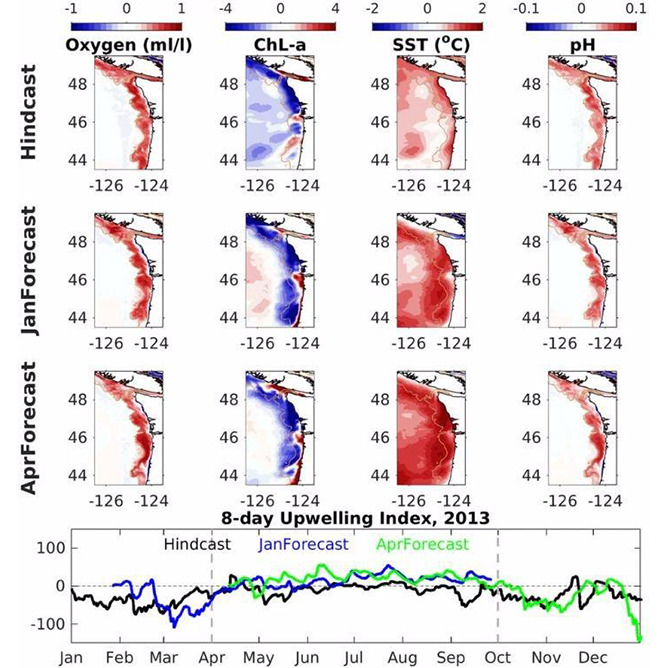
Ocean Acidification Science Needs for Natural Resource Managers of the North American West Coast

Natural circulation patterns along the west coast of North America periodically draw subthermocline, low pH waters into shallow coastal areas. The presence of corrosive, low pH waters, caused by ocean acidification (OA), is frequently observed along the North American west coast. Reduction of global atmospheric CO2 inputs is the appropriate management focus for decreasing OA,

Ocean Acidification Science Needs for Natural Resource Managers of the North American West Coast Read More »

Characterizing the Natural System: Toward Sustained, Integrated Coastal Ocean Acidification Observing Networks to Facilitate Resource Management and Decision Support

Coastal ocean ecosystems have always served human populations—they provide food security, livelihoods, coastal protection, and defense. Ocean acidification is a global threat to these ecosystem services, particularly when other local and regional stressors combine with it to jeopardize coastal health. Monitoring efforts call for a coordinated global approach toward sustained, integrated coastal ocean health observing

Characterizing the Natural System: Toward Sustained, Integrated Coastal Ocean Acidification Observing Networks to Facilitate Resource Management and Decision Support Read More »

Gauging perceptions of ocean acidification in Alaska

While ocean acidification (OA) poses a significant threat to ocean-related ecosystems and communities reliant on marine fisheries, aquaculture, and coral reef systems, limited public understanding and awareness can prevent coastal regions from being able to adequately assess the need for OA adaptation or mitigation. This study assessed public understanding of OA and how social and

Gauging perceptions of ocean acidification in Alaska Read More »

Community-Level Actions that Can Address Ocean Acidification

Ocean acidification has led to detectable changes in seawater chemistry around the world, which are associated with reduced growth and survival of many species. Acute ocean acidification “events” in the Pacific Northwest United States have jeopardized the $270 million, 3200 jobs/year shellfish aquaculture industry in Washington State, and this has contributed to the state’s broad-based,

Community-Level Actions that Can Address Ocean Acidification Read More »

Using integrated, ecosystem-level management to address intensifying ocean acidification and hypoxia in the California Current large marine ecosystem

Ocean acidification is intensifying and hypoxia is projected to expand in the California Current large marine ecosystem as a result of processes associated with the global emission of CO2. Observed changes in the California Current outpace those in many other areas of the ocean, underscoring the pressing need to adopt management approaches that can accommodate

Using integrated, ecosystem-level management to address intensifying ocean acidification and hypoxia in the California Current large marine ecosystem Read More »

Ecological and socioeconomic strategies to sustain Caribbean coral reefs in a high-CO<sub>2</sub> world

The Caribbean and Western Atlantic region hosts one of the world’s most diverse geopolitical regions and a unique marine biota distinct from tropical seas in the Pacific and Indian Oceans. While this region varies in human population density, GDP and wealth, coral reefs, and their associated ecosystem services, are central to people’s livelihoods. Unfortunately, the region’s reefs

Ecological and socioeconomic strategies to sustain Caribbean coral reefs in a high-CO<sub>2</sub> world Read More »

Linking knowledge to action in ocean ecosystem management: The Ocean Modeling Forum

The sustainable use of global marine resources depends upon science-based decision processes and systems. Informing decisions with science is challenging for many reasons, including the nature of science and science-based institutions. The complexity of ecosystem-based management often requires the use of models, and model-based advice can be especially difficult to convert into policies or decisions.

Linking knowledge to action in ocean ecosystem management: The Ocean Modeling Forum Read More »

Future Ocean Observations to Connect Climate, Fisheries and Marine Ecosystems

Advances in ocean observing technologies and modeling provide the capacity to revolutionize the management of living marine resources. While traditional fisheries management approaches like single-species stock assessments are still common, a global effort is underway to adopt ecosystem-based fisheries management (EBFM) approaches. These approaches consider changes in the physical environment and interactions between ecosystem elements,

Future Ocean Observations to Connect Climate, Fisheries and Marine Ecosystems Read More »

The U.S. Integrated Ocean Observing System: Governance Milestones and Lessons From Two Decades of Growth

Reflecting on two decades of the U.S. Integrated Ocean Observing System (IOOS) is particularly timely during the OceanObs’19 meeting. Over the past twenty years since the first OceanObs meeting was convened, U.S. IOOS has advanced from regional proofs of concept to a national, sustained enterprise. U.S. IOOS has grown to include 17 Federal partners and

The U.S. Integrated Ocean Observing System: Governance Milestones and Lessons From Two Decades of Growth Read More »

Forecasts for Alaska Fisheries

Crab pots and fishing nets in Alaska's Dutch Harbor
Image credit: Michael Theberge

Understanding seasonal changes in ocean acidification in Alaskan waters and the potential impacts to the multi-billion-dollar fishery sector is a main priority. Through work funded by NOAA’s Ocean Acidification Program, the Pacific Marine Environmental Laboratory developed a model capable of depicting past ocean chemistry conditions for the Bering Sea and is now testing the ability of this model to forecast future conditions. This model is being used to develop an ocean acidification indicator provided to fisheries managers in the annual NOAA Eastern Bering Sea Ecosystem Status Report.

ADAPTING TO OCEAN ACIDIFICATION

The NOAA Ocean Acidification Program (OAP) works to prepare society to adapt to the consequences of ocean acidification and conserve marine ecosystems as acidification occurs. Learn more about the human connections and adaptation strategies from these efforts.

Adaptation approaches fostered by the OAP include:

FORECASTING

Using models and research to understand the sensitivity of organisms and ecosystems to ocean acidification to make predictions about the future, allowing communities and industries to prepare

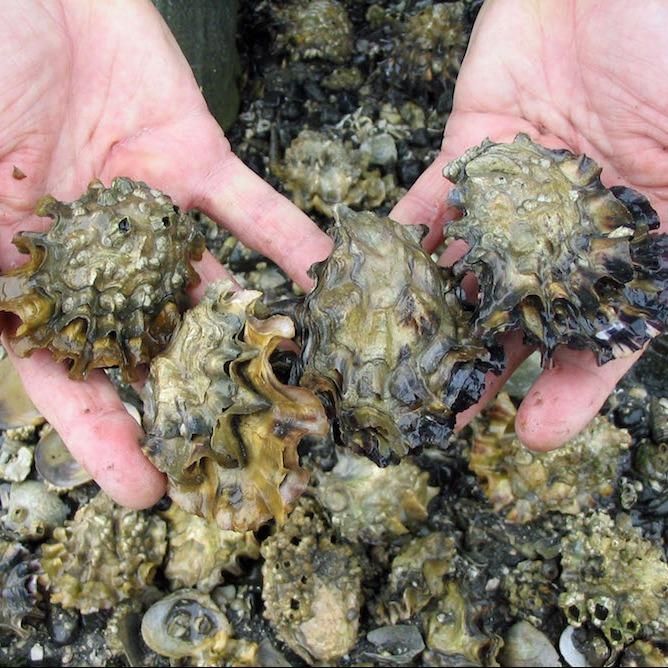
Closeup of oysters cupped in someone's hands

MANAGEMENT

Using these models and predictions as tools to facilitate management strategies that will protect marine resources and communities from future changes

TECHNOLOGY DEVELOPMENT

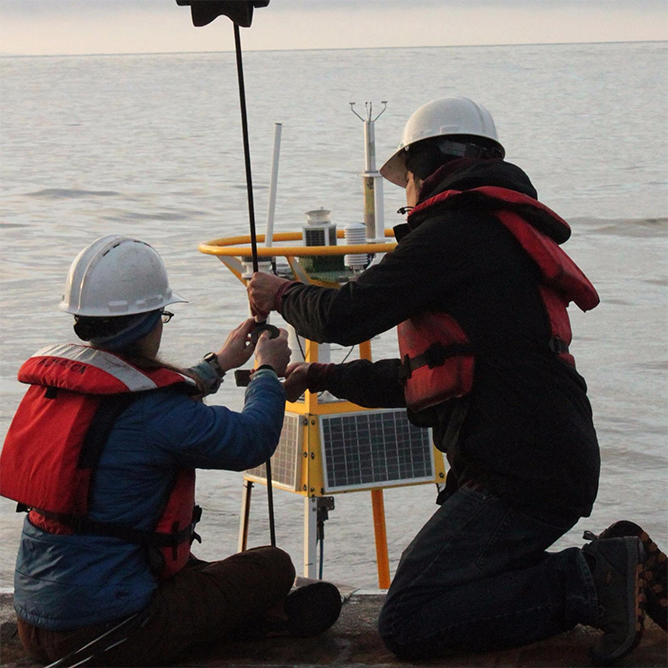
Developing innovative tools to help monitor ocean acidification and mitigate changing ocean chemistry locally

REDUCING OUR CARBON FOOTPRINT

On the Road

Drive fuel-efficient vehicles or choose public transportation. Choose your bike or walk! Don't sit idle for more than 30 seconds. Keep your tires properly inflated.

With your Food Choices

Eat local- this helps cut down on production and transport! Reduce your meat and dairy. Compost to avoid food waste ending up in the landfill

With your Food Choices

Make energy-efficient choices for your appliances and lighting. Heat and cool efficiently! Change your air filters and program your thermostat, seal and insulate your home, and support clean energy sources

By Reducing Coastal Acidification

Reduce your use of fertilizers, Improve sewage treatment and run off, and Protect and restore coastal habitats

TAKE ACTION WITH YOUR COMMUNITY

You've taken the first step to learn more about ocean acidification - why not spread this knowledge to your community?

Every community has their unique culture, economy and ecology and what’s at stake from ocean acidification may be different depending on where you live.  As a community member, you can take a larger role in educating the public about ocean acidification. Creating awareness is the first step to taking action.  As communities gain traction, neighboring regions that share marine resources can build larger coalitions to address ocean acidification.  Here are some ideas to get started:

  1. Work with informal educators, such as aquarium outreach programs and local non-profits, to teach the public about ocean acidification. Visit our Education & Outreach page to find the newest tools!
  2. Participate in habitat restoration efforts to restore habitats that help mitigate the effects of coastal acidification
  3. Facilitate conversations with local businesses that might be affected by ocean acidification, building a plan for the future.
  4. Partner with local community efforts to mitigate the driver behind ocean acidification  – excess CO2 – such as community supported agriculture, bike & car shares and other public transportation options.
  5. Contact your regional Coastal Acidification Network (CAN) to learn how OA is affecting your region and more ideas about how you can get involved in your community
       More for Taking Community Action