Official websites use .gov
A .gov website belongs to an official government organization in the United States.

Secure .gov websites use HTTPS
A lock ( ) or https:// means you’ve safely connected to the .gov website. Share sensitive information only on official, secure websites.

Publications

Publication Post Type

Survival, growth, and morphology of blue king crabs: effect of ocean acidification decreases with exposure time 

Ocean acidification is an altering marine carbonate chemistry resulting in potential effects to marine life. In this study, we determine the effects of decreased pH on the morphology, growth, and survival of juvenile blue king crab, Paralithodes platypus. Crabs were reared at three pH levels: ambient (control, pH ∼8.1), pH 7.8, and pH 7.5, for 1 […]

Survival, growth, and morphology of blue king crabs: effect of ocean acidification decreases with exposure time  Read More »

Risks of ocean acidification in the California Current food web and fisheries: ecosystem model projections

The benefits and ecosystem services that humans derive from the oceans are threatened by numerous global change stressors, one of which is ocean acidification. Here, we describe the effects of ocean acidification on an upwelling system that already experiences inherently low pH conditions, the California Current. We used an end-to-end ecosystem model (Atlantis), forced by

Risks of ocean acidification in the California Current food web and fisheries: ecosystem model projections Read More »

Plasticity in skeletal characteristics of nursery-raised staghorn coral, <em>Acropora cervicornis</em>

Staghorn coral, Acropora cervicornis, is a threatened species and the primary focus of western Atlantic reef restoration efforts to date. We compared linear extension, calcification rate, and skeletal density of nursery-raised A. cervicornis branches reared for 6 months either on blocks attached to substratum or hanging from PVC trees in the water column. We demonstrate that branches grown on

Plasticity in skeletal characteristics of nursery-raised staghorn coral, <em>Acropora cervicornis</em> Read More »

A year in the life of a central California kelp forest: physical and biological insights into biogeochemical variability

Kelp forests are among the world’s most productive marine ecosystems, yet little is known about their biogeochemistry. This study presents a 14-month time series (July 2013–August 2014) of surface and benthic dissolved inorganic carbon and total alkalinity measurements, along with accompanying hydrographic measurements, from six locations within a central California kelp forest. We present ranges and patterns

A year in the life of a central California kelp forest: physical and biological insights into biogeochemical variability Read More »

Using integrated, ecosystem-level management to address intensifying ocean acidification and hypoxia in the California Current large marine ecosystem

Ocean acidification is intensifying and hypoxia is projected to expand in the California Current large marine ecosystem as a result of processes associated with the global emission of CO2. Observed changes in the California Current outpace those in many other areas of the ocean, underscoring the pressing need to adopt management approaches that can accommodate

Using integrated, ecosystem-level management to address intensifying ocean acidification and hypoxia in the California Current large marine ecosystem Read More »

Modeling food web effects of low sardine and anchovy abundance in the California Current

Populations of sardine, anchovy, and other forage species can fluctuate to low levels due to climate variability and fishing, leading to indirect effects on marine food webs. In the context of recent declines of sardine (Sardinops sagax) and anchovy (Engraulis mordax) in the California Current, we apply an end-to-end Atlantis ecosystem model that is spatially explicit, includes

Modeling food web effects of low sardine and anchovy abundance in the California Current Read More »

Elevated CO<sub>2</sub> does not exacerbate nutritional stress in larvae of a Pacific flatfish

Multiple aspects of climate change are expected to co-occur such that ocean acidification will take place in conjunction with warming and a range of trophic changes. Previous studies have demonstrated that nutritional condition plays a significant role in the responses of invertebrates to ocean acidification, but similar studies have yet to be conducted with marine

Elevated CO<sub>2</sub> does not exacerbate nutritional stress in larvae of a Pacific flatfish Read More »

The Carbonate Chemistry of the “Fattening Line,” Willapa Bay, 2011–2014

Willapa Bay has received a great deal of attention in the context of rising atmospheric CO2 and the concomitant effects of changes in bay carbonate chemistry, referred to as ocean acidification, and the potential effects on the bay’s naturalized Pacific oyster (Crassostrea gigas) population and iconic oyster farming industry. Competing environmental stressors, historical variability in the

The Carbonate Chemistry of the “Fattening Line,” Willapa Bay, 2011–2014 Read More »

Assessing the effects of ocean acidification in the Northeast US using an end-to-end marine ecosystem model

The effects of ocean acidification on living marine resources present serious challenges for managers of these resources. An understanding of the ecosystem consequences of ocean acidification is required to assess tradeoffs among ecosystem components (e.g. fishery yield, protected species conservation, sensitive habitat) and adaptations to this perturbation. We used a marine ecosystem model for the Northeast

Assessing the effects of ocean acidification in the Northeast US using an end-to-end marine ecosystem model Read More »

Mixed-layer carbon cycling at the Kuroshio Extension Observatory

Seven years of data from the NOAA Kuroshio Extension Observatory (KEO) surface mooring, located in the North Pacific Ocean carbon sink region, were used to evaluate drivers of mixed-layer carbon cycling. A time-dependent mass balance approach relying on two carbon tracers was used to diagnostically evaluate how surface ocean processes influence mixed-layer carbon concentrations over

Mixed-layer carbon cycling at the Kuroshio Extension Observatory Read More »

Forecasts for Alaska Fisheries

Crab pots and fishing nets in Alaska's Dutch Harbor
Image credit: Michael Theberge

Understanding seasonal changes in ocean acidification in Alaskan waters and the potential impacts to the multi-billion-dollar fishery sector is a main priority. Through work funded by NOAA’s Ocean Acidification Program, the Pacific Marine Environmental Laboratory developed a model capable of depicting past ocean chemistry conditions for the Bering Sea and is now testing the ability of this model to forecast future conditions. This model is being used to develop an ocean acidification indicator provided to fisheries managers in the annual NOAA Eastern Bering Sea Ecosystem Status Report.

ADAPTING TO OCEAN ACIDIFICATION

The NOAA Ocean Acidification Program (OAP) works to prepare society to adapt to the consequences of ocean acidification and conserve marine ecosystems as acidification occurs. Learn more about the human connections and adaptation strategies from these efforts.

Adaptation approaches fostered by the OAP include:

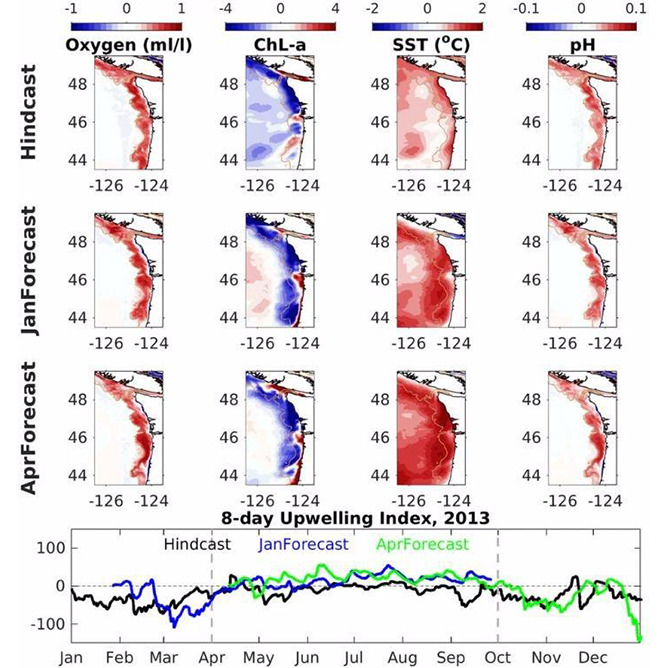
FORECASTING

Using models and research to understand the sensitivity of organisms and ecosystems to ocean acidification to make predictions about the future, allowing communities and industries to prepare

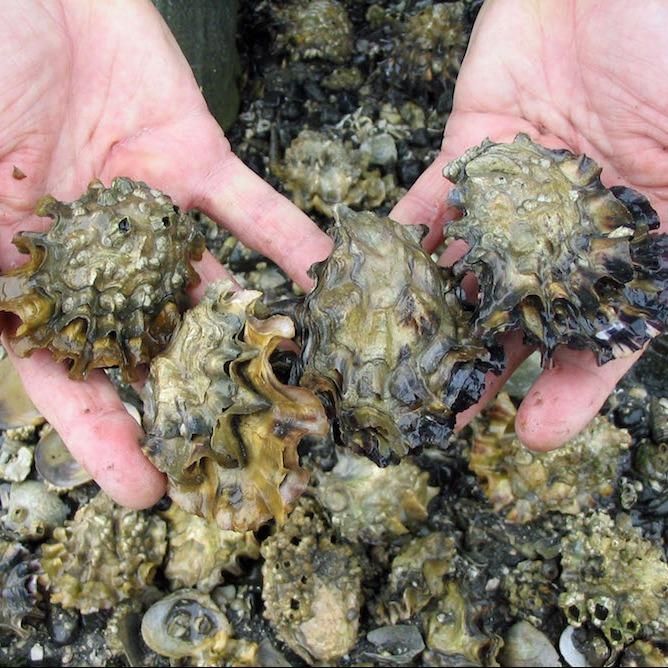
Closeup of oysters cupped in someone's hands

MANAGEMENT

Using these models and predictions as tools to facilitate management strategies that will protect marine resources and communities from future changes

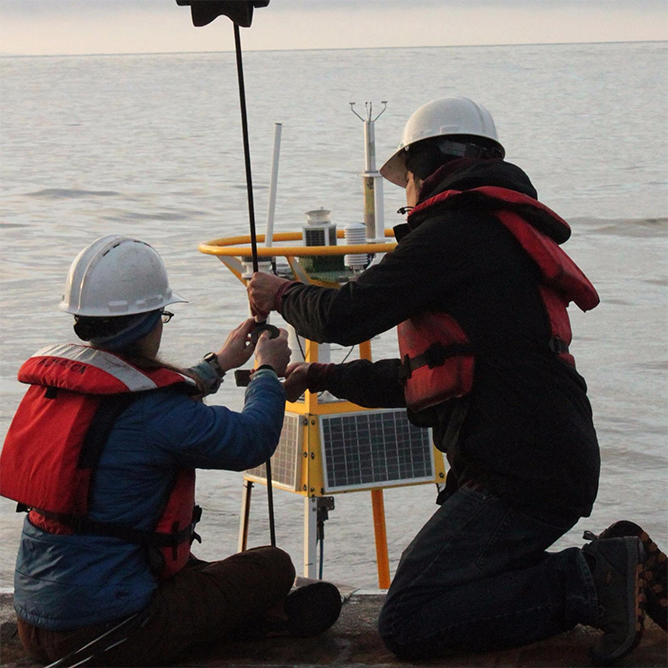
TECHNOLOGY DEVELOPMENT

Developing innovative tools to help monitor ocean acidification and mitigate changing ocean chemistry locally

REDUCING OUR CARBON FOOTPRINT

On the Road

Drive fuel-efficient vehicles or choose public transportation. Choose your bike or walk! Don't sit idle for more than 30 seconds. Keep your tires properly inflated.

With your Food Choices

Eat local- this helps cut down on production and transport! Reduce your meat and dairy. Compost to avoid food waste ending up in the landfill

With your Food Choices

Make energy-efficient choices for your appliances and lighting. Heat and cool efficiently! Change your air filters and program your thermostat, seal and insulate your home, and support clean energy sources

By Reducing Coastal Acidification

Reduce your use of fertilizers, Improve sewage treatment and run off, and Protect and restore coastal habitats

TAKE ACTION WITH YOUR COMMUNITY

You've taken the first step to learn more about ocean acidification - why not spread this knowledge to your community?

Every community has their unique culture, economy and ecology and what’s at stake from ocean acidification may be different depending on where you live.  As a community member, you can take a larger role in educating the public about ocean acidification. Creating awareness is the first step to taking action.  As communities gain traction, neighboring regions that share marine resources can build larger coalitions to address ocean acidification.  Here are some ideas to get started:

  1. Work with informal educators, such as aquarium outreach programs and local non-profits, to teach the public about ocean acidification. Visit our Education & Outreach page to find the newest tools!
  2. Participate in habitat restoration efforts to restore habitats that help mitigate the effects of coastal acidification
  3. Facilitate conversations with local businesses that might be affected by ocean acidification, building a plan for the future.
  4. Partner with local community efforts to mitigate the driver behind ocean acidification  – excess CO2 – such as community supported agriculture, bike & car shares and other public transportation options.
  5. Contact your regional Coastal Acidification Network (CAN) to learn how OA is affecting your region and more ideas about how you can get involved in your community
       More for Taking Community Action