Official websites use .gov
A .gov website belongs to an official government organization in the United States.

Secure .gov websites use HTTPS
A lock ( ) or https:// means you’ve safely connected to the .gov website. Share sensitive information only on official, secure websites.

Publications

Publication Post Type

Recommended priorities for research on ecological impacts of ocean and coastal acidification in the U.S. Mid-Atlantic

The estuaries and continental shelf system of the United States Mid-Atlantic are subject to ocean acidification driven by atmospheric CO2, and coastal acidification caused by nearshore and land-sea interactions that include biological, chemical, and physical processes. These processes include freshwater and nutrient input from rivers and groundwater; tidally-driven outwelling of nutrients, inorganic carbon, alkalinity; high […]

Recommended priorities for research on ecological impacts of ocean and coastal acidification in the U.S. Mid-Atlantic Read More »

Loss of coral reef growth capacity to track future increases in sea level

Sea-level rise (SLR) is predicted to elevate water depths above coral reefs and to increase coastal wave exposure as ecological degradation limits vertical reef growth, but projections lack data on interactions between local rates of reef growth and sea level rise. Here we calculate the vertical growth potential of more than 200 tropical western Atlantic

Loss of coral reef growth capacity to track future increases in sea level Read More »

Ocean Futures Under Ocean Acidification, Marine Protection, and Changing Fishing Pressures Explored Using a Worldwide Suite of Ecosystem Models

Ecosystem-based management (EBM) of the ocean considers all impacts on and uses of marine and coastal systems. In recent years, there has been a heightened interest in EBM tools that allow testing of alternative management options and help identify tradeoffs among human uses. End-to-end ecosystem modeling frameworks that consider a wide range of management options

Ocean Futures Under Ocean Acidification, Marine Protection, and Changing Fishing Pressures Explored Using a Worldwide Suite of Ecosystem Models Read More »

Resilience in carbonate production despite three coral bleaching events in 5 years on an inshore patch reef in the Florida Keys

The persistence of coral reef frameworks requires that calcium carbonate (CaCO3) production by corals and other calcifiers outpaces CaCO3 loss via physical, chemical, and biological erosion. Coral bleaching causes declines in CaCO3 production, but this varies with bleaching severity and the species impacted. We conducted census-based CaCO3 budget surveys using the established ReefBudget approach at Cheeca Rocks, an inshore patch

Resilience in carbonate production despite three coral bleaching events in 5 years on an inshore patch reef in the Florida Keys Read More »

Global Carbon Budget 2018

Accurate assessment of anthropogenic carbon dioxide (CO2) emissions and their redistribution among the atmosphere, ocean, and terrestrial biosphere – the “global carbon budget” – is important to better understand the global carbon cycle, support the development of climate policies, and project future climate change. Here we describe data sets and methodology to quantify the five

Global Carbon Budget 2018 Read More »

Seasonal variability of carbonate chemistry and decadal changes in waters of a marine sanctuary in the Northwestern Gulf of Mexico

We report seasonal water column carbonate chemistry data collected over a three-year period (late 2013 to 2016) at Flower Garden Banks National Marine Sanctuary (FGBNMS) located on the subtropical shelf edge of the northwestern Gulf of Mexico. The FGBNMS hosts the northernmost tropical coral species in the contiguous United States, with over 50% living coral cover.

Seasonal variability of carbonate chemistry and decadal changes in waters of a marine sanctuary in the Northwestern Gulf of Mexico Read More »

Consequences of spatially variable ocean acidification in the California Current: Lower pH drives strongest declines in benthic species in southern regions while greatest economic impacts occur in northern regions

Marine ecosystems are experiencing rapid changes driven by anthropogenic stressors which, in turn, are affecting human communities. One such stressor is ocean acidification, a result of increasing carbon emissions. Most research on biological impacts of ocean acidification has focused on the responses of an individual species or life stage. Yet, understanding how changes scale from species

Consequences of spatially variable ocean acidification in the California Current: Lower pH drives strongest declines in benthic species in southern regions while greatest economic impacts occur in northern regions Read More »

Warming and <em>p</em>CO<sub>2</sub> effects on Florida stone crab larvae

Greenhouse gas emissions are increasing ocean temperatures and the partial pressure of CO2 (pCO2), resulting in more acidic waters. It is presently unknown how elevated temperature and pCO2 will influence the early life history stages of the majority of marine coastal species. We investigated the combined effect of elevated temperature (30 °C control and 32 °C treatment) and elevated pCO2 (450 μatm control and

Warming and <em>p</em>CO<sub>2</sub> effects on Florida stone crab larvae Read More »

Seasonal patterns in phytoplankton biomass across the northern and deep Gulf of Mexico: a numerical model study

Biogeochemical models that simulate realistic lower-trophic-level dynamics, including the representation of main phytoplankton and zooplankton functional groups, are valuable tools for improving our understanding of natural and anthropogenic disturbances in marine ecosystems. Previous three-dimensional biogeochemical modeling studies in the northern and deep Gulf of Mexico (GoM) have used only one phytoplankton and one zooplankton type.

Seasonal patterns in phytoplankton biomass across the northern and deep Gulf of Mexico: a numerical model study Read More »

Marked annual coral bleaching resilience of an inshore patch reef in the Florida Keys: A nugget of hope, aberrance, or last man standing?

Annual coral bleaching events, which are predicted to occur as early as the next decade in the Florida Keys, are expected to cause catastrophic coral mortality. Despite this, there is little field data on how Caribbean coral communities respond to annual thermal stress events. At Cheeca Rocks, an inshore patch reef near Islamorada, FL, the

Marked annual coral bleaching resilience of an inshore patch reef in the Florida Keys: A nugget of hope, aberrance, or last man standing? Read More »

Forecasts for Alaska Fisheries

Crab pots and fishing nets in Alaska's Dutch Harbor
Image credit: Michael Theberge

Understanding seasonal changes in ocean acidification in Alaskan waters and the potential impacts to the multi-billion-dollar fishery sector is a main priority. Through work funded by NOAA’s Ocean Acidification Program, the Pacific Marine Environmental Laboratory developed a model capable of depicting past ocean chemistry conditions for the Bering Sea and is now testing the ability of this model to forecast future conditions. This model is being used to develop an ocean acidification indicator provided to fisheries managers in the annual NOAA Eastern Bering Sea Ecosystem Status Report.

ADAPTING TO OCEAN ACIDIFICATION

The NOAA Ocean Acidification Program (OAP) works to prepare society to adapt to the consequences of ocean acidification and conserve marine ecosystems as acidification occurs. Learn more about the human connections and adaptation strategies from these efforts.

Adaptation approaches fostered by the OAP include:

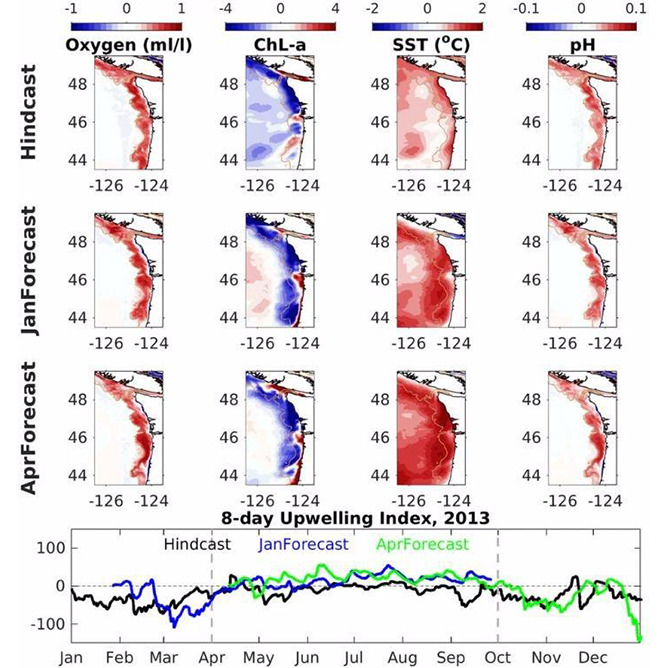
FORECASTING

Using models and research to understand the sensitivity of organisms and ecosystems to ocean acidification to make predictions about the future, allowing communities and industries to prepare

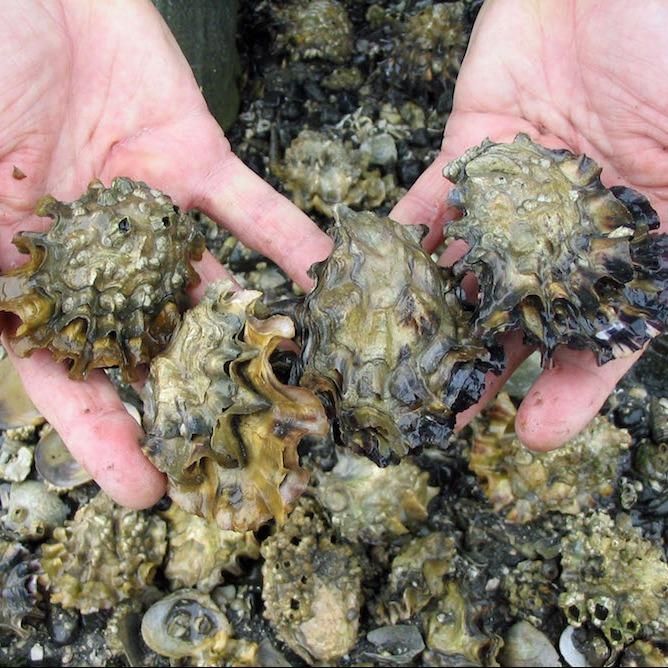
Closeup of oysters cupped in someone's hands

MANAGEMENT

Using these models and predictions as tools to facilitate management strategies that will protect marine resources and communities from future changes

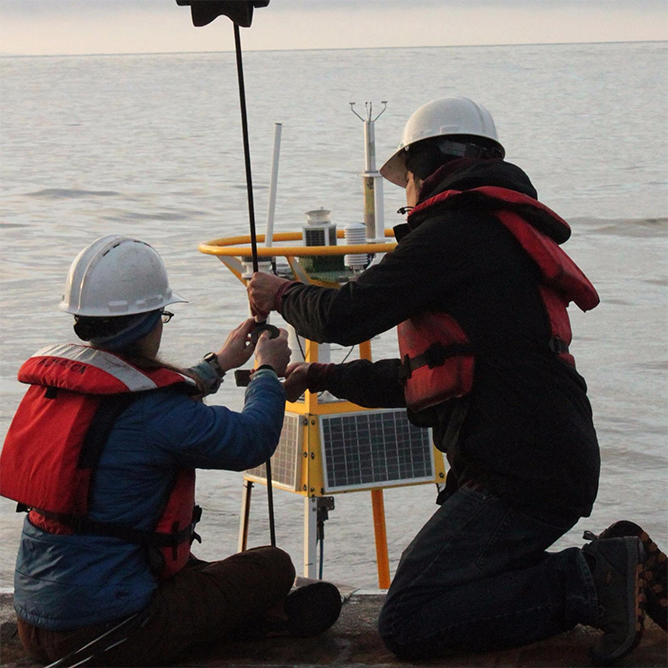
TECHNOLOGY DEVELOPMENT

Developing innovative tools to help monitor ocean acidification and mitigate changing ocean chemistry locally

REDUCING OUR CARBON FOOTPRINT

On the Road

Drive fuel-efficient vehicles or choose public transportation. Choose your bike or walk! Don't sit idle for more than 30 seconds. Keep your tires properly inflated.

With your Food Choices

Eat local- this helps cut down on production and transport! Reduce your meat and dairy. Compost to avoid food waste ending up in the landfill

With your Food Choices

Make energy-efficient choices for your appliances and lighting. Heat and cool efficiently! Change your air filters and program your thermostat, seal and insulate your home, and support clean energy sources

By Reducing Coastal Acidification

Reduce your use of fertilizers, Improve sewage treatment and run off, and Protect and restore coastal habitats

TAKE ACTION WITH YOUR COMMUNITY

You've taken the first step to learn more about ocean acidification - why not spread this knowledge to your community?

Every community has their unique culture, economy and ecology and what’s at stake from ocean acidification may be different depending on where you live.  As a community member, you can take a larger role in educating the public about ocean acidification. Creating awareness is the first step to taking action.  As communities gain traction, neighboring regions that share marine resources can build larger coalitions to address ocean acidification.  Here are some ideas to get started:

  1. Work with informal educators, such as aquarium outreach programs and local non-profits, to teach the public about ocean acidification. Visit our Education & Outreach page to find the newest tools!
  2. Participate in habitat restoration efforts to restore habitats that help mitigate the effects of coastal acidification
  3. Facilitate conversations with local businesses that might be affected by ocean acidification, building a plan for the future.
  4. Partner with local community efforts to mitigate the driver behind ocean acidification  – excess CO2 – such as community supported agriculture, bike & car shares and other public transportation options.
  5. Contact your regional Coastal Acidification Network (CAN) to learn how OA is affecting your region and more ideas about how you can get involved in your community
       More for Taking Community Action