Official websites use .gov
A .gov website belongs to an official government organization in the United States.

Secure .gov websites use HTTPS
A lock ( ) or https:// means you’ve safely connected to the .gov website. Share sensitive information only on official, secure websites.

Publications

Publication Post Type

Time of Detection as a Metric for Prioritizing Between Climate Observation Quality, Frequency, and Duration

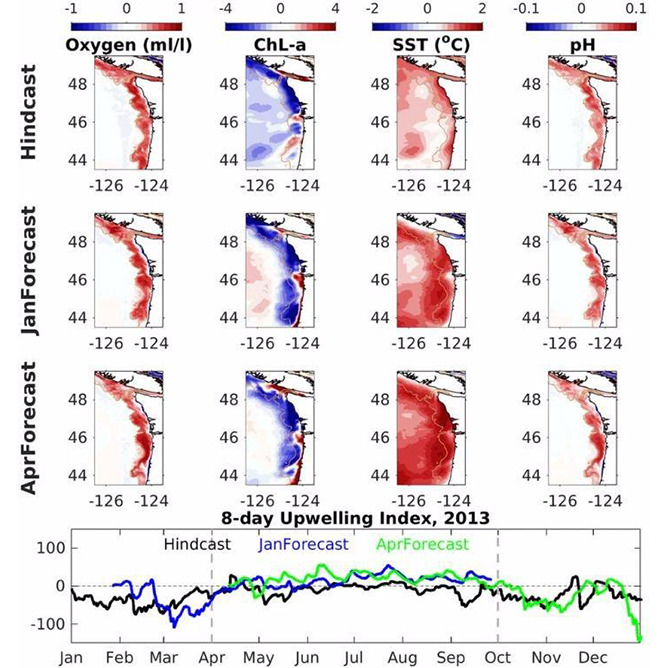
We advance a simple framework based on “time of detection” for estimating the observational needs of studies assessing climate changes amidst natural variability and apply it to several examples related to ocean acidification. This approach aims to connect the Global Ocean Acidification Observing Network “weather” and “climate” data quality thresholds with a single dynamic threshold […]

Time of Detection as a Metric for Prioritizing Between Climate Observation Quality, Frequency, and Duration Read More »

The effects of <em>in-vitro</em> pH decrease on the gametogenesis of the red tree coral, <em>Primnoa pacifica</em>

Primnoa pacifica is the most ecologically important coral species in the North Pacific Ocean and provides important habitat for commercially important fish and invertebrates. Ocean acidification (OA) is more rapidly increasing in high-latitude seas because anthropogenic CO2 uptake is greater in these regions. This is due to the solubility of CO2 in cold water and the reduced buffering

The effects of <em>in-vitro</em> pH decrease on the gametogenesis of the red tree coral, <em>Primnoa pacifica</em> Read More »

Seasonal Carbonate Chemistry Dynamics on Southeast Florida Coral Reefs: Localized Acidification Hotspots From Navigational Inlets

Seawater carbonate chemistry varies across temporal and spatial scales. Shallow-water environments can exhibit especially dynamic fluctuations as biological and physical processes operate on a smaller water volume relative to open ocean environments. Water was collected on a bi-monthly basis from seven sites off of southeast Florida (Miami-Dade and Broward counties), including four reefs, and three

Seasonal Carbonate Chemistry Dynamics on Southeast Florida Coral Reefs: Localized Acidification Hotspots From Navigational Inlets Read More »

A multi-model approach to understanding the role of Pacific sardine in the California Current food web

We develop a multi-model approach to explore how abundance of a forage fish (Pacific sardine Sardinops sagax) impacts the ecosystem and predators in the California Current, a region where sardine and anchovy Engraulis mordax have recently declined to less than 10% of contemporary peak abundances. We developed or improved applications of 3 ecosystem modeling approaches: Ecopath, Model of

A multi-model approach to understanding the role of Pacific sardine in the California Current food web Read More »

An Enhanced Ocean Acidification Observing Network: From People to Technology to Data Synthesis and Information Exchange

A successful integrated ocean acidification (OA) observing network must include (1) scientists and technicians from a range of disciplines from physics to chemistry to biology to technology development; (2) government, private, and intergovernmental support; (3) regional cohorts working together on regionally specific issues; (4) publicly accessible data from the open ocean to coastal to estuarine

An Enhanced Ocean Acidification Observing Network: From People to Technology to Data Synthesis and Information Exchange Read More »

Pacific geoduck (<em>Panopea generosa</em>) resilience to natural pH variation

Pacific geoduck aquaculture is a growing industry, however, little is known about how geoduck respond to varying environmental conditions, or how the industry will fare under projected climate conditions. To understand how geoduck production may be impacted by low pH associated with ocean acidification, multi-faceted environmental heterogeneity needs to be included to understand species and community

Pacific geoduck (<em>Panopea generosa</em>) resilience to natural pH variation Read More »

Effects of ocean acidification on the respiration and feeding of juvenile red and blue king crabs (<Em>Paralithodes camtschaticus</em> and <em>P. platypus</em>)

Ocean acidification is a decrease in pH resulting from dissolution of anthropogenic CO2 in the oceans that has physiological effects on many marine organisms. Juvenile red and blue king crabs (Paralithodes camtschaticus and P. platypus) exhibit both increased mortality and decreased growth in acidified waters. In this study, we determined how ocean acidification affects oxygen consumption, feeding rates,

Effects of ocean acidification on the respiration and feeding of juvenile red and blue king crabs (<Em>Paralithodes camtschaticus</em> and <em>P. platypus</em>) Read More »

Building the Knowledge-to-Action Pipeline in North America: Connecting Ocean Acidification Research and Actionable Decision Support

Ocean acidification (OA) describes the progressive decrease in the pH of seawater and other cascading chemical changes resulting from oceanic uptake of atmospheric carbon. These changes can have important implications for marine ecosystems, creating risk for commercial industries, subsistence communities, cultural practices, and recreation. Characterizing the extent of acidification and predicting the ramifications for marine

Building the Knowledge-to-Action Pipeline in North America: Connecting Ocean Acidification Research and Actionable Decision Support Read More »

Biogeochemical Anomalies at Two Southern California Current System Moorings During the 2014–2016 Warm Anomaly-El Niño Sequence

We analyzed impacts of the 2014–2015 Pacific Warm Anomaly and 2015–2016 El Niño on physical and biogeochemical variables at two southern California Current System moorings (CCE2, nearshore upwelling off Point Conception; CCE1, offshore California Current). Nitrate and Chl-a fluorescence were <1 μM and <1 Standardized Fluorescence Unit, respectively, at CCE2 for the entire durations of the

Biogeochemical Anomalies at Two Southern California Current System Moorings During the 2014–2016 Warm Anomaly-El Niño Sequence Read More »

Surface ocean pH and buffer capacity: past, present and future

The ocean’s chemistry is changing due to the uptake of anthropogenic carbon dioxide (CO2). This phenomenon, commonly referred to as “Ocean Acidification”, is endangering coral reefs and the broader marine ecosystems. In this study, we combine a recent observational seawater CO2 data product, i.e., the 6th version of the Surface Ocean CO2 Atlas (1991–2018, ~23 million observations), with

Surface ocean pH and buffer capacity: past, present and future Read More »

Forecasts for Alaska Fisheries

Crab pots and fishing nets in Alaska's Dutch Harbor
Image credit: Michael Theberge

Understanding seasonal changes in ocean acidification in Alaskan waters and the potential impacts to the multi-billion-dollar fishery sector is a main priority. Through work funded by NOAA’s Ocean Acidification Program, the Pacific Marine Environmental Laboratory developed a model capable of depicting past ocean chemistry conditions for the Bering Sea and is now testing the ability of this model to forecast future conditions. This model is being used to develop an ocean acidification indicator provided to fisheries managers in the annual NOAA Eastern Bering Sea Ecosystem Status Report.

ADAPTING TO OCEAN ACIDIFICATION

The NOAA Ocean Acidification Program (OAP) works to prepare society to adapt to the consequences of ocean acidification and conserve marine ecosystems as acidification occurs. Learn more about the human connections and adaptation strategies from these efforts.

Adaptation approaches fostered by the OAP include:

FORECASTING

Using models and research to understand the sensitivity of organisms and ecosystems to ocean acidification to make predictions about the future, allowing communities and industries to prepare

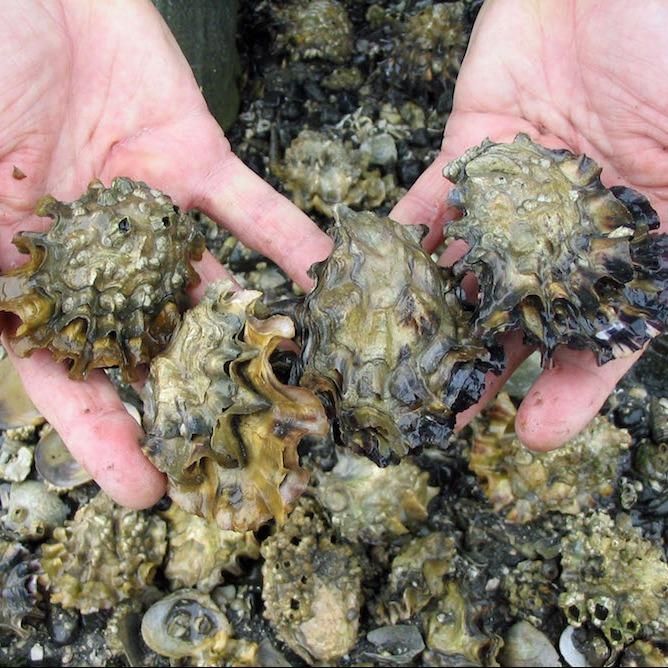
Closeup of oysters cupped in someone's hands

MANAGEMENT

Using these models and predictions as tools to facilitate management strategies that will protect marine resources and communities from future changes

TECHNOLOGY DEVELOPMENT

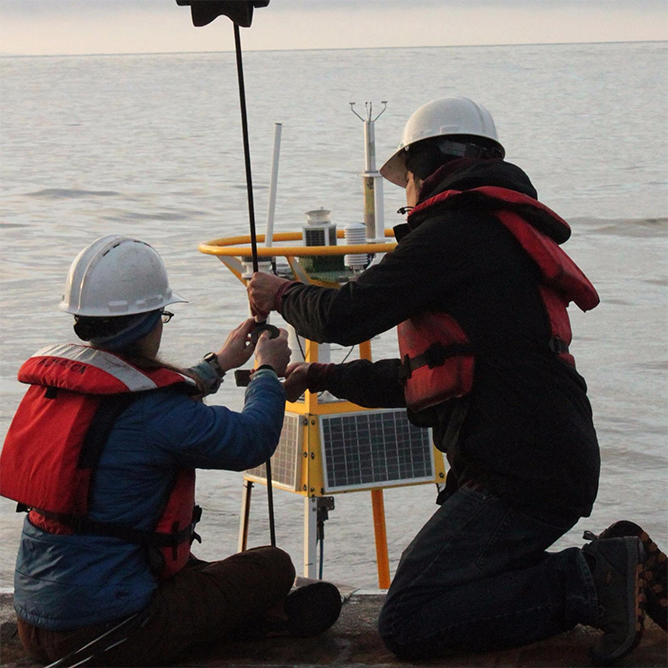
Developing innovative tools to help monitor ocean acidification and mitigate changing ocean chemistry locally

REDUCING OUR CARBON FOOTPRINT

On the Road

Drive fuel-efficient vehicles or choose public transportation. Choose your bike or walk! Don't sit idle for more than 30 seconds. Keep your tires properly inflated.

With your Food Choices

Eat local- this helps cut down on production and transport! Reduce your meat and dairy. Compost to avoid food waste ending up in the landfill

With your Food Choices

Make energy-efficient choices for your appliances and lighting. Heat and cool efficiently! Change your air filters and program your thermostat, seal and insulate your home, and support clean energy sources

By Reducing Coastal Acidification

Reduce your use of fertilizers, Improve sewage treatment and run off, and Protect and restore coastal habitats

TAKE ACTION WITH YOUR COMMUNITY

You've taken the first step to learn more about ocean acidification - why not spread this knowledge to your community?

Every community has their unique culture, economy and ecology and what’s at stake from ocean acidification may be different depending on where you live.  As a community member, you can take a larger role in educating the public about ocean acidification. Creating awareness is the first step to taking action.  As communities gain traction, neighboring regions that share marine resources can build larger coalitions to address ocean acidification.  Here are some ideas to get started:

  1. Work with informal educators, such as aquarium outreach programs and local non-profits, to teach the public about ocean acidification. Visit our Education & Outreach page to find the newest tools!
  2. Participate in habitat restoration efforts to restore habitats that help mitigate the effects of coastal acidification
  3. Facilitate conversations with local businesses that might be affected by ocean acidification, building a plan for the future.
  4. Partner with local community efforts to mitigate the driver behind ocean acidification  – excess CO2 – such as community supported agriculture, bike & car shares and other public transportation options.
  5. Contact your regional Coastal Acidification Network (CAN) to learn how OA is affecting your region and more ideas about how you can get involved in your community
       More for Taking Community Action