Official websites use .gov
A .gov website belongs to an official government organization in the United States.

Secure .gov websites use HTTPS
A lock ( ) or https:// means you’ve safely connected to the .gov website. Share sensitive information only on official, secure websites.

Monitoring & Modeling

Variability of bottom carbonate chemistry over the deep coral reefs in the Florida Straits and the impacts of mesoscale processes

Abundant and diverse cold-water coral and fish communities can be found in the deep waters of the Florida Straits, which are believed to be living under suboptimal conditions impacted by increasing oceanic CO2 levels. Yet, little is known regarding the spatial–temporal variability of bottom carbonate chemistry parameters and their dynamic drivers in this area. To address […]

Variability of bottom carbonate chemistry over the deep coral reefs in the Florida Straits and the impacts of mesoscale processes Read More »

Surface Water CO<sub>2</sub> variability in the Gulf of Mexico (1996–2017)

Approximately 380,000 underway measurements of sea surface salinity, temperature, and carbon dioxide (CO2) in the Gulf of Mexico (GoM) were compiled from the Surface Ocean CO2 Atlas (SOCAT) to provide a comprehensive observational analysis of spatiotemporal CO2 dynamics from 1996 to 2017. An empirical orthogonal function (EOF) was used to derive the main drivers of spatial and

Surface Water CO<sub>2</sub> variability in the Gulf of Mexico (1996–2017) Read More »

Purified meta-Cresol Purple dye perturbation: How it influences spectrophotometric pH measurements

Ocean acidification, a phenomenon of seawater pH decrease due to increasing atmospheric CO2, has a global effect on seawater chemistry, marine biology, and ecosystems. Ocean acidification is a gradual and global long-term process, the study of which demands high-quality pH data. The spectrophotometric technique is capable of generating accurate and precise pH measurements but requires adding an indicator

Purified meta-Cresol Purple dye perturbation: How it influences spectrophotometric pH measurements Read More »

The challenges of detecting and attributing ocean acidification impacts on marine ecosystems

A substantial body of research now exists demonstrating sensitivities of marine organisms to ocean acidification (OA) in laboratory settings. However, corresponding in situ observations of marine species or ecosystem changes that can be unequivocally attributed to anthropogenic OA are limited. Challenges remain in detecting and attributing OA effects in nature, in part because multiple environmental changes are

The challenges of detecting and attributing ocean acidification impacts on marine ecosystems Read More »

Seasonal patterns of surface inorganic carbon system variables in the Gulf of Mexico inferred from a regional high-resolution ocean biogeochemical model

Uncertainties in carbon chemistry variability still remain large in the Gulf of Mexico (GoM), as data gaps limit our ability to infer basin-wide patterns. Here we configure and validate a regional high-resolution ocean biogeochemical model for the GoM to describe seasonal patterns in surface pressure of CO2 (pCO2), aragonite saturation state (ΩAr), and sea–air CO2 flux. Model results indicate that

Seasonal patterns of surface inorganic carbon system variables in the Gulf of Mexico inferred from a regional high-resolution ocean biogeochemical model Read More »

Acidification in the U.S. Southeast: Causes, Potential Consequences and the Role of the Southeast Ocean and Coastal Acidification Network

Coastal acidification in southeastern U.S. estuaries and coastal waters is influenced by biological activity, run-off from the land, and increasing carbon dioxide in the atmosphere. Acidification can negatively impact coastal resources such as shellfish, finfish, and coral reefs, and the communities that rely on them. Organismal responses for species located in the U.S. Southeast document

Acidification in the U.S. Southeast: Causes, Potential Consequences and the Role of the Southeast Ocean and Coastal Acidification Network Read More »

A regional hindcast model simulating ecosystem dynamics, inorganic carbon chemistry, and ocean acidification in the Gulf of Alaska

The coastal ecosystem of the Gulf of Alaska (GOA) is especially vulnerable to the effects of ocean acidification and climate change. To improve our conceptual understanding of the system, we developed a new regional biogeochemical model setup for the GOA. Model output suggests that bottom water is seasonally high in CO2 between June and January. Such

A regional hindcast model simulating ecosystem dynamics, inorganic carbon chemistry, and ocean acidification in the Gulf of Alaska Read More »

Challenges in Quantifying Air-Water Carbon Dioxide Flux Using Estuarine Water Quality Data: Case Study for Chesapeake Bay

Carbon dioxide (CO2), an important greenhouse gas, is transferred from most estuaries to the atmosphere at a poorly known but potentially large rate. The difficulty in accurately quantifying the transfer is the lack of data of the amount of CO2 in estuarine surface waters. We evaluated the proposition that the abundance of historical water quality measurements

Challenges in Quantifying Air-Water Carbon Dioxide Flux Using Estuarine Water Quality Data: Case Study for Chesapeake Bay Read More »

Understanding Anthropogenic Impacts on pH and Aragonite Saturation State in Chesapeake Bay: Insights From a 30-Year Model Study

Ocean acidification (OA) is often defined as the gradual decline in pH and aragonite saturation state (ΩAr) for open ocean waters as a result of increasing atmospheric pCO2. Potential long-term trends in pH and ΩAr in estuarine environments are often obscured by a variety of other factors, including changes in watershed land use and associated riverine carbonate

Understanding Anthropogenic Impacts on pH and Aragonite Saturation State in Chesapeake Bay: Insights From a 30-Year Model Study Read More »

Forecasts for Alaska Fisheries

Crab pots and fishing nets in Alaska's Dutch Harbor
Image credit: Michael Theberge

Understanding seasonal changes in ocean acidification in Alaskan waters and the potential impacts to the multi-billion-dollar fishery sector is a main priority. Through work funded by NOAA’s Ocean Acidification Program, the Pacific Marine Environmental Laboratory developed a model capable of depicting past ocean chemistry conditions for the Bering Sea and is now testing the ability of this model to forecast future conditions. This model is being used to develop an ocean acidification indicator provided to fisheries managers in the annual NOAA Eastern Bering Sea Ecosystem Status Report.

ADAPTING TO OCEAN ACIDIFICATION

The NOAA Ocean Acidification Program (OAP) works to prepare society to adapt to the consequences of ocean acidification and conserve marine ecosystems as acidification occurs. Learn more about the human connections and adaptation strategies from these efforts.

Adaptation approaches fostered by the OAP include:

FORECASTING

Using models and research to understand the sensitivity of organisms and ecosystems to ocean acidification to make predictions about the future, allowing communities and industries to prepare

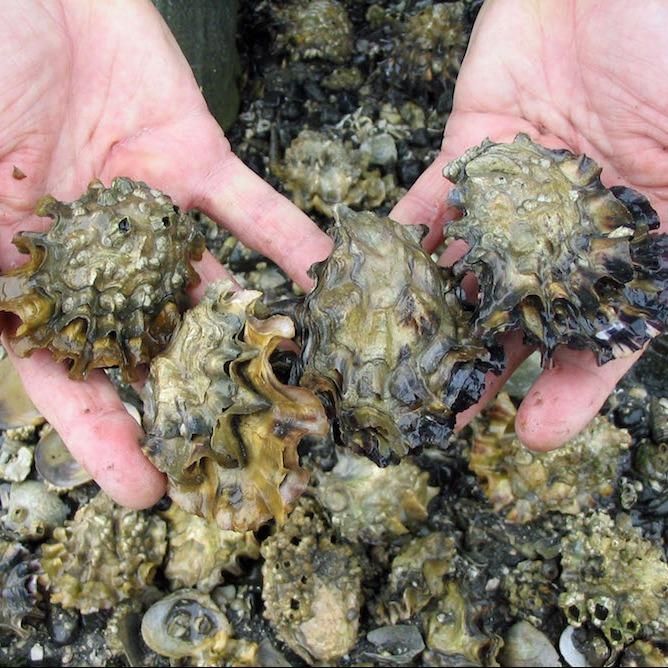
Closeup of oysters cupped in someone's hands

MANAGEMENT

Using these models and predictions as tools to facilitate management strategies that will protect marine resources and communities from future changes

TECHNOLOGY DEVELOPMENT

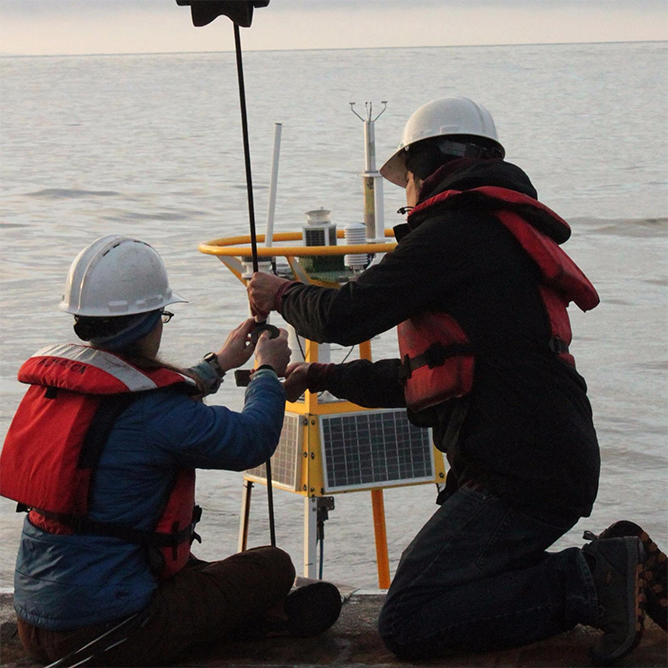
Developing innovative tools to help monitor ocean acidification and mitigate changing ocean chemistry locally

REDUCING OUR CARBON FOOTPRINT

On the Road

Drive fuel-efficient vehicles or choose public transportation. Choose your bike or walk! Don't sit idle for more than 30 seconds. Keep your tires properly inflated.

With your Food Choices

Eat local- this helps cut down on production and transport! Reduce your meat and dairy. Compost to avoid food waste ending up in the landfill

With your Food Choices

Make energy-efficient choices for your appliances and lighting. Heat and cool efficiently! Change your air filters and program your thermostat, seal and insulate your home, and support clean energy sources

By Reducing Coastal Acidification

Reduce your use of fertilizers, Improve sewage treatment and run off, and Protect and restore coastal habitats

TAKE ACTION WITH YOUR COMMUNITY

You've taken the first step to learn more about ocean acidification - why not spread this knowledge to your community?

Every community has their unique culture, economy and ecology and what’s at stake from ocean acidification may be different depending on where you live.  As a community member, you can take a larger role in educating the public about ocean acidification. Creating awareness is the first step to taking action.  As communities gain traction, neighboring regions that share marine resources can build larger coalitions to address ocean acidification.  Here are some ideas to get started:

  1. Work with informal educators, such as aquarium outreach programs and local non-profits, to teach the public about ocean acidification. Visit our Education & Outreach page to find the newest tools!
  2. Participate in habitat restoration efforts to restore habitats that help mitigate the effects of coastal acidification
  3. Facilitate conversations with local businesses that might be affected by ocean acidification, building a plan for the future.
  4. Partner with local community efforts to mitigate the driver behind ocean acidification  – excess CO2 – such as community supported agriculture, bike & car shares and other public transportation options.
  5. Contact your regional Coastal Acidification Network (CAN) to learn how OA is affecting your region and more ideas about how you can get involved in your community
       More for Taking Community Action