Official websites use .gov
A .gov website belongs to an official government organization in the United States.

Secure .gov websites use HTTPS
A lock ( ) or https:// means you’ve safely connected to the .gov website. Share sensitive information only on official, secure websites.

Monitoring & Modeling

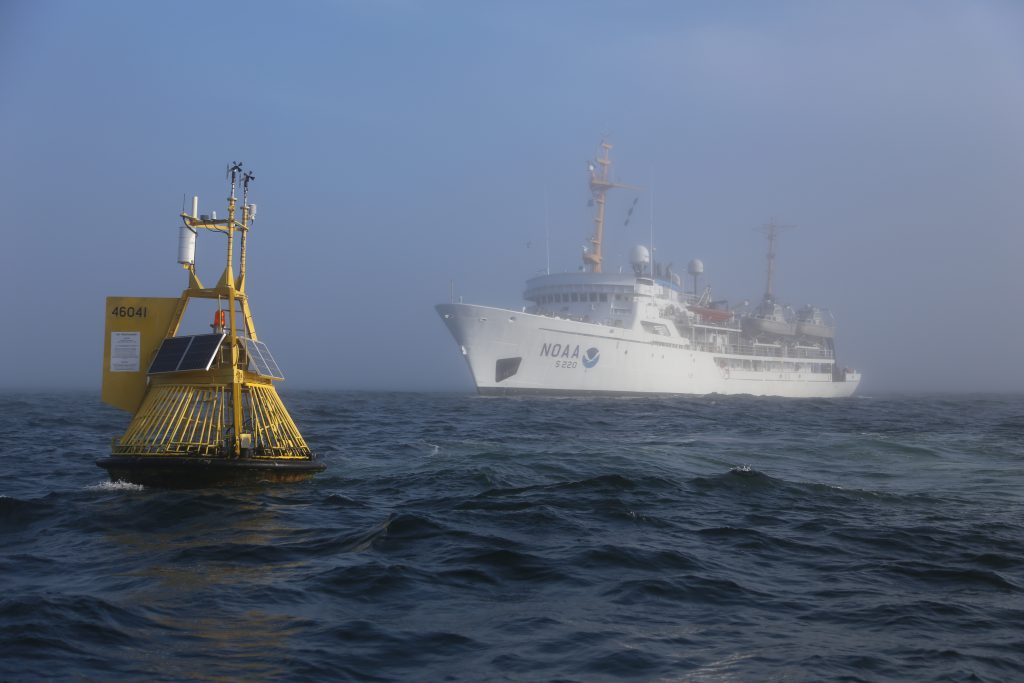
NOAA and Partners Launch Research Cruise of East Coast to Study Ocean Acidification

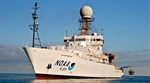
NOAA and scientists from PrincetonOld Dominion University, and the Universities of New HampshireDelaware, and Miami set off on June 19th from Newport, Rhode Island aboard NOAA ship Gordon Gunter on a research cruise to better understand ocean acidification and its drivers along the U.S. East Coast. 

This research cruise is just one part of a larger effort supported by the NOAA Ocean Acidification Program to better understand how ocean chemistry along all the U.S. coasts is changing in response to ocean acidification and where marine organisms may be at greatest risk. Similar cruises have taken place on the U.S. West Coast and the Gulf of Mexico. Understanding why and how fast our ocean chemistry is changing in different areas will allow scientists to better predict future changes and explore ways to adapt to those shifts.

NOAA and Partners Launch Research Cruise of East Coast to Study Ocean Acidification Read More »

Turning the High Beams on Ocean Acidification: NOAA Funds Shellfish Farmers and Scientist To Expand Pacific Coast Monitoring With $1.4 Million Over Three Years

NOAA is providing a grant of $1.4 million over three years to help shellfish growers and scientific experts work together to expand ocean acidification (OA) monitoring in waters that are particularly important to Pacific coast communities such as in oyster hatcheries and coastal waters where young oysters are grown. 
Shellfish growers, hatchery owners and scientists will work together to strengthen their understanding of and ability to adapt to the impacts of ocean acidification on the Pacific Coast of the US, including Alaska. Carbon dioxide (CO2) emissions from the burning of fossil fuels, which are being absorbed by the ocean, are causing a change in ocean chemistry which has already been detected along this coast. 

Turning the High Beams on Ocean Acidification: NOAA Funds Shellfish Farmers and Scientist To Expand Pacific Coast Monitoring With $1.4 Million Over Three Years Read More »

Ocean Acidification Concerns, Information to be aired at Northeast Stakeholders Workshop

The Northeast Coastal Acidification Network (NECAN) is hosting an “Ocean and Coastal Acidification Stakeholder Workshop” on December 10, 2014 at the Darling Marine Center in Walpole, Maine. The purpose is to inform and learn from fishermen, clam harvesters, aquaculturists, and coastal water quality volunteer programs their concerns and state of knowledge about ocean and coastal acidification (OCA). 

Ocean Acidification Concerns, Information to be aired at Northeast Stakeholders Workshop Read More »

Waterways Program Features the Impacts of Ocean Acidification on Coral Reefs

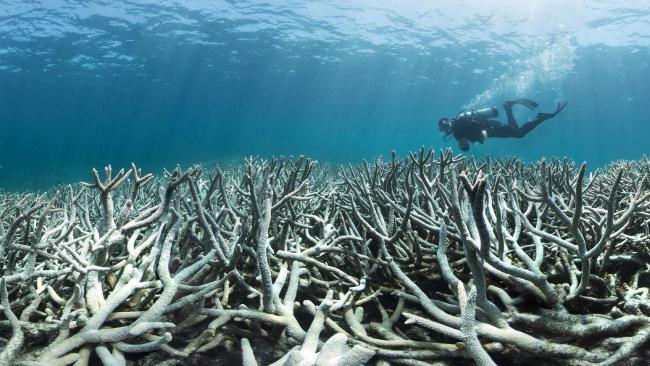
NOAA Atlantic Oceanographic and Meteorological Laboratory  The latest episode of the educational television series “Waterways” features coral research conducted by NOAA scientists in the Florida Keys. As the global ocean becomes more acidic, NOAA is documenting these changes and their impact on organisms like corals. The first part of the episode entitled “Ocean Acidification &

Waterways Program Features the Impacts of Ocean Acidification on Coral Reefs Read More »

Ocean Acidification: NSF awards $11.4 million in new grants to study effects on marine ecosystems

National Science Foundation  With increasing levels of carbon dioxide accumulating in the atmosphere and moving into marine ecosystems, the world’s oceans are becoming more acidic. The oceans may be acidifying faster today than at any time in the past 300 million years, scientists have found. To address concerns for acidifying oceans, the National Science Foundation

Ocean Acidification: NSF awards $11.4 million in new grants to study effects on marine ecosystems Read More »

NOAA and partner scientists study ocean acidification in Prince William Sound

NOAA Research  Scientists from NOAA’s Pacific Marine Environmental Laboratory, the University of Alaska and the Alaska Ocean Observing System are teaming up this summer and early fall to use new unmanned tools to study how melting glaciers in Alaska’s Prince William Sound may be intensifying ocean acidification in the sound and on the Gulf of

NOAA and partner scientists study ocean acidification in Prince William Sound Read More »

Pacific island is natural laboratory to study ocean acidification

NOAA Research  Ian Enochs, a scientist with NOAA’s Cooperative Institute for Marine and Atmospheric Studies at the University of Miami, traveled in May to the Island of Maug in the Pacific Ocean as part of a NOAA expedition aboard NOAA Ship Hi’ialakai to study coral reef ecosystems. We caught up with Enochs to learn about his research

Pacific island is natural laboratory to study ocean acidification Read More »

NOAA and partners release first federal ocean acidification strategic research plan

NOAA Research NOAA and its partners released the first federal strategic plan to guide research and monitoring investments that will improve our understanding of ocean acidification, its potential impacts on marine species and ecosystems, and adaptation and mitigation strategies.

NOAA and partners release first federal ocean acidification strategic research plan Read More »

Carbon dioxide in the tropical Pacific Ocean is increasing faster than expected

NOAA Research New NOAA research has revealed unprecedented changes in ocean carbon dioxide in the tropical Pacific Ocean over the last 14 years, influencing the role the oceans play in current and projected global warming and ocean acidification. Natural variability has dominated patterns in ocean CO2 in this region, but observations now show human activity contributes to

Carbon dioxide in the tropical Pacific Ocean is increasing faster than expected Read More »

Forecasts for Alaska Fisheries

Crab pots and fishing nets in Alaska's Dutch Harbor
Image credit: Michael Theberge

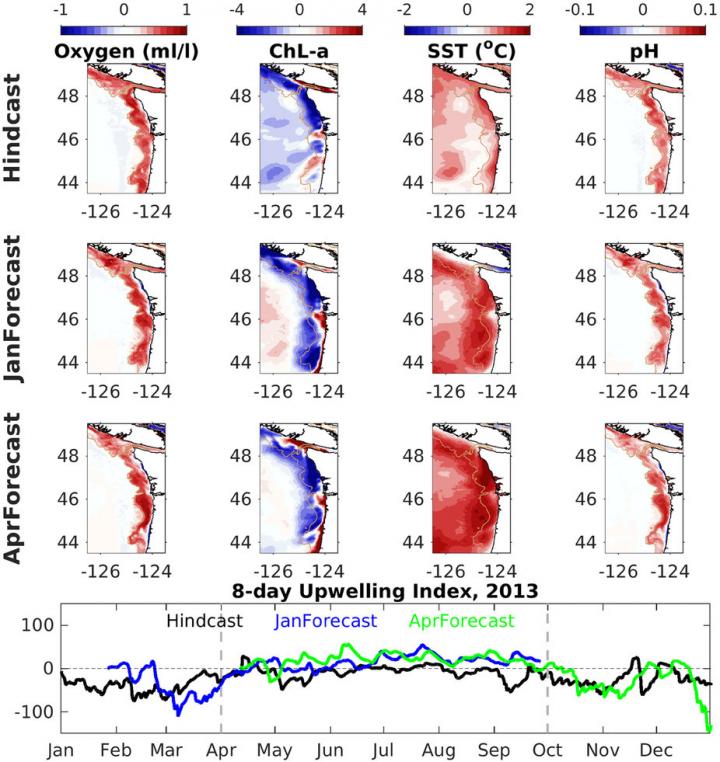
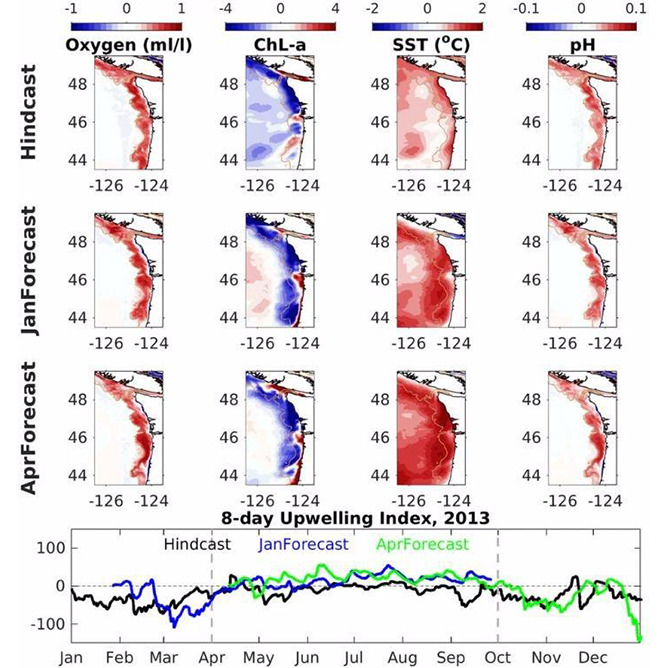
Understanding seasonal changes in ocean acidification in Alaskan waters and the potential impacts to the multi-billion-dollar fishery sector is a main priority. Through work funded by NOAA’s Ocean Acidification Program, the Pacific Marine Environmental Laboratory developed a model capable of depicting past ocean chemistry conditions for the Bering Sea and is now testing the ability of this model to forecast future conditions. This model is being used to develop an ocean acidification indicator provided to fisheries managers in the annual NOAA Eastern Bering Sea Ecosystem Status Report.

ADAPTING TO OCEAN ACIDIFICATION

The NOAA Ocean Acidification Program (OAP) works to prepare society to adapt to the consequences of ocean acidification and conserve marine ecosystems as acidification occurs. Learn more about the human connections and adaptation strategies from these efforts.

Adaptation approaches fostered by the OAP include:

FORECASTING

Using models and research to understand the sensitivity of organisms and ecosystems to ocean acidification to make predictions about the future, allowing communities and industries to prepare

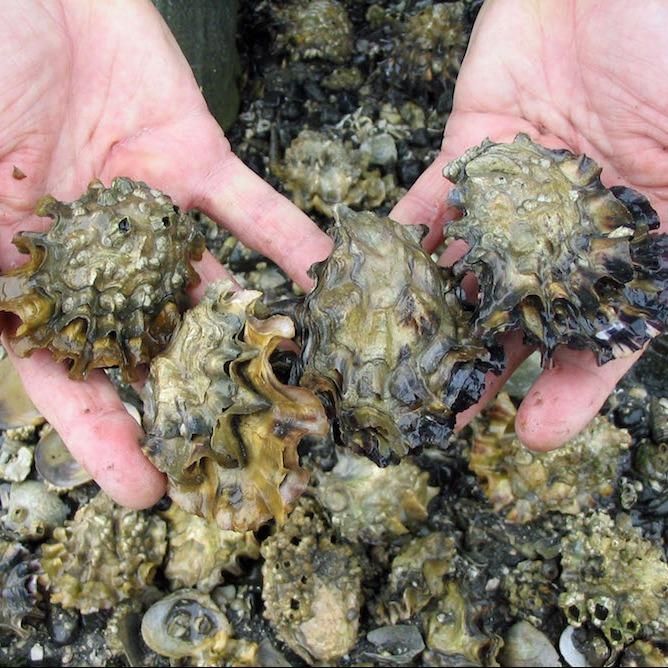
Closeup of oysters cupped in someone's hands

MANAGEMENT

Using these models and predictions as tools to facilitate management strategies that will protect marine resources and communities from future changes

TECHNOLOGY DEVELOPMENT

Developing innovative tools to help monitor ocean acidification and mitigate changing ocean chemistry locally

REDUCING OUR CARBON FOOTPRINT

On the Road

Drive fuel-efficient vehicles or choose public transportation. Choose your bike or walk! Don't sit idle for more than 30 seconds. Keep your tires properly inflated.

With your Food Choices

Eat local- this helps cut down on production and transport! Reduce your meat and dairy. Compost to avoid food waste ending up in the landfill

With your Food Choices

Make energy-efficient choices for your appliances and lighting. Heat and cool efficiently! Change your air filters and program your thermostat, seal and insulate your home, and support clean energy sources

By Reducing Coastal Acidification

Reduce your use of fertilizers, Improve sewage treatment and run off, and Protect and restore coastal habitats

TAKE ACTION WITH YOUR COMMUNITY

You've taken the first step to learn more about ocean acidification - why not spread this knowledge to your community?

Every community has their unique culture, economy and ecology and what’s at stake from ocean acidification may be different depending on where you live.  As a community member, you can take a larger role in educating the public about ocean acidification. Creating awareness is the first step to taking action.  As communities gain traction, neighboring regions that share marine resources can build larger coalitions to address ocean acidification.  Here are some ideas to get started:

  1. Work with informal educators, such as aquarium outreach programs and local non-profits, to teach the public about ocean acidification. Visit our Education & Outreach page to find the newest tools!
  2. Participate in habitat restoration efforts to restore habitats that help mitigate the effects of coastal acidification
  3. Facilitate conversations with local businesses that might be affected by ocean acidification, building a plan for the future.
  4. Partner with local community efforts to mitigate the driver behind ocean acidification  – excess CO2 – such as community supported agriculture, bike & car shares and other public transportation options.
  5. Contact your regional Coastal Acidification Network (CAN) to learn how OA is affecting your region and more ideas about how you can get involved in your community
       More for Taking Community Action