Official websites use .gov
A .gov website belongs to an official government organization in the United States.

Secure .gov websites use HTTPS
A lock ( ) or https:// means you’ve safely connected to the .gov website. Share sensitive information only on official, secure websites.

Publications

Publication Post Type

Shellfisheries’ adaptation to ocean acidification in OR and CA: Linking strategies to strategic policy action

As ocean pH levels continue to decline due to increased absorption of atmospheric CO2, a process known as ocean acidification (OA), industries dependent on ocean resources must adapt to mitigate negative impacts of OA. Utilizing adaptive strategies identified by shellfish growers in prior, related research, we seek to explore and identify existing U.S. State and […]

Shellfisheries’ adaptation to ocean acidification in OR and CA: Linking strategies to strategic policy action Read More »

Disentangling the Effects of Global and Regional Drivers on Diverse Long-Term pH Trends in Coastal Waters

Ocean acidification due to uptake of atmospheric CO2 is a concern in the open ocean. In contrast, pH in coastal systems has shown both decreasing and increasing long-term trends. A number of global and regional processes drive these diverse trends, including changes in nutrient loading, human-accelerated chemical weathering in watersheds, changes in acid-rain and land-use, as

Disentangling the Effects of Global and Regional Drivers on Diverse Long-Term pH Trends in Coastal Waters Read More »

Estimating coral reef carbonate budgets using Structure‑from‑Motion photogrammetry

Carbonate budget assessments quantify rates of calcium carbonate production and erosion from habitat-altering marine taxa and can be used to evaluate the potential for reef growth and the persistence of coral reef frameworks. Tracking the key ecosystem processes that control carbonate budgets is increasingly critical as climate change threatens to shift reefs toward net erosional

Estimating coral reef carbonate budgets using Structure‑from‑Motion photogrammetry Read More »

Ocean acidification may contribute to recruitment failure of Bering Sea red king crab

We used semi-parametric Bayesian regression to determine whether ocean acidification or climate warming could explain declining productivity for southeast Bering Sea red king crab (Paralithodes camtchaticus). Negative effects of acidification explained ∼21% of recruitment variability over 1980–2023, and ∼45% since 2000. Ocean warming had a negligible effect in our analysis. Model-estimated annual mean bottom pH

Ocean acidification may contribute to recruitment failure of Bering Sea red king crab Read More »

Will Climate Change Alter the Swimming Behavior of Larval Stone Crabs?: A Guided-Inquiry Lesson

The ocean has absorbed ~one third of the excess atmospheric carbon dioxide (CO2) released since the Industrial Revolution. When the ocean absorbs excess CO2, a series of chemical reactions occur that result in a reduction in seawater pH, a process called ocean acidification. The excess atmospheric CO2 is also resulting in warmer seawater temperatures. These stressors

Will Climate Change Alter the Swimming Behavior of Larval Stone Crabs?: A Guided-Inquiry Lesson Read More »

Calcification and organic production on a Hawaiian coral reef

Net ecosystem calcification rates (NEC) and net photosynthesis (NP) were determined from CO2 seawater parameters on the barrier coral reef of Kaneohe Bay, Oahu, Hawaii. Autosamplers were deployed to collect samples on the barrier reef every 2 h for six 48-hour deployments, two each in June 2008, August 2009, and January/February 2010. NEC on the Kaneohe Bay

Calcification and organic production on a Hawaiian coral reef Read More »

Sensitivity of atmospheric CO<sub>2</sub> and climate to explosive volcanic eruptions

Impacts of low-latitude, explosive volcanic eruptions on climate and the carbon cycle are quantified by forcing a comprehensive, fully coupled carbon cycle-climate model with pulse-like stratospheric aerosol optical depth changes. The model represents the radiative and dynamical response of the climate system to volcanic eruptions and simulates a decrease of global and regional atmospheric surface

Sensitivity of atmospheric CO<sub>2</sub> and climate to explosive volcanic eruptions Read More »

Real-time estimation of pH and aragonite saturation state from Argo profiling floats: Prospects for an autonomous carbon observing strategy

We demonstrate the ability to obtain accurate estimates of pH and carbonate mineral saturation state (Ω) from an Argo profiling float in the NE subarctic Pacific. Using hydrographic surveys of the NE Pacific region, we develop empirical algorithms to predict pH and Ω using observations of temperature (T) and dissolved O2. We attain R2 values greater

Real-time estimation of pH and aragonite saturation state from Argo profiling floats: Prospects for an autonomous carbon observing strategy Read More »

The Pacific oyster, <em>Crassostrea gigas</em>, shows negative correlation to naturally elevated carbon dioxide levels: Implications for near-term ocean acidification effects

We report results from an oyster hatchery on the Oregon coast, where intake waters experienced variable carbonate chemistry (aragonite saturation state < 0.8 to > 3.2; pH < 7.6 to > 8.2) in the early summer of 2009. Both larval production and midstage growth (∼ 120 to ∼ 150 µm) of the oyster Crassostrea gigas were significantly

The Pacific oyster, <em>Crassostrea gigas</em>, shows negative correlation to naturally elevated carbon dioxide levels: Implications for near-term ocean acidification effects Read More »

Resiliency of juvenile walleye pollock to projected levels of ocean acidification

As atmospheric concentrations of CO2 rise, the pH of high-latitude oceans is predicted to decrease by 0.3 to 0.5 units by 2100. Several biological consequences of ocean acidification across this pH range have already been documented in invertebrates and tropical marine fishes. However, little work has been done examining potential responses of the temperate and boreal

Resiliency of juvenile walleye pollock to projected levels of ocean acidification Read More »

Forecasts for Alaska Fisheries

Crab pots and fishing nets in Alaska's Dutch Harbor
Image credit: Michael Theberge

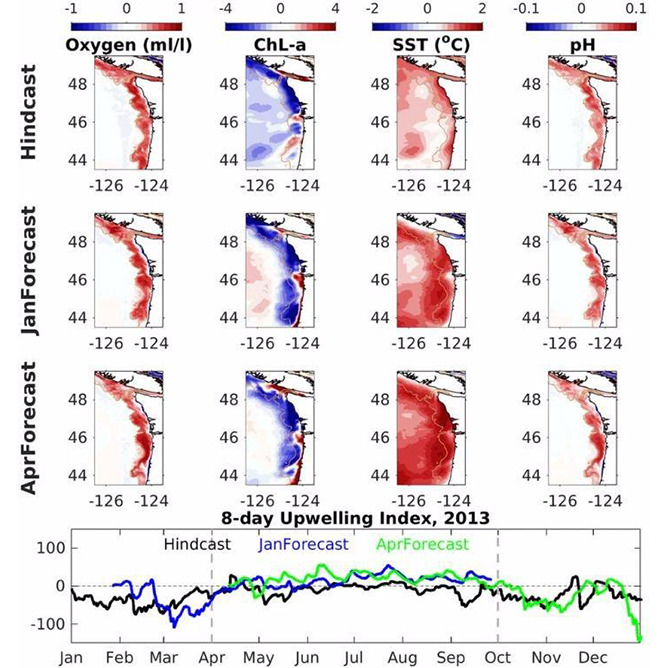
Understanding seasonal changes in ocean acidification in Alaskan waters and the potential impacts to the multi-billion-dollar fishery sector is a main priority. Through work funded by NOAA’s Ocean Acidification Program, the Pacific Marine Environmental Laboratory developed a model capable of depicting past ocean chemistry conditions for the Bering Sea and is now testing the ability of this model to forecast future conditions. This model is being used to develop an ocean acidification indicator provided to fisheries managers in the annual NOAA Eastern Bering Sea Ecosystem Status Report.

ADAPTING TO OCEAN ACIDIFICATION

The NOAA Ocean Acidification Program (OAP) works to prepare society to adapt to the consequences of ocean acidification and conserve marine ecosystems as acidification occurs. Learn more about the human connections and adaptation strategies from these efforts.

Adaptation approaches fostered by the OAP include:

FORECASTING

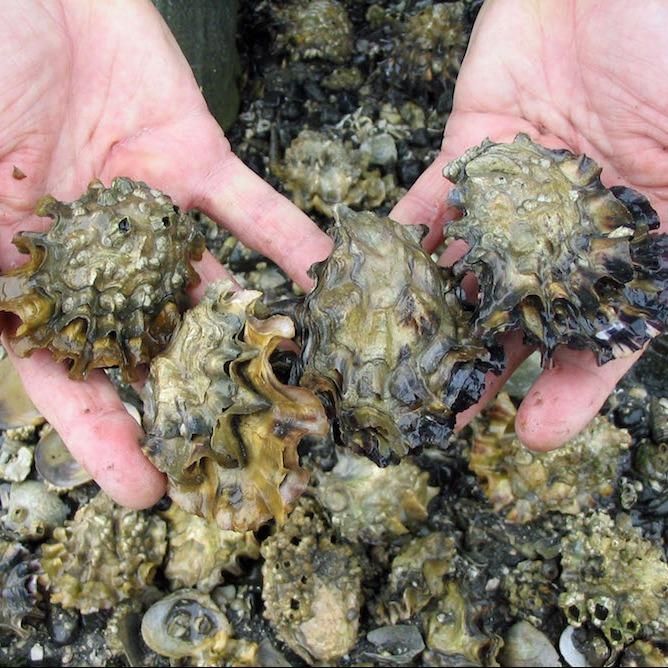
Using models and research to understand the sensitivity of organisms and ecosystems to ocean acidification to make predictions about the future, allowing communities and industries to prepare

Closeup of oysters cupped in someone's hands

MANAGEMENT

Using these models and predictions as tools to facilitate management strategies that will protect marine resources and communities from future changes

TECHNOLOGY DEVELOPMENT

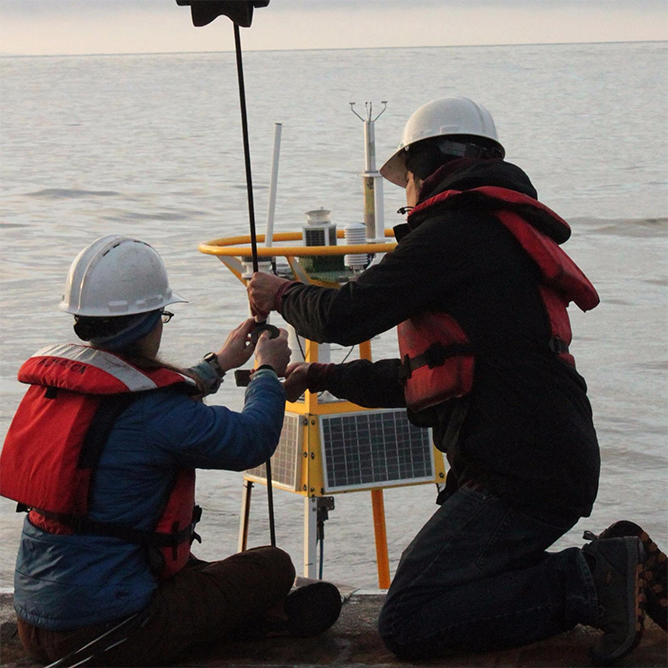
Developing innovative tools to help monitor ocean acidification and mitigate changing ocean chemistry locally

REDUCING OUR CARBON FOOTPRINT

On the Road

Drive fuel-efficient vehicles or choose public transportation. Choose your bike or walk! Don't sit idle for more than 30 seconds. Keep your tires properly inflated.

With your Food Choices

Eat local- this helps cut down on production and transport! Reduce your meat and dairy. Compost to avoid food waste ending up in the landfill

With your Food Choices

Make energy-efficient choices for your appliances and lighting. Heat and cool efficiently! Change your air filters and program your thermostat, seal and insulate your home, and support clean energy sources

By Reducing Coastal Acidification

Reduce your use of fertilizers, Improve sewage treatment and run off, and Protect and restore coastal habitats

TAKE ACTION WITH YOUR COMMUNITY

You've taken the first step to learn more about ocean acidification - why not spread this knowledge to your community?

Every community has their unique culture, economy and ecology and what’s at stake from ocean acidification may be different depending on where you live.  As a community member, you can take a larger role in educating the public about ocean acidification. Creating awareness is the first step to taking action.  As communities gain traction, neighboring regions that share marine resources can build larger coalitions to address ocean acidification.  Here are some ideas to get started:

  1. Work with informal educators, such as aquarium outreach programs and local non-profits, to teach the public about ocean acidification. Visit our Education & Outreach page to find the newest tools!
  2. Participate in habitat restoration efforts to restore habitats that help mitigate the effects of coastal acidification
  3. Facilitate conversations with local businesses that might be affected by ocean acidification, building a plan for the future.
  4. Partner with local community efforts to mitigate the driver behind ocean acidification  – excess CO2 – such as community supported agriculture, bike & car shares and other public transportation options.
  5. Contact your regional Coastal Acidification Network (CAN) to learn how OA is affecting your region and more ideas about how you can get involved in your community
       More for Taking Community Action