Official websites use .gov
A .gov website belongs to an official government organization in the United States.

Secure .gov websites use HTTPS
A lock ( ) or https:// means you’ve safely connected to the .gov website. Share sensitive information only on official, secure websites.

Monitoring & Modeling

Surveying the state of ocean acidification along the U.S. West Coast

PMEL Sustained Ocean Acidification Biogeochemical and Ecological Survey Observations
Why we care
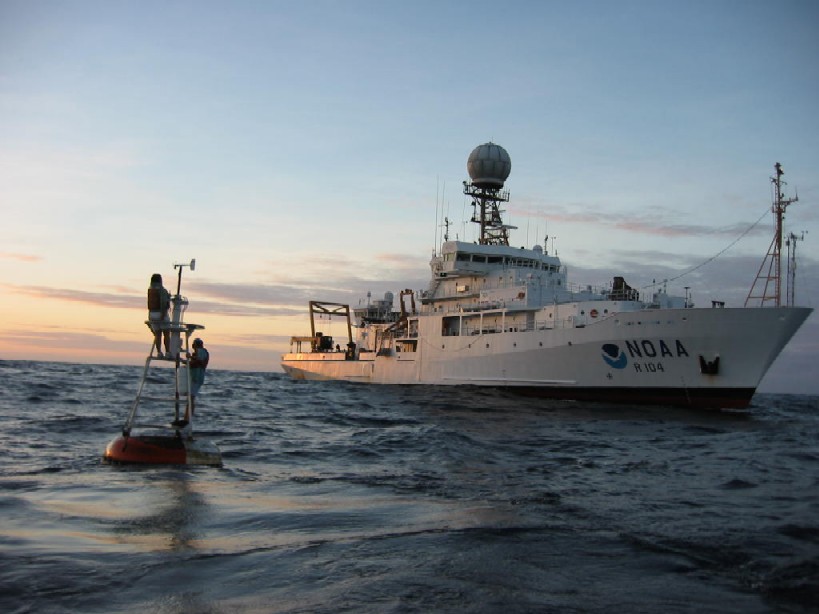
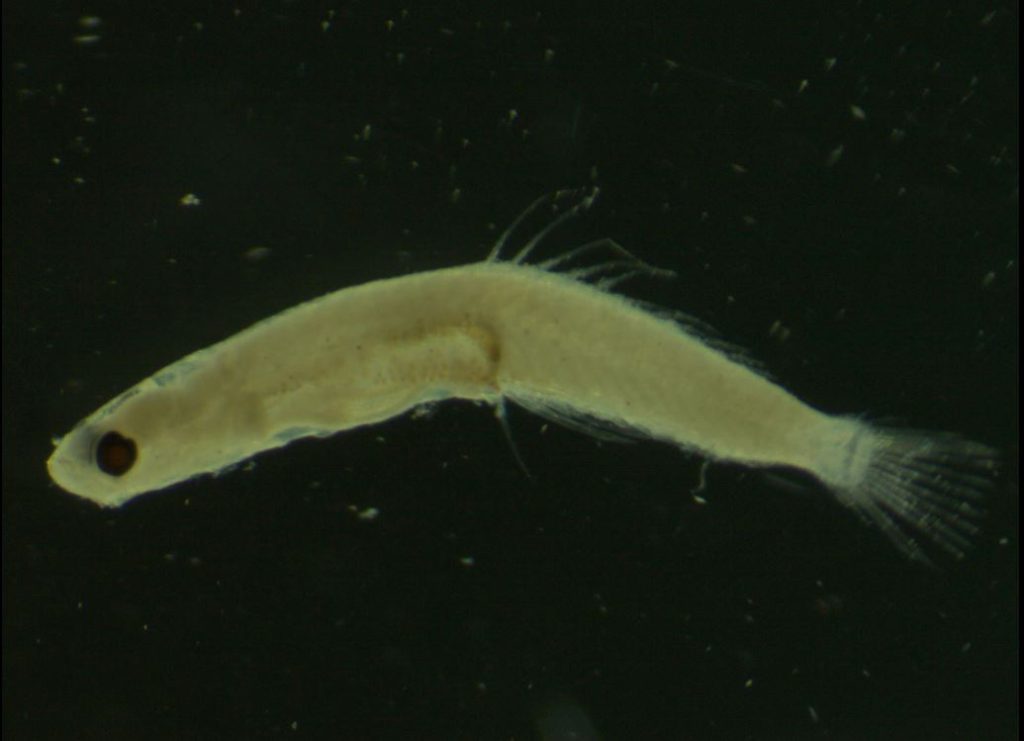
U.S. West coast-wide hydrographic surveys have been conducted intermittently from 2007 to 2017, providing evidence for the geographic extent and severity of ocean acidification in the continental shelf ecosystem. Scientists on the NOAA West Coast Ocean Acidification (WCOA) discovered that the combined effects of anthropogenic and biologically-derived carbon dioxide resulted in significant biological impacts for oyster larvae and pteropods, which are small, ecologically important mollusks for the food web. 
What we are doing
This project executes a large-scale survey of ocean acidification carbonate chemistry in the California Current System and continues processing data and publishing scientific papers based on 2016 and 2017 surveys findings. This survey determines the spatial distributions of temperature, salinity, pH, dissolved inorganic carbon, total alkalinity, oxygen, nutrients, and biological parameters along the west coast of North America. Survey results will provide the basis for accurate assessments of changing ocean chemistry in the following areas: 1) spatial variability; 2) extent and causes of long-term changes in carbonate system parameters and their impacts on calcifying (shell-building) organisms; and 3) empirical relationships for obtaining high-resolution information on ocean acidification collected on moorings. 
Benefits of our work
This project links the combined stressors of increased temperature, acidification, and hypoxia (low oxygen) with effects on marine organisms in the region and identifies spatial variability of acidifying conditions during the spring/summer upwelling season. In addition to scientific partners, this project engages a NOAA Teacher At Sea (TAS) fellow on the cruise to help develop outreach and education on West Coast ocean acidification.

Surveying the state of ocean acidification along the U.S. West Coast Read More »

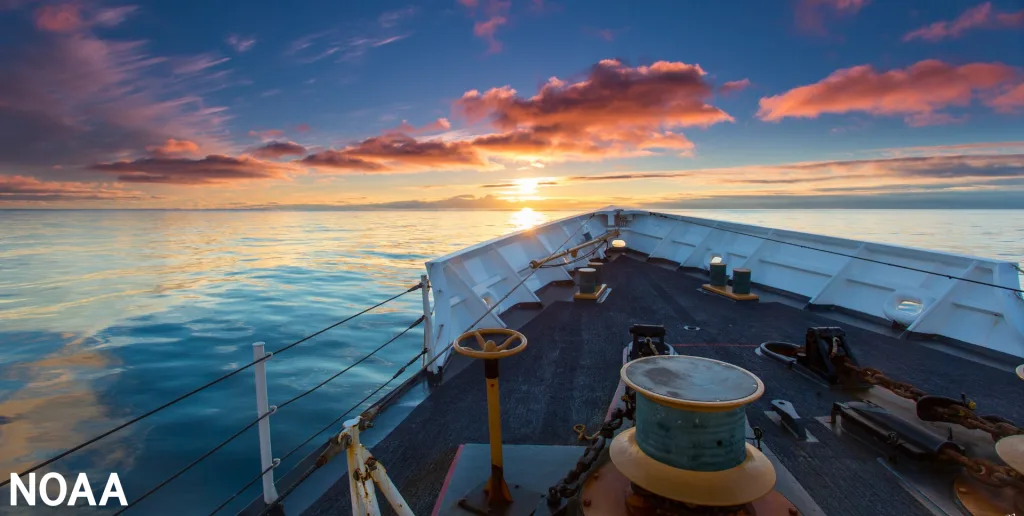
The Coast Guard Cutter Munro from Kodiak, Alaska, sails toward the sunset during an unusually calm evening on the Bering Sea. Credit: USCG

Assessing Ocean Acidification in Alaska Fishery Zones

Sustained Observations of Ocean Acidification in Alaska Coastal Seas
Why we care
Coastal regions around Alaska experience some of the most rapid and extensive progressions of ocean acidification (OA) in the United States. Assessments indicate that Alaska coastal communities have a varying degree of vulnerability to OA ranging from moderate to severe. Economically vital fishing regions are the most vulnerable. Sustained monitoring is critical to track the extent and impact of ocean acidification in habitats that are home to sensitive species such as red king crab in the Bering Sea.
What we are doing
This project “rethinks” the coastal Alaskan OA monitoring effort (initiated in 2015) by sampling Alaska waters directly through the annual population survey program of the Alaska Fisheries Science Center (AFSC). This new vision doubles the spatial footprint of Alaska OA observations, increases the time resolution of these observations, and complements shipboard surveys in Alaska. Carbonate chemistry samples will be combined with fisheries population surveys to assess OA in the habitats of keystone organisms in the Bering Sea and Gulf of Alaska. 
Benefits of our work
This project enhances our understanding of how the accumulation of anthropogenic carbon dioxide affects the seasonal progression of carbonate carbonate chemistry variables in the Gulf of Alaska. The observations can also be used to validate new OA models developed for the Gulf of Alaska and Bering Sea. Additionally, it can be applied to bioeconomic forecast models of crab and walleye pollock providing insight on how to adapt and build resilience to impacted industries and communities.

Assessing Ocean Acidification in Alaska Fishery Zones Read More »

Sustained ocean acidification monitoring on ships of opportunity in the Pacific

PMEL Sustained Investment Coastal Underway Ocean Acidification Observations (PUO)
Why we care
Underway ship measurements of ocean acidification (OA) data on ships of opportunity (SOOP) have proven to be a robust and cost-effective way of expanding OA observations. Ship-based observations provide an understanding of the spatial extent of processes that drive OA. Surface underway observations, in conjunction with coastal moorings and dedicated large-scale surveys, make an important contribution to addressing the hypothesis that acidification varies across space and time as a consequence of local and regional processes.

What we are doing 
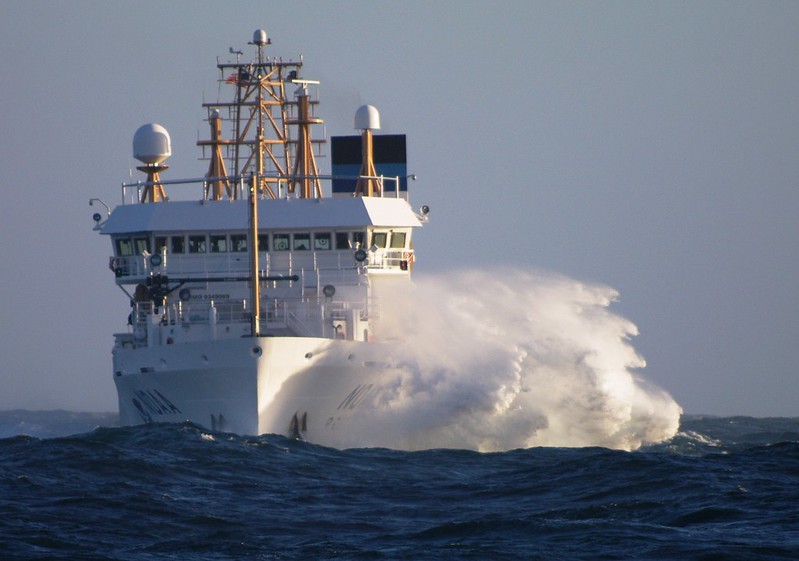
The focus of this project is to sustain existing underway OA monitoring systems on NOAA Ships Oscar Dyson and Bell M. Shimada, which operate along the U.S. West Coast. Project objectives also include sustaining underway OA observations in the equatorial Pacific, upgrading sensor systems, and improving oxygen data collection. 
Benefits of our work
This project increases high-quality surface water OA data taken underway to accompany NOAA Fisheries cruises. Efforts also improve spatial and temporal coverage of OA measurements, improving our understanding of OA variability along the Pacific coast of North America.

Sustained ocean acidification monitoring on ships of opportunity in the Pacific Read More »

Carbonate Parameter Estimation and Its Application in Revealing Temporal and Spatial Variation in the South and Mid-Atlantic Bight, USA

Coastal ocean carbon cycling is a complex process that is influenced by various physical and biological processes. Sporadic carbonate data challenges our understanding of carbon cycling in coastal areas. We first reviewed the assumptions and routines in developing coastal empirical models, and then built linear regression models with frequently measured seawater properties, such as temperature,

Carbonate Parameter Estimation and Its Application in Revealing Temporal and Spatial Variation in the South and Mid-Atlantic Bight, USA Read More »

Collecting environmental DNA helps scientists make new discoveries about ocean ecosystems. Image courtesy of ThayerMahan, Inc., Kraken Robotics, and the NOAA Office of Ocean Exploration and Research

Understanding biodiversity in the Gulf of America using eDNA

Assessing ecosystem responses of Gulf of Mexico coastal communities to ocean acidification using environmental DNA
Why we care 
Recent efforts to monitor ocean acidification in the Gulf of Mexico via the Gulf of Mexico Ecosystems and Carbon Cycle (GOMECC) cruises have revealed spatial differences in ocean acidification. While we know that ocean acidification negatively impacts many species and exacerbates the effects of oxygen limitation and harmful algal blooms, there is little work to monitor or predict the effects of ocean acidification on biodiversity. This project employs cutting-edge technology using environmental DNA to assess biodiversity in different conditions in the Gulf of Mexico region.
What we are doing
Every organism sheds DNA. This project analyzes environmental DNA (eDNA), which is free-floating or microscopic DNA found in seawater, collected during the 4th GOMECC cruise, to identify biodiversity of bacteria, plankton, and fish in the Gulf of Mexico. eDNA will be compared to ocean properties to draw conclusions about drivers of biodiversity. 
Benefits of our work
Links between eDNA, ocean acidification, and other ocean properties will provide a deeper understanding of environmental drivers of biodiversity. These relationships can inform predictions of biodiversity patterns and guide the management of key habitats in the Gulf of Mexico, and help us adapt to changing ocean conditions.

Understanding biodiversity in the Gulf of America using eDNA Read More »

Forecasts for Alaska Fisheries

Crab pots and fishing nets in Alaska's Dutch Harbor
Image credit: Michael Theberge

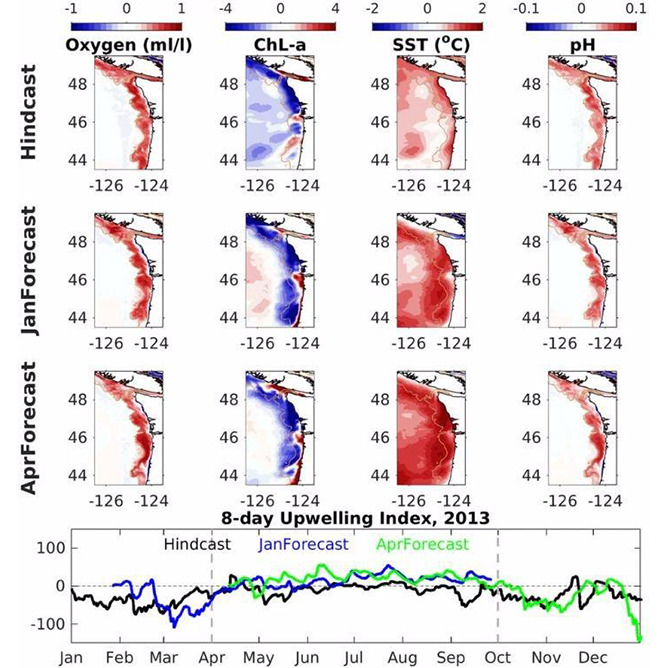
Understanding seasonal changes in ocean acidification in Alaskan waters and the potential impacts to the multi-billion-dollar fishery sector is a main priority. Through work funded by NOAA’s Ocean Acidification Program, the Pacific Marine Environmental Laboratory developed a model capable of depicting past ocean chemistry conditions for the Bering Sea and is now testing the ability of this model to forecast future conditions. This model is being used to develop an ocean acidification indicator provided to fisheries managers in the annual NOAA Eastern Bering Sea Ecosystem Status Report.

ADAPTING TO OCEAN ACIDIFICATION

The NOAA Ocean Acidification Program (OAP) works to prepare society to adapt to the consequences of ocean acidification and conserve marine ecosystems as acidification occurs. Learn more about the human connections and adaptation strategies from these efforts.

Adaptation approaches fostered by the OAP include:

FORECASTING

Using models and research to understand the sensitivity of organisms and ecosystems to ocean acidification to make predictions about the future, allowing communities and industries to prepare

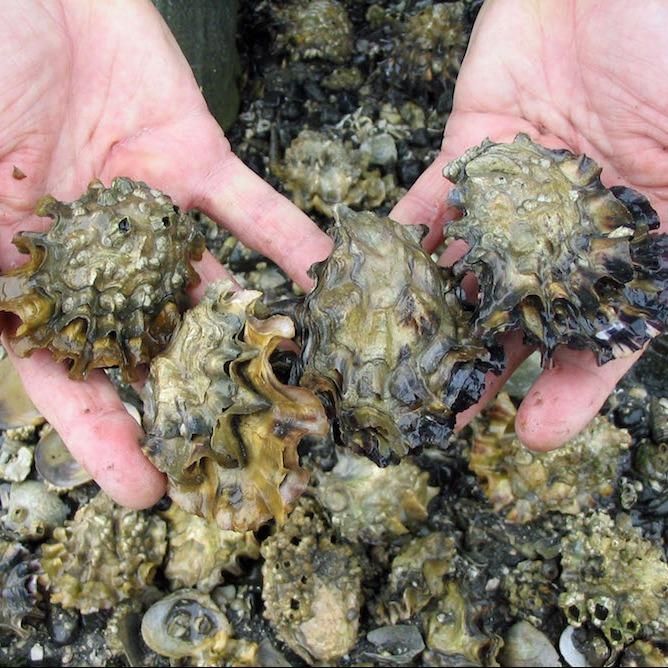
Closeup of oysters cupped in someone's hands

MANAGEMENT

Using these models and predictions as tools to facilitate management strategies that will protect marine resources and communities from future changes

TECHNOLOGY DEVELOPMENT

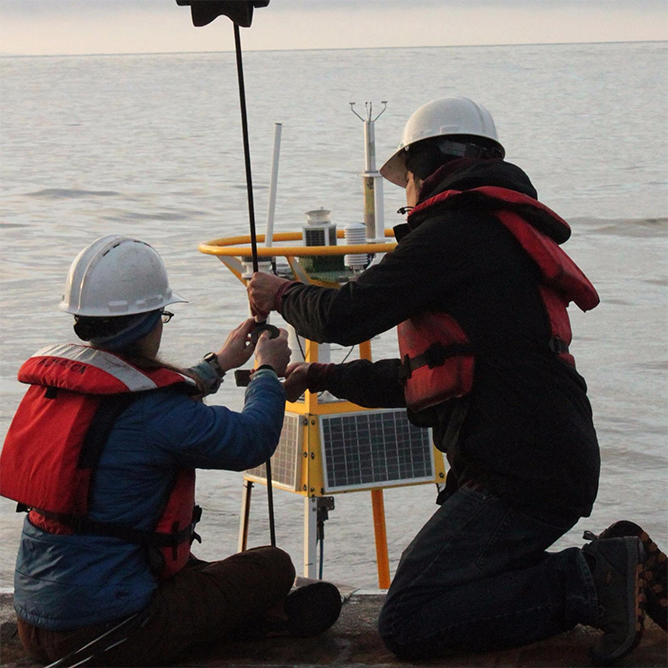
Developing innovative tools to help monitor ocean acidification and mitigate changing ocean chemistry locally

REDUCING OUR CARBON FOOTPRINT

On the Road

Drive fuel-efficient vehicles or choose public transportation. Choose your bike or walk! Don't sit idle for more than 30 seconds. Keep your tires properly inflated.

With your Food Choices

Eat local- this helps cut down on production and transport! Reduce your meat and dairy. Compost to avoid food waste ending up in the landfill

With your Food Choices

Make energy-efficient choices for your appliances and lighting. Heat and cool efficiently! Change your air filters and program your thermostat, seal and insulate your home, and support clean energy sources

By Reducing Coastal Acidification

Reduce your use of fertilizers, Improve sewage treatment and run off, and Protect and restore coastal habitats

TAKE ACTION WITH YOUR COMMUNITY

You've taken the first step to learn more about ocean acidification - why not spread this knowledge to your community?

Every community has their unique culture, economy and ecology and what’s at stake from ocean acidification may be different depending on where you live.  As a community member, you can take a larger role in educating the public about ocean acidification. Creating awareness is the first step to taking action.  As communities gain traction, neighboring regions that share marine resources can build larger coalitions to address ocean acidification.  Here are some ideas to get started:

  1. Work with informal educators, such as aquarium outreach programs and local non-profits, to teach the public about ocean acidification. Visit our Education & Outreach page to find the newest tools!
  2. Participate in habitat restoration efforts to restore habitats that help mitigate the effects of coastal acidification
  3. Facilitate conversations with local businesses that might be affected by ocean acidification, building a plan for the future.
  4. Partner with local community efforts to mitigate the driver behind ocean acidification  – excess CO2 – such as community supported agriculture, bike & car shares and other public transportation options.
  5. Contact your regional Coastal Acidification Network (CAN) to learn how OA is affecting your region and more ideas about how you can get involved in your community
       More for Taking Community Action