Apply for Pier2Peer as mentor or mentee
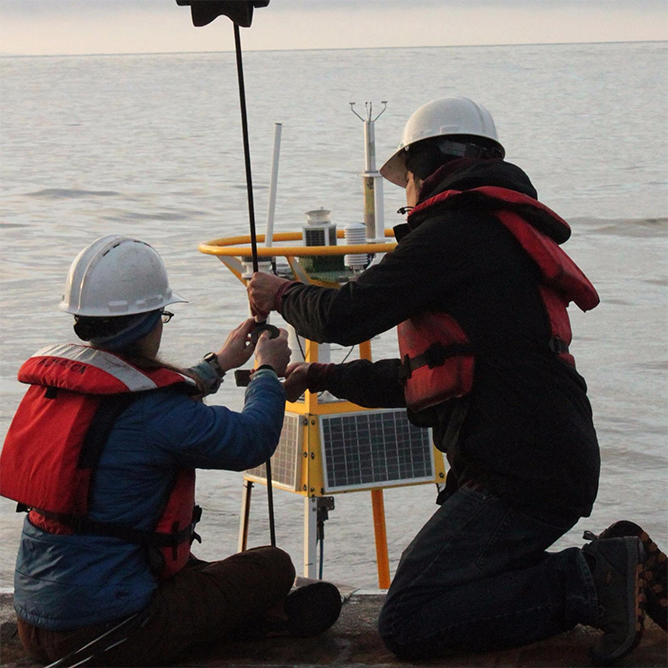
GOA-ON’s Pier2Peer program is now accepting mentor and mentee applications for the next cohort.
Apply for Pier2Peer as mentor or mentee Read More »
GOA-ON’s Pier2Peer program is now accepting mentor and mentee applications for the next cohort.
Apply for Pier2Peer as mentor or mentee Read More »
The Northeast Coastal Acidification Network (NECAN) released six priorities for ocean and coastal acidification monitoring in the Northeast U.S. and Eastern Canada.
Ocean acidification monitoring priorities report released for Northeast Read More »
Surprising findings from a pair of NOAA buoys show the importance of frequent, long-term observations.
New research challenges current understanding of ocean’s role in carbon uptake Read More »
The response of marine organisms to ocean acidification depends on their adaptive capacity, which can be partially understood by evaluating the amount of existing variability in CO2 sensitivity within a species. The process of local adaptation is a mechanism that can drive variability in CO2 sensitivity. In this study, we measured the survival and molt rate of
Increasingly complex and severe impacts of global change require collaboratively developed tools that simultaneously address multiple applications/uses. It is critical to come together as a research community to co-develop ocean biogeochemical observing networks and models that support research and monitoring, decision-making, operational forecasting, and other stakeholder applications. Despite serving as two major research tools in
Two moorings equipped with autonomous air-sea CO2 instrumentation located in the Southern California Current System were used to examine the seasonal and interannual variability of the surface partial pressure of carbon dioxide in seawater (pCO2,sw) and the air-sea CO2 flux between 2008 and 2022. These two moorings are in two distinct oceanographic regimes: offshore, centered in the
The exchange of carbon dioxide (CO2) between the ocean and atmosphere plays a crucial role in regulating Earth’s climate and ocean chemistry. In this study, we examined how accurately this exchange is captured along the California coast, where seasonal wind‐driven upwelling brings CO2‐rich waters to the surface. We compared CO2 flux estimates using data collected
The 2025 National Coral Reef Monitoring Program (NCRMP)’s Mariana Archipelago mission finished in June.
Marianas coral reef and ocean monitoring mission completed Read More »
Study finds that ocean acidification has significantly compromised 40% of the global surface ocean, and 60% of the subsurface ocean.
Study finds ocean acidification is more pervasive than previously thought Read More »
Ocean acidification has been identified in the Planetary Boundary Framework as a planetary process approaching a boundary that could lead to unacceptable environmental change. Using revised estimates of pre-industrial aragonite saturation state, state-of-the-art data-model products, including uncertainties and assessing impact on ecological indicators, we improve upon the ocean acidification planetary boundary assessment and demonstrate that
Ocean Acidification: Another Planetary Boundary Crossed Read More »
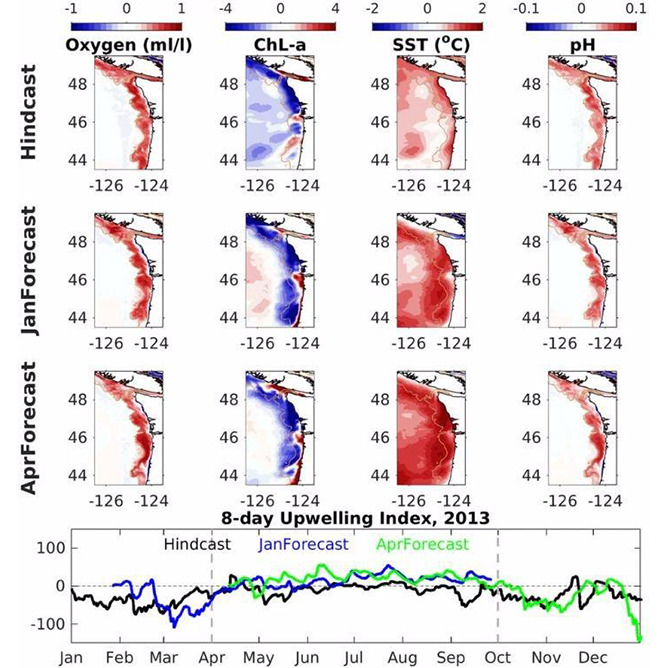
Understanding seasonal changes in ocean acidification in Alaskan waters and the potential impacts to the multi-billion-dollar fishery sector is a main priority. Through work funded by NOAA’s Ocean Acidification Program, the Pacific Marine Environmental Laboratory developed a model capable of depicting past ocean chemistry conditions for the Bering Sea and is now testing the ability of this model to forecast future conditions. This model is being used to develop an ocean acidification indicator provided to fisheries managers in the annual NOAA Eastern Bering Sea Ecosystem Status Report.
The NOAA Ocean Acidification Program (OAP) works to prepare society to adapt to the consequences of ocean acidification and conserve marine ecosystems as acidification occurs. Learn more about the human connections and adaptation strategies from these efforts.
Adaptation approaches fostered by the OAP include:

Using models and research to understand the sensitivity of organisms and ecosystems to ocean acidification to make predictions about the future, allowing communities and industries to prepare

Using these models and predictions as tools to facilitate management strategies that will protect marine resources and communities from future changes

Developing innovative tools to help monitor ocean acidification and mitigate changing ocean chemistry locally
Drive fuel-efficient vehicles or choose public transportation. Choose your bike or walk! Don't sit idle for more than 30 seconds. Keep your tires properly inflated.
Eat local- this helps cut down on production and transport! Reduce your meat and dairy. Compost to avoid food waste ending up in the landfill
Make energy-efficient choices for your appliances and lighting. Heat and cool efficiently! Change your air filters and program your thermostat, seal and insulate your home, and support clean energy sources
Reduce your use of fertilizers, Improve sewage treatment and run off, and Protect and restore coastal habitats
You've taken the first step to learn more about ocean acidification - why not spread this knowledge to your community?
Every community has their unique culture, economy and ecology and what’s at stake from ocean acidification may be different depending on where you live. As a community member, you can take a larger role in educating the public about ocean acidification. Creating awareness is the first step to taking action. As communities gain traction, neighboring regions that share marine resources can build larger coalitions to address ocean acidification. Here are some ideas to get started: