

Ocean Acidification Program News
Check out all of the news and visual webstories produced by the NOAA Ocean Acidification Program.
Check out all of the news and visual webstories produced by the NOAA Ocean Acidification Program.
This review article provides an overview of 68 existing ocean carbonate chemistry data products and data product sets, encompassing a broad range of types, including compilations of cruise datasets, gap-filled observational products, model simulations, and more. It is designed to help researchers identify and access the data products that best support their scientific objectives, thereby
Ocean acidification (OA) is a pressing global issue characterized by fundamental changes in ocean chemistry, including the reduction of pH levels, due to the absorption of increased atmospheric CO2. This phenomenon poses significant threats to marine ecosystems, affecting biodiversity, food security, and coastal economies. Time-series observations remain indispensable for documenting these changes, offering insights into
The oxygen inventory of the global ocean is declining. This phenomenon, known as ocean deoxygenation, has emerged as a fundamental pathway for climate change to alter marine ecosystems. An important concern is how this global oxygen decline will manifest in coastal and oceanic systems that are already subject to low oxygen, or hypoxic conditions. There
Accurate assessment of anthropogenic carbon dioxide (CO2) emissions and their redistribution among the atmosphere, ocean, and terrestrial biosphere in a changing climate is critical to better understand the global carbon cycle, support the development of climate policies, and project future climate change. Here we describe and synthesize datasets and methodologies to quantify the five major
Human activities are causing more carbon dioxide (CO2) to be absorbed by the oceans from the atmosphere, leading to decreasing ocean pH levels (ocean acidification). Acidification slows down biotic calcification, the process by which many marine organisms build their shells and skeletons. Lowered biotic calcification is hypothesized to reduce the carbon moving from the ocean’s
Impacts of low-latitude, explosive volcanic eruptions on climate and the carbon cycle are quantified by forcing a comprehensive, fully coupled carbon cycle-climate model with pulse-like stratospheric aerosol optical depth changes. The model represents the radiative and dynamical response of the climate system to volcanic eruptions and simulates a decrease of global and regional atmospheric surface
As a response to public demand for a well-documented, quality controlled, publically available, global surface ocean carbon dioxide (CO2) data set, the international marine carbon science community developed the Surface Ocean CO2 Atlas (SOCAT). The first SOCAT product is a collection of 6.3 million quality controlled surface CO2 data from the global oceans and coastal seas, spanning
A well-documented, publicly available, global data set of surface ocean carbon dioxide (CO2) parameters has been called for by international groups for nearly two decades. The Surface Ocean CO2 Atlas (SOCAT) project was initiated by the international marine carbon science community in 2007 with the aim of providing a comprehensive, publicly available, regularly updated, global data
Decadal-to-century scale trends for a range of marine environmental variables in the upper mesopelagic layer (UML, 100–600 m) are investigated using results from seven Earth System Models forced by a high greenhouse gas emission scenario. The models as a class represent the observation-based distribution of oxygen (O2) and carbon dioxide (CO2), albeit major mismatches between


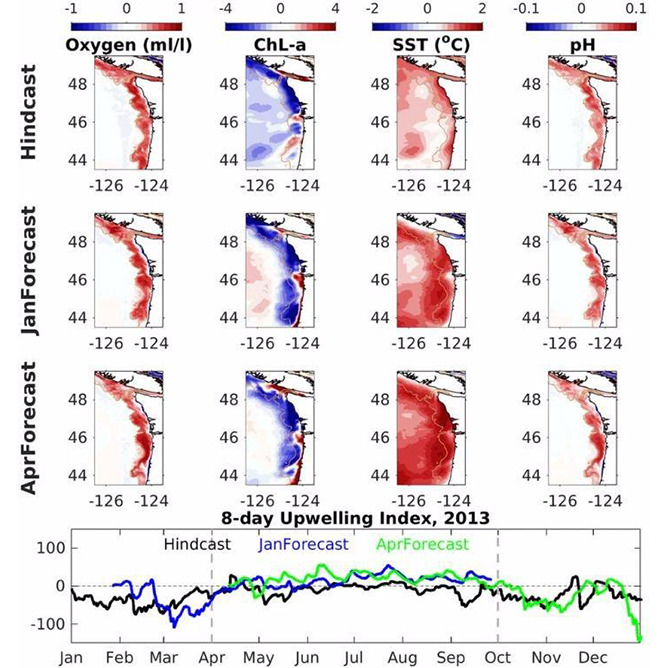
Using models and research to understand the sensitivity of organisms and ecosystems to ocean acidification to make predictions about the future, allowing communities and industries to prepare
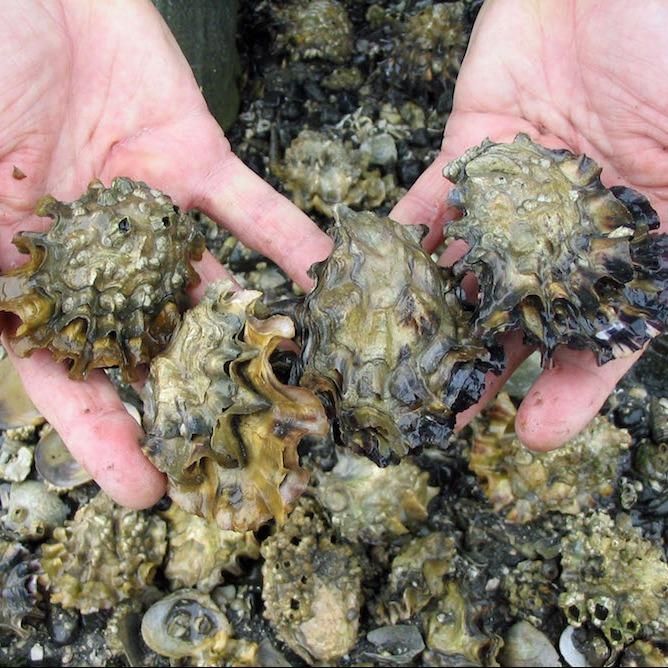
Using these models and predictions as tools to facilitate management strategies that will protect marine resources and communities from future changes
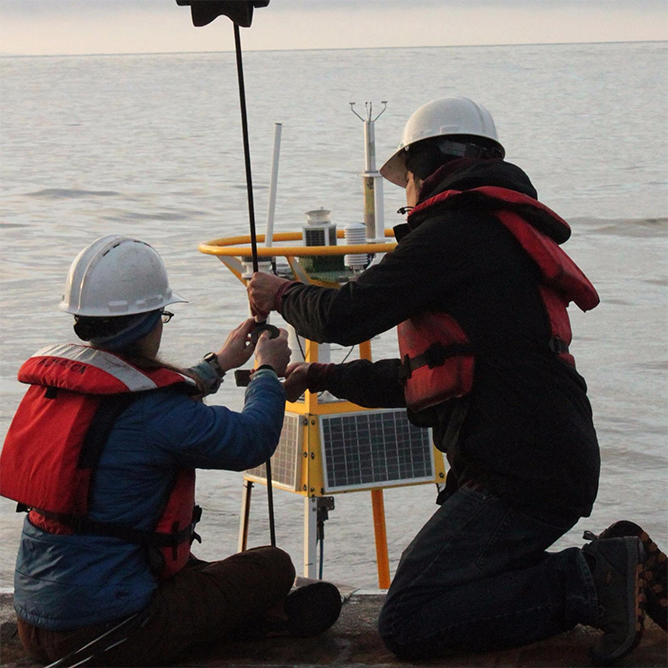
Developing innovative tools to help monitor ocean acidification and mitigate changing ocean chemistry locally